Artwork
The Risen Christ
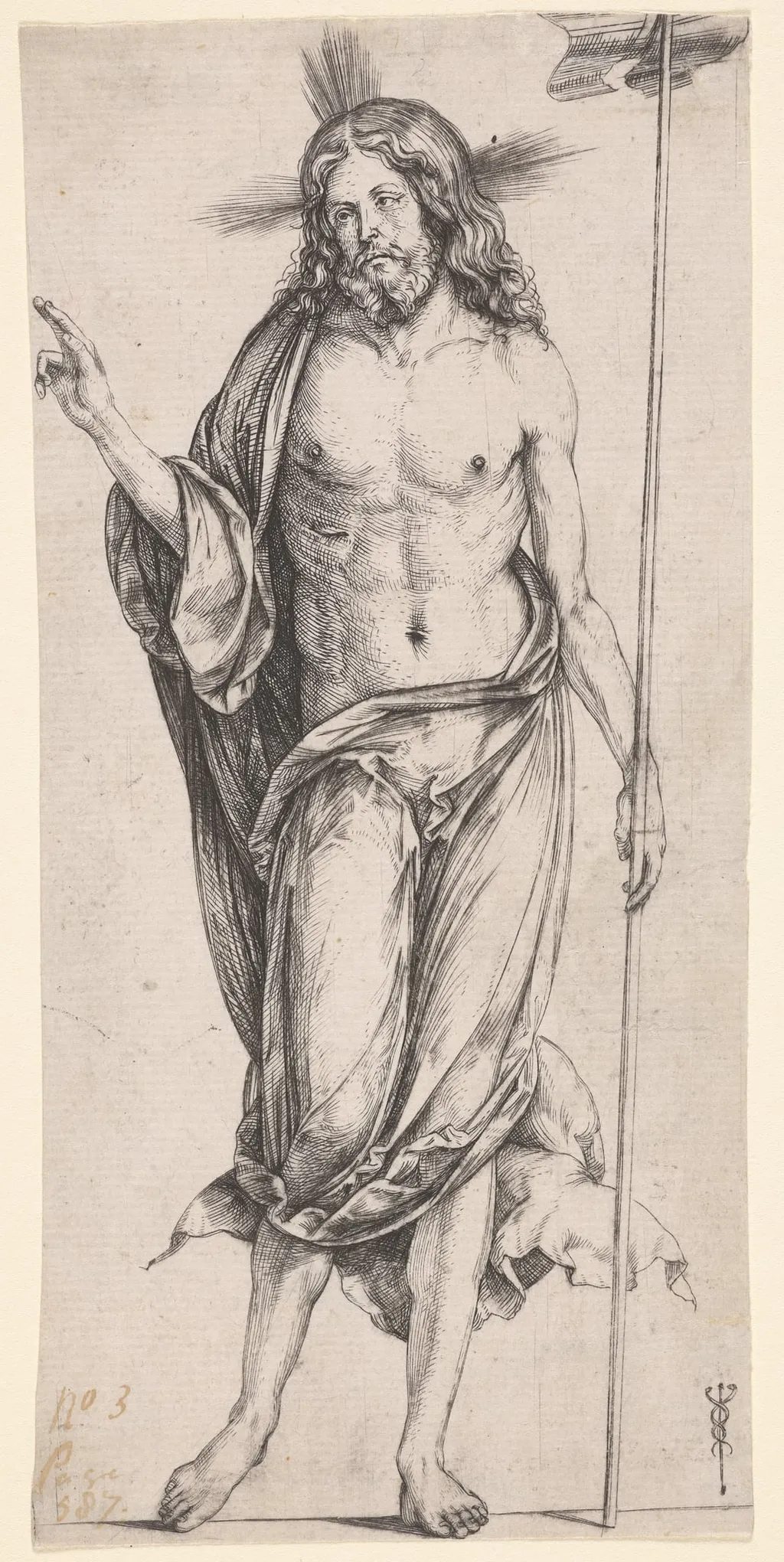
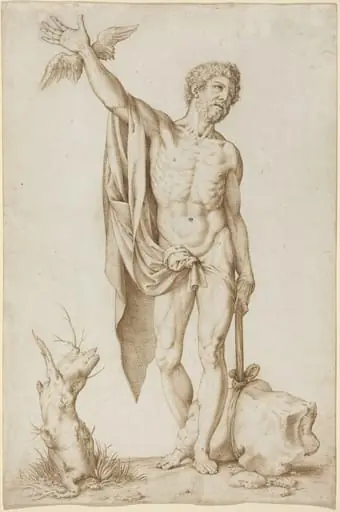
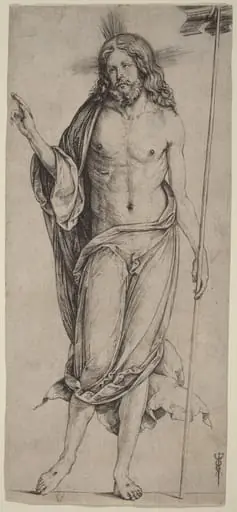
The Risen Christ is a print by the Renaissance artist Jacopo de' Barbari. It dates from 1504 and is held in the collection of the Cleveland Museum of Art.
About this work
Overview
After moving from Venice to Germany in 1500, Barbari absorbed elements of Northern detail while retaining the compositional clarity of the Italian Renaissance.
Created around 1504 by Jacopo de' Barbari, *The Risen Christ* is a woodcut print that reflects the artist’s engagement with both Italian and Northern European artistic traditions. After moving from Venice to Germany in 1500, Barbari absorbed elements of Northern detail while retaining the compositional clarity of the Italian Renaissance. This work exemplifies his skill in printmaking and his interest in religious subjects during a period of intense spiritual and artistic transformation.
Subject & Meaning
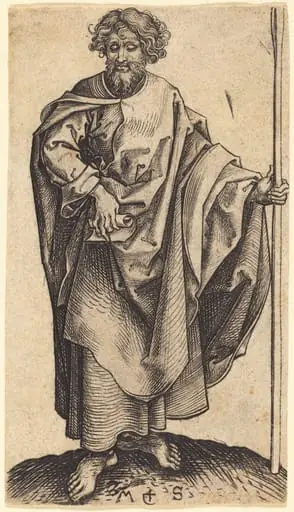
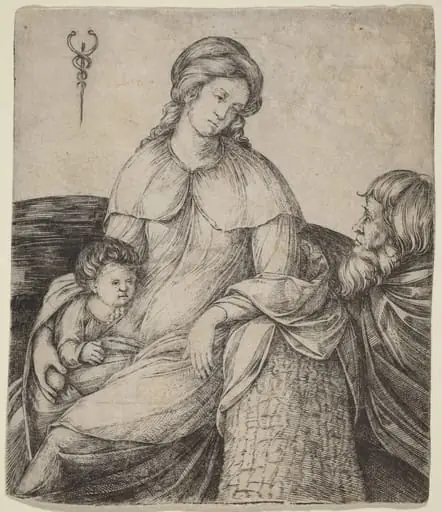
The image portrays Christ immediately after the Resurrection, depicted with a serene expression and upright posture. His raised left hand gestures toward heaven, signaling divine authority, while the staff in his right hand suggests both kingship and spiritual guidance. The halo and subtle cross behind him reinforce his identity as the risen savior. The bare feet and simple loincloth convey humility, aligning with theological interpretations of Christ’s triumph through suffering rather than power.
Technique & Style
Barbari executed this image as a finely detailed woodcut, using precise lines to define form and texture. The figure emerges from a flat, pale background, enhancing its sculptural presence. Delicate hatching models the body, while the flowing hair and drapery show influence from both classical sculpture and Northern European engraving traditions. The composition is balanced and restrained, avoiding dramatic excess in favor of quiet dignity, characteristic of early 16th-century religious imagery.
History & Provenance
The print entered the collection of the Cleveland Museum of Art through documented acquisitions in the 20th century. While its early ownership history is not fully traceable, its survival in good condition suggests it was valued by collectors who appreciated Renaissance prints for their technical refinement and devotional resonance. As a rare example of Barbari’s printed religious imagery, it contributes to understanding the circulation of sacred imagery beyond painting.
Context
Produced during a time of religious upheaval and renewed interest in biblical imagery, *The Risen Christ* reflects the broader Renaissance trend of humanizing sacred figures with naturalistic detail. Barbari’s time in Germany exposed him to the growing print culture there, where images like this were used for private devotion and education. The work bridges Italian compositional ideals with Northern emphasis on fine line and surface texture.
Legacy
Though less widely known than his contemporaries, Barbari’s prints, including this one, influenced the development of religious imagery in print form across Europe. His synthesis of Italian grace and Northern precision helped shape the visual language of Protestant and Catholic devotional art in the decades before the Reformation. *The Risen Christ* remains a quiet but significant example of early printmaking’s capacity to convey theological depth through understated form.
Artist & collection
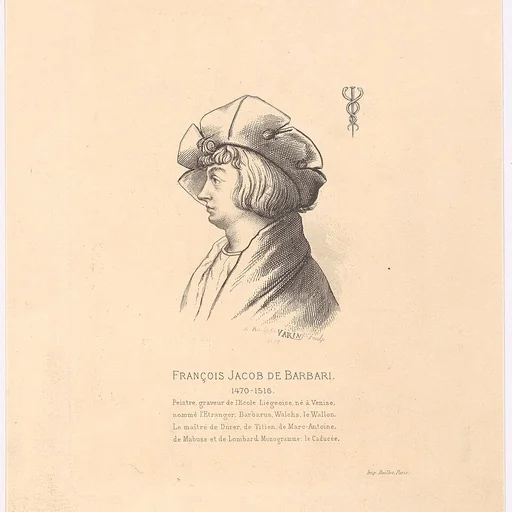
Artist
Jacopo de' Barbari, sometimes known or referred to as de'Barbari, de Barberi, de Barbari, Barbaro, Barberino, Barbarigo or Barberigo (c.

![View of Venice [lower right block], by Jacopo de' Barbari](https://artifactworldgallery.com/img/jacopo-de-barbari--view-of-venice-lower-right-block--371460ae957995b9-w320.webp)