Artwork
La Trei Sarmale
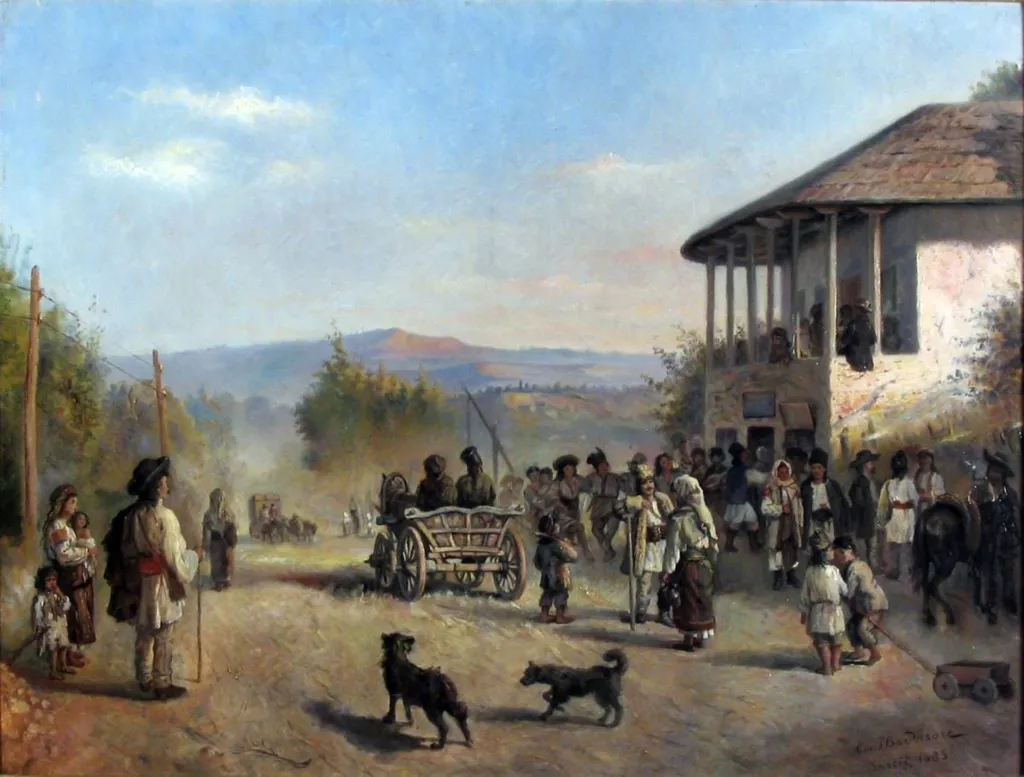
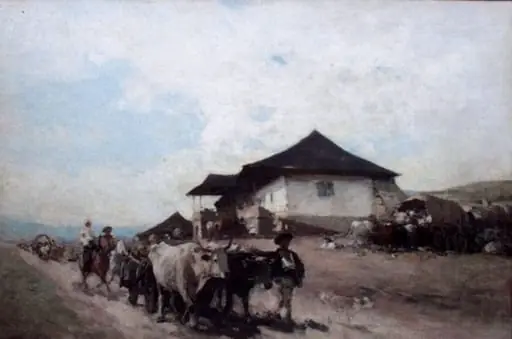
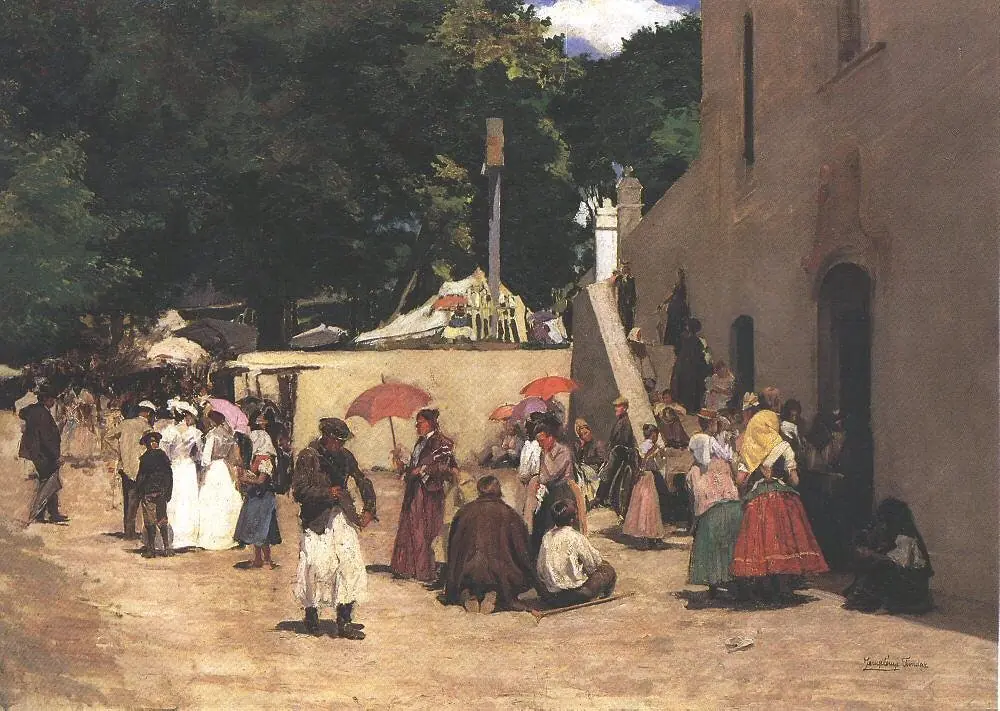
La Trei Sarmale is a print by the Impressionist artist Emanoil Bardasare-Panaiteanu. It dates from 1883 and is held in the collection of the Moldova National Museum Complex.
About this work
Overview
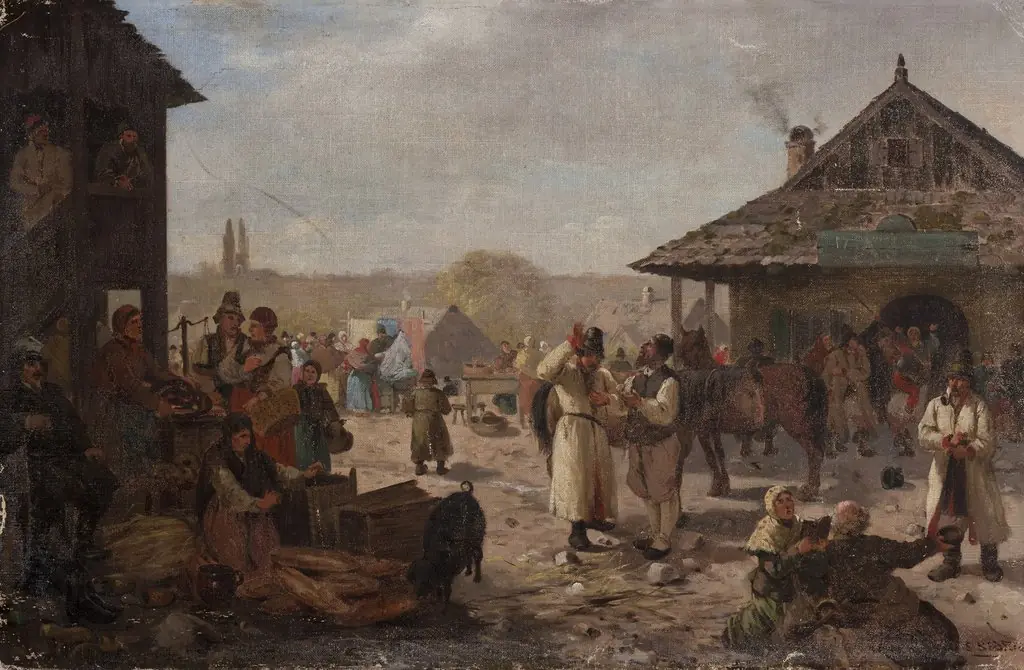
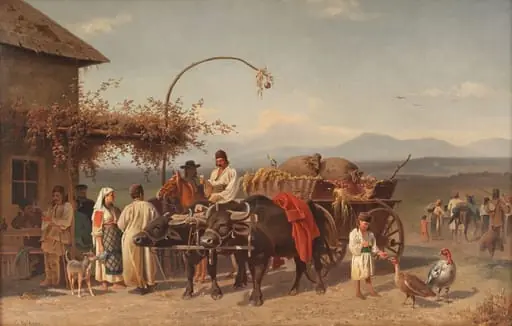
La Trei Sarmale, painted by Emanoil Bardasare‑Panaiteanu in 1883, depicts a lively village thoroughfare. The composition includes a wooden cart positioned beside a modest building with a porch, two dogs strolling in the foreground, and villagers dressed in period attire. A bright sky dotted with soft clouds arches over gently receding hills.
Subject & Meaning
The scene captures a moment of everyday rural activity, emphasizing communal interaction and the rhythm of village life. The presence of the cart and the casual posture of the figures suggest commerce and social exchange, while the dogs add a touch of spontaneity to the otherwise orderly setting.
Technique & Style
Bardasare‑Panaiteanu employs a realist approach, using nuanced lighting to differentiate warm illuminated areas from cooler shadows on faces and clothing. The brushwork conveys texture in the wooden cart and the fabric of the garments, while the atmospheric perspective softens the distant hills, reinforcing depth.
History & Provenance
Created in the late nineteenth century, La Trei Sarmale reflects the artist’s interest in documenting Romanian rural environments. The work has remained within collections that focus on realist depictions of everyday life, contributing to the broader understanding of regional visual culture of the period.
Artist & collection
Artist
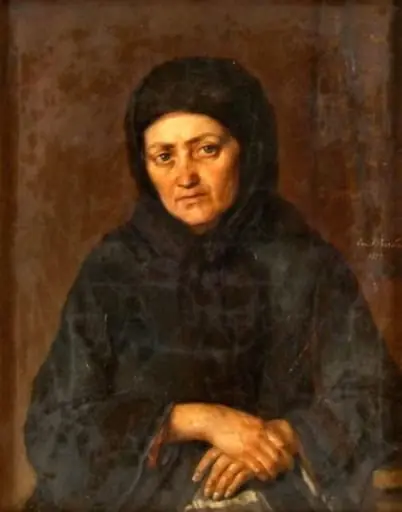
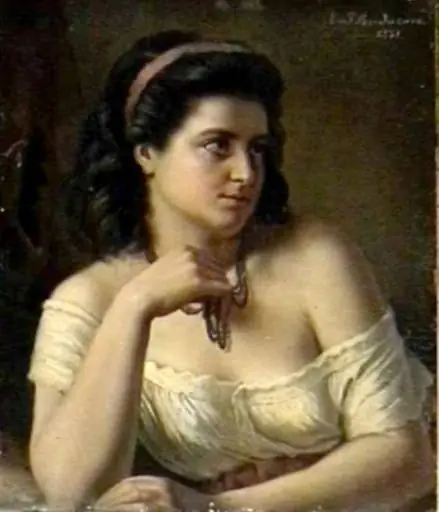
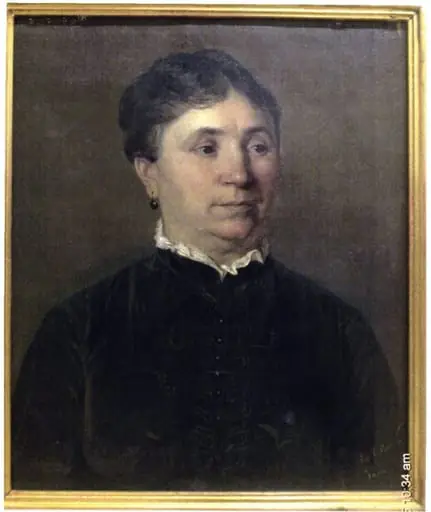
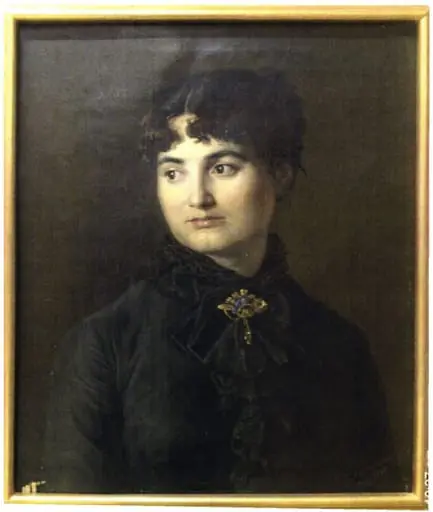
Born in a generation when Romanian painters put paint on canvas instead of icons, Emanoil Bardasare-Panaiteanu made small, direct portraits in oil.