Artwork
Vue de Belgrad la ruine du Prince Eugene
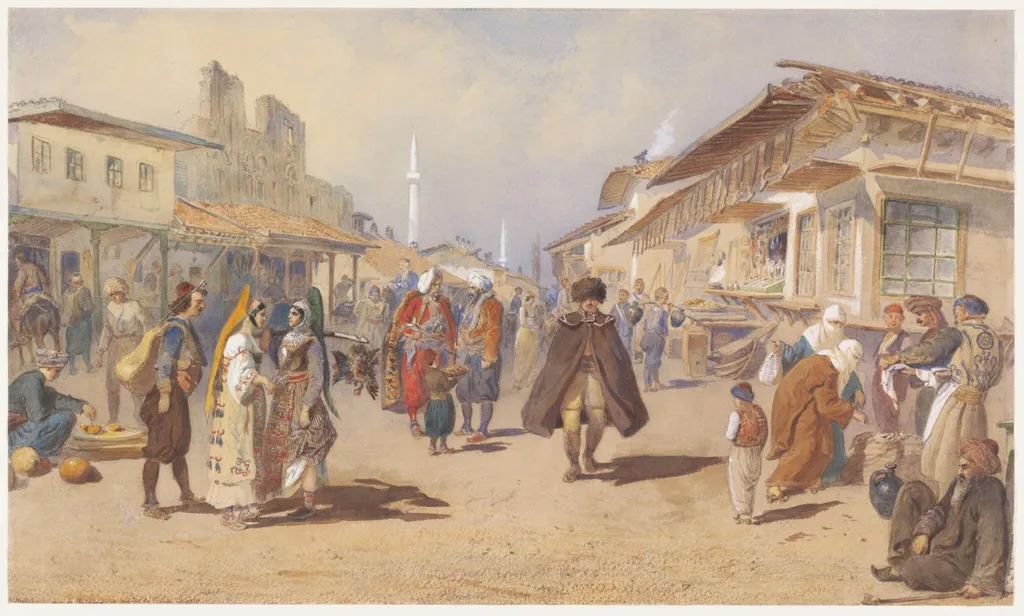
Vue de Belgrad la ruine du Prince Eugene is a watercolor work on paper by the Impressionist artist Karl Goebel. It dates from 1865 and is held in the collection of the Victoria and Albert Museum.
About this work
The artist captures a mix of people: Christian Serbs in traditional dress and Muslim Turks going about daily life.
This watercolor shows a busy street scene in Belgrade around 1865. The artist captures a mix of people: Christian Serbs in traditional dress and Muslim Turks going about daily life. The ruins of a fortress gate stand in the background.
The artist, Karl Goebel, blends Impressionist and Realist styles in his work. It’s a snapshot of a city caught between old traditions and change.
Want to see more? Look up the artist: Goebel, Karl.
Overview
Vue de Belgrad la ruine du Prince Eugene is a watercolour by Karl Goebel, depicting a mid-19th-century street scene in Belgrade, then a culturally diverse city under Ottoman influence. The work captures the coexistence of Christian Serbs and Muslim Turks amidst the remnants of a historical fortress.
Subject & Meaning
The scene conveys the everyday life of Belgrade's mixed population around 1865. Christian Serbs, identifiable by traditional attire such as elaborate headdresses and fur hats, interact with Muslim Turks, distinguished by yashmaks and Ottoman dress. The ruins of Prince Eugene's Gate in the background symbolize the city's complex historical layers.
Technique & Style
Goebel executed the piece in watercolour, blending Impressionist spontaneity with Realist attention to detail. This stylistic fusion captures the vibrant, dynamic atmosphere of the street while accurately portraying the architectural and cultural specifics of the scene.
History & Provenance
Created during Goebel's travels to Belgrade in the 1860s, the watercolour reflects the artist's interest in landscapes and local life scenes. The specific provenance and ownership history of the piece are not detailed here.
Context
Belgrade's cultural diversity and historical significance are highlighted against the backdrop of the fading Ottoman presence (the garrison remained until 1867) and the legacy of Austrian influence, as embodied by the ruins of Prince Eugene's Gate, built in 1717 to commemorate an Austrian victory.
Legacy
While specific legacy details of 'Vue de Belgrad' are not provided, the work contributes to the visual record of 19th-century Belgrade, offering insights into the city's social and architectural landscape during a period of transition.
Artist & collection

Artist
Karl Immanuel Eberhard Ritter von Goebel FRS FRSE was a German botanist. His main fields of study were comparative functional anatomy, morphology, and the developmental physiology of plants under the influence of both…

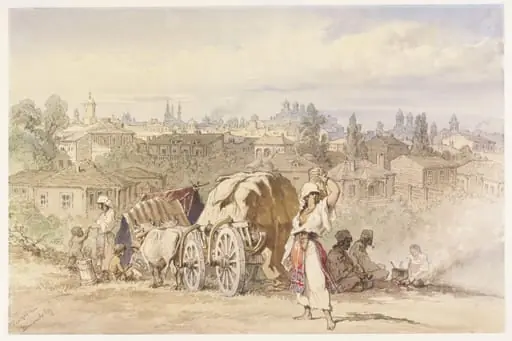 A Gipsy Encampment at Filaret outside Bucharest
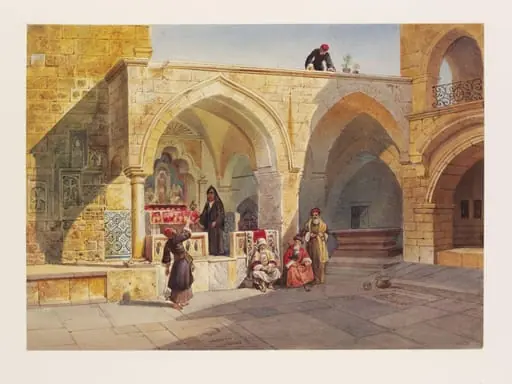 Court of the House of Caiaphus
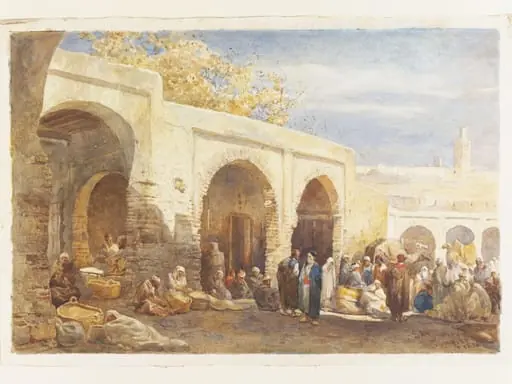 The Corn Market, Tangier
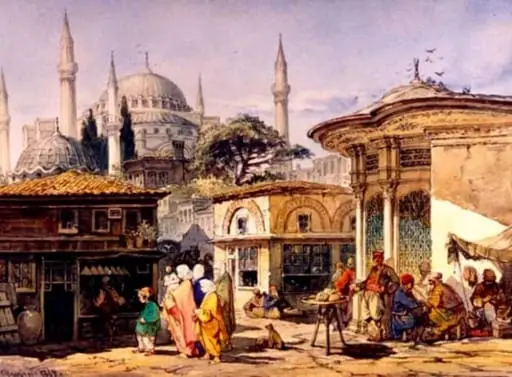 Stradă din Constantinopol
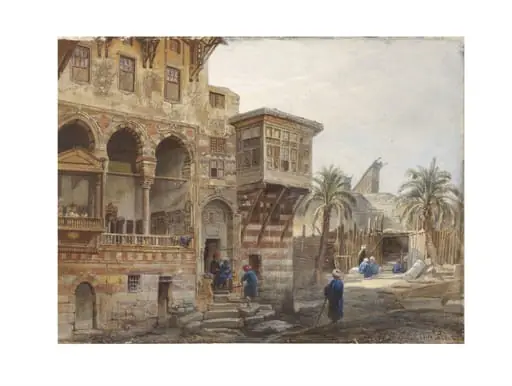 Exterior of the House of the Memluk Raduan Bey, Cairo
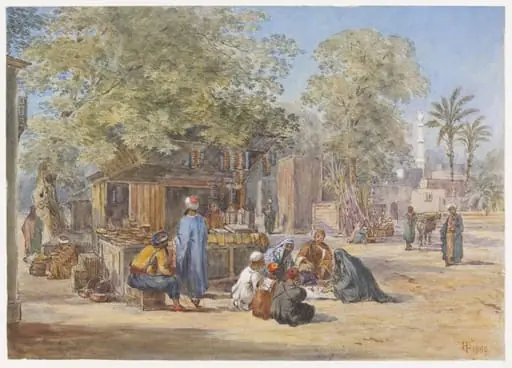 Egyptian Village Scene
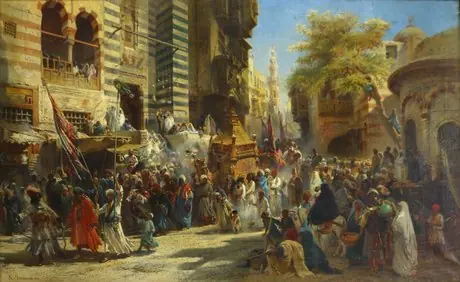 Muhammed's carpet moving from Mecca to Cairo
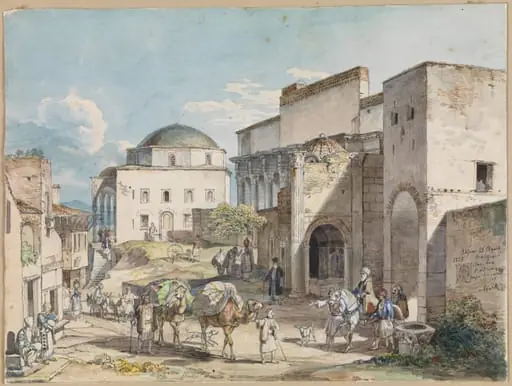 Gadeparti i Athen. Med Hadji Hazekis' palads og Tzistarakis Moskeen
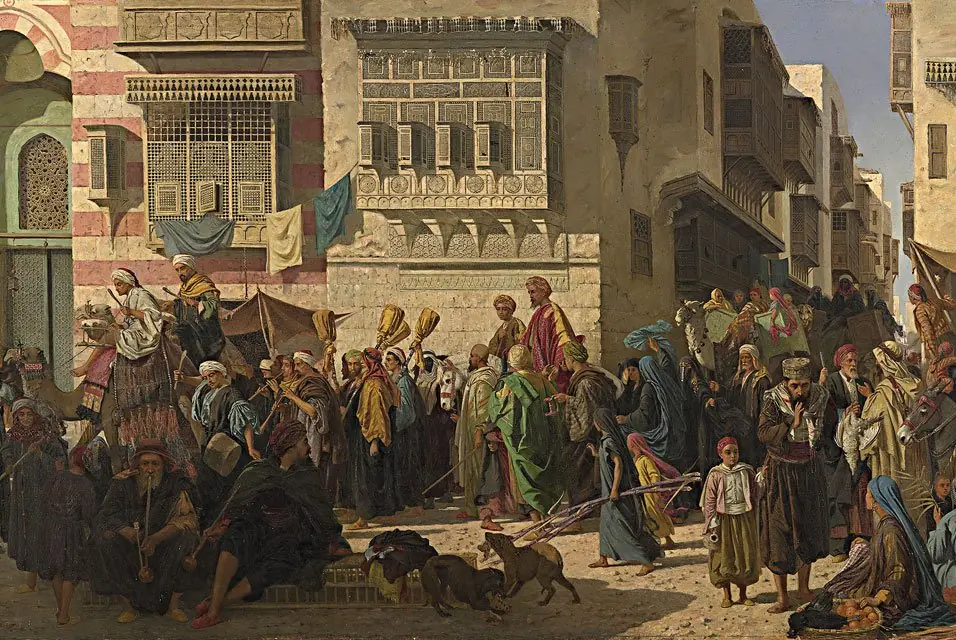 A Sheikh and his son entering Cairo on their return from a pilgrimage to Mecca
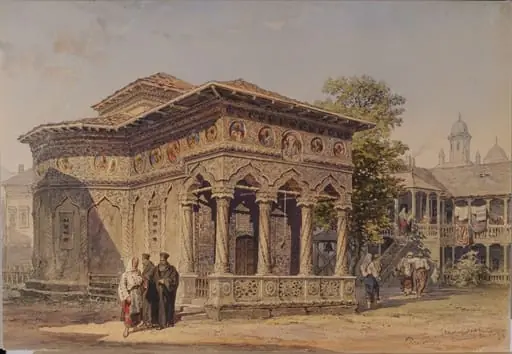 Biserica Stavropoleos
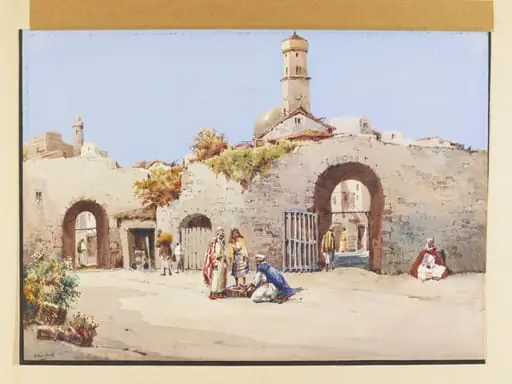 The City Walls, Jaffa, Palestine
 A Turkish Coffee-House, Constantinople