Artwork
The Fugitives
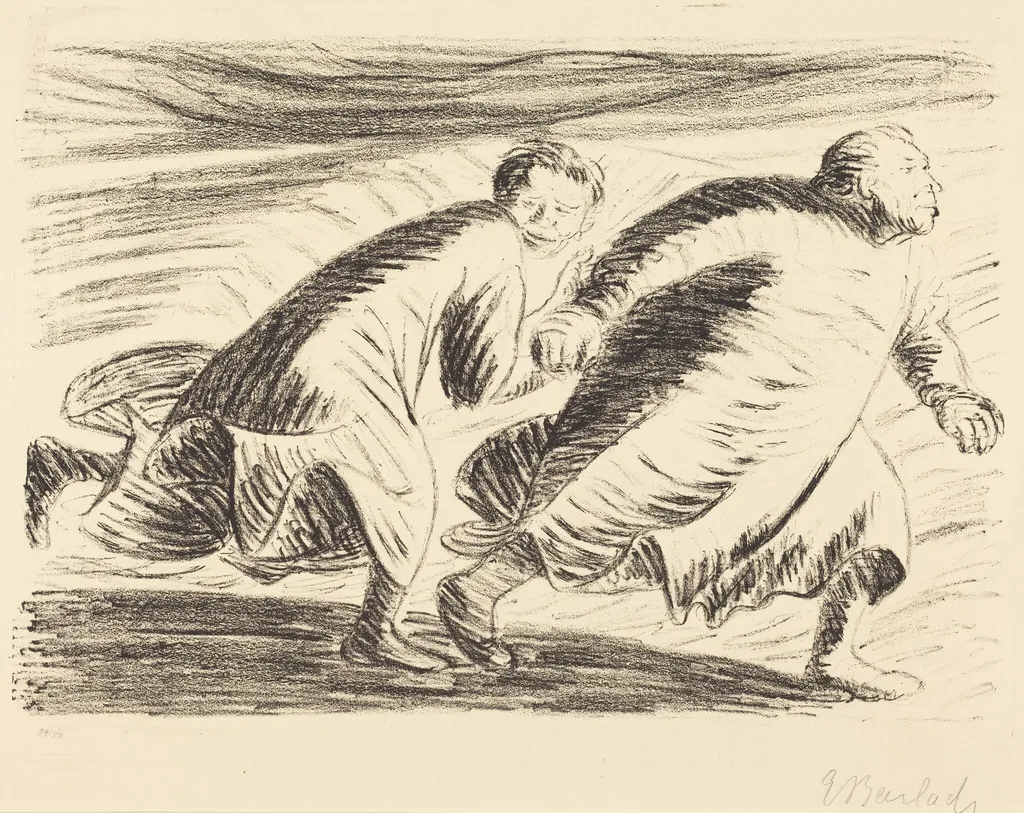
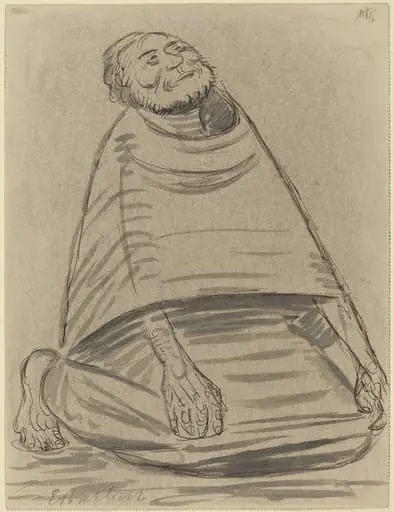
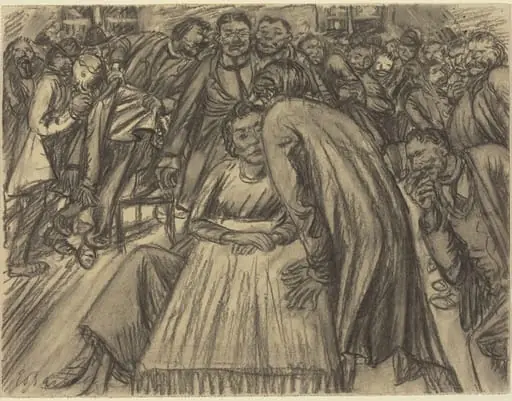
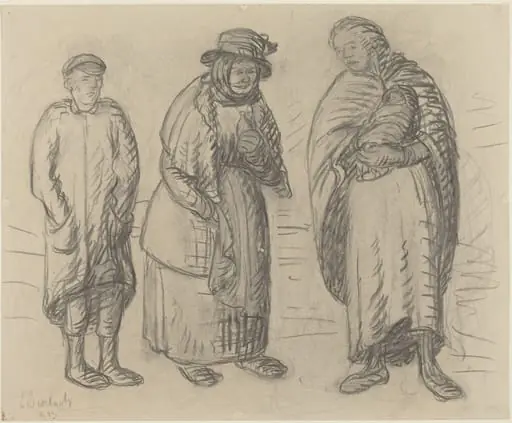
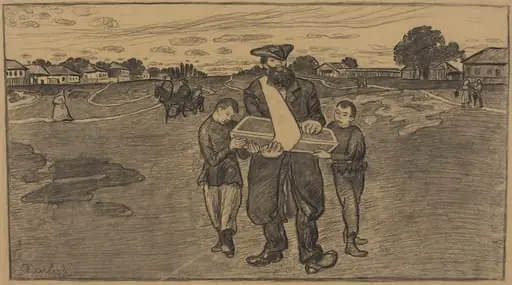
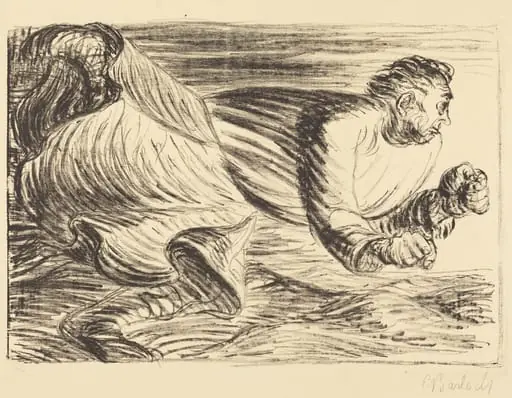
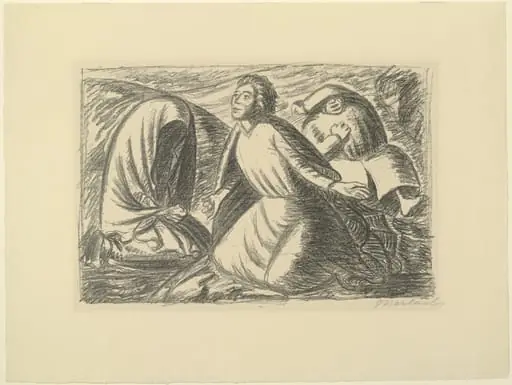
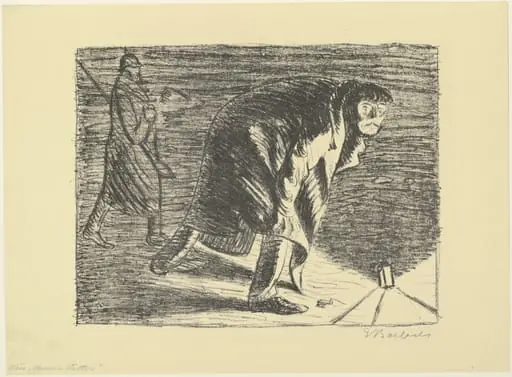
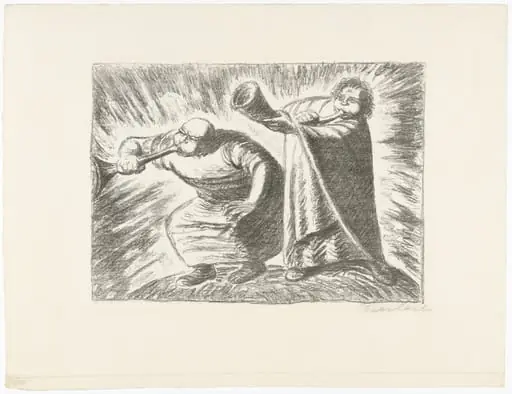
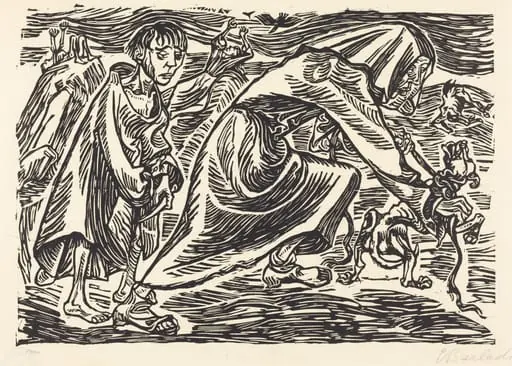
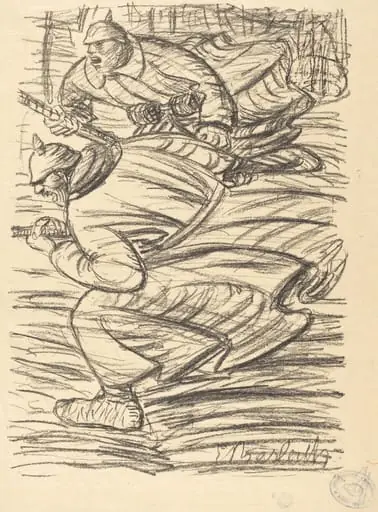
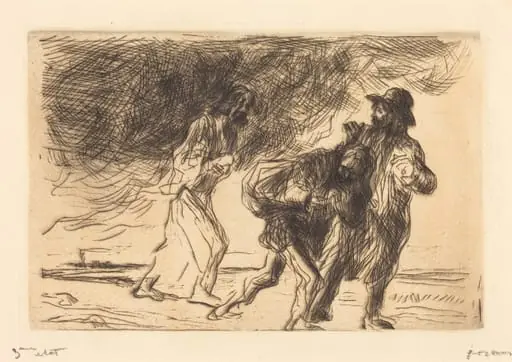
The Fugitives is an ink print by Ernst Barlach. It dates from 1916 and is held in the collection of the National Gallery of Art.
About this work
Overview
Unlike traditional illustrations, it captures fleeting motion rather than static narrative, emphasizing urgency over detail.
Created in 1916, *The Fugitives* is a lithograph by German artist Ernst Heinrich Barlach, produced during his engagement with the emotional aftermath of World War I. The work belongs to a series of prints in which Barlach translated his growing disillusionment with war into visual form. Unlike traditional illustrations, it captures fleeting motion rather than static narrative, emphasizing urgency over detail.
Subject & Meaning
Two figures sprint across the page—one bearing a child on their back, the other clutching a small object—suggesting flight from danger. The absence of facial features and precise clothing strips the scene of individual identity, transforming it into a universal image of displacement. The work conveys the desperation of civilians caught in war’s chaos, prioritizing emotional resonance over literal representation.
Technique & Style
Barlach employed rapid, angular lithographic lines to mimic the instability of movement. The ink is applied with deliberate roughness, avoiding refinement or shading. Forms are reduced to essential contours, with limbs and torsos rendered as dynamic masses. This approach aligns with Expressionist priorities—inner feeling over external accuracy—while retaining the observational grounding of Realism.
History & Provenance
Produced during Barlach’s active years as a war correspondent and artist, *The Fugitives* emerged from his direct exposure to wartime suffering. It was likely circulated among anti-war circles in Germany, though specific early ownership records are sparse. The print was later included in institutional collections that recognized Barlach’s role in documenting civilian trauma through printmaking.
Context
In 1916, as trench warfare entrenched Europe, artists like Barlach turned from idealism toward raw depictions of human endurance. *The Fugitives* reflects a broader shift in German art away from pre-war romanticism toward visceral, socially conscious imagery. It stands alongside other wartime prints that rejected nationalism in favor of empathy for the displaced and vulnerable.
Legacy
The work remains a key example of early 20th-century German printmaking that merged political urgency with formal experimentation. Barlach’s stripped-down style influenced later artists addressing displacement and conflict. Though not widely exhibited during his lifetime, *The Fugitives* is now recognized as a quiet but potent testament to civilian resilience amid war.
Own this work as a print
Artist & collection
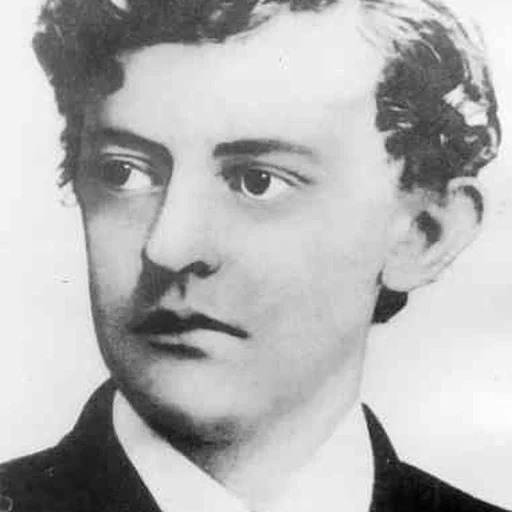
Artist
Ernst Heinrich Barlach (2 January 1870 – 24 October 1938) was a German expressionist sculptor, medallist, printmaker and writer.