Artwork
Brudermord (Cain and Abel)
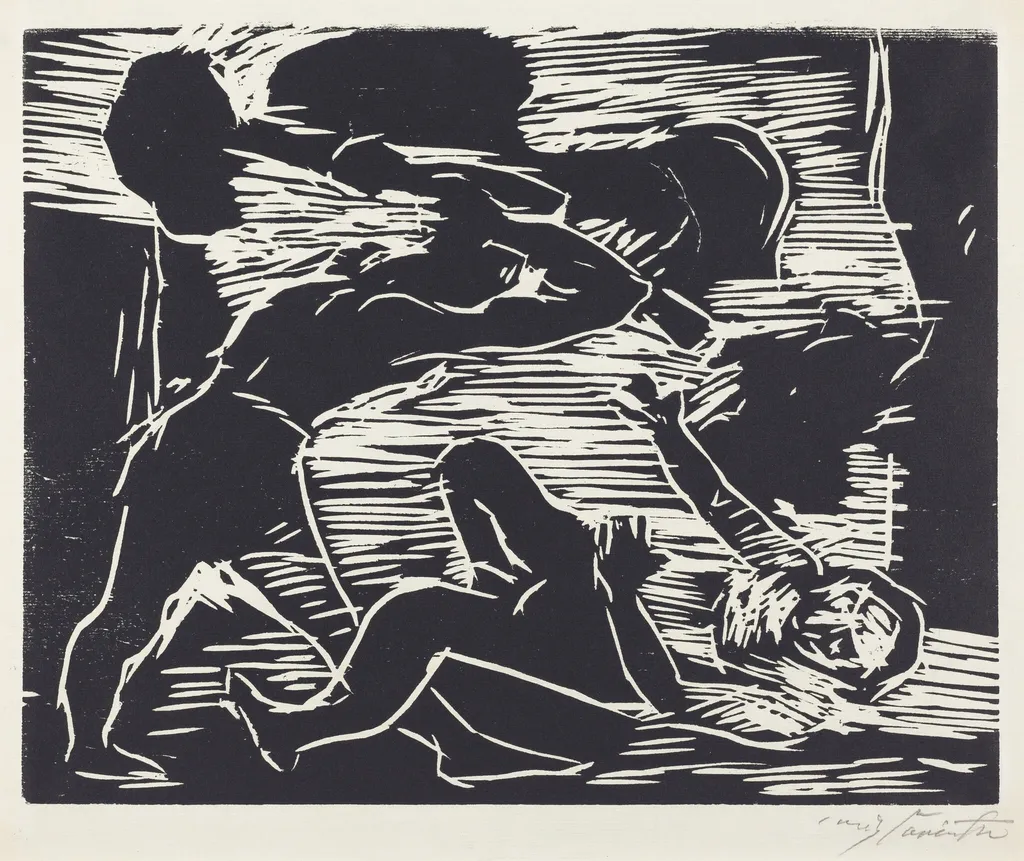
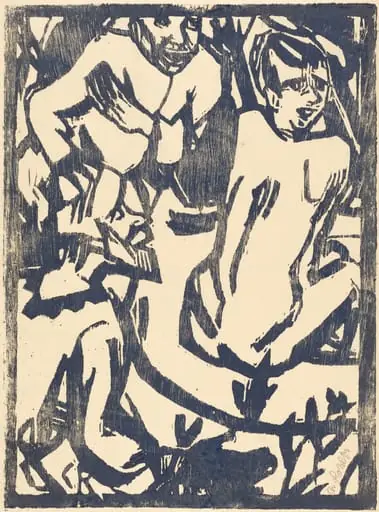
Brudermord (Cain and Abel) is an ink print by Lovis Corinth. It dates from 1919 and is held in the collection of the Rosenwald Collection.
About this work
Overview
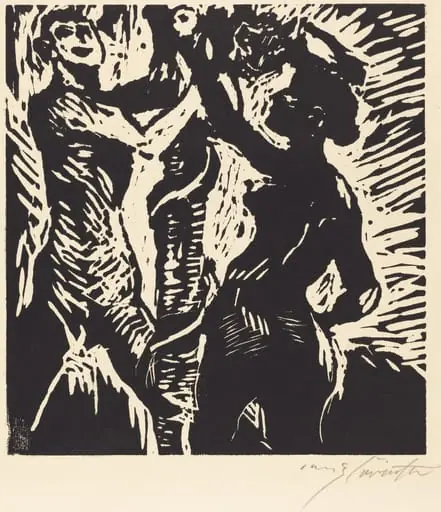
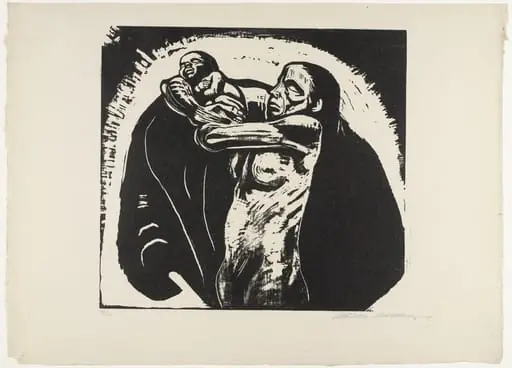
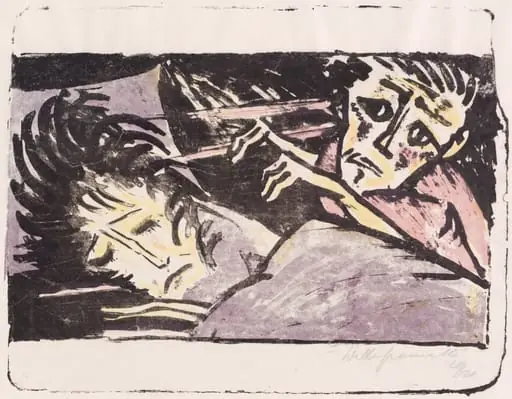
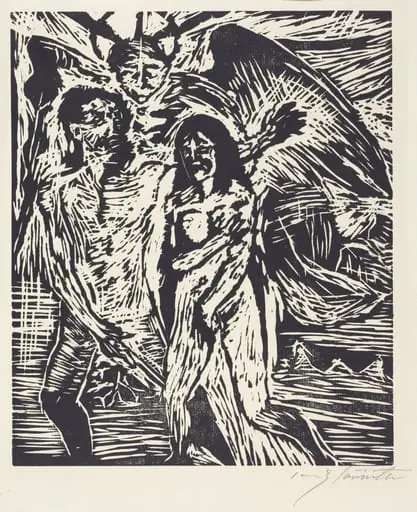
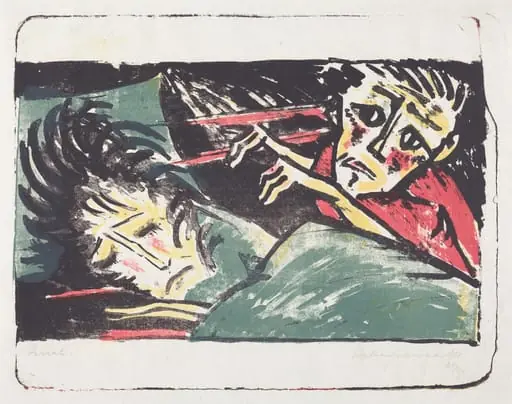
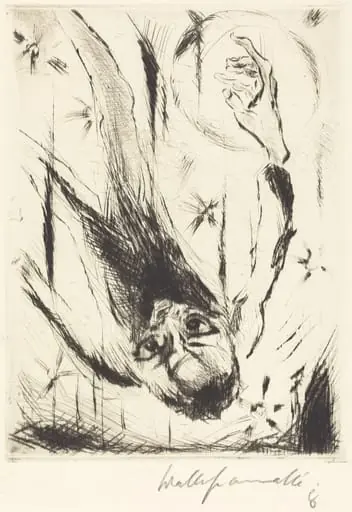
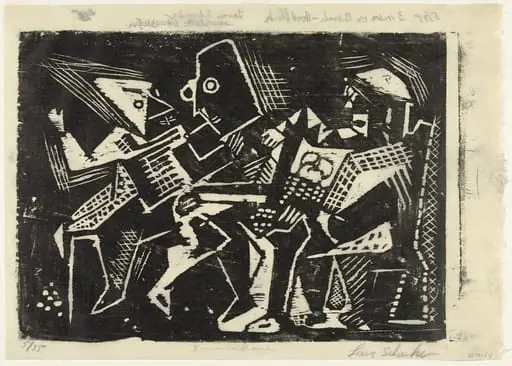
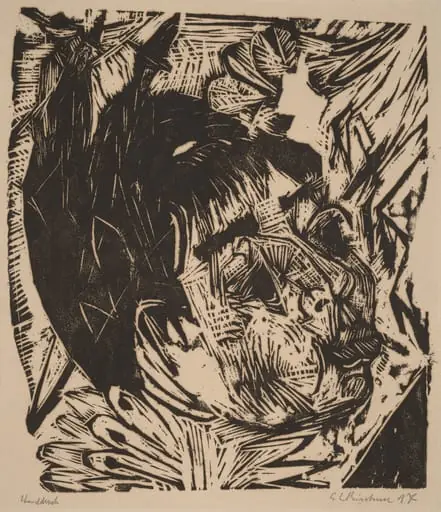
Lovis Corinth’s 1919 black‑and‑white woodcut, titled *Brudermord (Cain and Abel)*, presents a stark, angular confrontation between two male figures. The composition is rendered in high contrast, with jagged lines and sharp chiaroscuro that emphasize the physical tension and emotional turmoil of the scene.
Subject & Meaning
The work visualizes the biblical narrative of Cain and Abel, portraying the brothers in a violent struggle. One figure dominates, clutching the other’s shoulders, while the subordinate figure bends in agony, his head cradled in his hands, suggesting both physical injury and psychological distress.
Technique & Style
Carved entirely from a single wood block, the print displays Corinth’s later graphic approach, characterized by rough, uneven cuts that produce a raw, tactile quality. The stark black ink against the white paper, combined with abrupt, angular forms, reflects the artist’s post‑stroke synthesis of impressionist light and expressionist intensity.
History & Provenance
Corinth, born in 1858, received artistic training in Paris and Munich before becoming a central figure in the Berlin Secession, where he succeeded Max Liebermann as president. After a debilitating stroke in 1911, his style shifted toward a more expressionist vocabulary, a change evident in this 1919 woodcut.
Context
Created in the aftermath of World War I, the piece resonates with the broader cultural climate of disillusionment and violence. Its biblical subject, rendered in a modernist visual language, aligns with contemporary efforts to reinterpret traditional narratives through the lens of early‑twentieth‑century anxieties.
Artist & collection

Artist
Lovis Corinth was a German artist and writer whose mature work as a painter and printmaker realized a synthesis of impressionism and expressionism.