Artwork
Madonna and Child
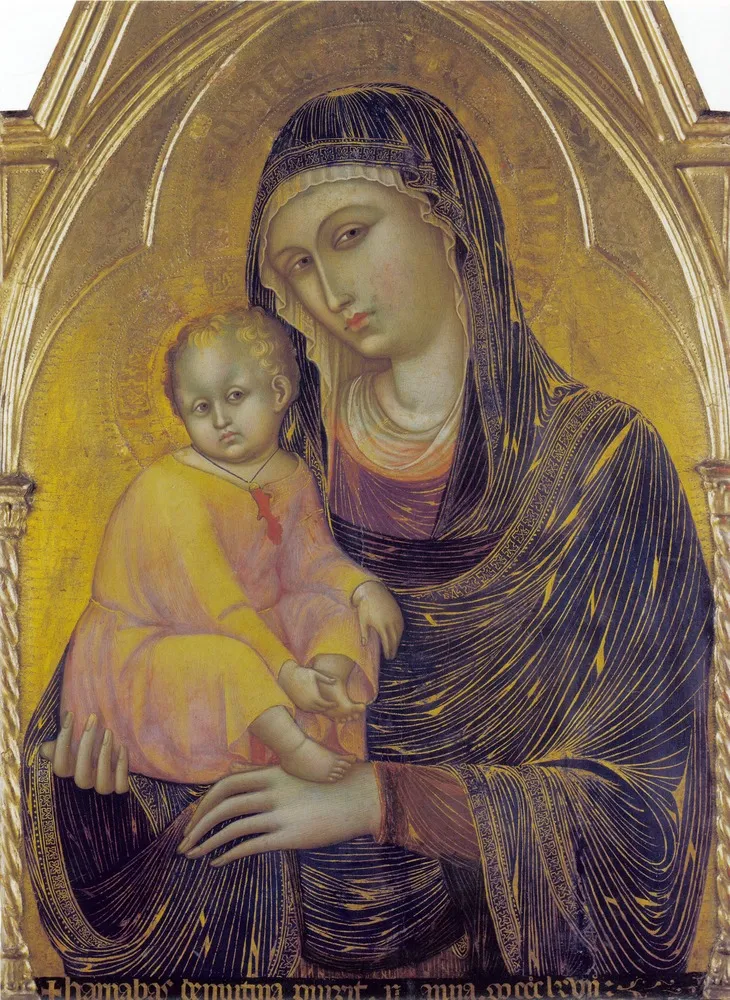
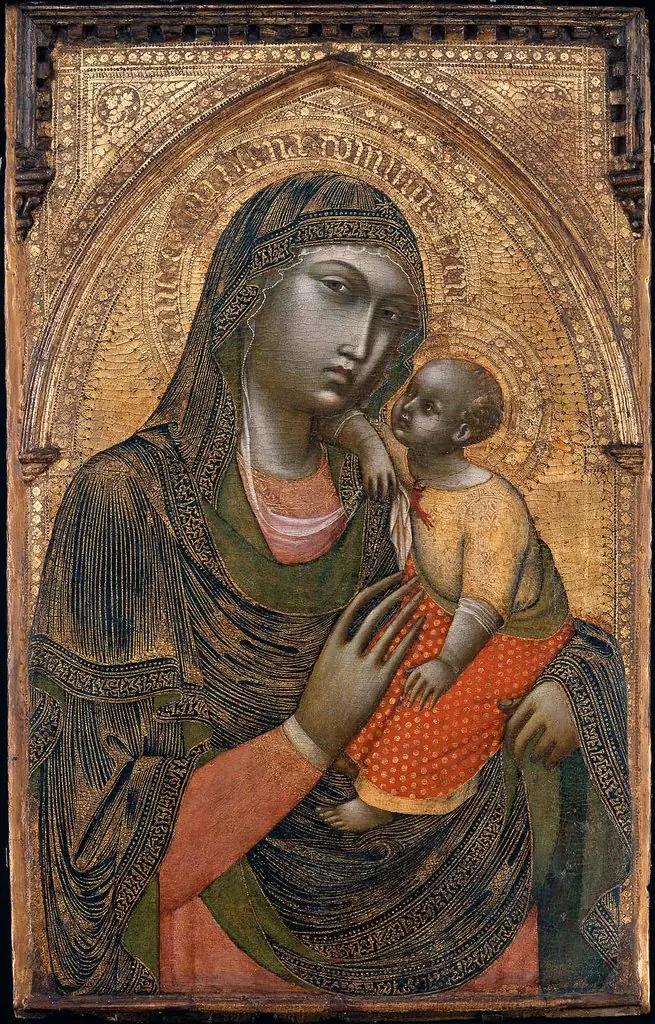
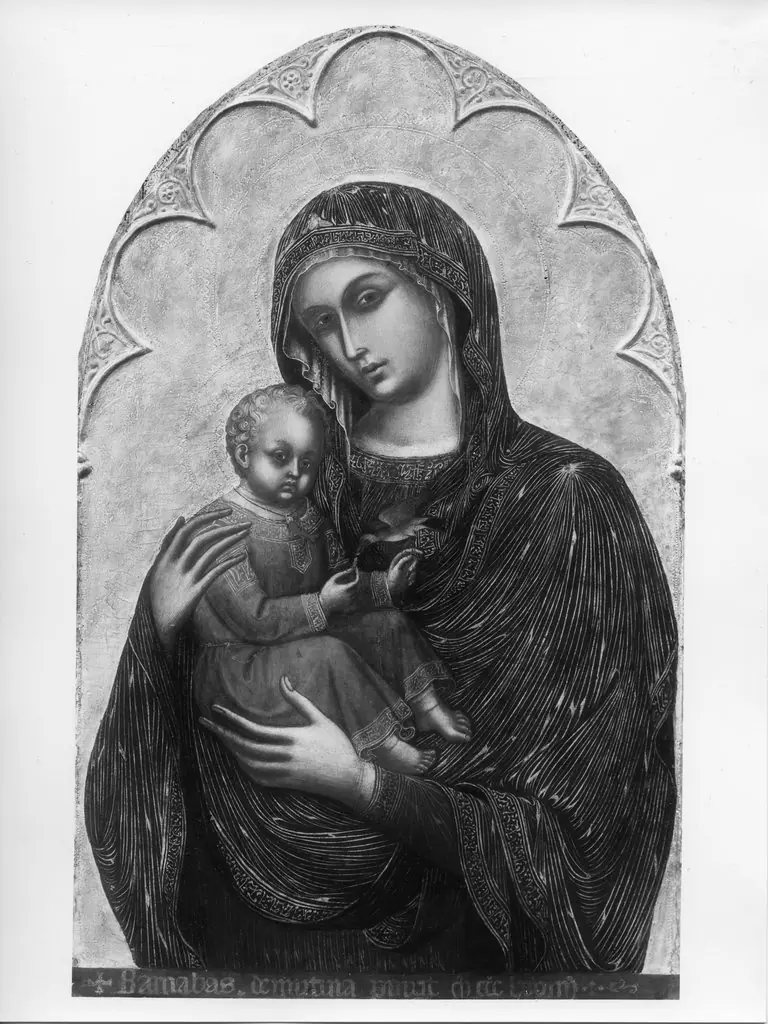
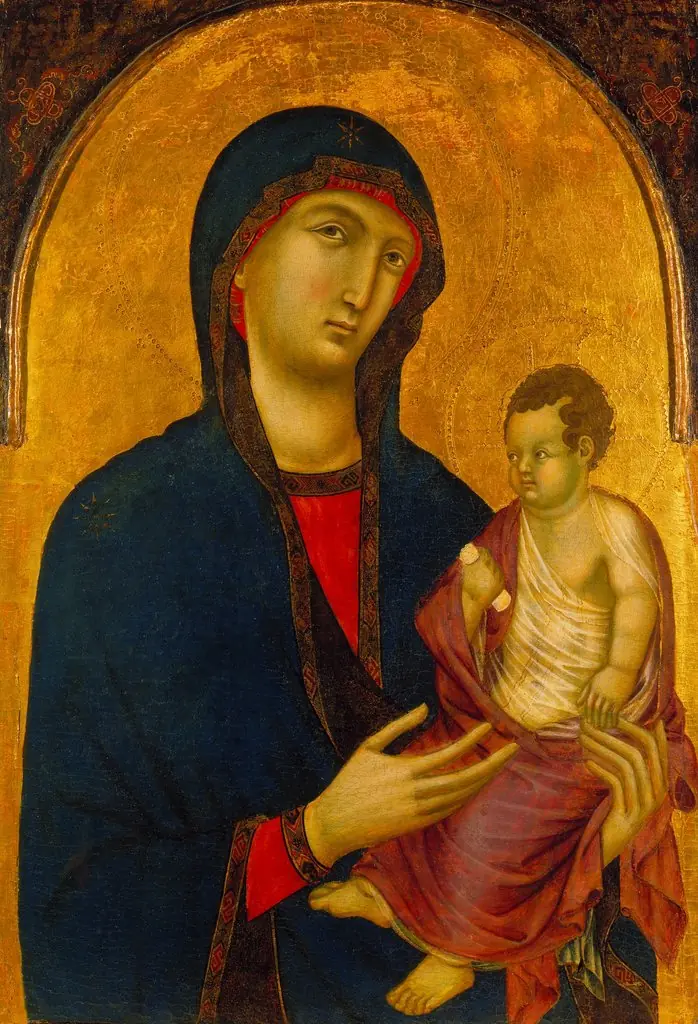
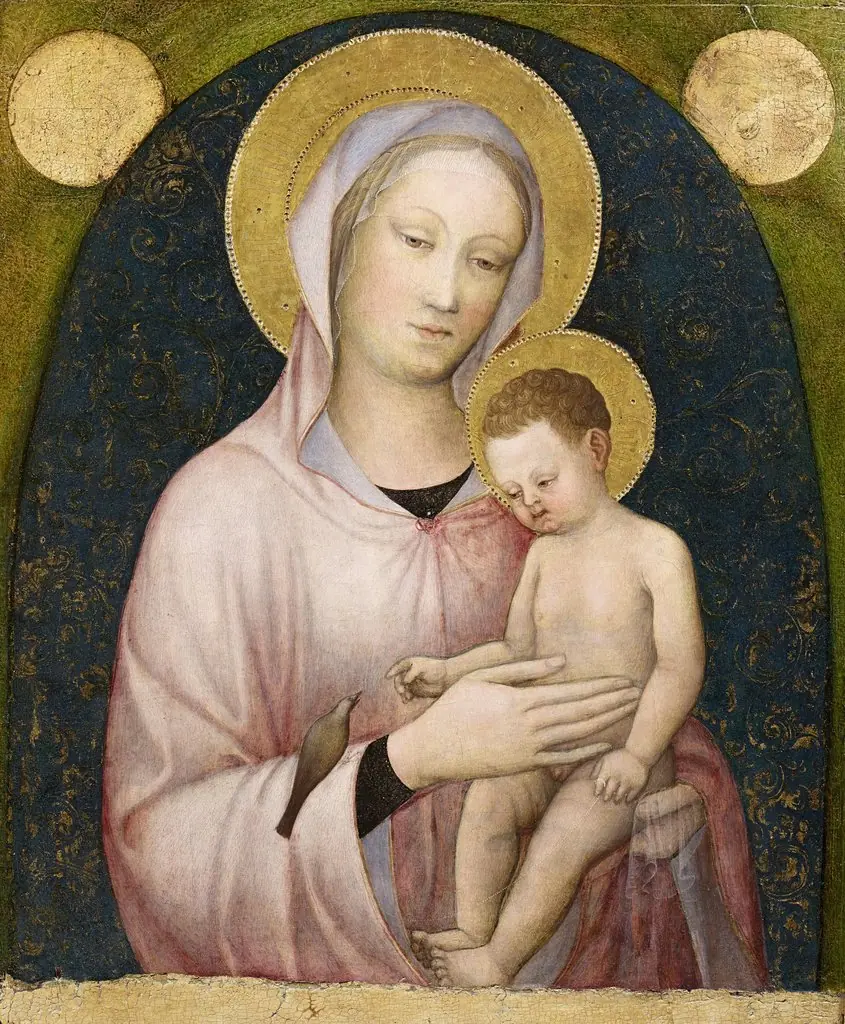
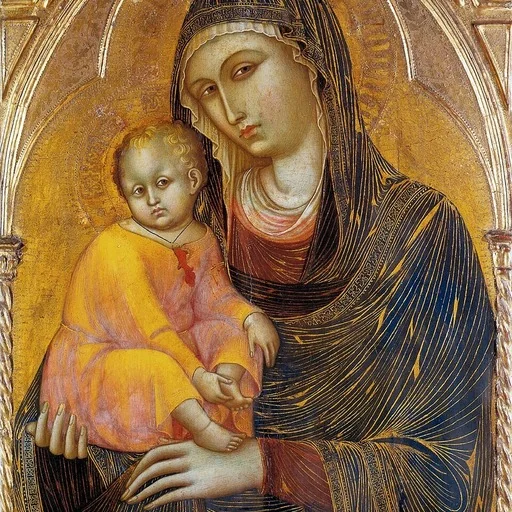
Madonna and Child is a mixed painting by the Byzantine icon painting artist Barnaba da Modena. It dates from 1367 and is held in the collection of the Städel Museum.
About this work
Overview
Executed in tempera and gold leaf on wood, it belongs to the late Byzantine tradition adapted in northern Italy.
Painted in 1367 by Barnaba da Modena, this panel depicts the Virgin Mary with the infant Jesus. Executed in tempera and gold leaf on wood, it belongs to the late Byzantine tradition adapted in northern Italy. Barnaba, a prominent figure in Lombard painting, infused the rigid conventions of Byzantine iconography with subtle regional sensibilities, resulting in a devotional image that balances formality with quiet humanity.
Subject & Meaning
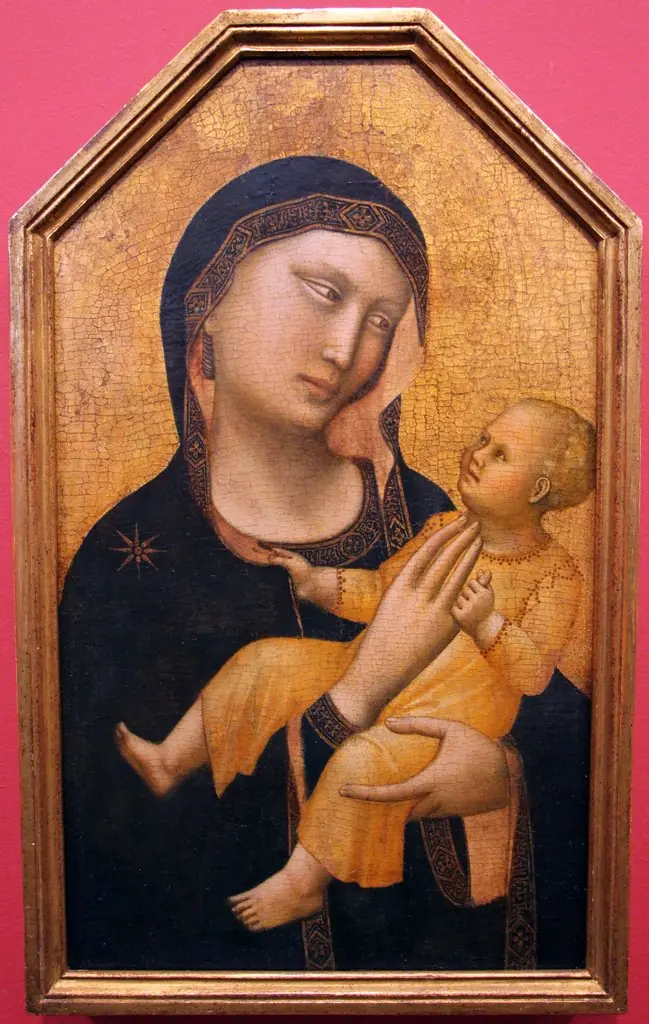
The Virgin Mary, seated and crowned, holds the Christ Child on her lap in a pose rooted in the Hodegetria type, where she gestures toward him as the source of salvation. The Child, gazing directly outward, conveys a solemn awareness beyond his years, reinforcing his divine role. The tender yet restrained interaction between mother and son invites contemplation, emphasizing spiritual presence over emotional display.
Technique & Style
Barnaba employed gold leaf for the background and decorative details, enhancing the sacred atmosphere. The figures are rendered with precise, linear contours and subtle modeling through chiaroscuro, giving them a sense of volume without full naturalism. The Virgin’s dark robe, accented with fine gold lines, contrasts with the Child’s warm yellow garment, creating visual harmony while directing focus to their faces and hands.
History & Provenance
The painting was created in the mid-14th century in Lombardy and remained within regional ecclesiastical or private collections before entering the Städel Museum’s holdings. Its survival in good condition reflects its continued veneration and careful preservation. Documentation linking it to Barnaba’s workshop is consistent with stylistic comparisons to other signed works from the period.
Context
In 14th-century Lombardy, religious imagery served both liturgical and personal devotion. Artists like Barnaba bridged the enduring Byzantine style with emerging Italian tendencies toward spatial awareness and emotional nuance. This work reflects a transitional moment in Italian painting, where symbolic representation still dominated, yet hints of humanized expression began to emerge.
Legacy
Barnaba da Modena’s *Madonna and Child* exemplifies the persistence of Byzantine conventions in northern Italy well into the Gothic period. While later Renaissance artists moved toward greater naturalism, this painting preserves the spiritual gravity of earlier traditions. Its presence in the Städel Museum allows continued study of how regional workshops adapted sacred iconography before the full rise of humanist ideals.
Artist & collection
Artist
Barnaba da Modena (c. 1328-c.1386) was a mid-14th-century Italian painter who painted in the style of Byzantine art. He is considered the first Lombard painter of note and was active in Lombardy, Piedmont, and Pisa in Tuscany.