Artwork
The Martyrdom of Saint Margaret of Antioch
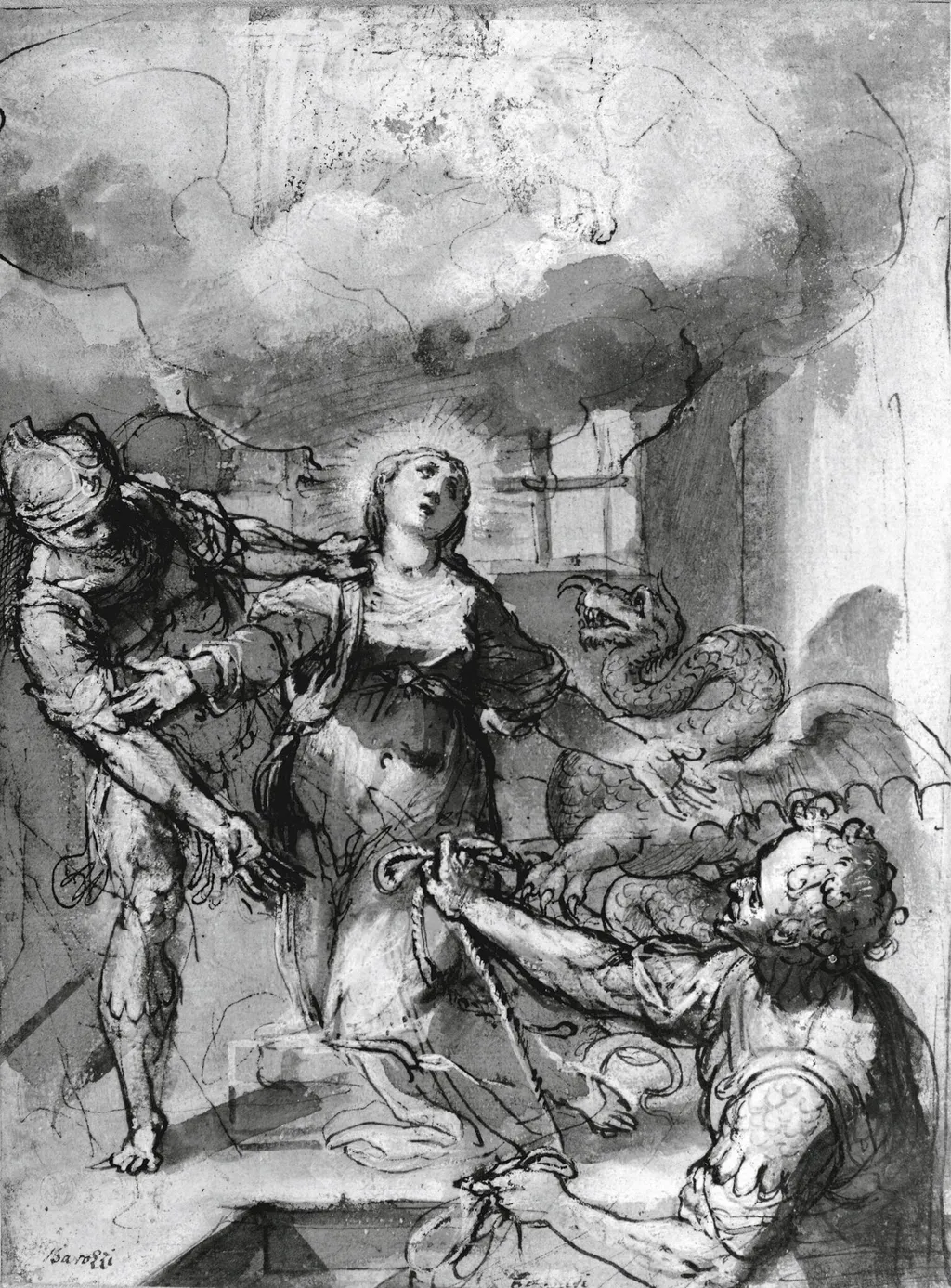
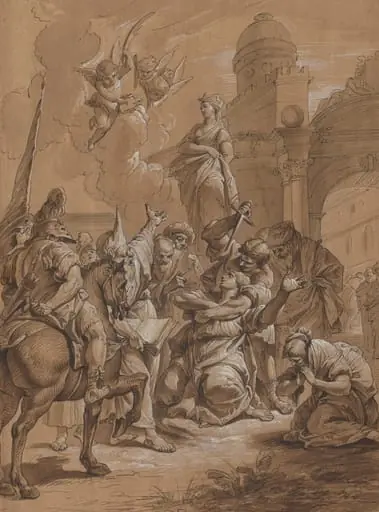
The Martyrdom of Saint Margaret of Antioch is a drawing by the Renaissance artist Federico Barocci. It dates from 1556 and is held in the collection of the Victoria and Albert Museum.
About this work
Overview
It depicts the martyrdom of Saint Margaret of Antioch, a Christian saint executed in the fourth century for refusing to renounce her faith.
This ink drawing, attributed to Federico Barocci, is believed to be a study for a now-lost altarpiece commissioned in 1556 in Urbino. It depicts the martyrdom of Saint Margaret of Antioch, a Christian saint executed in the fourth century for refusing to renounce her faith. The composition centers on her struggle against a monstrous dragon, a symbol from her hagiography. Executed in expressive line and tonal wash, the work reflects Barocci’s early development as an artist.
Subject & Meaning
Saint Margaret, according to legend, was swallowed by a dragon sent to kill her for her faith, but emerged unharmed after the devil’s body burst open. The drawing captures her moment of torment, her body twisted in anguish as the dragon looms nearby. Her expression conveys suffering without surrender, emphasizing spiritual endurance over physical defeat. The dragon’s presence transforms the scene from mere violence into a theological narrative of divine protection.
Technique & Style
Barocci employs fluid, incisive pen lines and subtle ink washes to model form and convey emotional intensity. The figures are rendered with dynamic tension, their musculature and drapery animated by rhythmic contours. The shading is deliberate, enhancing volume and drama without obscuring detail. The style shows clear engagement with Mannerist conventions, particularly in the elongated proportions and heightened emotional expression, echoing contemporaries like Zuccaro.
History & Provenance
The drawing is linked to a lost painting commissioned in Urbino in 1556, during Barocci’s formative years. It likely served as a preparatory study for an altarpiece intended for local devotion. While the final painting has not survived, this sheet remains as a key witness to his early compositional thinking. Its survival suggests it was valued by the artist or his circle, possibly kept as a reference or autograph work.
Context
Barocci created this work during a period of intense artistic exchange in central Italy, following his time in Rome where he encountered Mannerist innovations. Urbino, though culturally diminished from its Renaissance peak, still maintained religious patronage networks. This drawing reflects the convergence of local devotional needs with broader stylistic currents, positioning Barocci as a bridge between Mannerism and emerging naturalism.
Legacy
Though the original painting is lost, this drawing preserves Barocci’s early approach to sacred narrative—emphasizing psychological depth and physical realism. It anticipates his later mature style, marked by emotional clarity and luminous color. As one of the few surviving preparatory works from this phase, it offers insight into his creative process and the evolution of Counter-Reformation visual piety.
Artist & collection
Artist
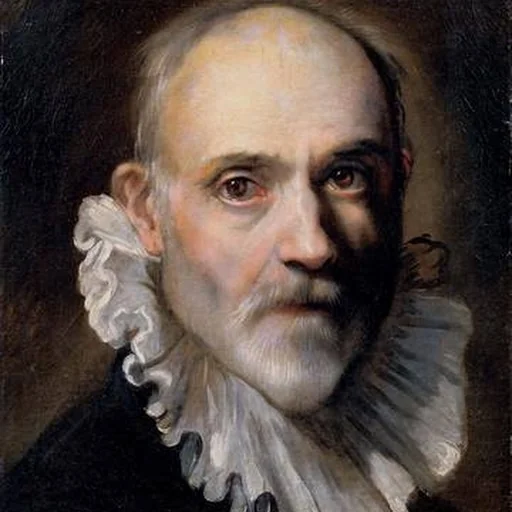
Federico Barocci (also written Barozzi) (c. 1535 – 30 September 1612) was an Italian Renaissance painter and printmaker. His original name was Federico Fiori, and he was nicknamed Il Baroccio. His work was highly…

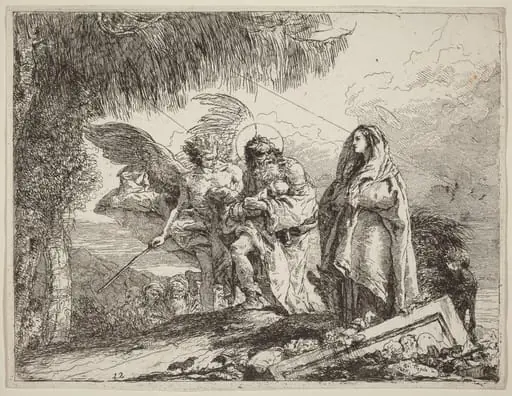 The Flight, Holy Family Walking with Angel
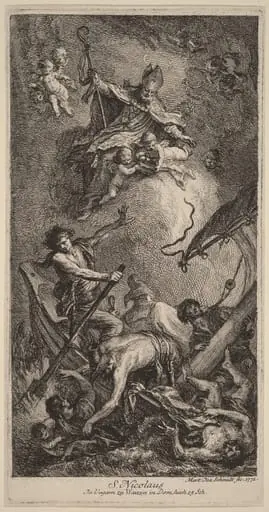 Saint Nicholas Rescuing Sailors
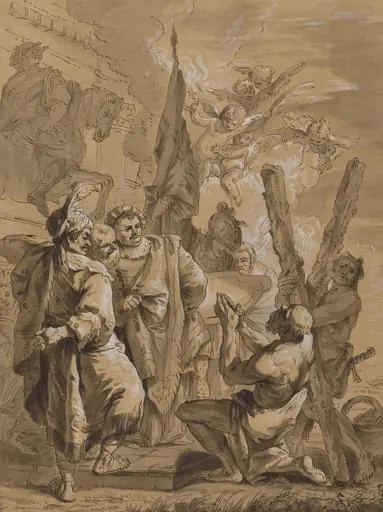 Martyrdom of Saint Andrew
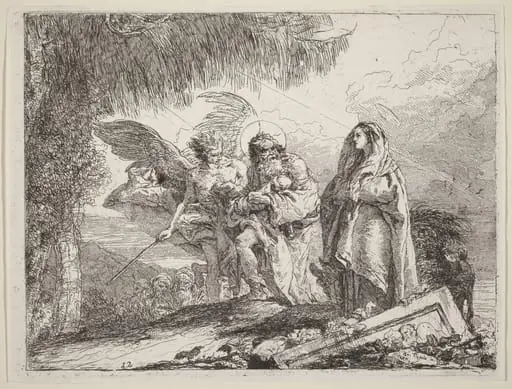 The Flight, Holy Family Walking with Angel
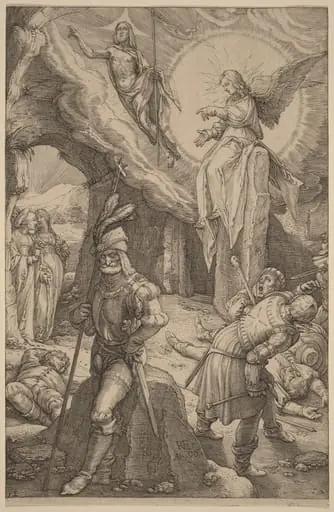 The Resurrection
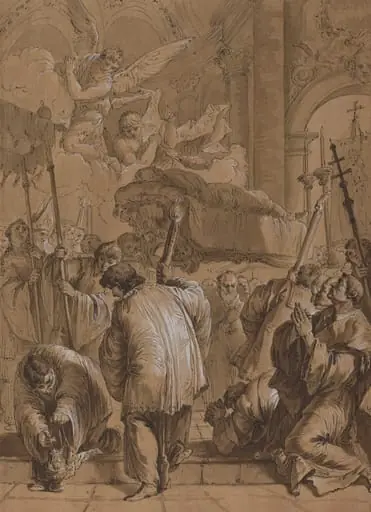 Funeral Procession of a Saint with Angels
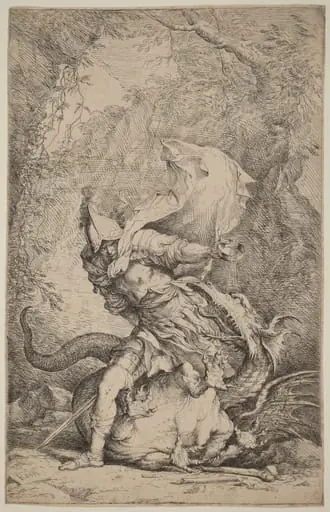 Jason and the Dragon
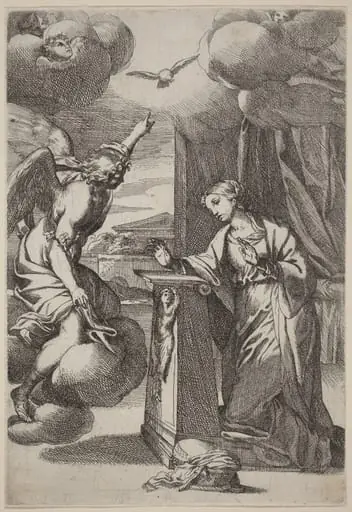 The Annunciation
![The Birth of Christ [verso], by German 16th Century](https://artifactworldgallery.com/img/german-16th-century--the-birth-of-christ-verso--76b597791431f5d1-w320.webp) The Birth of Christ [verso]
The Birth of Christ [verso]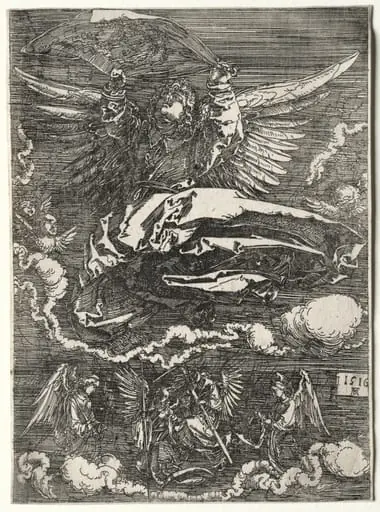 The Angel with the Sudarium
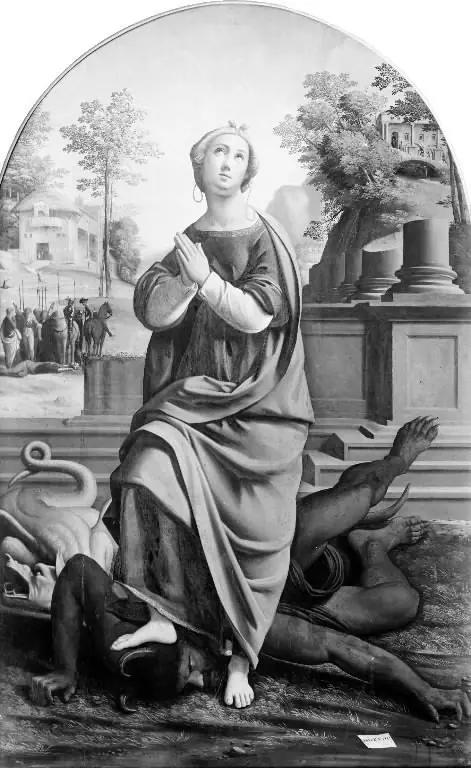 St Margaret
 Martyrdom of a Female Saint