Artwork
Martyrdom of a Female Saint
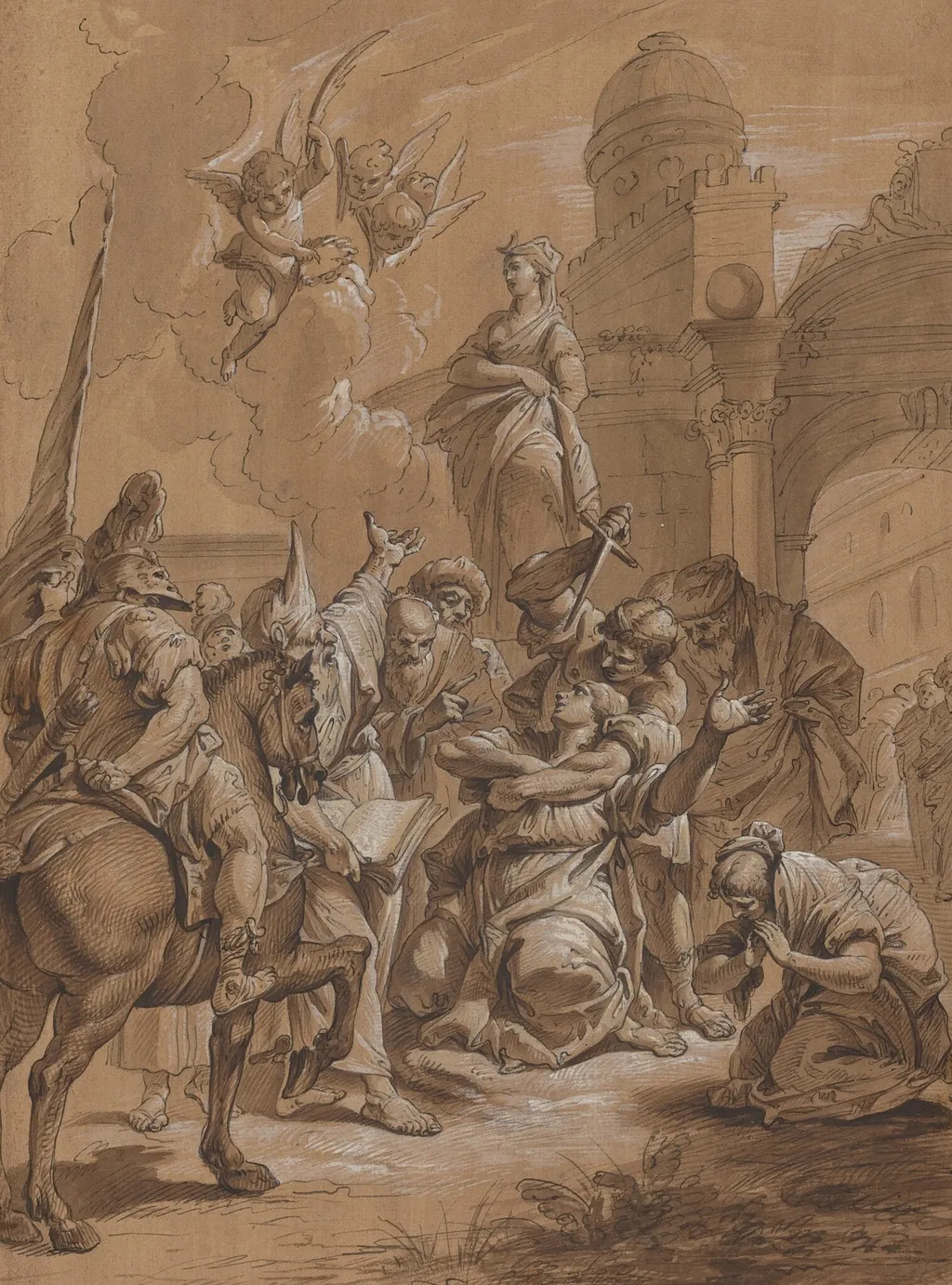
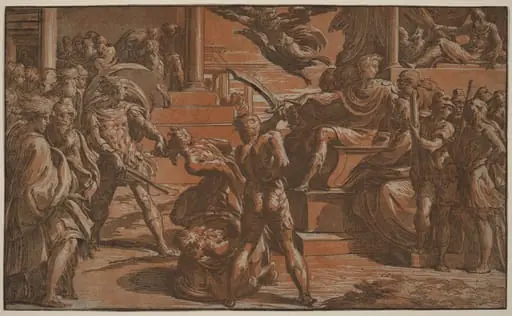
Martyrdom of a Female Saint is an ink drawing by the Baroque artist Unknown. It dates from 1701 and is held in the collection of the National Gallery of Art. This drawing captures a moment of religious sacrifice through ink and wash on prepared paper.
About this work
Overview
The composition centers on a female saint amid a crowd, with architectural elements and a hovering cherub reinforcing its spiritual gravity.
This drawing captures a moment of religious sacrifice through ink and wash on prepared paper. Executed in earthy browns with selective white highlights, it employs chiaroscuro to heighten emotional tension. The composition centers on a female saint amid a crowd, with architectural elements and a hovering cherub reinforcing its spiritual gravity. The medium and technique align with Baroque draftsmanship, emphasizing movement and dramatic contrast.
Subject & Meaning
The scene portrays the martyrdom of a female saint, her poised stance contrasting with the agitation of surrounding figures. A cherub above suggests divine presence, while a mounted man pointing toward her may indicate witness or judgment. The architecture in the background evokes sacred space, possibly a temple or church, anchoring the event in a sacred context. The narrative implies endurance in the face of persecution.
Technique & Style
The artist used pen and brush with brown ink, layered with washes to model form and depth. White highlights accentuate key surfaces, such as fabric folds and the cherub’s wings. The handling of light and shadow follows Baroque principles, creating volume and emotional intensity. The preparatory nature of the medium suggests it was a study for a larger work, not a finished painting.
History & Provenance
The drawing’s origin remains undocumented, though its style and materials are consistent with 17th-century Italian or Flemish workshop practices. No known collector or institutional record precedes its current attribution. Its survival as a standalone sheet indicates it was valued as a compositional study, possibly preserved by a student or collector of devotional imagery.
Context
Created during the height of the Baroque period, the work reflects the Counter-Reformation’s emphasis on emotional religious narratives. Martyrdom scenes were common in Catholic art, intended to inspire piety through visceral depiction. The inclusion of celestial and earthly figures aligns with contemporary iconographic conventions, where divine intervention and human suffering coexisted in visual storytelling.
Legacy
Though unsigned and unattributed, the drawing exemplifies the expressive potential of ink drawings in Baroque religious art. It survives as a testament to the period’s focus on dramatic narrative and spiritual intensity, preserved not as a finished work but as a compelling record of artistic process and devotional intent.
Artist & collection

 Domestic Scene
 Giacomo and Cardinal Marco, investing Andrea, Abbot of San Zeno, with his Benefice
 The Nymph of Fontainebleau
 Portrait of a Woman
 Madonna and Child with Saints in the Enclosed Garden
 Venus and Minerva
 Family Group of Four on Sofa
 Wall painting from Room H of the Villa of P. Fannius Synistor at Boscoreale
 The Raising of Lazarus
 Martyrdom of Saint Andrew
 Funeral Procession of a Saint with Angels
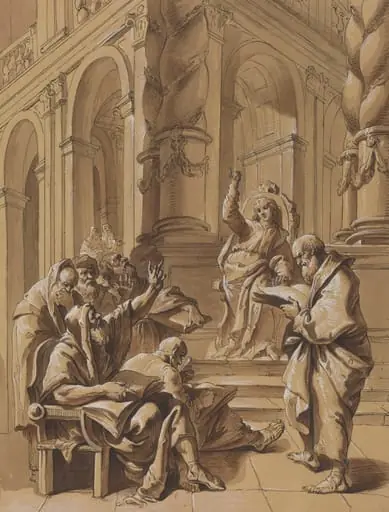 Christ among the Doctors
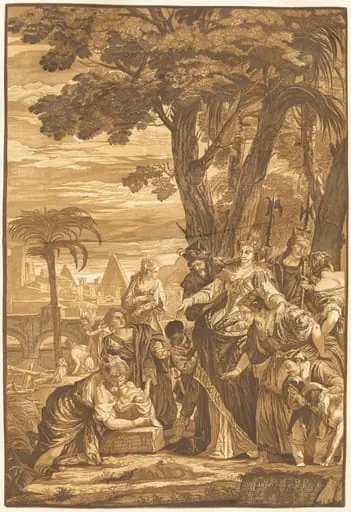 The Finding of Moses
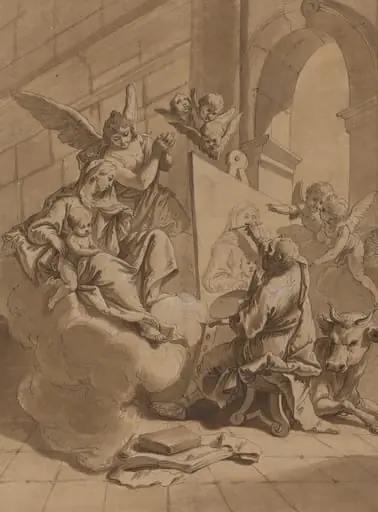 Saint Luke Painting the Virgin
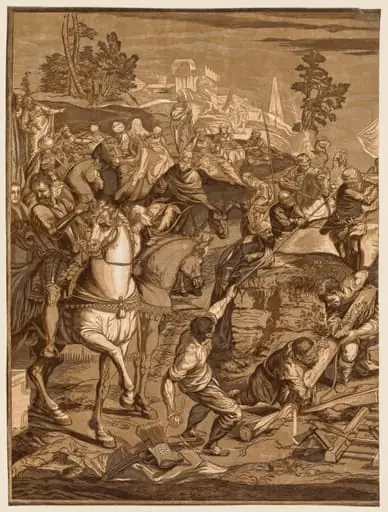 Crucifixion
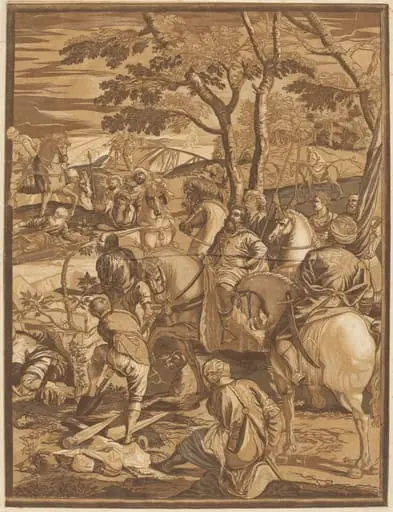 The Crucifixion (Right Panel)
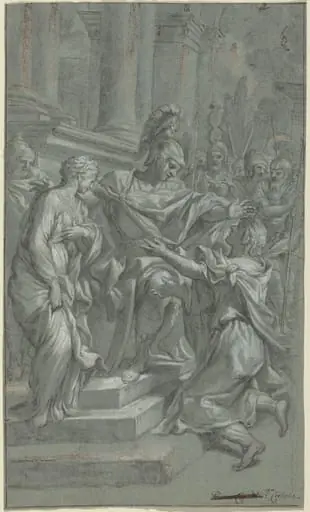 Scipio Restoring His Captive to Her Lover
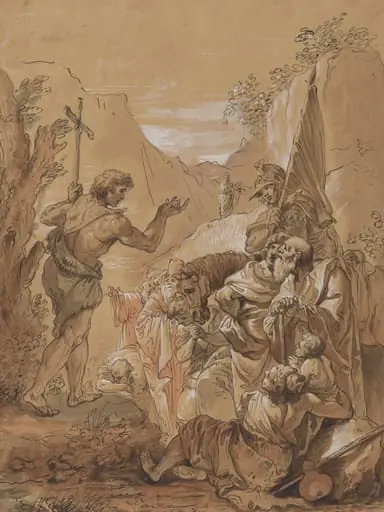 Preaching of John the Baptist in the Wilderness
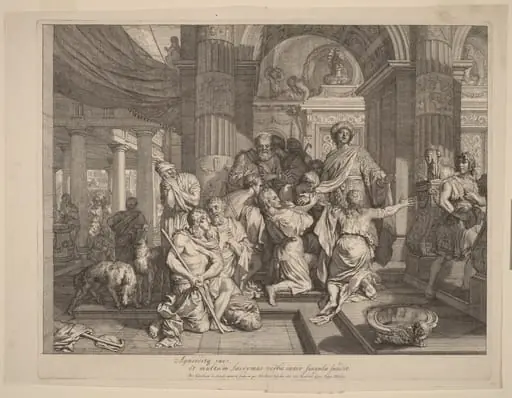 Joseph Reveals Himself to His Brothers
 The Martyrdom of Two Saints