Artwork
Marriage a la Mode: pl. 3
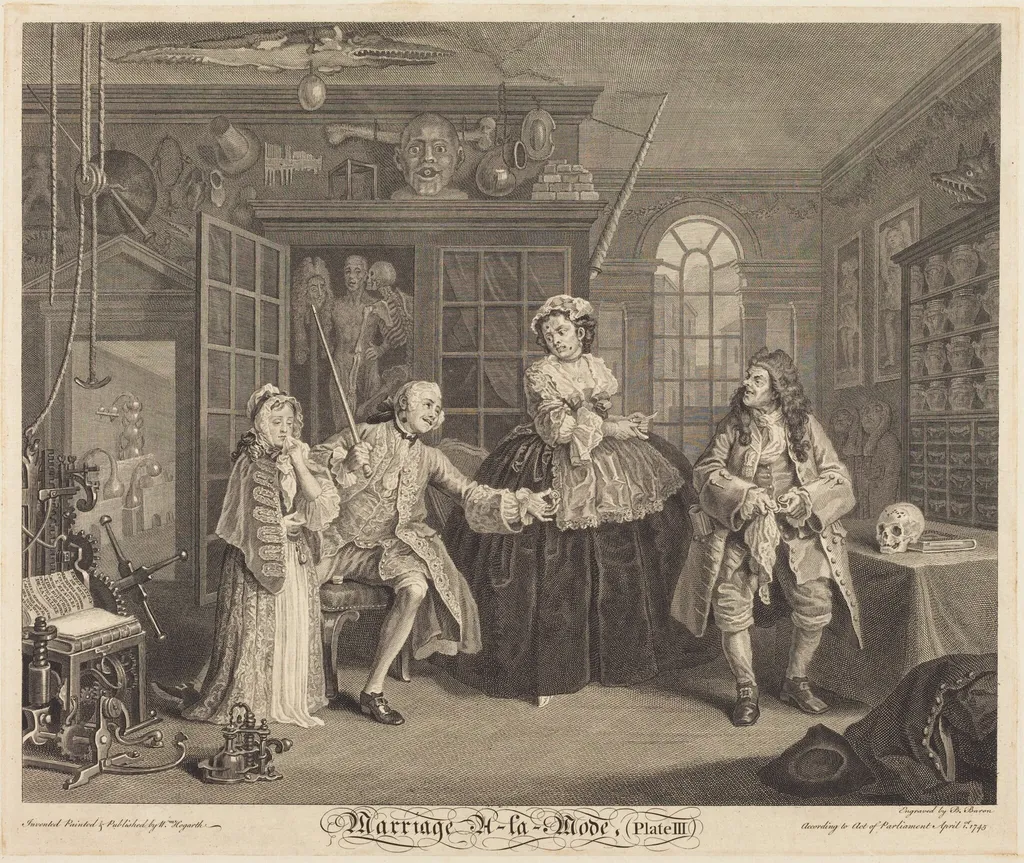
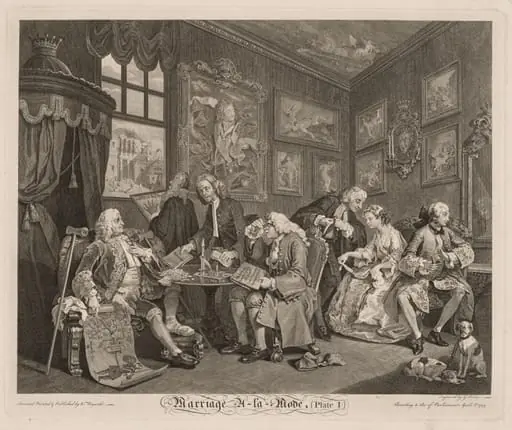
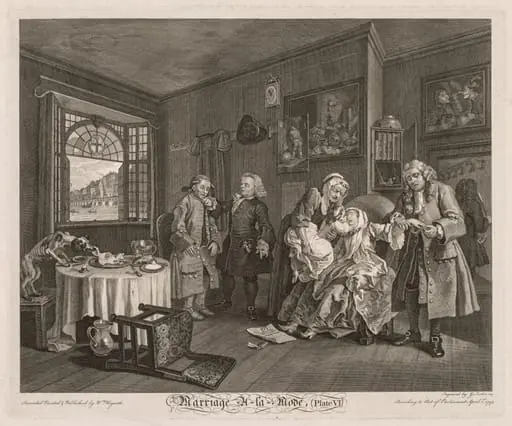
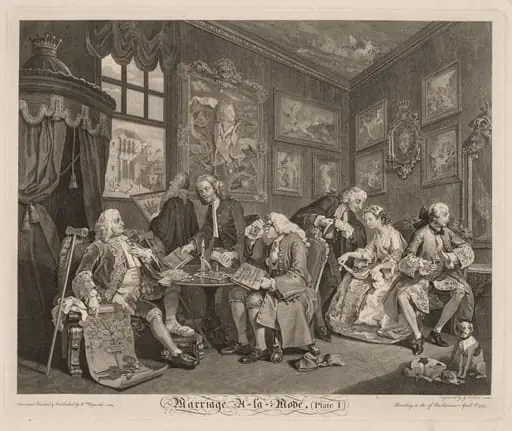
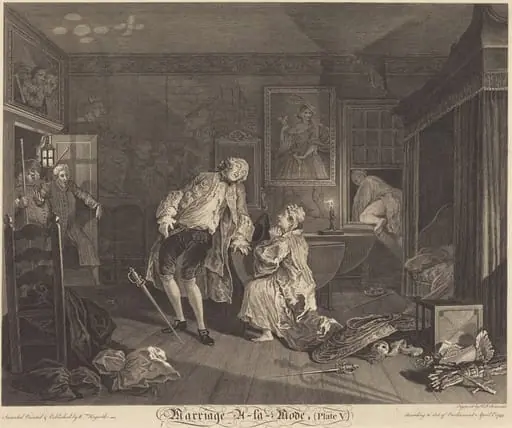
Marriage a la Mode: pl. 3 is an ink print by the Baroque artist Bernard Baron. It dates from 1745 and is held in the collection of the National Gallery of Art.
About this work
Overview
The composition centers on a domestic encounter among four figures, set within a richly furnished interior that reflects the moral decay of the upper class.
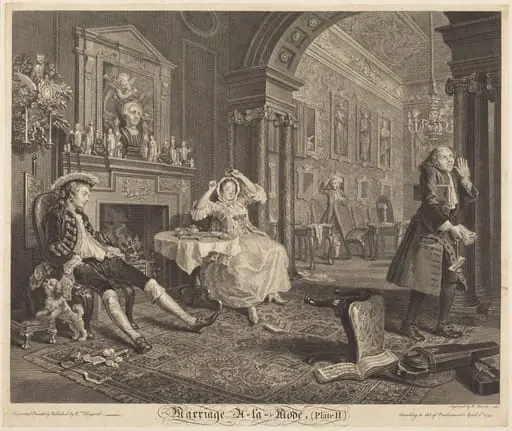
This print, the third in William Hogarth’s series Marriage a la Mode, was engraved by Bernard Baron in 1745. It translates Hogarth’s original painting into a detailed etching and engraving, preserving the narrative tension and social critique of the scene. The composition centers on a domestic encounter among four figures, set within a richly furnished interior that reflects the moral decay of the upper class.
Subject & Meaning
The scene captures a moment of emotional distance and hidden tension within a marriage of convenience. The woman in the ornate gown appears detached, while the man beside her seems preoccupied. The figure in dark dress, likely a lawyer or agent, holds a document, suggesting legal or financial arrangements. The skull on the table introduces a memento mori, subtly underscoring the futility and moral emptiness of the union.
Technique & Style
Bernard Baron employed fine-line etching and engraving to reproduce Hogarth’s intricate composition with precision. The textures of fabric, wood, and metal are rendered through delicate hatching and cross-hatching, while the spatial depth is achieved through careful perspective and layered background elements. The technique enhances the narrative clarity, allowing viewers to discern subtle gestures and symbolic objects.
History & Provenance
Created as part of a six-print series published in 1745, this engraving was produced under Hogarth’s supervision to disseminate his social commentary to a wider audience. Baron, a skilled reproductive engraver, was commissioned to translate the paintings into prints. The series was widely circulated, establishing Hogarth’s reputation as a moralist artist and influencing the development of narrative printmaking in Britain.
Context
The print reflects 18th-century British anxieties about arranged marriages among the aristocracy, where wealth and status often superseded personal compatibility. Hogarth’s series critiques the corruption of social norms, the commodification of relationships, and the decay of moral values. The inclusion of symbolic objects—like the skull, book, and sword—anchors the scene in a tradition of allegorical painting that warned against vanity and excess.
Legacy
Marriage a la Mode: pl. 3 became a key example of narrative printmaking in the Enlightenment era. Its influence extended to later satirical artists and social commentators who used sequential imagery to critique class and behavior. The series helped elevate printmaking from mere reproduction to a vehicle for moral and cultural critique, securing Hogarth’s place in the history of British visual art.
Own this work as a print
Artist & collection