Artwork
Marriage a la Mode: pl.6
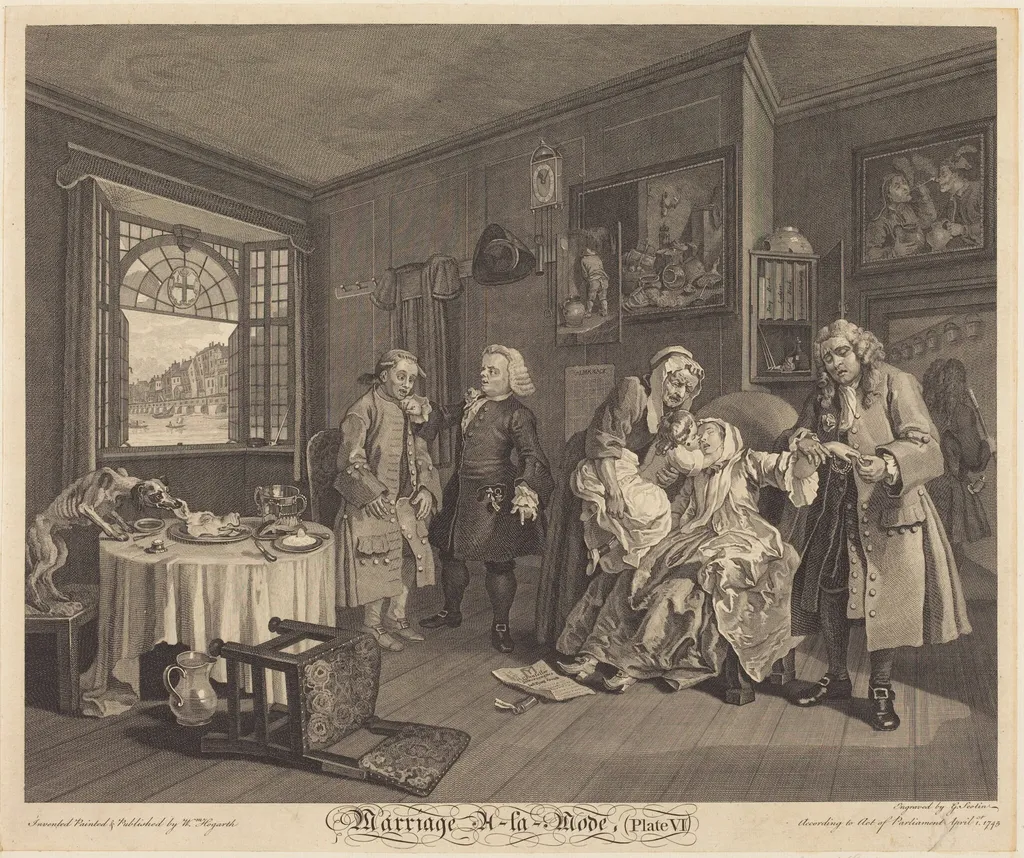
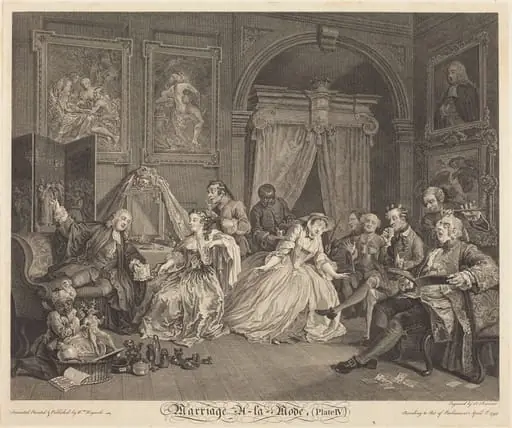
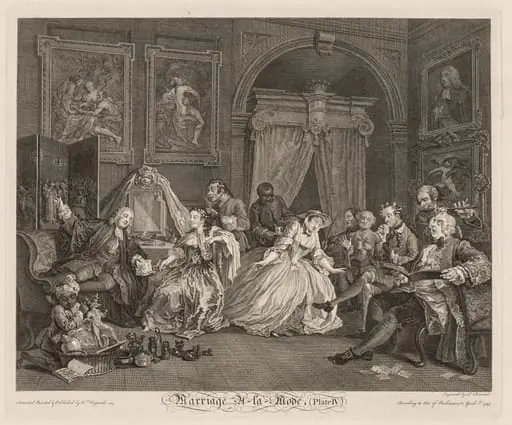
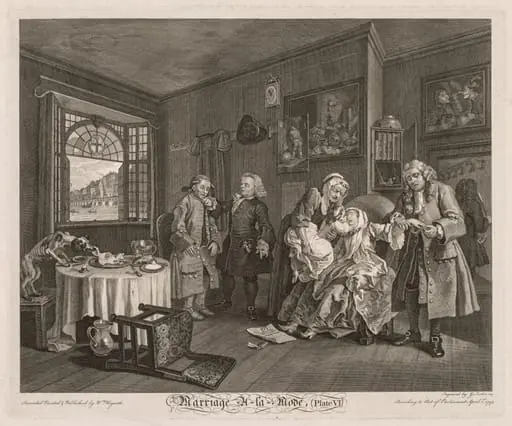
Marriage a la Mode: pl.6 is an ink print by the Baroque artist Louis Gerard Scotin. It dates from 1745 and is held in the collection of the National Gallery of Art. This print is the sixth and final plate in William Hogarth’s series Marriage a la Mode, produced in 1745.
About this work
Overview
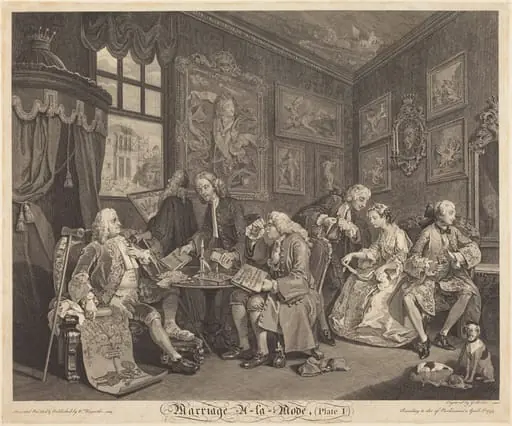
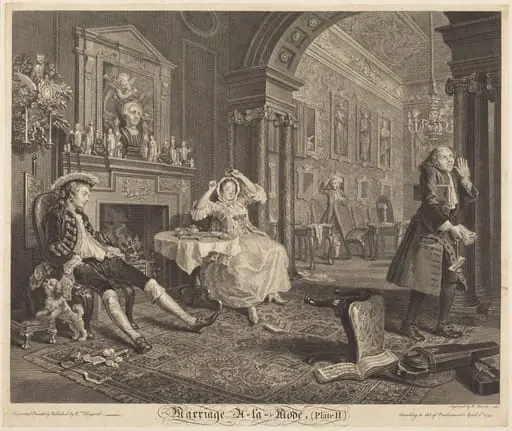
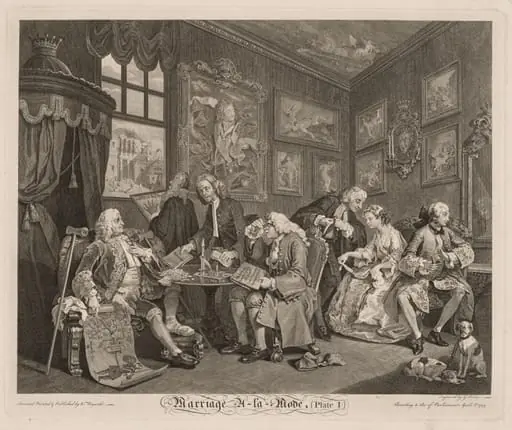
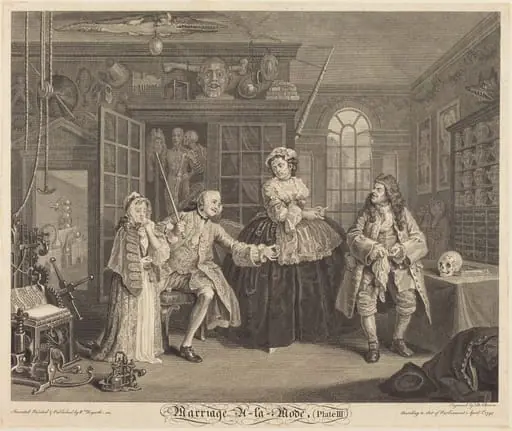
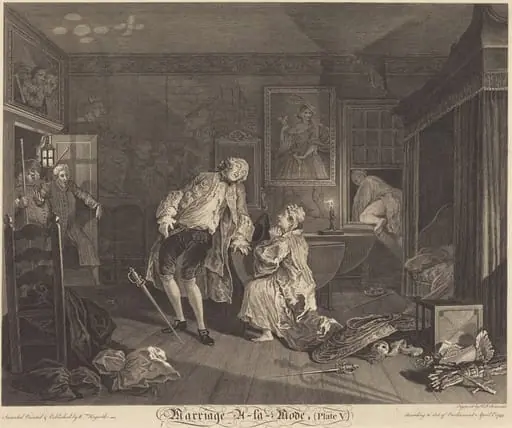
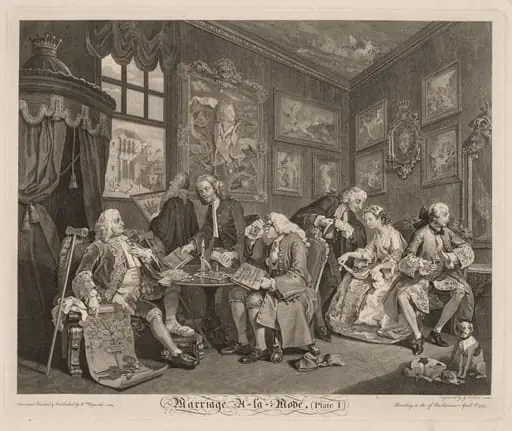
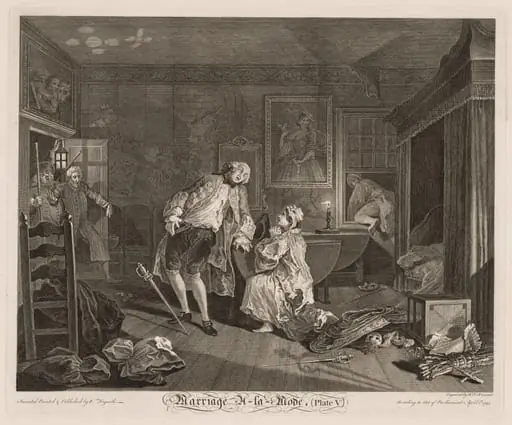
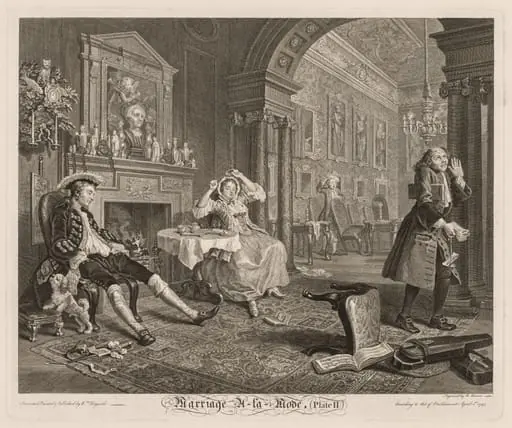
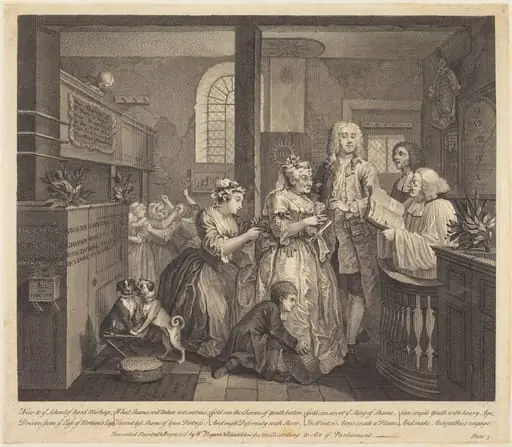
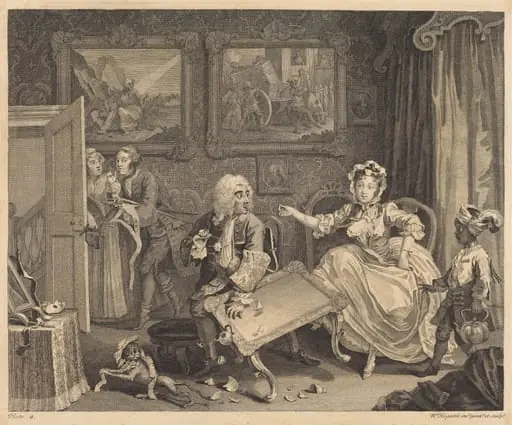
This print is the sixth and final plate in William Hogarth’s series Marriage a la Mode, produced in 1745. Though often attributed to Louis Gerard Scotin for its engraving, the original design is Hogarth’s. It depicts the collapse of a marriage alliance through a chaotic domestic scene, concluding a narrative that critiques aristocratic unions driven by wealth rather than affection.
Subject & Meaning
The scene captures the aftermath of a fatal duel, with the husband dead and the wife distraught, clutching her child. Others in the room—servants, a lawyer, and a physician—react with indifference or self-interest. The half-eaten meal and scattered papers suggest neglect and moral decay. The composition underscores the emptiness of a marriage built on social ambition, now reduced to ruin.
Technique & Style
The cluttered interior, filled with symbolic items like a broken clock and a portrait of a dead ancestor, reinforces thematic decay.
Hogarth employed fine, incised lines to render texture and emotion with precision. Deep shadows heighten the somber mood, while sharp contrasts draw attention to key figures and objects. The cluttered interior, filled with symbolic items like a broken clock and a portrait of a dead ancestor, reinforces thematic decay. The etching’s detail invites close viewing, revealing layers of narrative in everyday clutter.
History & Provenance
The series was first published in 1745 as a set of six engravings, intended for public sale to reach a broad audience. Scotin, a skilled engraver, translated Hogarth’s drawings into print. The plates were widely distributed and later collected by institutions and private patrons. The sixth plate, in particular, became a focal point for moral commentary on 18th-century British society.
Context
In mid-18th-century London, arranged marriages among the elite were common, often sealing financial or political alliances. Hogarth’s series responded to this trend, satirizing the consequences of such unions. The work aligned with broader Enlightenment critiques of aristocratic excess and moral hypocrisy, using visual storytelling to engage viewers in social reflection.
Legacy
Marriage a la Mode established Hogarth as a pioneer of narrative art in print. The series influenced later social satirists and the development of sequential imagery in visual culture. Its unflinching portrayal of domestic collapse remains a reference point in studies of class, gender, and morality in 18th-century Britain.
Artist & collection