Artwork
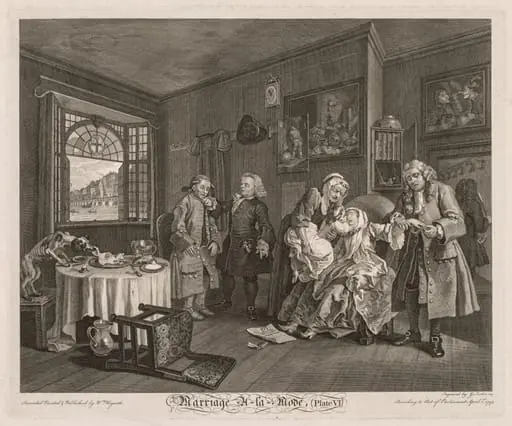
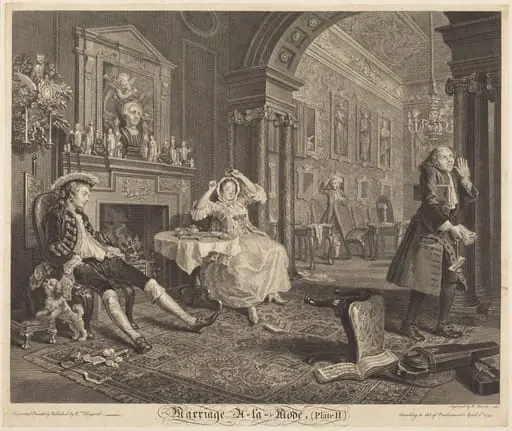
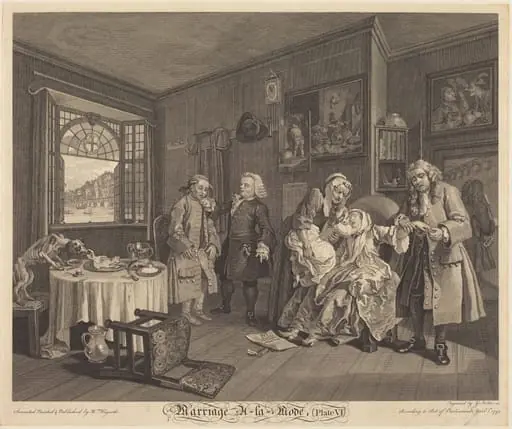
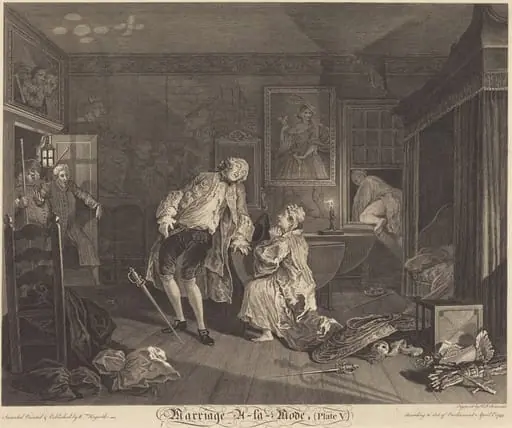
Marriage à la Mode: The Death of the Earl
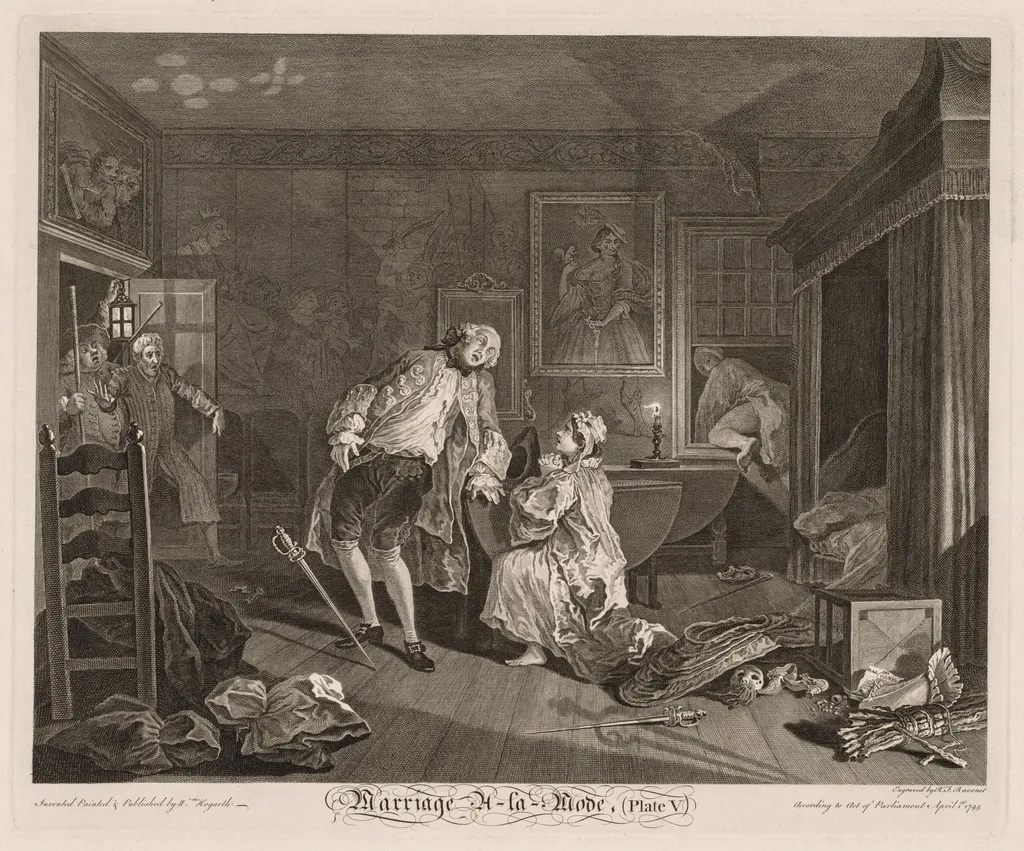
Marriage à la Mode: The Death of the Earl is a work on paper by the Baroque artist William Hogarth. It dates from 1745 and is held in the collection of the Cleveland Museum of Art.
About this work
Overview
The Death of the Earl is the sixth and final plate in William Hogarth’s six-part series Marriage à la Mode, completed in 1745.
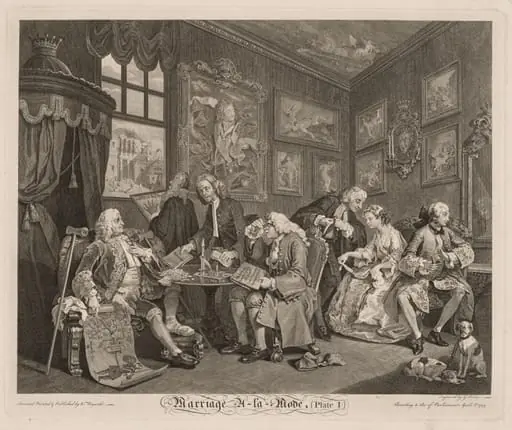
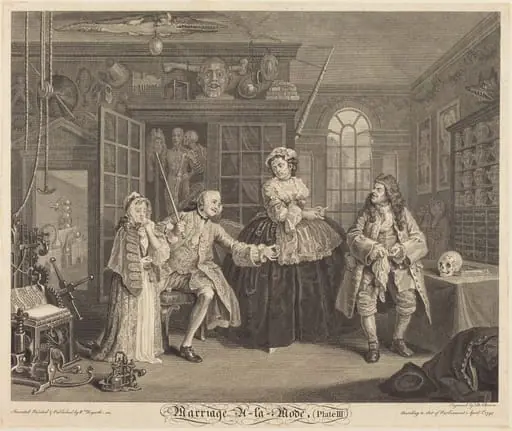
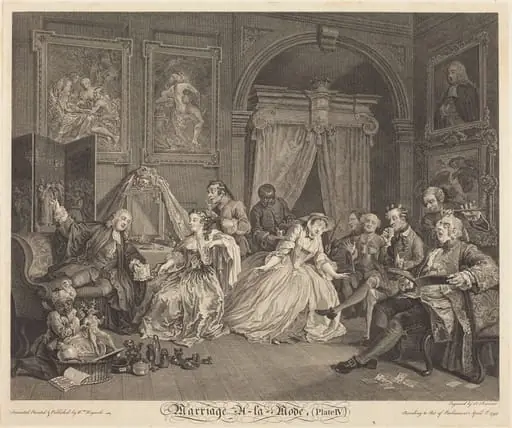
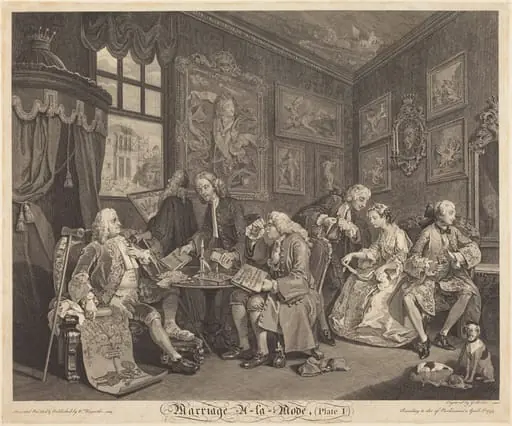
The Death of the Earl is the sixth and final plate in William Hogarth’s six-part series Marriage à la Mode, completed in 1745. It depicts the tragic culmination of a marriage arranged for financial gain, ending in violence and death. Unlike traditional history paintings, Hogarth used domestic interiors and everyday details to convey moral decline, turning private tragedy into public critique of aristocratic values.
Subject & Meaning
The scene shows the earl’s corpse on the floor, killed in a duel over his wife’s infidelity. His mistress kneels beside him, her dress disheveled, while a servant stands over them, indifferent. Two older men argue in the background, likely representing the families whose interests drove the marriage. The broken furniture and scattered belongings symbolize the collapse of order, while the dog, abandoned near the body, reflects the neglect of loyalty and affection.
Technique & Style
Hogarth rendered the scene with precise, linear engraving, emphasizing texture and spatial depth. His use of chiaroscuro directs attention to the central figures, while the cluttered room creates visual tension. Every object—torn fabric, overturned chair, scattered shoes—is deliberately placed to reinforce narrative meaning. The style avoids idealization, favoring unflinching realism to heighten the moral impact.
History & Provenance
The series was first published as engravings in 1745, intended for wide distribution to reach a middle-class audience. Hogarth retained control over reproduction, ensuring his commentary remained unaltered. The original oil paintings were commissioned by the earl’s fictional patron, but the engravings became more influential, circulating widely in Britain and abroad as examples of narrative art with social purpose.
Context
In mid-18th-century England, arranged marriages among the aristocracy often prioritized wealth and status over personal compatibility. Hogarth’s series responded to public awareness of such unions’ consequences: financial ruin, adultery, and early death. His work aligned with broader Enlightenment critiques of inherited privilege and moral corruption, using visual storytelling to reach audiences beyond the literate elite.
Legacy
Marriage à la Mode established Hogarth as a pioneer of sequential visual narrative, influencing later comic strips and social realism. The series demonstrated how art could function as public critique, not merely decoration. Its emphasis on moral consequence over heroism reshaped British painting, shifting focus from mythological grandeur to the intimate failures of everyday life.
Artist & collection
Artist
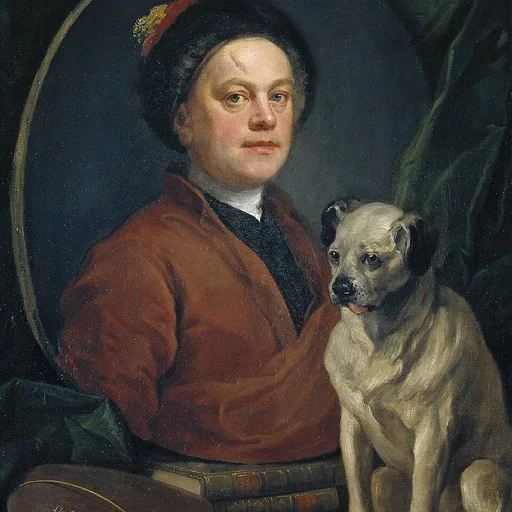
William Hogarth (; 10 November 1697 – 26 October 1764) was an English painter, engraver, satirist, cartoonist and writer.