Artwork
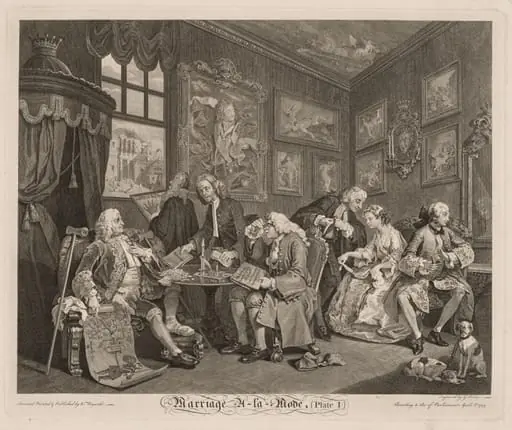
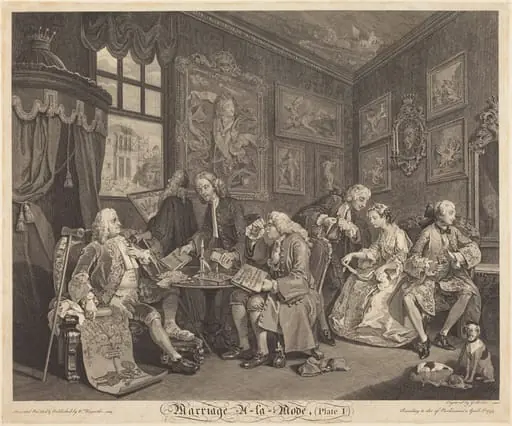
The Marriage Settlement, Plate 1
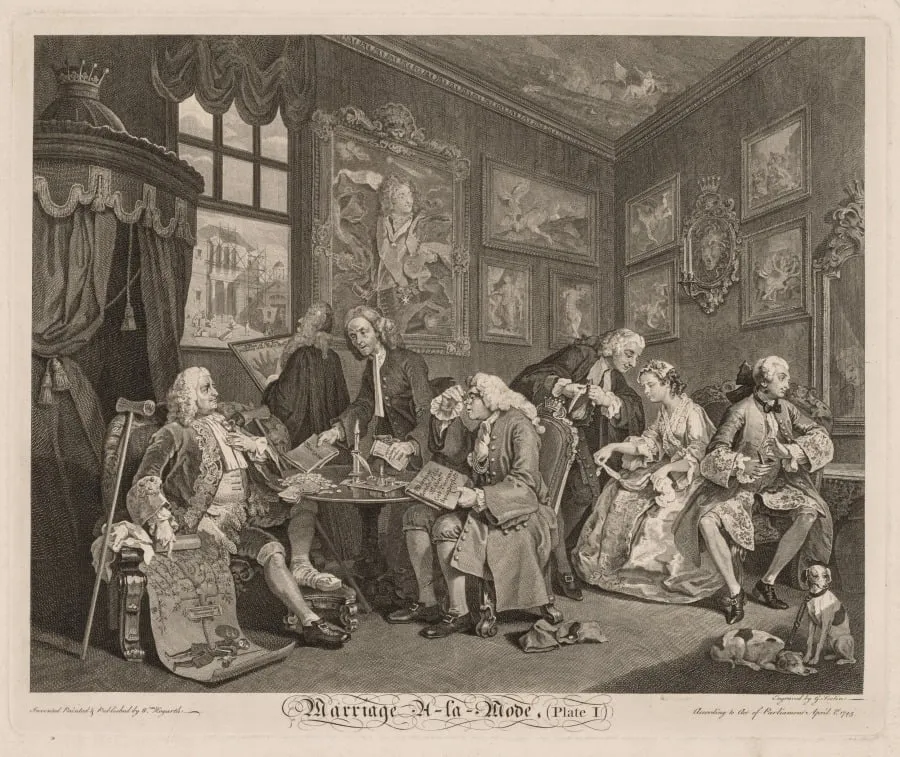
The Marriage Settlement, Plate 1 is a print by the Baroque artist Gérard Jean-Baptiste Scotin II. It dates from 1745 and is held in the collection of the Cleveland Museum of Art.
About this work
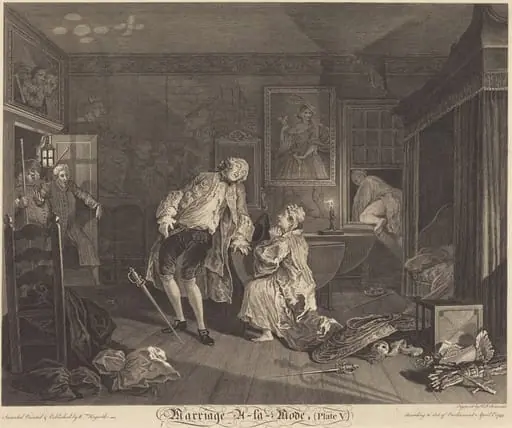
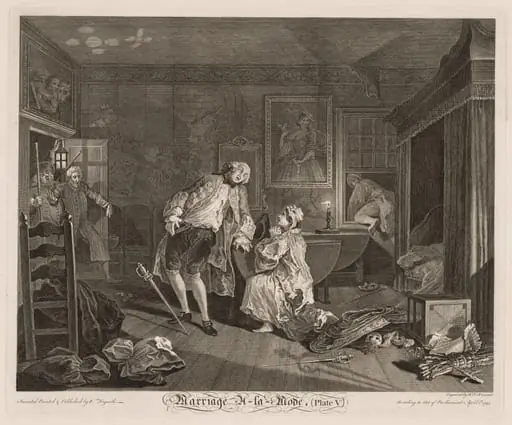
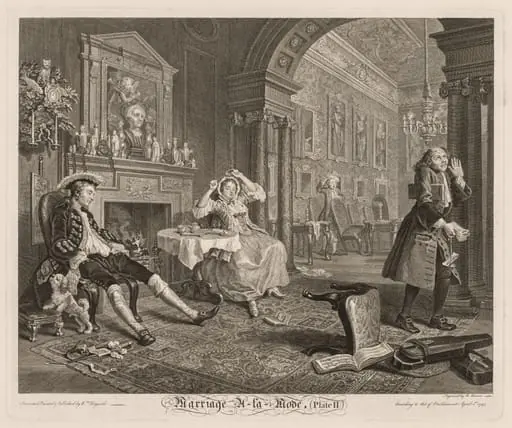
This is the first scene in William Hogarth’s *Marriage à la Mode*, a series that pokes fun at high-society marriages for money.
You see a crowded room where two families haggle over a marriage contract. A broke nobleman points to his family tree while a rich merchant’s daughter sits ignored.
This is the first scene in William Hogarth’s *Marriage à la Mode*, a series that pokes fun at high-society marriages for money. The nobleman’s son slumps in a chair, already bored, while the daughter stares at the floor—neither gets a say.
Look up *england, 18th century* to see more of Hogarth’s sharp, funny takes on the time.
Overview
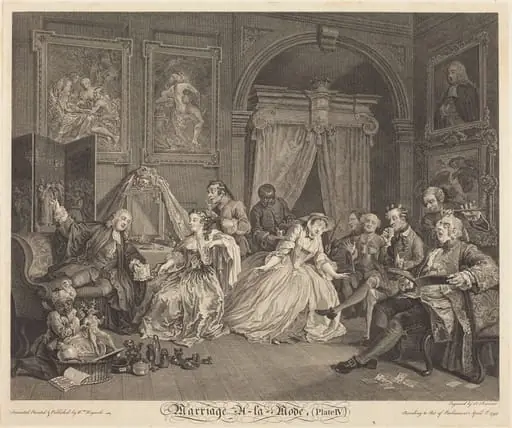
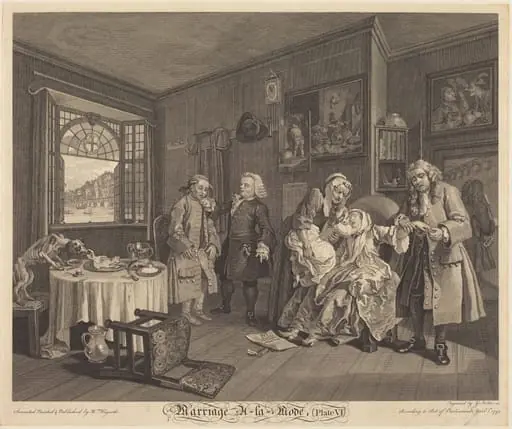
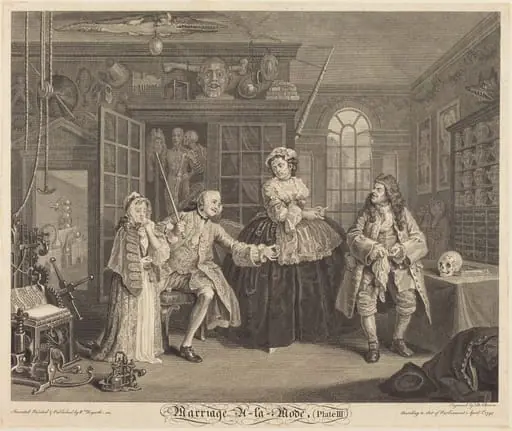
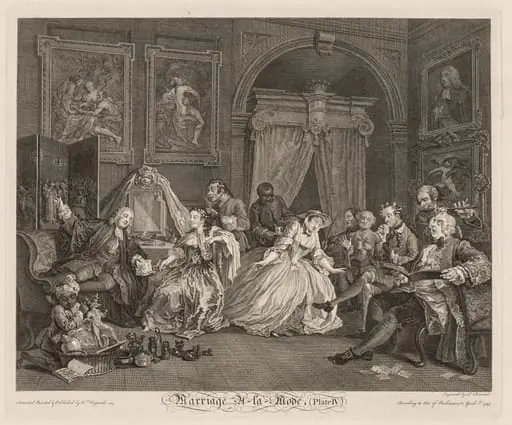
The Marriage Settlement, Plate 1, opens William Hogarth’s six-part print series Marriage à la Mode. It depicts a legal negotiation between two families—one financially ruined aristocracy, the other newly wealthy merchant class—finalizing a marriage contract. The scene captures the transactional nature of elite unions in 18th-century England, where personal affection is absent and social status is the sole currency.
Subject & Meaning
The impoverished Earl of Squander points to a genealogical tree, emphasizing lineage over substance, while the Alderman’s daughter sits passively, ignored by both families. The young couple, engaged but emotionally detached, reveal the hollow core of the arrangement: the son admires himself in a mirror, the daughter listens to a lawyer who will become her lover. The image critiques marriage as a business deal, not a bond.
Technique & Style
Hogarth employs fine line engraving to render intricate details—fabric folds, facial expressions, ornate interiors—with precision. His compositions are densely packed, guiding the viewer’s eye through symbolic gestures and objects. Each figure is rendered with psychological nuance, turning satire into narrative. The controlled chaos of the room mirrors the moral disorder beneath its polished surface.
History & Provenance
Created in 1743–1745, the series was published as engravings for public sale, a deliberate move to reach a broader audience beyond elite patrons. Hogarth retained control over reproduction, ensuring his critique reached middle-class buyers who recognized the social absurdities portrayed. The prints were widely circulated and discussed, cementing his reputation as a moral commentator through art.
Context
In mid-18th-century England, arranged marriages between aristocrats and wealthy commoners were common, driven by the decline of noble fortunes and the rise of mercantile wealth. Hogarth’s series responded to this trend, reflecting contemporary anxieties about moral decay, social mobility, and the erosion of traditional values through materialism.
Legacy
Marriage à la Mode became a defining example of narrative printmaking in Britain. Its sequential storytelling and social critique influenced later satirical artists and early graphic novels. Hogarth’s unflinching portrayal of class and gender dynamics set a precedent for using visual art as a tool for public moral reflection, beyond mere decoration.
Artist & collection
Artist
Gérard Jean-Baptiste Scotin II
Gérard Jean-Baptiste Scotin II (1698–1760) was a French artist.