Artwork
Spanish Campaign: The Assassination
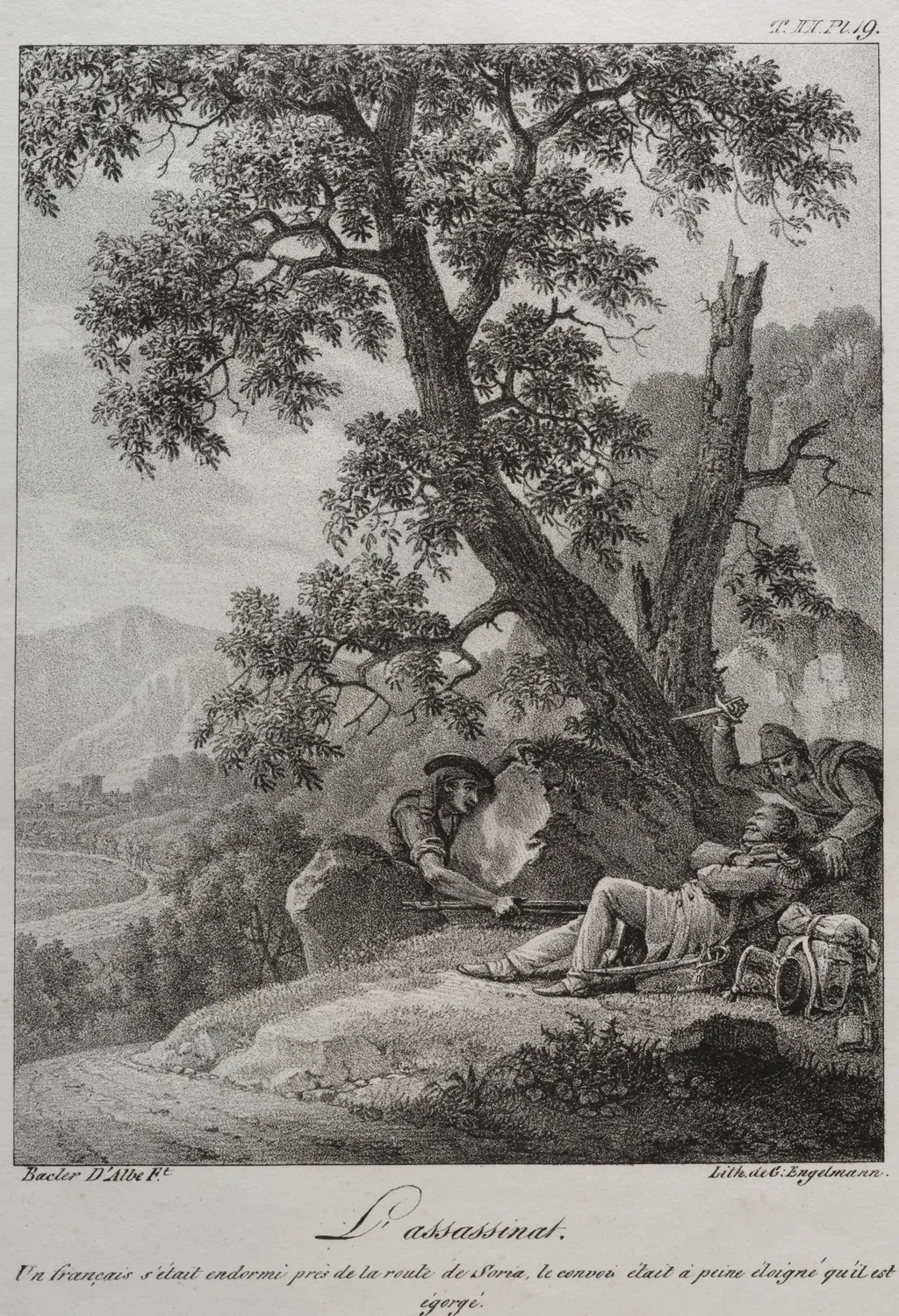
Spanish Campaign: The Assassination is a print by the Romanticist artist Louis Albert Guislain Bacler d'Albe. It dates from 1816 and is held in the collection of the Cleveland Museum of Art. Created in 1816 by Baron Louis Albert Guillain Bacler d'Albe, this print is part of a series documenting Napoleon’s Peninsular War.
About this work
Overview
Though not a battle scene, the image captures a moment of quiet tension, reflecting his intimate knowledge of campaign logistics and guerrilla warfare in Spain.
Created in 1816 by Baron Louis Albert Guillain Bacler d'Albe, this print is part of a series documenting Napoleon’s Peninsular War. Bacler d'Albe, who served as Napoleon’s principal cartographer and military advisor, produced the work after his active service ended in 1814. Though not a battle scene, the image captures a moment of quiet tension, reflecting his intimate knowledge of campaign logistics and guerrilla warfare in Spain.
Subject & Meaning
The scene portrays three figures concealed in a wooded landscape, suggesting an ambush or covert operation during the Spanish Campaign. Their postures—alert, resting, and concealed—imply preparation for violence, consistent with the irregular warfare waged by Spanish partisans against French forces. The title references assassination, but the image avoids explicit violence, instead emphasizing suspense and concealment, aligning with the unpredictable nature of the conflict.
Technique & Style
Rendered as a detailed engraving, the print uses fine linework to define dense foliage, rocky terrain, and distant topography. The composition balances naturalism with atmospheric perspective, guiding the eye from the foreground figures to the hazy horizon where buildings and hills emerge. The muted tonal range and restrained detail reflect the precision expected of military documentation, while the mood leans toward somber realism rather than theatrical drama.
History & Provenance
Bacler d'Albe produced this work after retiring from active service, drawing on his extensive field sketches from the Peninsular War. The print entered the collection of The Cleveland Museum of Art through documented acquisitions in the 20th century. Its survival as part of a larger series underscores its role as archival material rather than a standalone artistic statement, preserving a soldier-cartographer’s perspective on a brutal campaign.
Context
The Peninsular War (1808–1814) was marked by guerrilla resistance in Spain, where French troops faced constant ambushes and sabotage. Bacler d'Albe’s role required him to map not only terrain but also insurgent activity. This print reflects the psychological strain of such warfare, where visibility was limited and danger came from hidden enemies. It stands as a quiet counterpoint to grander Napoleonic battle narratives.
Legacy
Though Bacler d'Albe is better known for his maps, this print contributes to a lesser-known body of visual records from the Napoleonic era that prioritize observation over heroism. It offers insight into how military professionals documented the quieter, more insidious aspects of war. As such, it remains a valuable resource for understanding the lived experience of soldiers and strategists during the conflict in Spain.
Artist & collection
Artist
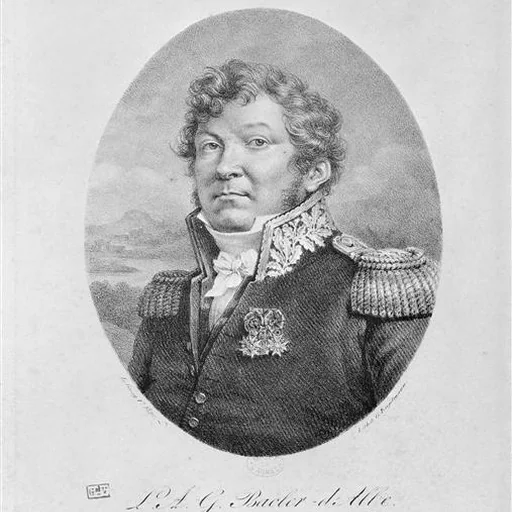
Louis Albert Guislain Bacler d'Albe
Louis Albert Guislain, Baron Bacler d’Albe (French pronunciation: ; October 21, 1761 – September 12, 1824) was a French artist, as well as the map-maker and closest strategic advisor of Napoleon from 1796 until 1814.

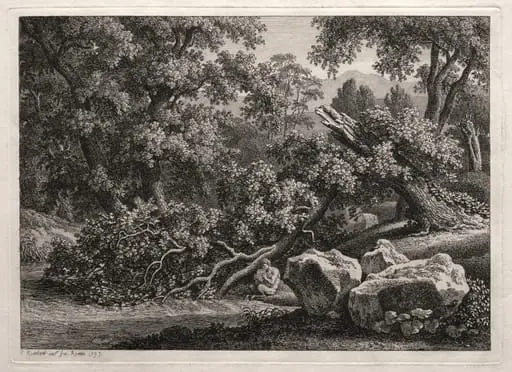 Heroic Landscape: The Satyr Playing the Flute
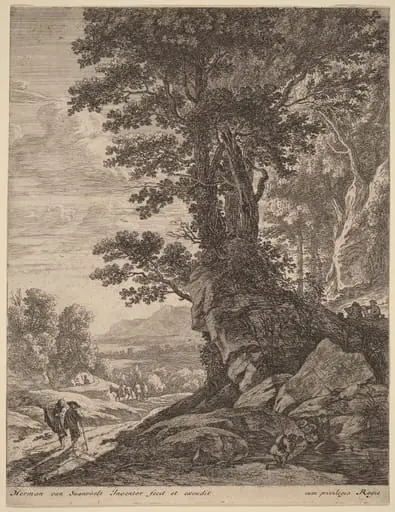 A Group of Trees
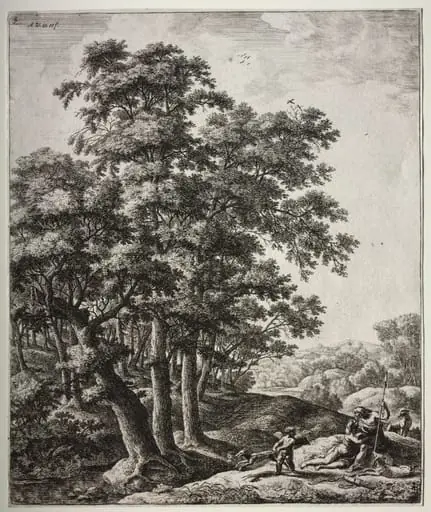 Six large upright landscapes with scenes from Ovid's Metamorphoses: Venus and Adonis
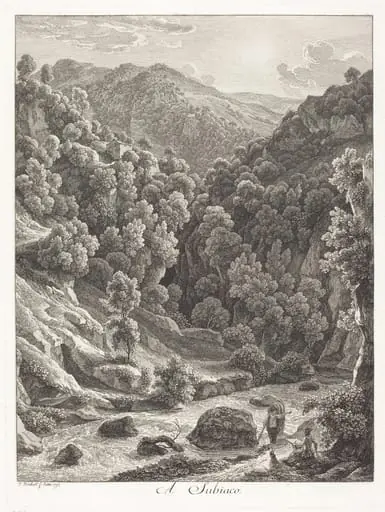 A Subiaco (Near Subiaco)
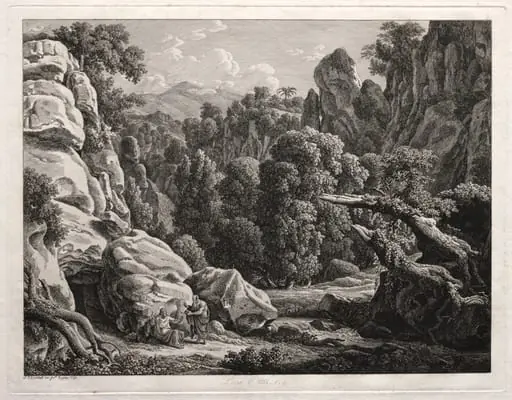 Heroic Landscape: Landscape with the Temptation of Christ
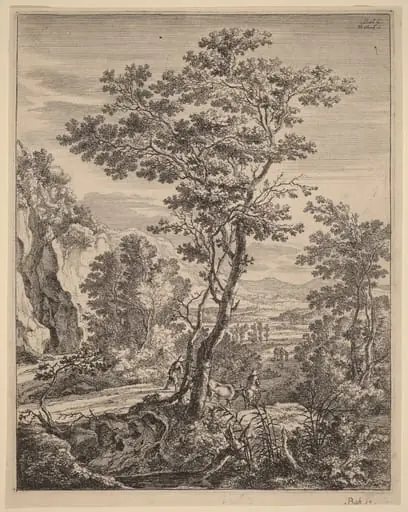 The Large Tree
 Les Penitents: St. Jean Baptiste
 Gebirgslandschaft
 Der mit seinem Fuhrer rastende Kunstler
 St. William the Hermit
 Shooting the Woodcock
 Six large upright landscapes with scenes from Ovid's Metamorphoses: The Death of Adonis