Artwork
A Group of Trees
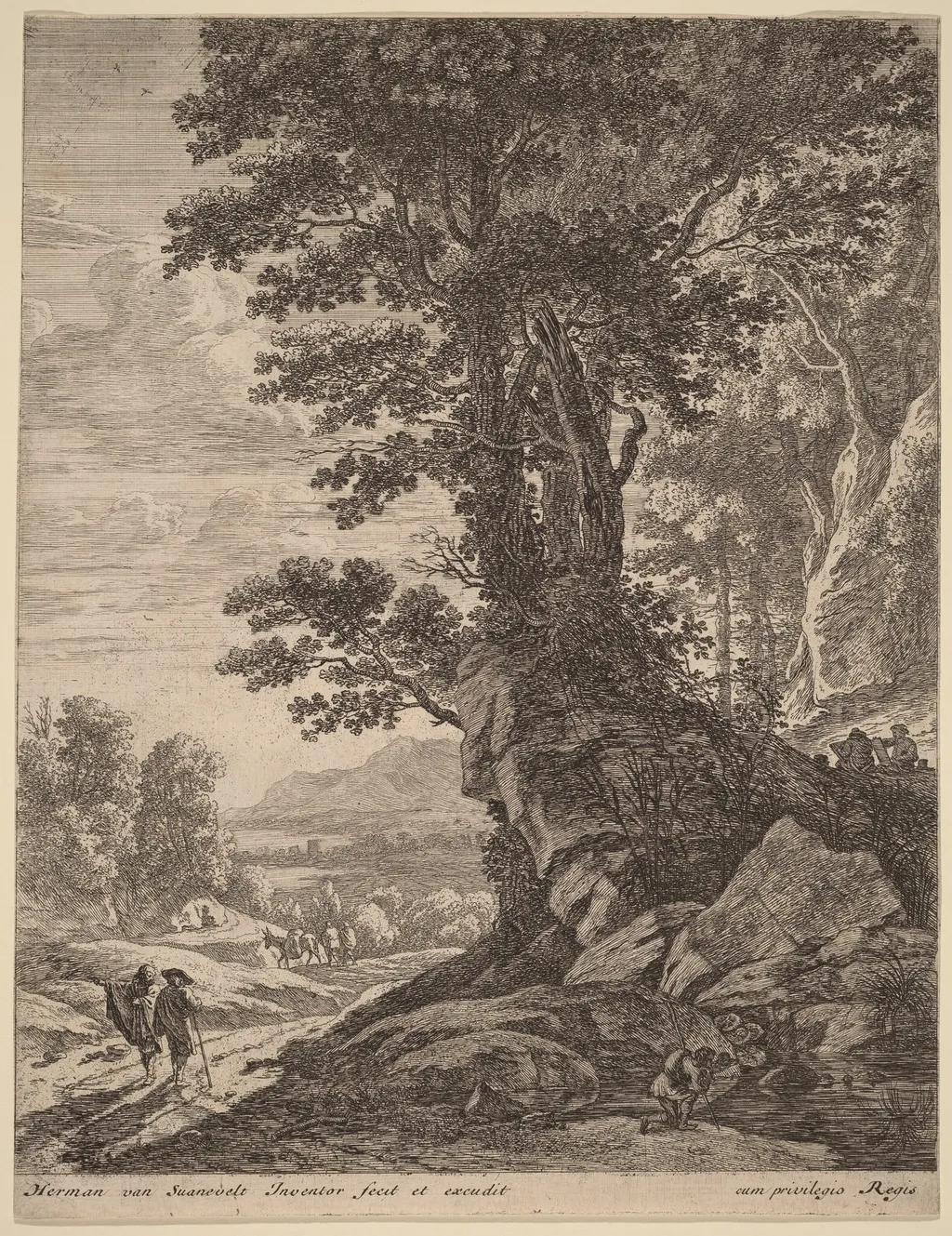
A Group of Trees is an ink print by the Baroque artist Herman van Swanevelt. It dates from 1628 and is held in the collection of the National Gallery of Art.
About this work
Overview
Unlike painted landscapes of the period, this work relies on the precision of engraved lines to render natural forms.
Created in 1628, A Group of Trees is an etching by Herman van Swanevelt that captures a quiet woodland scene. Unlike painted landscapes of the period, this work relies on the precision of engraved lines to render natural forms. The composition centers on a cluster of trees, their branches and trunks carefully delineated to suggest volume and spatial recession, with minimal human presence to anchor the scale.
Subject & Meaning
The subject is a modest grouping of trees in a rural setting, devoid of dramatic narrative or mythological reference. The inclusion of tiny, indistinct figures in the distance serves not as focal points but as subtle indicators of human presence within nature. The work conveys stillness and solitude, reflecting a contemplative engagement with the natural world rather than an idealized or symbolic landscape.
Technique & Style
Van Swanevelt employed fine, controlled etching lines to build texture in bark, foliage, and ground. Cross-hatching and varying line density create tonal gradations that suggest light filtering through leaves and shadow beneath branches. The technique emphasizes detail without ornamentation, aligning with Northern European traditions of observational drawing, where realism emerges through careful rendering rather than dramatic contrast.
History & Provenance
The etching was produced during van Swanevelt’s early career, likely in Rome, where he lived among artists drawn to the Italian countryside. Though few of his prints survive in large numbers, this work is documented in early 17th-century collections. Its attribution has remained consistent, with no evidence of later alterations or reworkings, preserving its original state.
Context
Made during the Baroque era, the piece diverges from the grandeur typical of Italianate painting. Instead, it aligns with a quieter trend among Northern artists who favored intimate, unidealized landscapes. Van Swanevelt’s focus on trees as subjects reflects a growing interest in nature as worthy of study in its own right, separate from religious or allegorical frameworks.
Legacy
A Group of Trees exemplifies the shift toward naturalism in printmaking during the early 17th century. While van Swanevelt is less known than contemporaries like Rembrandt, this etching influenced later artists who sought to capture landscape with quiet precision. Its restrained composition and technical discipline remain a reference point for studies of early modern print techniques.
Own this work as a print
Artist & collection

 Peasant Woman on Horseback with a Child in Her Arms
 The Large Tree
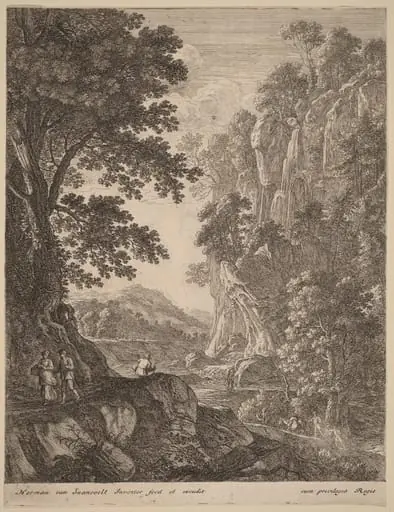 The Large Cascade
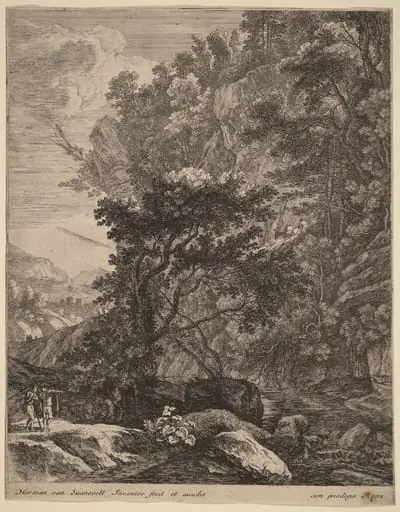 The Mountain
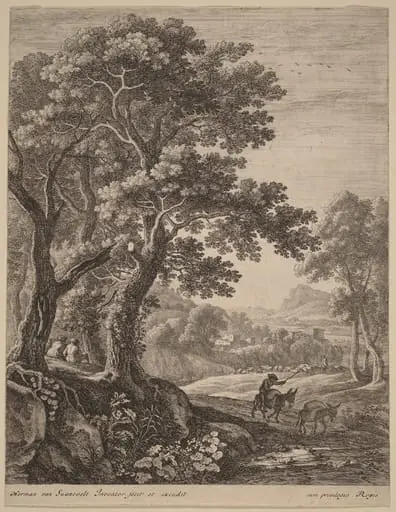 The Mule Driver
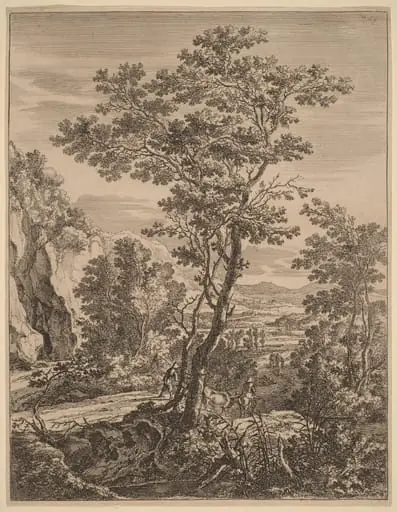 The Large Tree
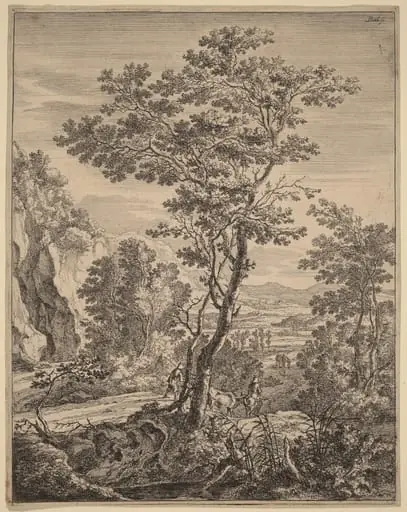 The Large Tree
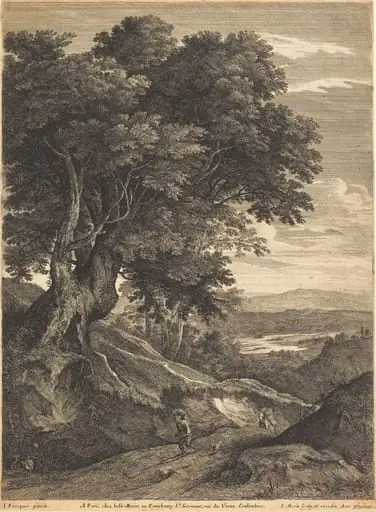 Hilly Landscape with Travelers on Foot
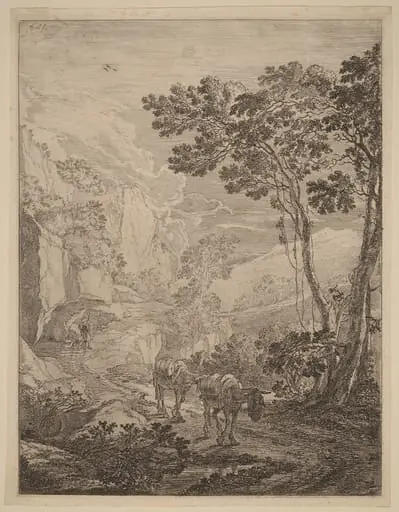 The Two Hinnies
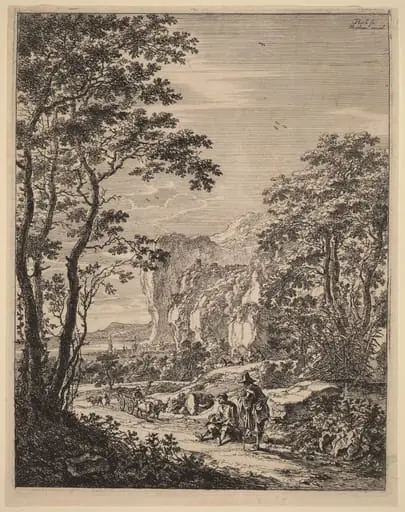 The Ox-Cart: View between Ancona and Sinigaglia
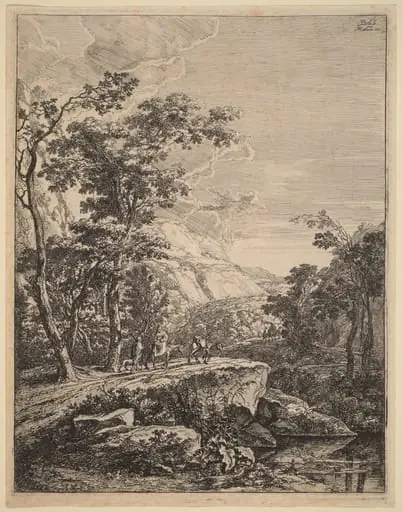 The Woman on the Hinny
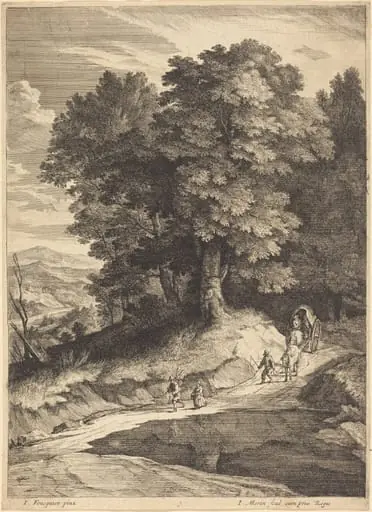 Edge of a Wood with Travelers in a Carriage