Artwork
A Subiaco (Near Subiaco)
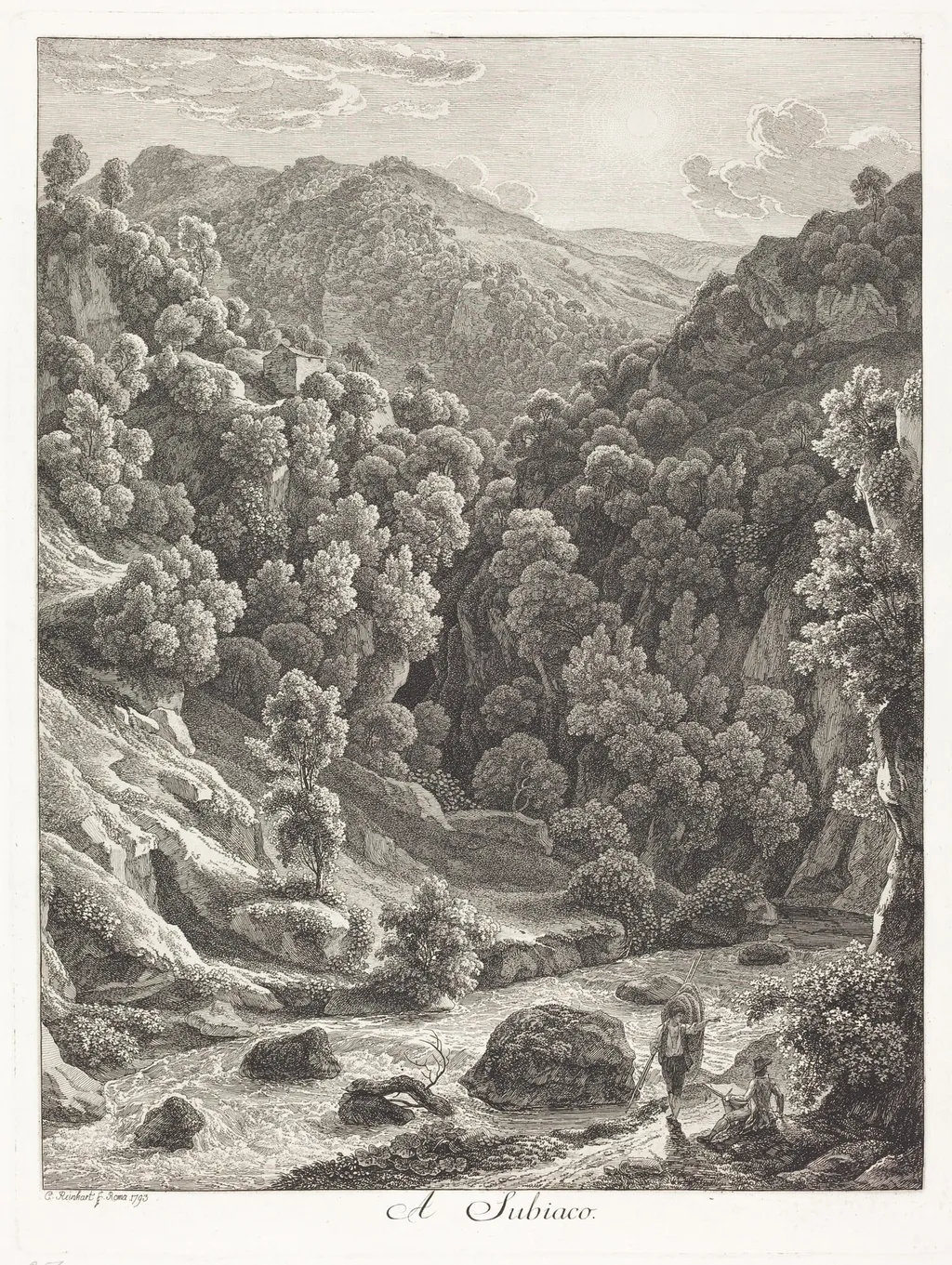
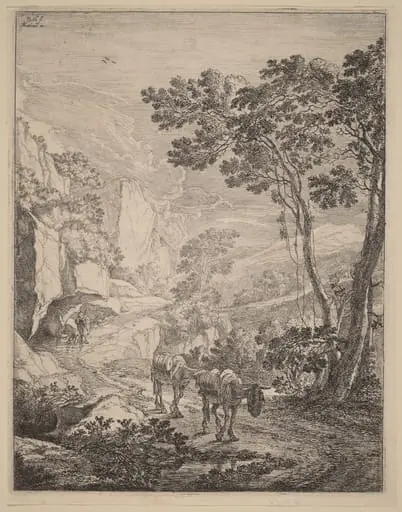
A Subiaco (Near Subiaco) is an ink print by the Romanticist artist Johann Christian Reinhart. It dates from 1793 and is held in the collection of the National Gallery of Art.
About this work
Overview
The print belongs to a series of Italian views that helped define a new approach to landscape in German art, blending observation with poetic restraint.
Created in 1793 by German artist Johann Christian Reinhart, this etching on laid paper captures a quiet stretch of landscape near Subiaco, Italy. Reinhart, known for his detailed topographical precision and atmospheric sensitivity, produced this work during his extended stay in Italy. The print belongs to a series of Italian views that helped define a new approach to landscape in German art, blending observation with poetic restraint.
Subject & Meaning
The scene portrays a tranquil valley with a winding river, flanked by rolling hills and dense foliage. Small human figures—travelers or laborers—are placed subtly in the foreground, neither dominating nor distracting from the natural setting. The composition suggests harmony between people and environment, reflecting a Romantic sensibility that valued quiet contemplation over grandeur. There is no narrative, only presence: a moment of stillness within an enduring landscape.
Technique & Style
Reinhart employed fine, controlled etching lines to model form and suggest texture, using varying densities of ink to create depth and luminosity. The river reflects light through delicate hatching, while the trees and hills are rendered in layered tones of green and gray. The laid paper’s subtle texture enhances the naturalism of the scene. His technique avoids theatricality, favoring nuanced tonal transitions that evoke mood through restraint rather than drama.
History & Provenance
Reinhart produced this work during his years in Rome, where he lived from the 1780s onward, immersing himself in classical and Renaissance landscapes. The print was likely made for collectors interested in Italian scenery, a growing market among Northern European patrons. Though specific early ownership records are sparse, the work aligns with prints circulated through academic and artistic circles in Germany and Italy during the late 18th century.
Context
In the 1790s, German artists were redefining landscape as a vehicle for emotional and philosophical reflection, moving beyond topographical accuracy. Reinhart, alongside Joseph Anton Koch, helped shape this shift, drawing inspiration from classical ruins and the Italian countryside. Their work responded to Enlightenment ideals of nature as orderly yet spiritually resonant, offering an alternative to the grandeur of Baroque or the sentimentality of later Romanticism.
Legacy
Reinhart’s etchings, including this one, influenced later generations of German landscape artists by demonstrating how precise draftsmanship could convey emotional depth. His integration of observed detail with lyrical composition became a model for the Nazarene movement and early 19th-century German Romanticism. Though less widely known today, his prints remain important documents of how Northern Europe perceived and internalized the Italian landscape during a pivotal era of artistic change.
Artist & collection

Artist
Johann Christian Reinhart was a German painter and engraver. He was one of the founders, along with Joseph Anton Koch, of German romantic classical landscape painting.

 Ideal Landscape
 A Woodland Path in Rosenthal in Winter
 Tivoli and the Temple of the Sibyl above the Aniene Gorge
 Two Intertwined Oak Trees
 River Landscape in the Roman Campagna
 The Mill at the Great Oaks
 The Mill at the Great Oaks
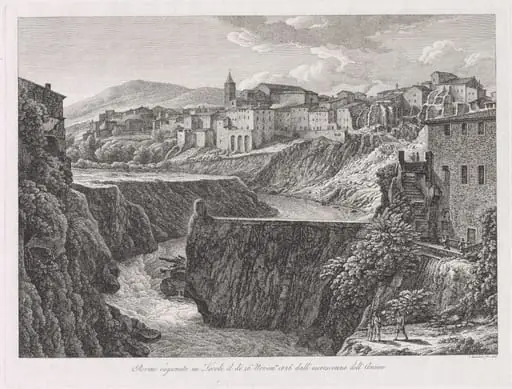 Rovine cagionate in Tivoli, dall'escrescenza dell'Aniene (Tivoli Damaged by the Flood of the River Aniene)
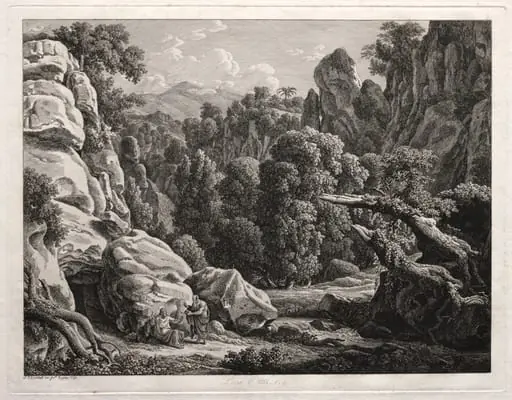 Heroic Landscape: Landscape with the Temptation of Christ
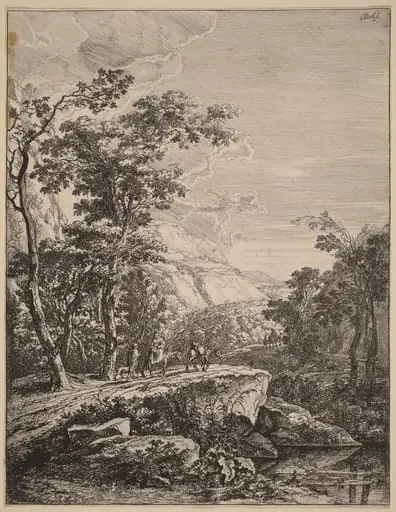 The Woman on the Hinny
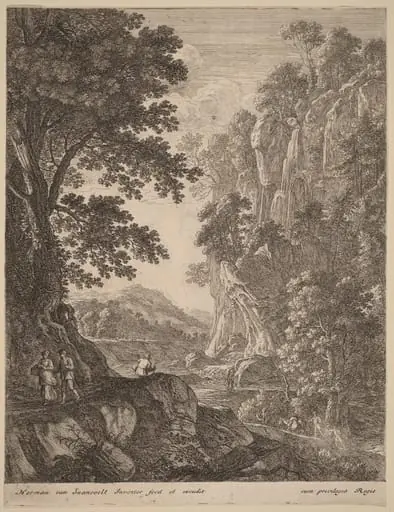 The Large Cascade
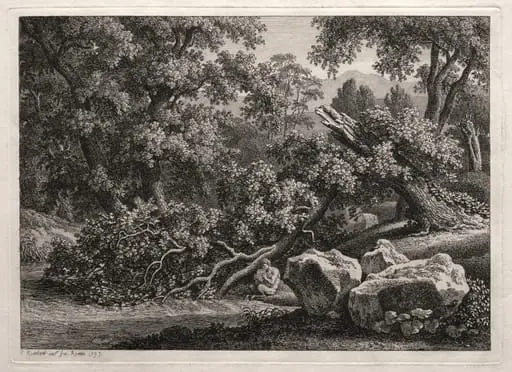 Heroic Landscape: The Satyr Playing the Flute
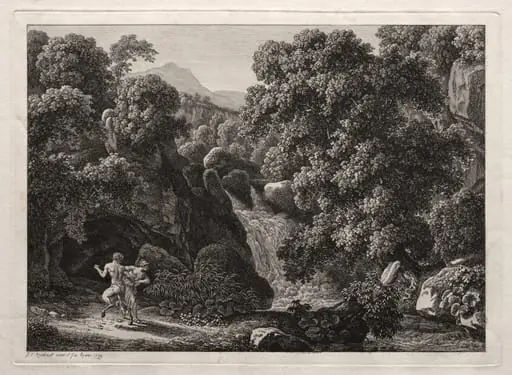 Heroic Landscape: The Satyr and the Nymph
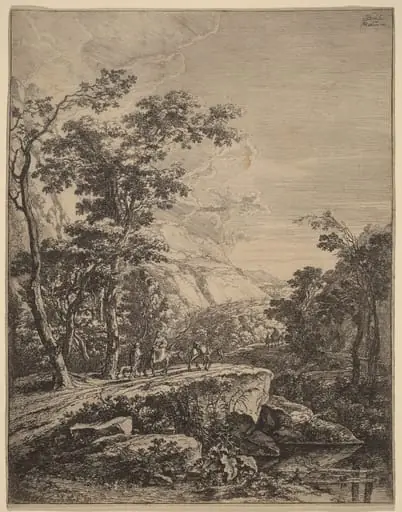 The Woman on the Hinny
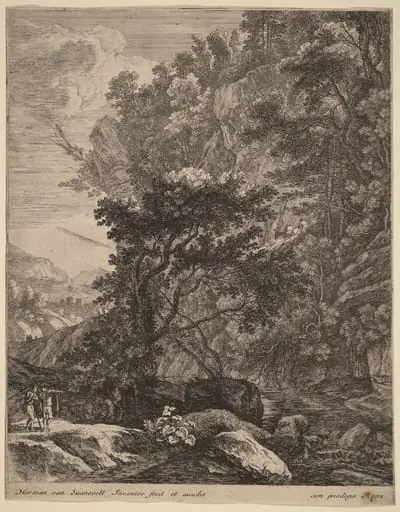 The Mountain
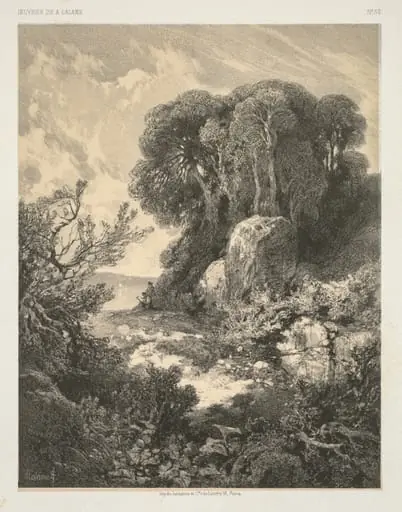 Oeuvres de A. Calame: No. 52
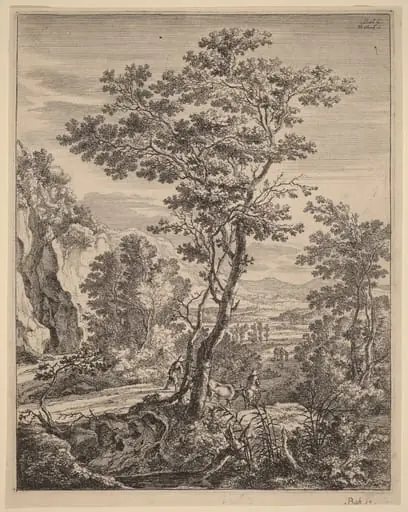 The Large Tree
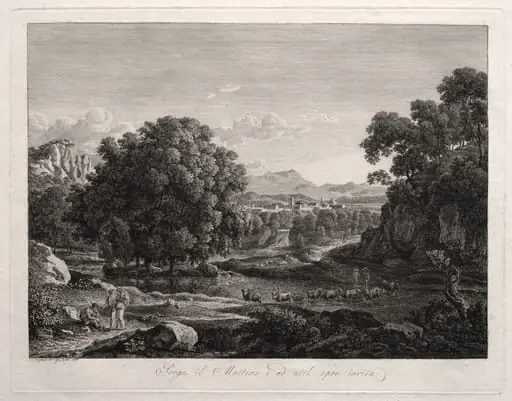 Heroic Landscape: Cattle Crossing the River
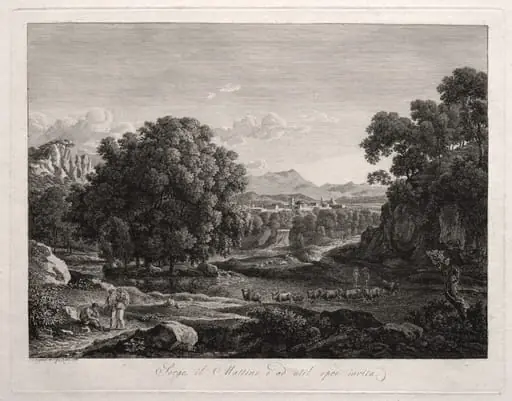 Heroic Landscape
 The Two Hinnies