Artwork
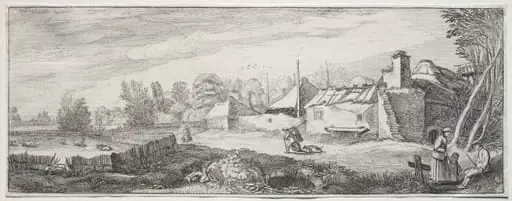
Der kleine Isarsteg
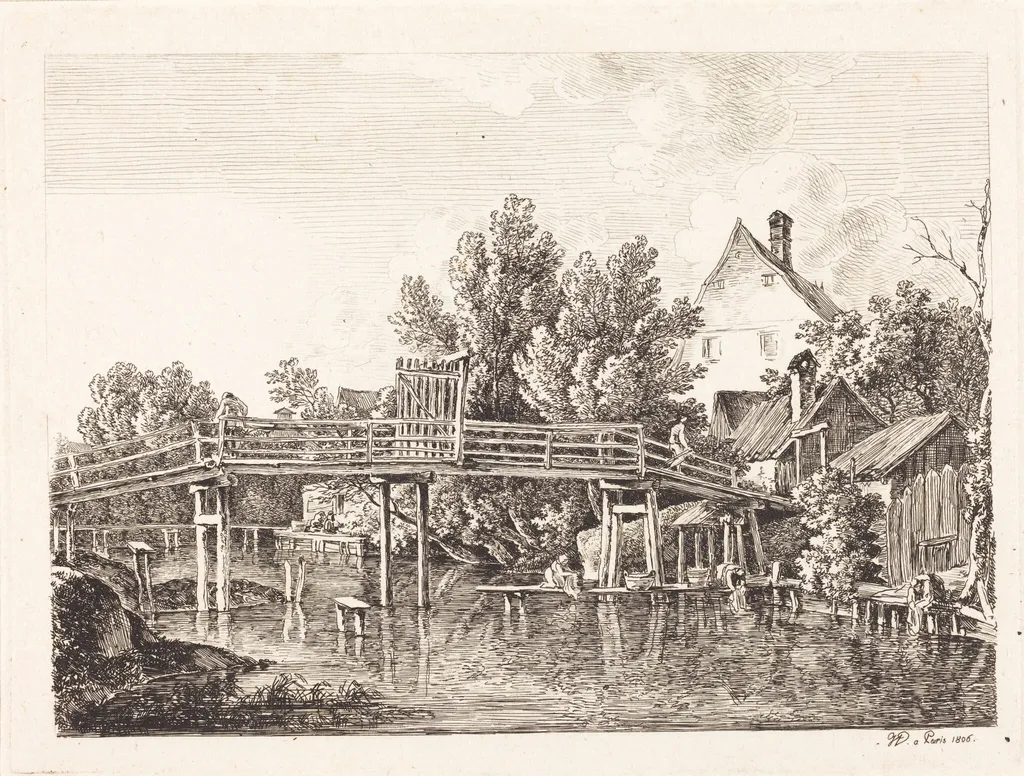
Der kleine Isarsteg is an ink print by the Romanticist artist Johann Georg von Dillis. It dates from 1806 and is held in the collection of the National Gallery of Art.
About this work
Overview
Johann Georg von Dillis executed *Der kleine Isarsteg* in 1806 as an etching on laid paper. The print depicts a modest wooden footbridge spanning the Isar River near Munich, capturing a moment of everyday tranquility. Trees and low structures flank the scene, while figures rest or stroll along the banks, suggesting leisure rather than industry.
Subject & Meaning
The composition centers on the eponymous Isarsteg, a small bridge that connects two quiet riverbanks. Human presence is understated: a few individuals occupy benches beneath the bridge, others traverse the path above. The absence of dramatic action or allegorical figures directs attention to the harmony between built and natural elements, evoking a sense of unhurried rural life.
Technique & Style
The restrained, descriptive style aligns with early 19th-century landscape traditions that favored observational accuracy over idealization.
Von Dillis employed etching to render fine linear detail, allowing precise depiction of ripples, foliage, and architectural textures. Ink forced into incised lines on a metal plate transfers to paper under pressure, yielding crisp contours and subtle tonal gradations. The restrained, descriptive style aligns with early 19th-century landscape traditions that favored observational accuracy over idealization.
History & Provenance
Created in 1806, *Der kleine Isarsteg* reflects von Dillis’s engagement with local Bavarian scenery. As a proof impression, it likely predates any formal edition. The print’s early ownership history remains undocumented, though its survival suggests inclusion in private or institutional collections focused on German graphic arts of the period.
Context
The work emerges from a period when Munich’s urban periphery retained pastoral character. Von Dillis, primarily a painter, occasionally turned to etching to explore landscape motifs. His choice of a mundane subject contrasts with grand historical or mythological themes prevalent in academic art, instead prioritizing direct observation of regional topography.
Artist & collection


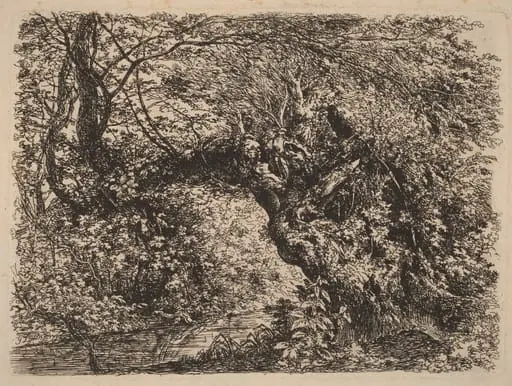
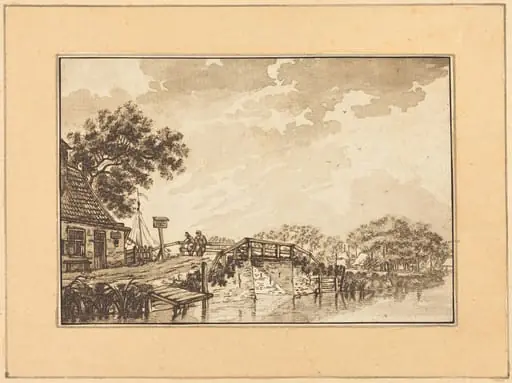 Landscape
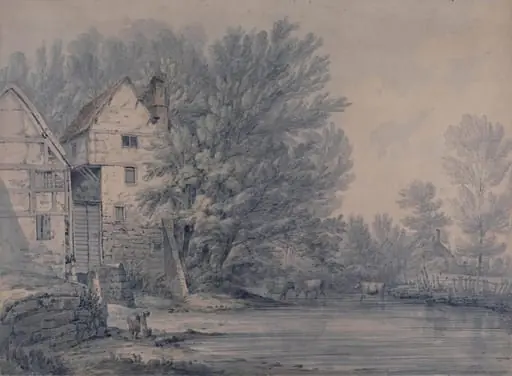 Millpond near Shrewsbury
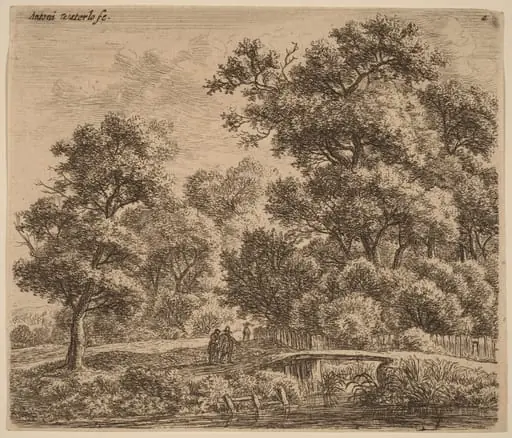 Wooded Landscape with a Bridge
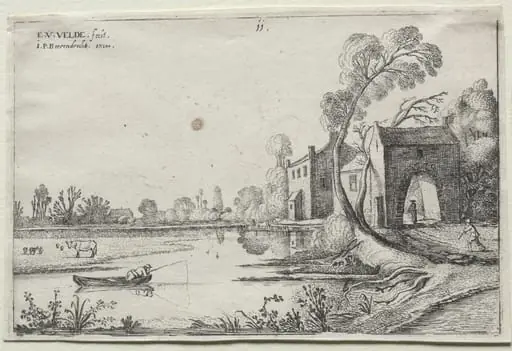 Landscape with a River and a Gatehouse
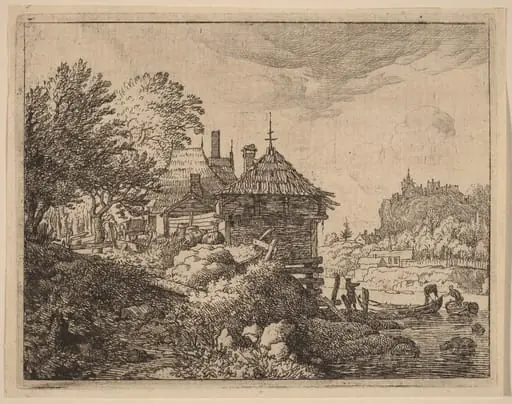 Two Boats Approaching a Hut
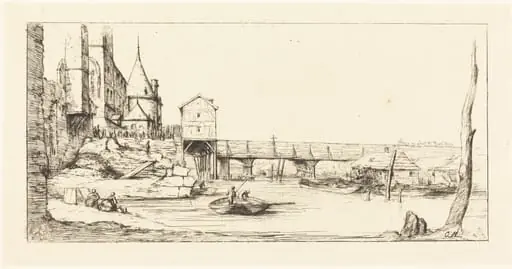 Passerelle du Pont-au-Change, Paris, après l'Incendie de 1621 (Footbridge Temporarily Replacing the Pont-au-Change, Paris, after the Fire of 1621)
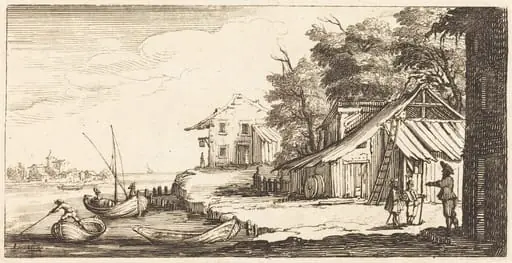 River Bank
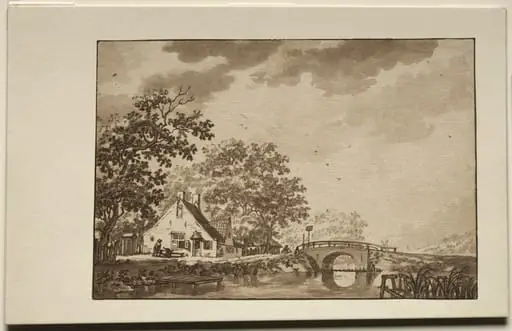 Landscape with Cottage and Bridge
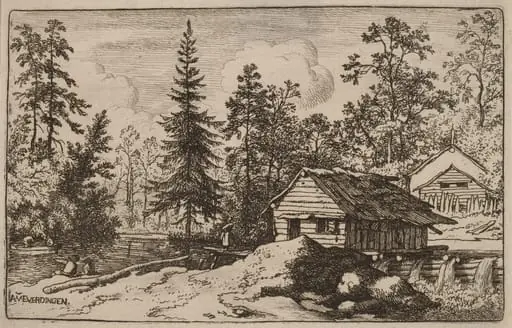 Woman in a Riverscape Looking towards a Boat
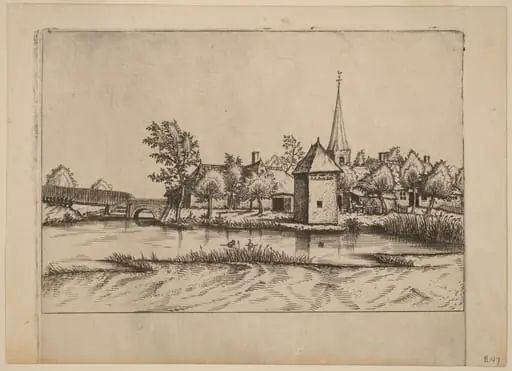 Country Village with Church and Bridge
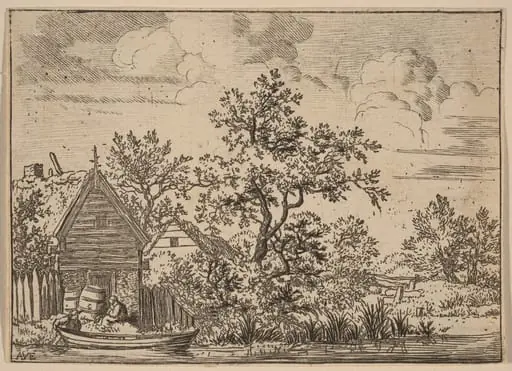 Two Casks in Front of a Cottage
 Some Pleasing Landscapes and Ruins of Ancient Monuments: Dilapidated Farm