Artwork
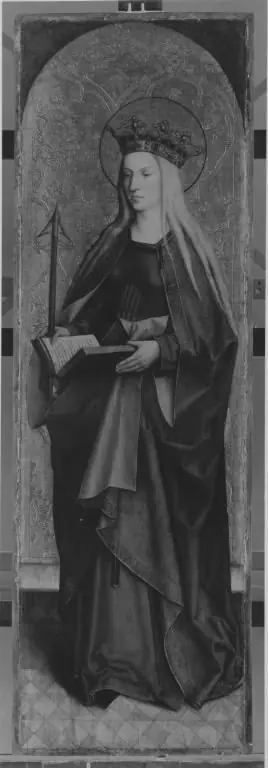
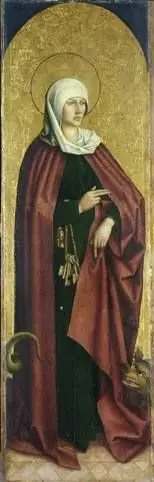
The Descent of the Holy Spirit; Saints Agnes and Dorothy (on verso)
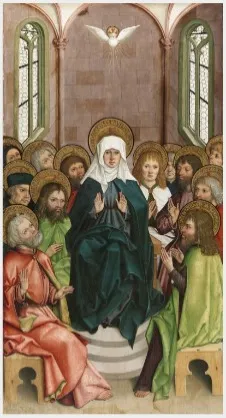
The Descent of the Holy Spirit; Saints Agnes and Dorothy (on verso) is an unspecified painting by the Northern Renaissance artist Bartholomäus Zeitblom. It dates from 1496 and is held in the collection of the National Gallery of Ireland.
About this work
Overview
The composition is framed by an architectural setting reminiscent of a church interior, with tall windows and vaulted arches that lend a sense of spaciousness.
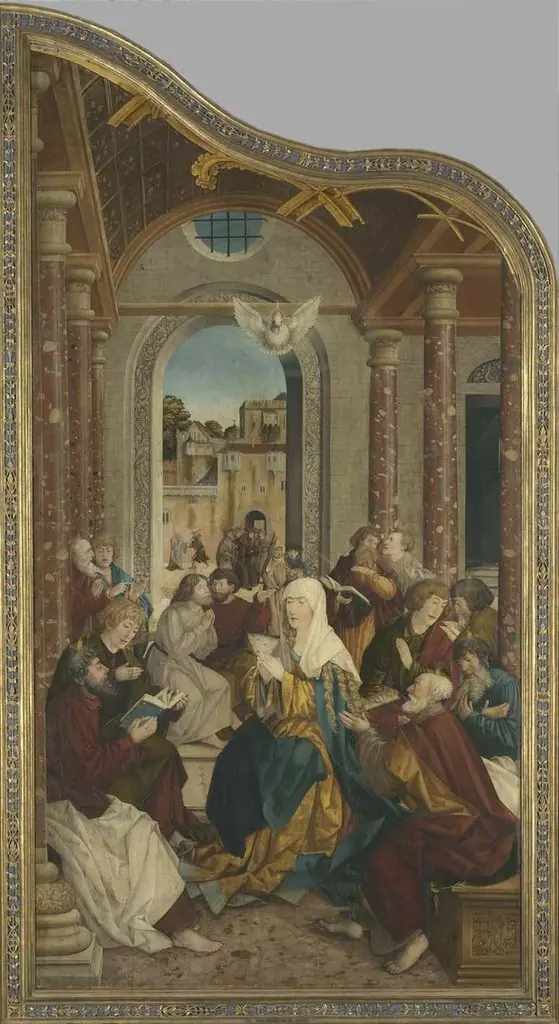
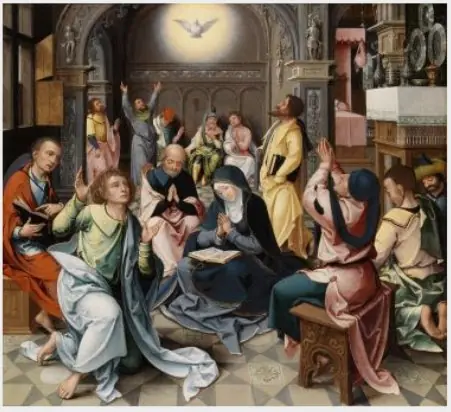
Bartholomäus Zeitblom’s panel, dated 1496, presents a devotional scene in which the Holy Spirit is shown descending upon a gathering of figures. The composition is framed by an architectural setting reminiscent of a church interior, with tall windows and vaulted arches that lend a sense of spaciousness. The work is part of the National Gallery of Ireland’s collection and forms one side of a double‑panel, the reverse bearing saints Agnes and Dorothy.
Subject & Meaning
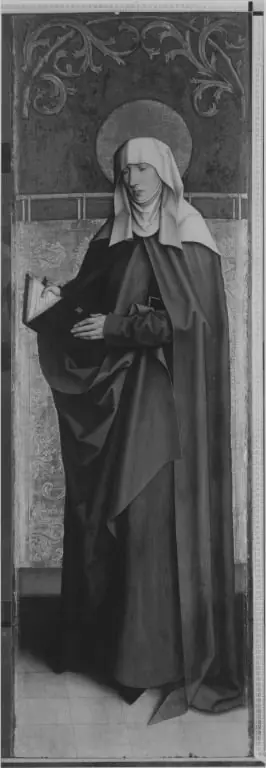
At the centre of the scene a woman, most likely the Virgin Mary, sits upon a striped pedestal, her hands lifted in prayer as the Holy Spirit descends in a luminous form. Surrounding her are worshippers of varied dress, many marked by halos, indicating their sanctity and the reverent atmosphere of the moment. The accompanying reverse panel, featuring Saints Agnes and Dorothy, reinforces the painting’s focus on intercessory prayer and the role of holy figures in mediating divine grace.
Technique & Style
Zeitblom employs the delicate linear clarity characteristic of the Ulm school, using fine brushwork to delineate the figures’ garments and the architectural details. The palette combines muted earth tones with brighter accents on the saints’ robes, creating a balanced visual hierarchy. Light is rendered softly, allowing the descending spirit to glow against the subdued interior, a hallmark of Northern Renaissance attention to atmospheric subtlety.
History & Provenance
Active in Ulm from 1482 to 1518, Zeitblom served as the chief master of the city’s leading workshop, overseeing numerous altarpieces and devotional panels. This particular work entered the National Gallery of Ireland in the twentieth century, though its earlier ownership remains undocumented. Its survival as a two‑sided panel offers insight into the devotional practices and artistic commissions of late‑medieval German churches.
Context
The painting reflects the theological emphasis of the late fifteenth century on the Holy Spirit’s role in the life of the faithful, a theme frequently depicted in German ecclesiastical art. By pairing the descent with saints renowned for purity and charity, the work aligns with contemporary devotional trends that encouraged personal piety through visual meditation. Zeitblom’s adherence to the Ulm school’s restrained elegance situates the piece within the broader Northern Renaissance movement.
Artist & collection
Artist
Bartholomäus Zeitblom (c. 1450 – c. 1519) was a German painter, the chief master of the school of Ulm, where he is on official record from 1482 to 1518.

 Kaisheimer Altar: Tod Mariens
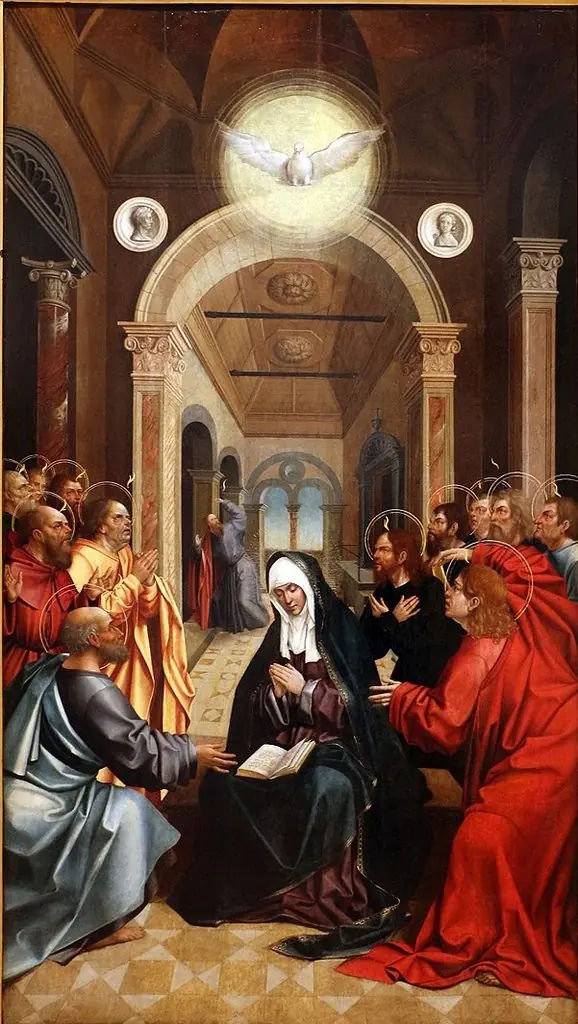 Pentecostes
 Our Lady of Mercy
 The Death of the Virgin
 Wettenhauser Hochaltar: Ausgießung des Heiligen Geistes Rückseite: ehemals Relief mit Anbetung der Könige
 The Assumption of Mary
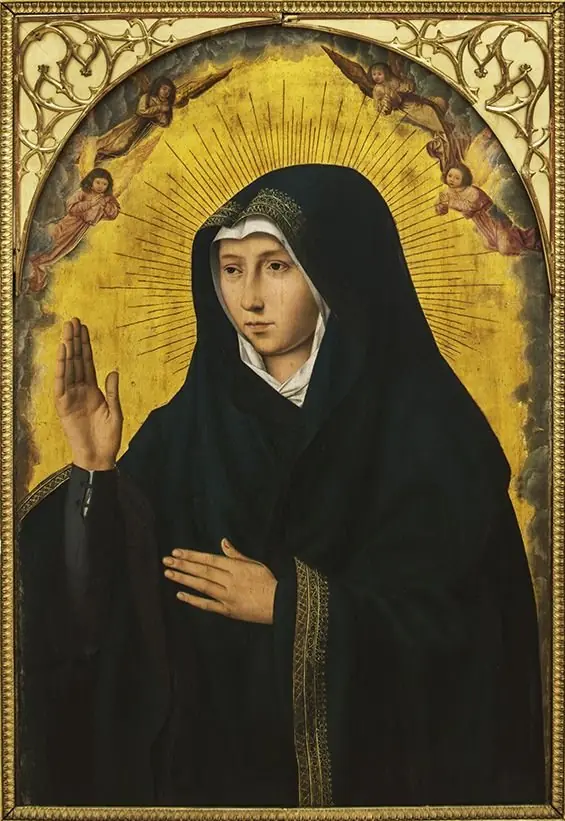 Maria als schmerzhafte Mutter
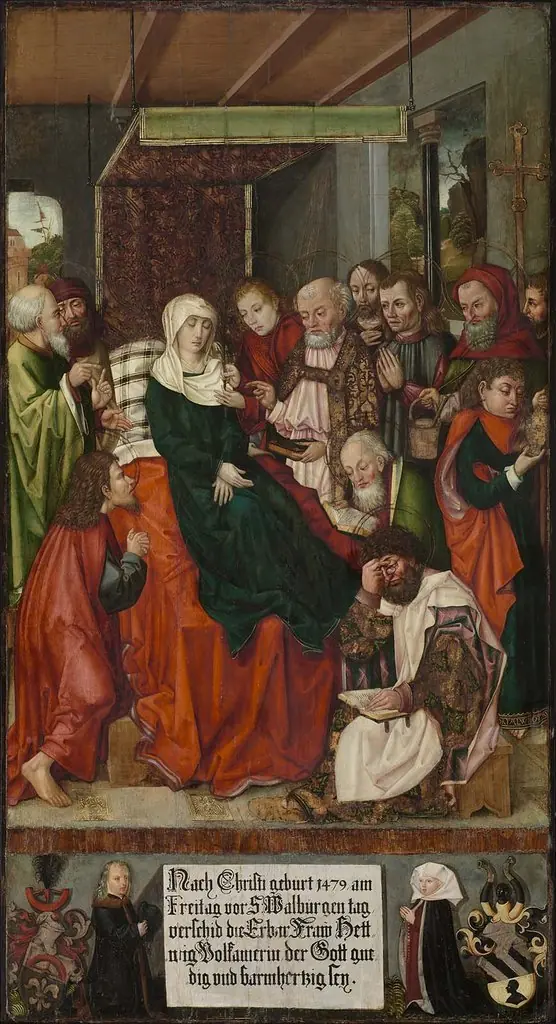 Dormition of the Virgin, with an Epitaph
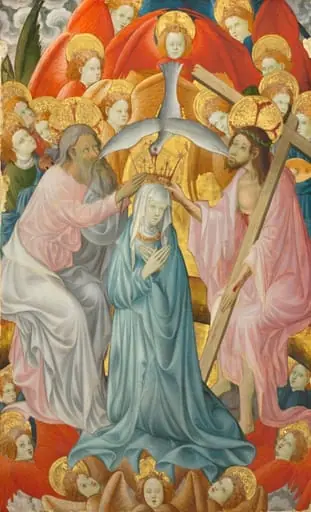 The Coronation of the Virgin with the Trinity
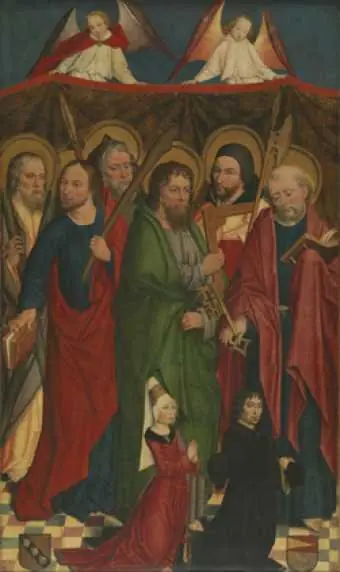 Left wing of St. Laurenz triptych - 6 Apostles and the donor Gerhard von Wesel (1443-1510) with his third wife Adelheid Bischof
 Last Judgement: Saint John the Baptist with six apostles
 The Descent of the Holy Ghost