Artwork
Pentecostes
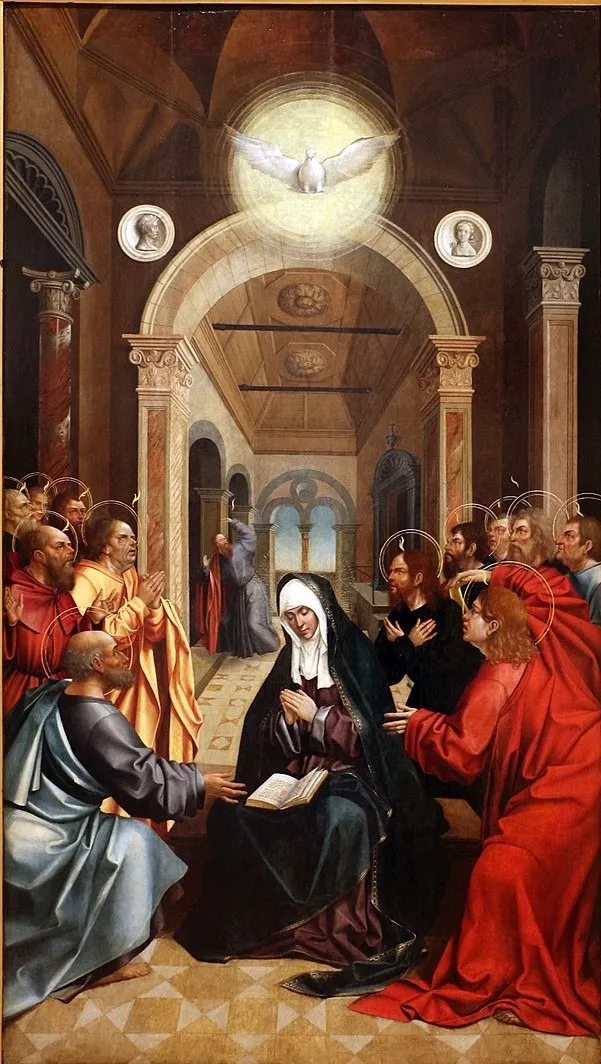
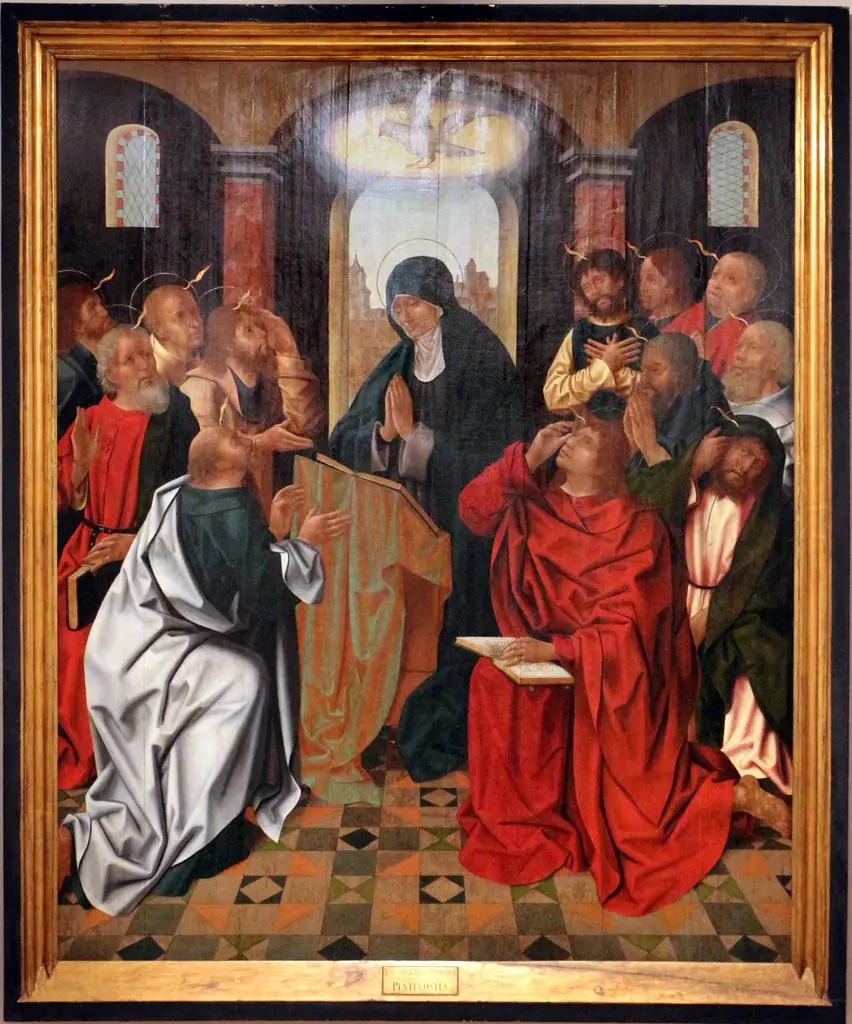
Pentecostes is an unspecified painting by the Mannerist artist Unknown. It dates from 1520 and is held in the collection of the National Museum of Ancient Art. This painting portrays a moment of spiritual revelation within an architecturally rich interior.
About this work
Overview
A central female figure, clad in dark garments and a white head covering, holds a book while surrounded by male figures, some adorned with halos.
This painting portrays a moment of spiritual revelation within an architecturally rich interior. A central female figure, clad in dark garments and a white head covering, holds a book while surrounded by male figures, some adorned with halos. Above them, a dove hovers, signaling divine presence. The setting, with its high ceilings and columns, conveys solemnity and ritual, suggesting a sacred gathering rather than an ordinary assembly.
Subject & Meaning
The scene likely represents Pentecost, the Christian event in which the Holy Spirit descends upon the apostles and other followers of Jesus. The central woman may symbolize the Virgin Mary, traditionally present among the disciples at this moment. The dove, a conventional emblem of the Holy Spirit, and the halos around the men reinforce the divine nature of the occasion, emphasizing spiritual empowerment and communal revelation.
Technique & Style
The composition is carefully balanced, with figures arranged to draw attention to the central woman and the dove above. Richly detailed robes and architectural elements suggest attention to texture and spatial depth. Lighting is subdued yet directional, enhancing the solemn mood. The style leans toward formal realism, with restrained color palettes and precise rendering that prioritize clarity and reverence over dramatic flair.
History & Provenance
The painting’s origins are not fully documented, but its iconography and stylistic elements align with late medieval or early Renaissance devotional works. It may have been commissioned for a religious institution or private chapel, intended to inspire contemplation during liturgical observances. Its preservation suggests it was valued within a community that maintained traditional religious imagery.
Context
In the period when such imagery was common, depictions of Pentecost often emphasized the unity of the early Church and the role of divine inspiration. The inclusion of the Virgin Mary as a central figure reflects her elevated status in devotional practice, even though biblical accounts do not specify her presence. This artistic choice reveals how theological tradition shaped visual narratives beyond scriptural detail.
Legacy
This work contributes to a broader tradition of religious painting that sought to make spiritual events tangible through visual symbolism. Its quiet dignity and focus on collective reverence distinguish it from more theatrical interpretations of Pentecost. Though not widely known, it remains a quiet testament to the enduring power of iconography in conveying sacred moments through composition and gesture.
Artist & collection

 Domestic Scene
 Giacomo and Cardinal Marco, investing Andrea, Abbot of San Zeno, with his Benefice
 The Nymph of Fontainebleau
 Portrait of a Woman
 Madonna and Child with Saints in the Enclosed Garden
 Venus and Minerva
 Family Group of Four on Sofa
 Wall painting from Room H of the Villa of P. Fannius Synistor at Boscoreale
 Pentecost
 Pentecost
 The Death of the Virgin
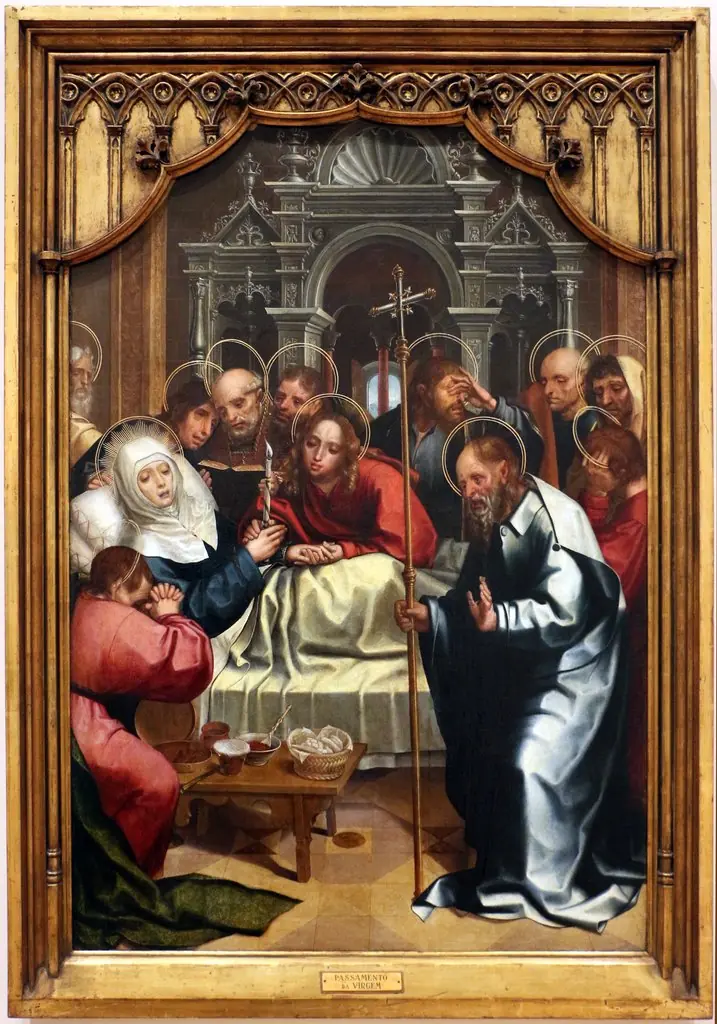 Morte da Virgem
 Pentecostes
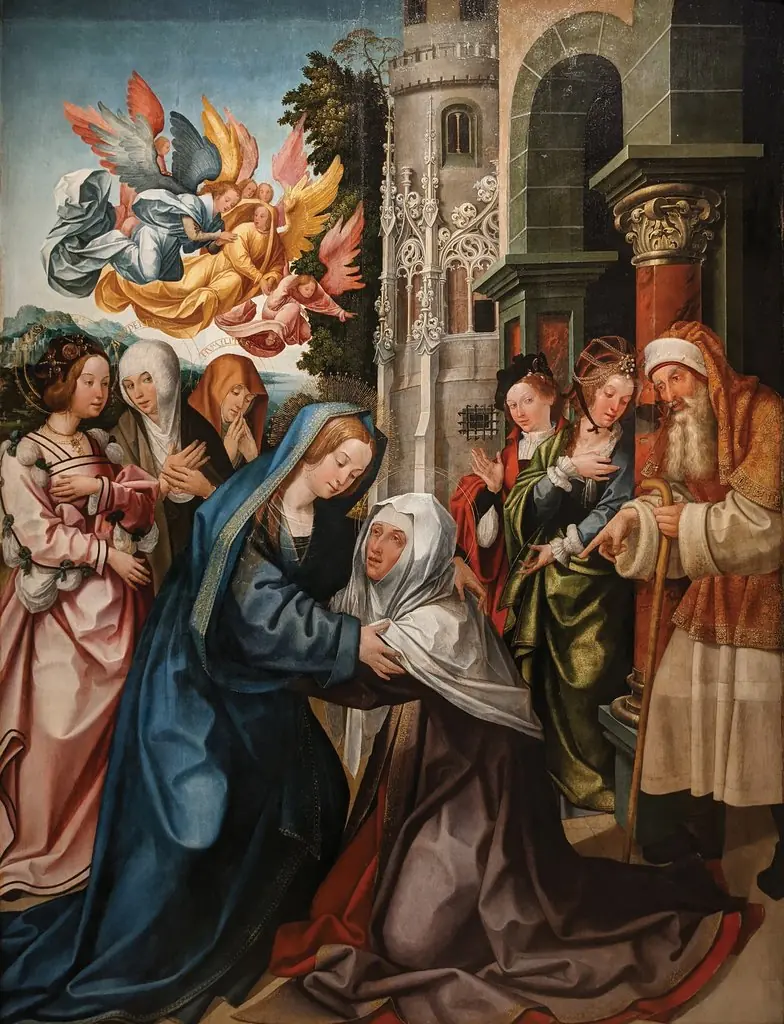 Visitation - Saint Benedict altarpiece
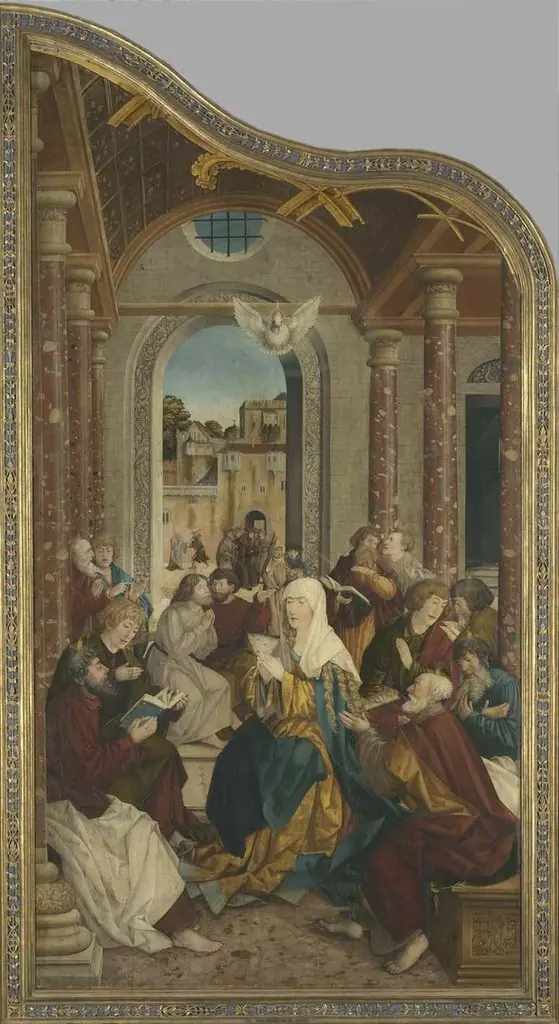 Wettenhauser Hochaltar: Ausgießung des Heiligen Geistes Rückseite: ehemals Relief mit Anbetung der Könige
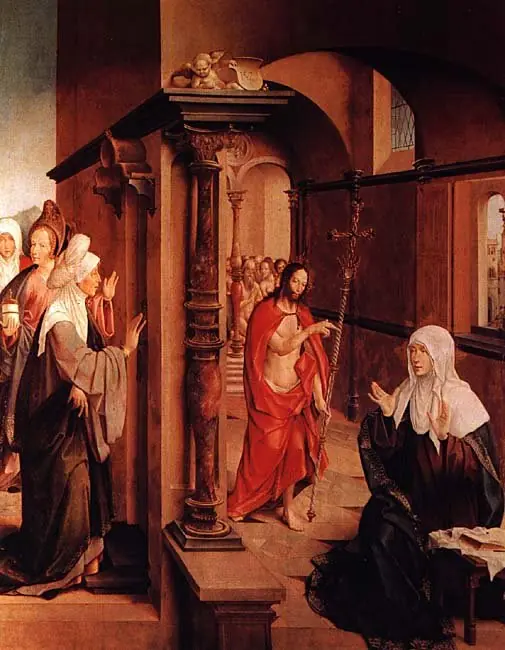 Apparition of Christ to the Virgin Mary
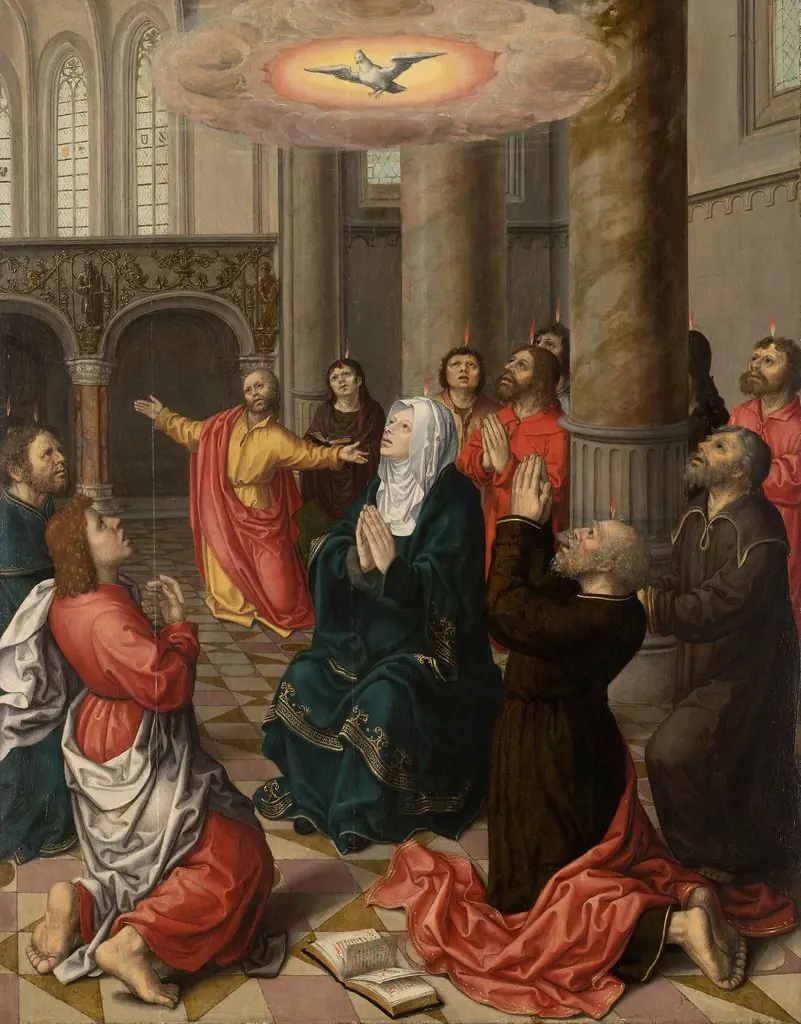 Pentecost
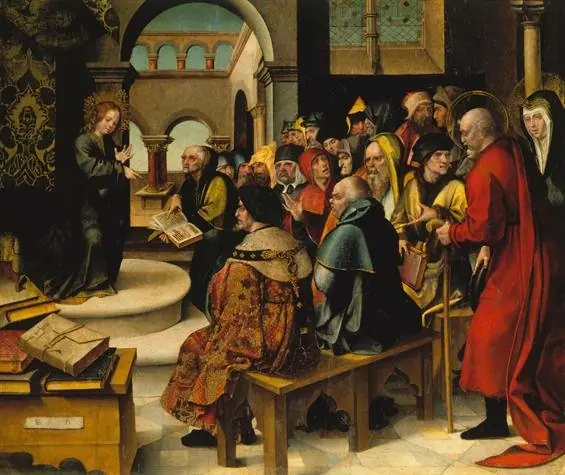 Jesus among the Doctors
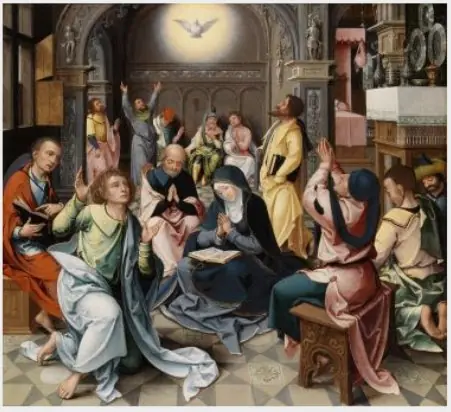 The Descent of the Holy Ghost
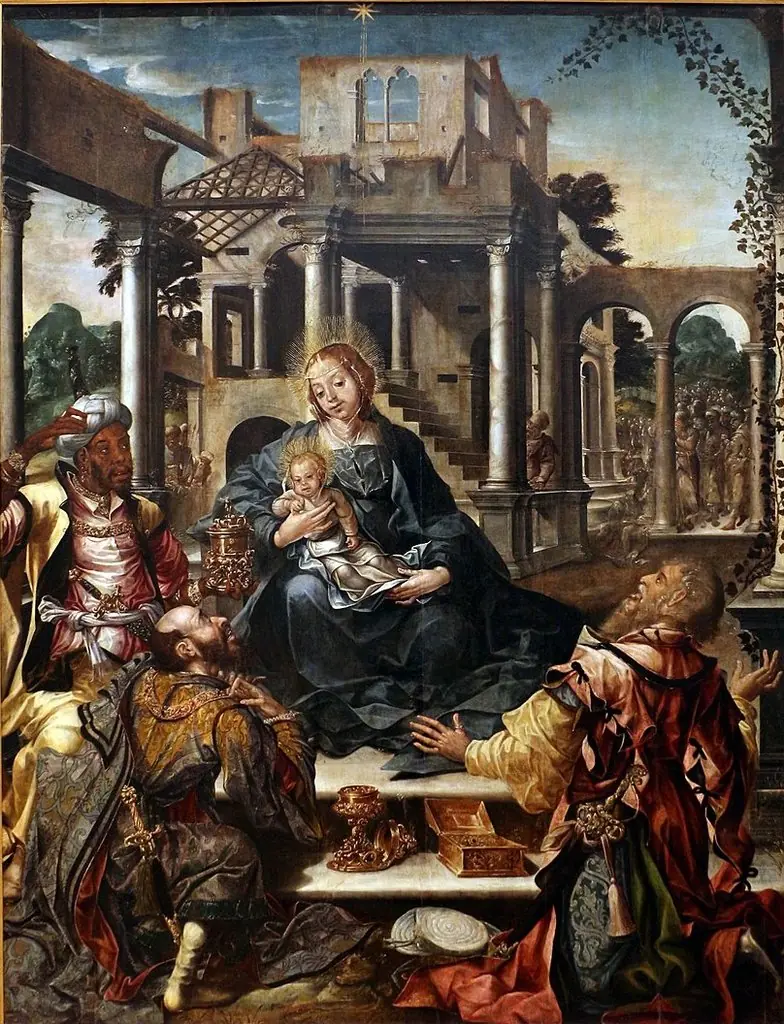 Adoração dos Reis Magos