Artwork
The Death of the Virgin
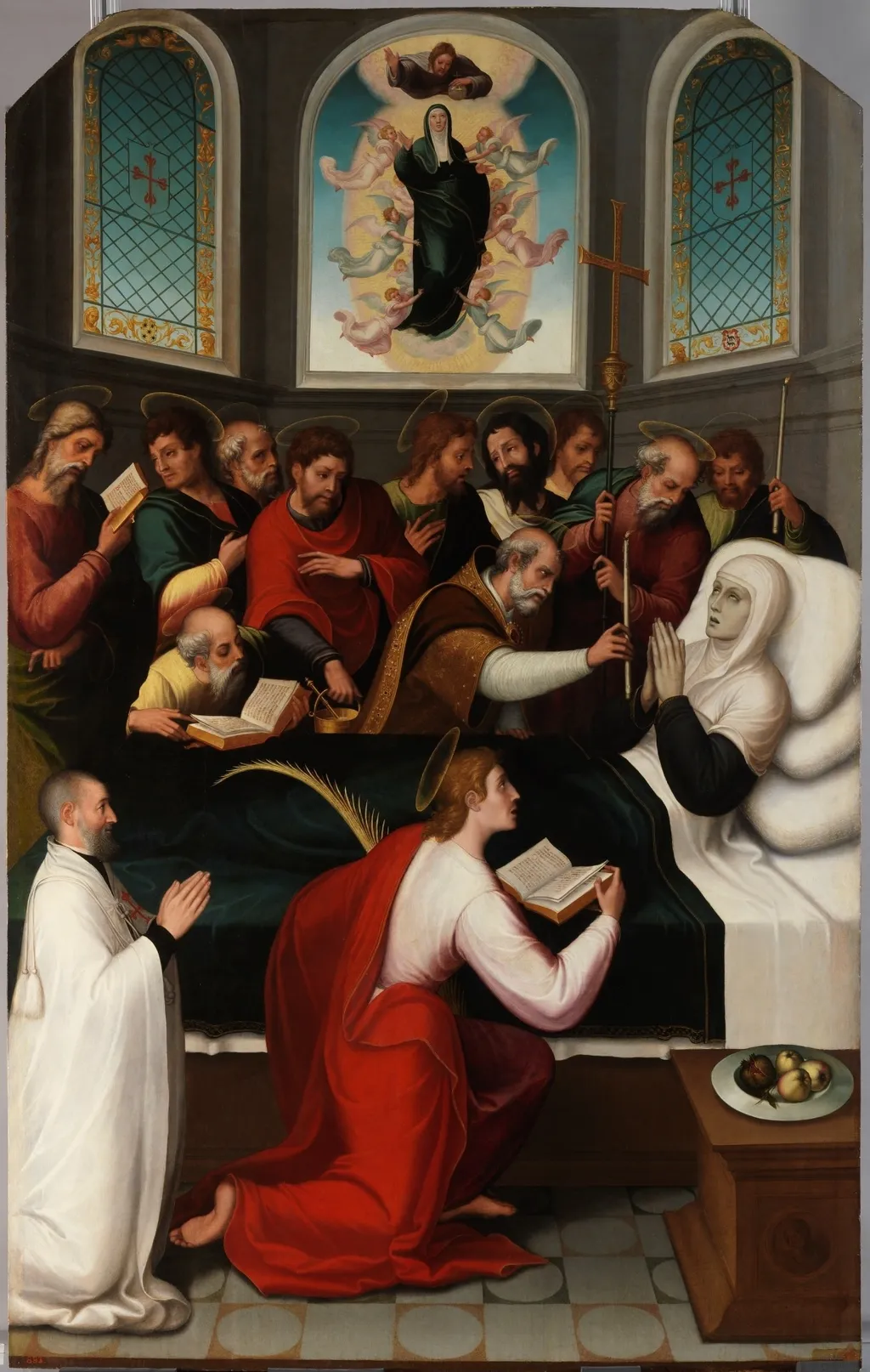
The Death of the Virgin is an oil painting by the Mannerist artist Juan Correa de Vivar. It dates from 1546 and is held in the collection of the Museo del Prado.
About this work
Overview
Executed in oil paint, the work reflects the Spanish Renaissance style of the mid-16th century, blending devotional intensity with clear narrative structure.
Painted in 1546 by Juan Correa de Vivar, The Death of the Virgin depicts the Dormition of the Virgin Mary, a pivotal moment in Christian iconography where the apostles gather around the dying Virgin. The composition centers on the Virgin, dressed in white, lying on a bed as she prepares to pass from earthly life. Surrounding her are the apostles, distinguished by their varied robes and gestures; some hold books symbolizing their role as witnesses and teachers, while others stand with folded hands in prayerful reverence. Above the earthly scene, a robed figure, representing Christ or God the Father, descends from a bright sky surrounded by angels, signifying the divine reception of the Virgin's soul. The background features two stained-glass windows with glowing crosses, adding a spiritual luminosity to the interior space. Executed in oil paint, the work reflects the Spanish Renaissance style of the mid-16th century, blending devotional intensity with clear narrative structure. This painting exemplifies Correa de Vivar's contribution to religious art in Spain during a period of significant Counter-Reformation influence, emphasizing the sanctity of the Virgin and the communal witness of the apostles.
Subject & Meaning
The central figure, clothed in white, is interpreted as a nun on her deathbed, evoking a scene of prayerful farewell. Attendants—some bearing books, others with folded hands—represent members of the Order of Calatrava, suggesting a ritual of spiritual transition. The presence of a candle and a bowl of fruit on a nearby table adds symbolic references to light, mortality, and the fleeting nature of earthly sustenance.
Technique & Style
Correa de Vivar employs chiaroscuro to model the faces and drapery, creating a contrast between illuminated areas that seem to glow and deeper shadows that recede. The handling of light on fabric and flesh demonstrates a careful study of how illumination defines form, while the ethereal sky and angelic entourage are rendered with softer, diffused tones that separate the divine realm from the earthly gathering.
History & Provenance
Completed in the mid‑16th century, the painting entered the Spanish royal collection before being transferred to the Museo del Prado, where it remains on display. Documentation traces its ownership through the royal inventories of the period, confirming its attribution to Correa de Vivar and its continuous presence in Spanish institutional holdings.
Context
The work reflects the Counter‑Reformation emphasis on pious devotion and the veneration of holy death. By depicting a nun’s passing within a framework of religious order and celestial intercession, the painting aligns with contemporary Spanish art that sought to reinforce Catholic doctrine through emotionally resonant, didactic imagery.
Artist & collection