Artwork
Lazarus im Palast des reichen Mannes
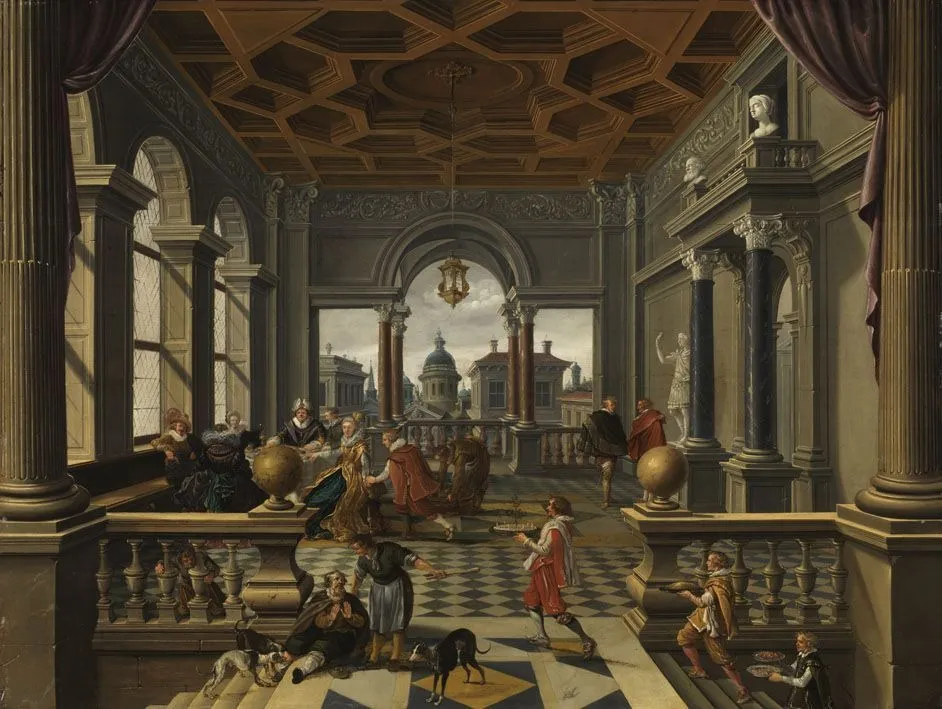
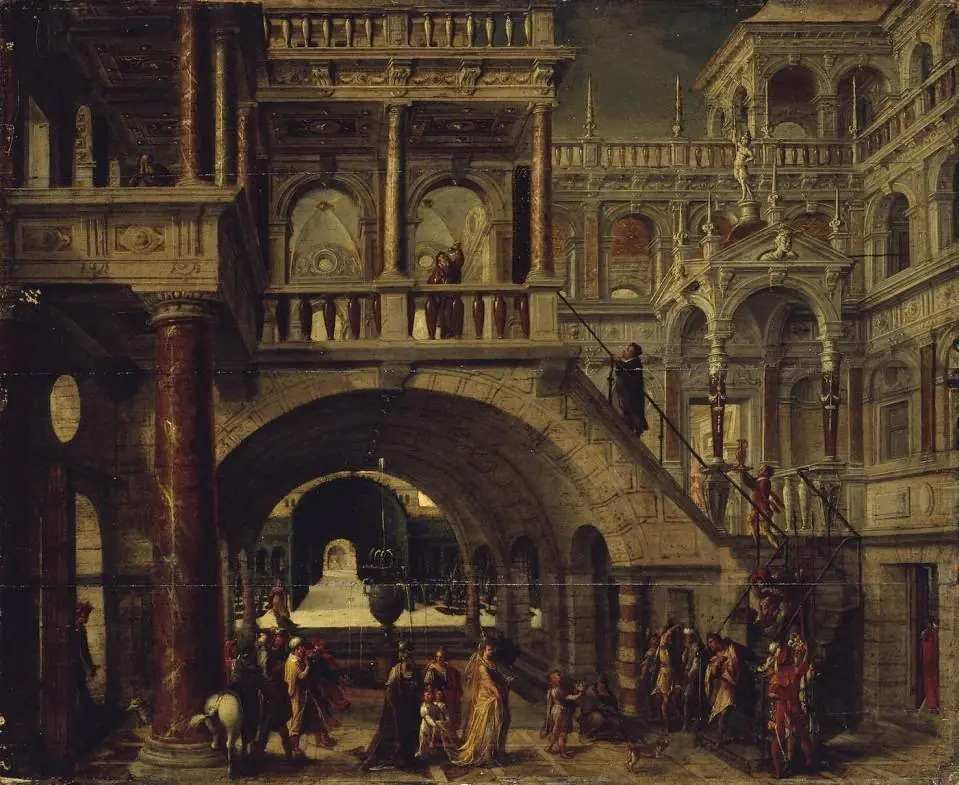
Lazarus im Palast des reichen Mannes is an unspecified painting by the Dutch Golden Age artist Bartholomeus van Bassen. It dates from 1625 and is held in the collection of the Bavarian State Painting Collections.
About this work
Overview
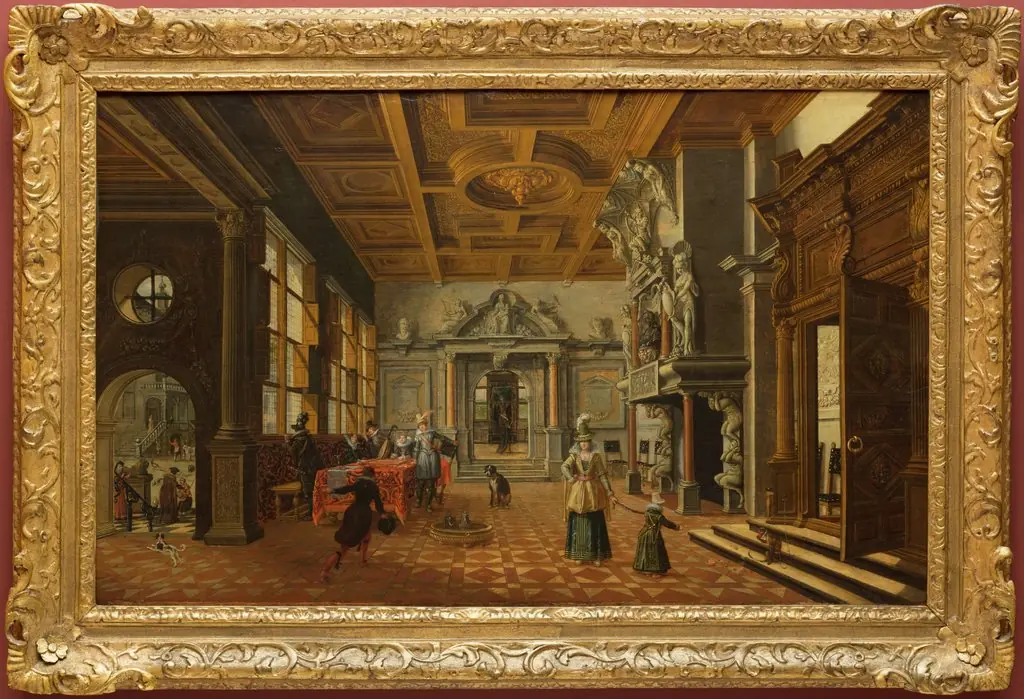
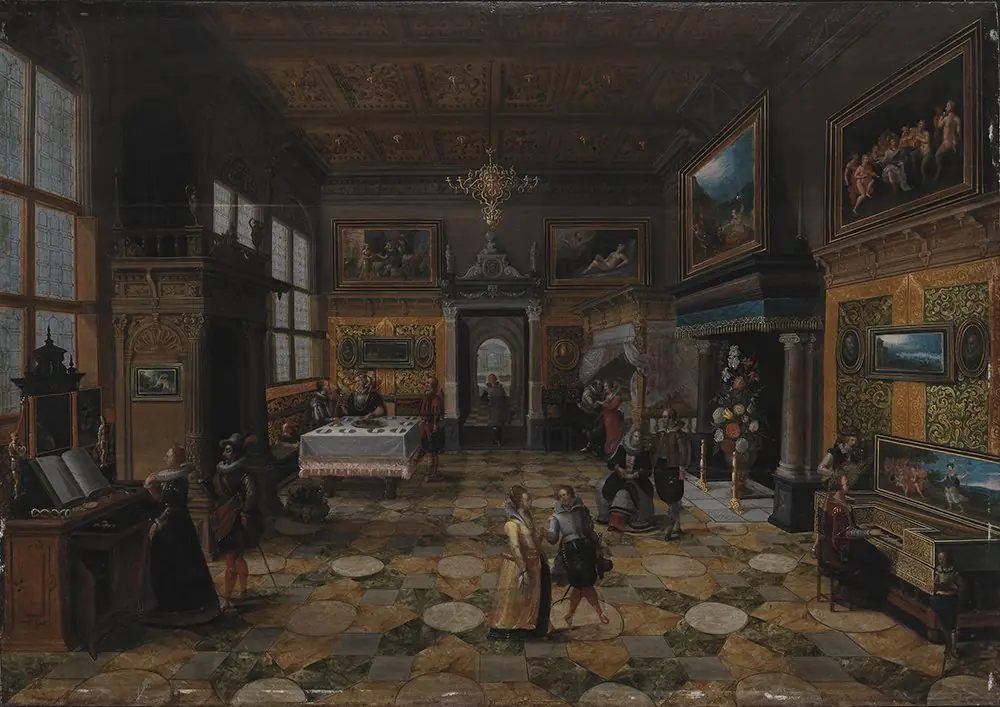
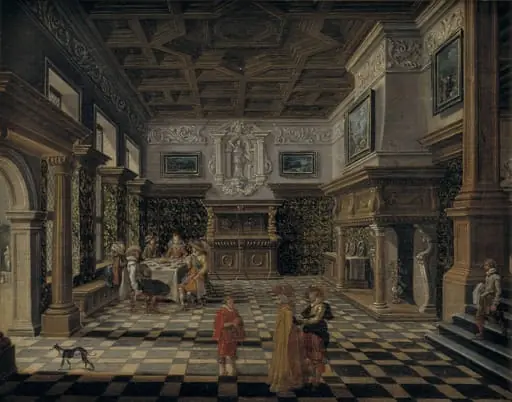
Architectural elements such as columns and sculptural niches frame a gathering of elegantly dressed figures engaged in various activities.
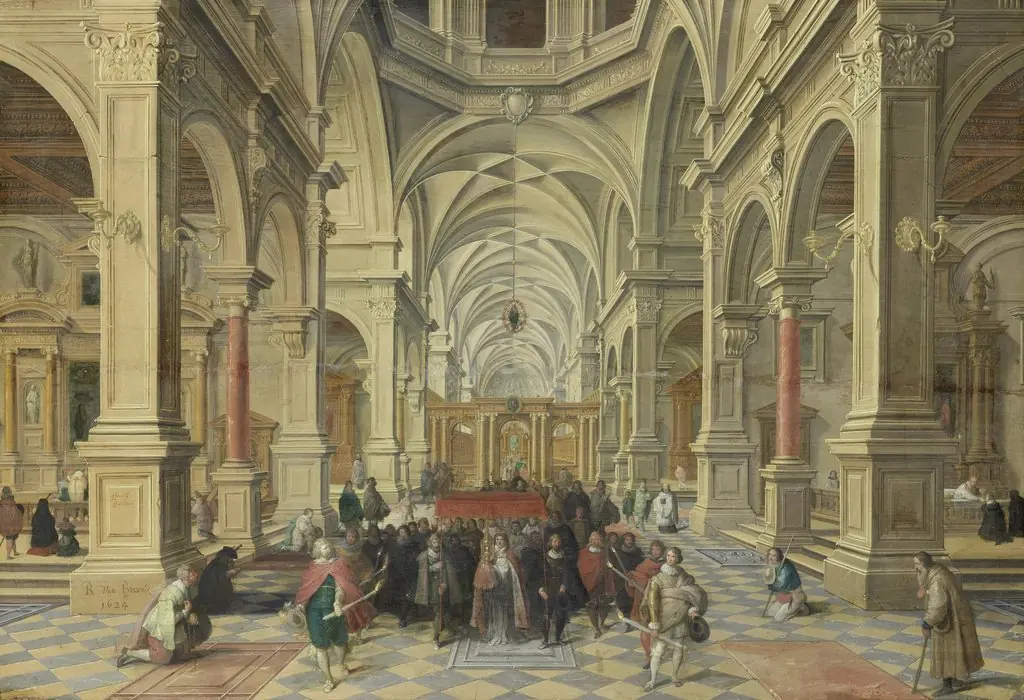
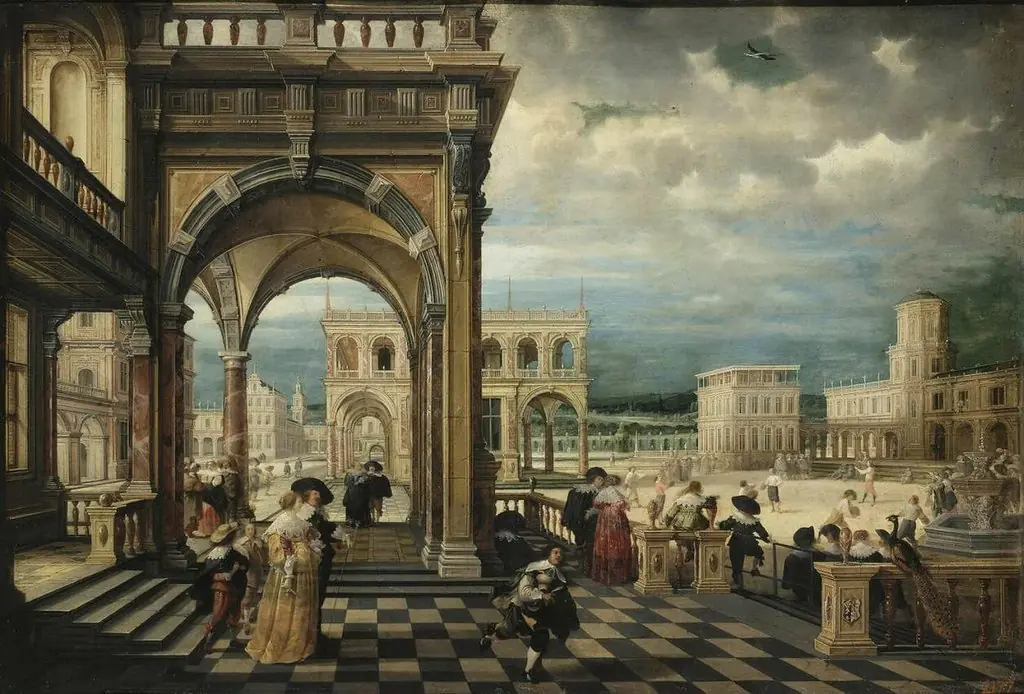
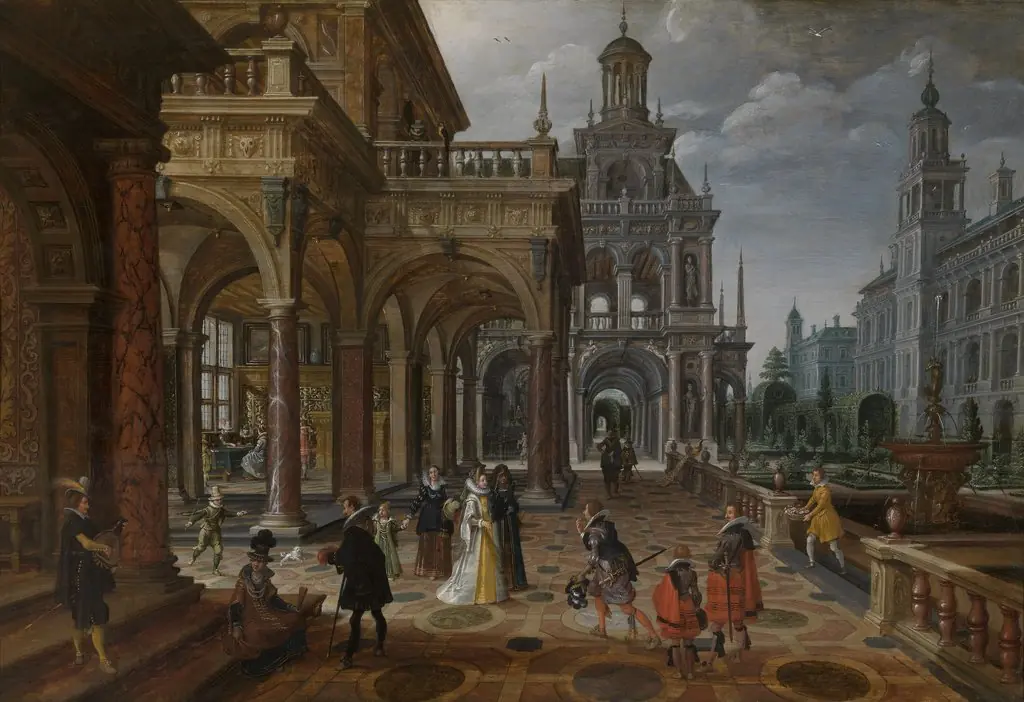
Bartholomeus van Bassen’s 1625 oil painting, titled “Lazarus im Palast des reichen Mannes,” presents an expansive interior scene. The composition is anchored by a lofty, elaborately decorated ceiling and a series of tall windows that flood the space with light. Architectural elements such as columns and sculptural niches frame a gathering of elegantly dressed figures engaged in various activities.
Subject & Meaning
The work depicts a biblical episode set within a sumptuous palace, juxtaposing the miracle of Lazarus’s resurrection with the opulence of a wealthy household. The multitude of well‑attired participants—conversing, seated, or standing—suggests a narrative of social spectacle surrounding the miraculous event, highlighting the contrast between spiritual wonder and material extravagance.
Technique & Style
Van Bassen employs a meticulous, almost theatrical approach to perspective, rendering the room’s depth through receding arches and a balanced arrangement of light across the floor and walls. The painter’s handling of texture—silks, lace, and polished surfaces—is rendered with fine brushwork, while the chiaroscuro accentuates the three‑dimensionality of the architectural framework.
History & Provenance
Created in 1625, the canvas entered the collection of the Alte Pinakothek in Munich, where it remains on display. Its attribution to van Bassen aligns with his known interest in architectural interiors and genre scenes, confirming the painting’s place within his early‑seventeenth‑century oeuvre.
Artist & collection
Artist
Bartholomeus van Bassen (1590–1652) was an artist, born in The Hague.