Artwork
'G.F. Handel'
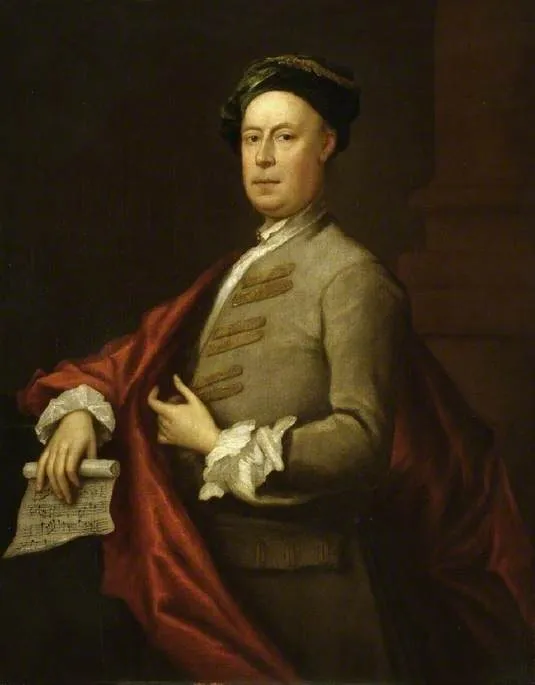
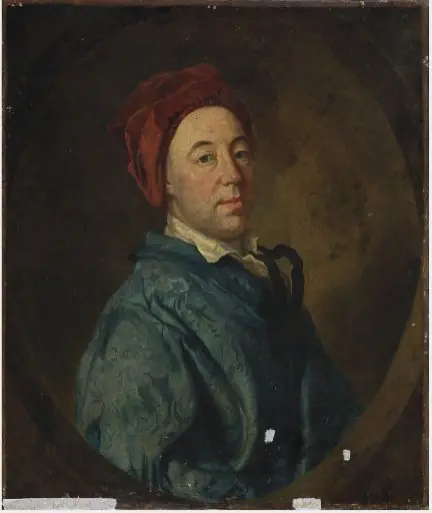
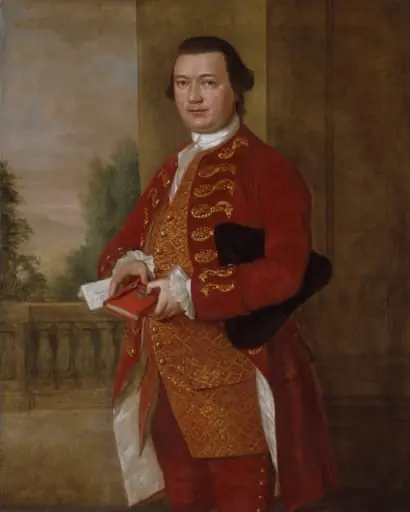
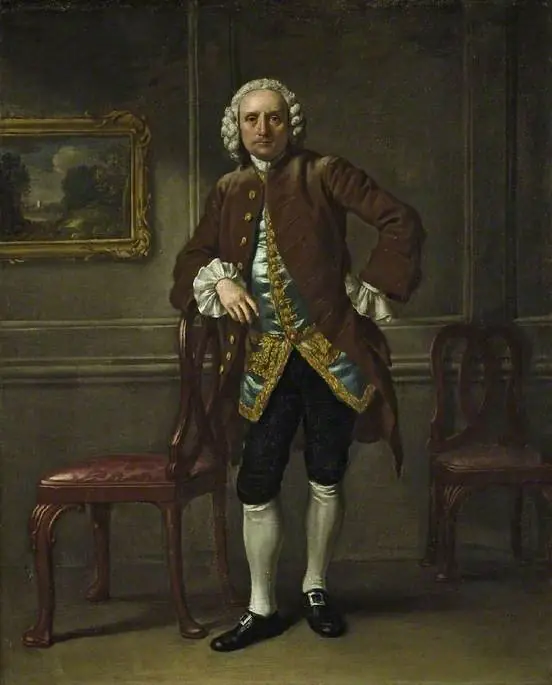
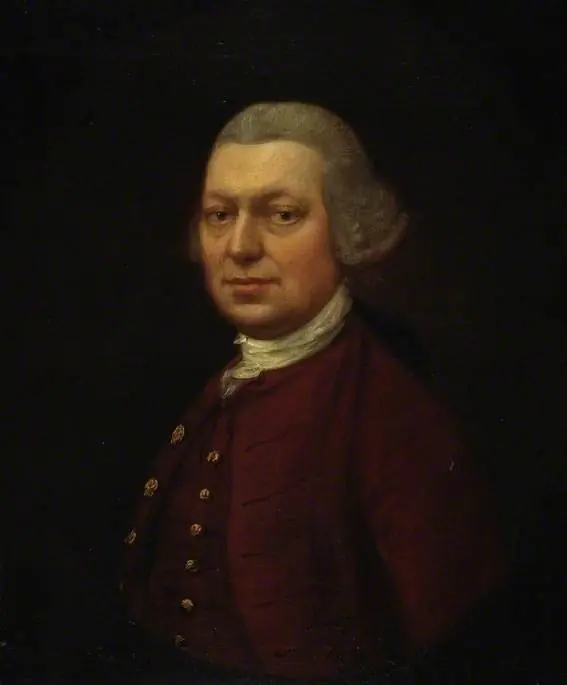
'G.F. Handel' is an oil painting by Bartholomew Dandridge. It dates from 1733 and is held in the collection of the Fitzwilliam Museum.
About this work
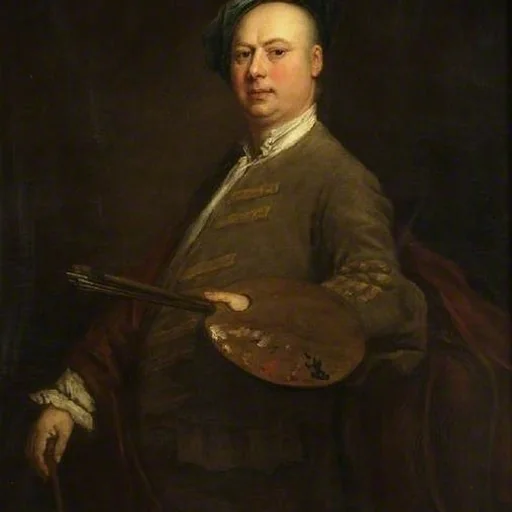
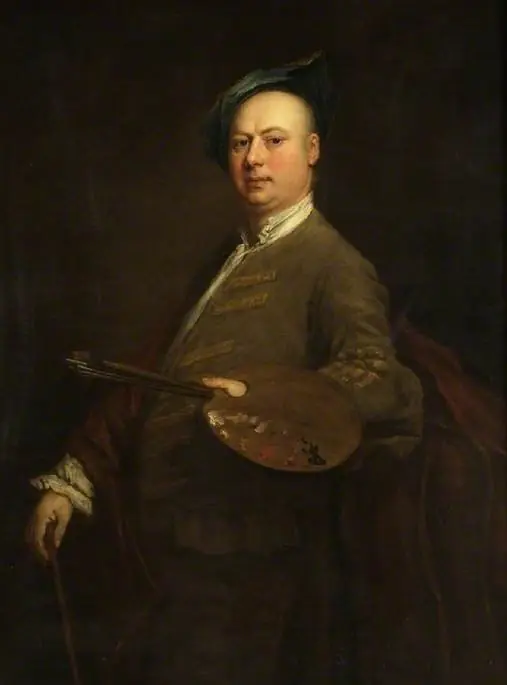
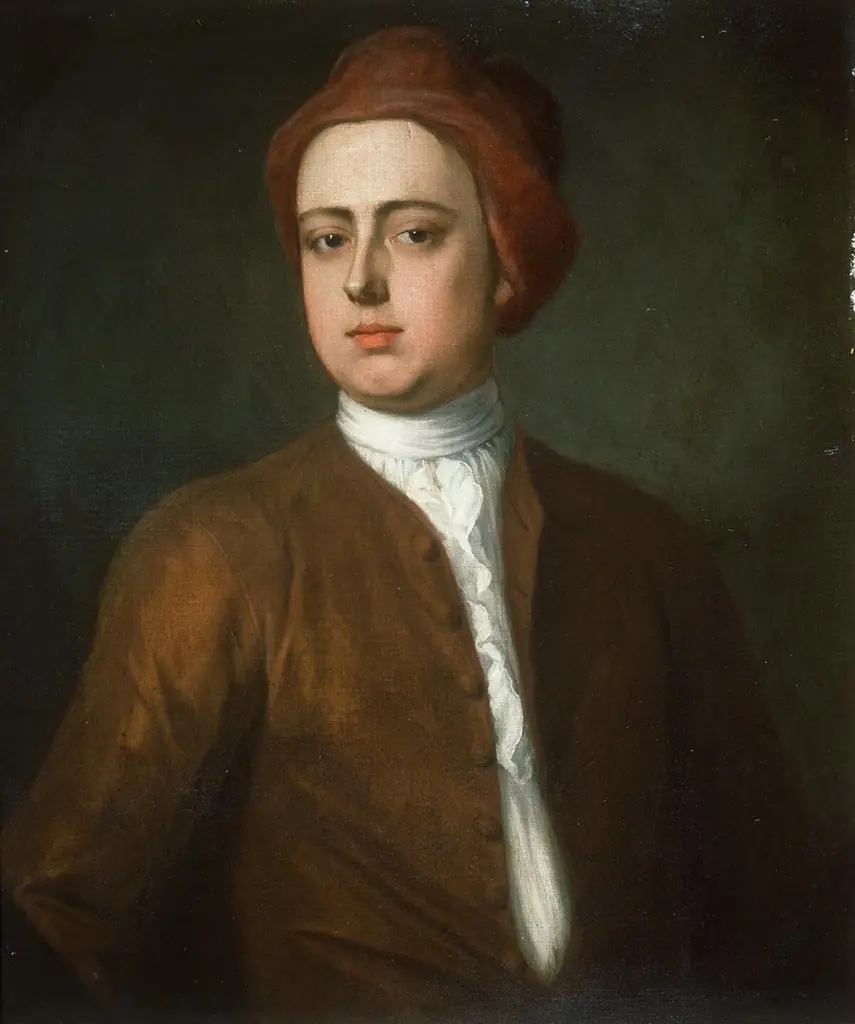
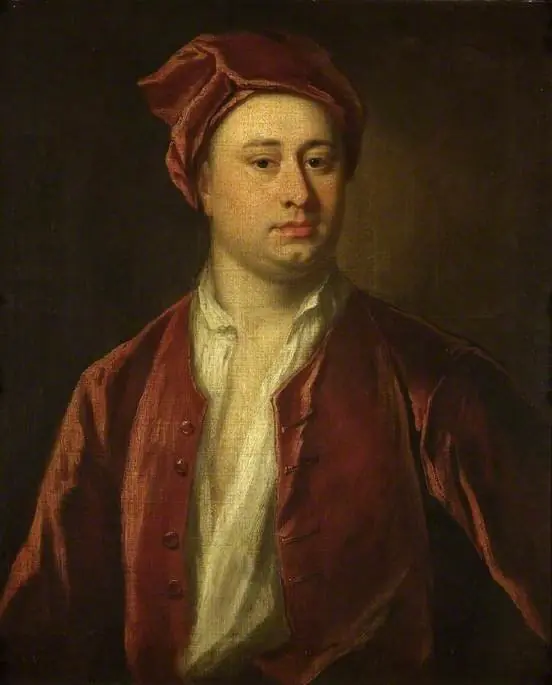
This portrait painting depicts a man in 18th-century attire, wearing a red cloak draped over his left shoulder and a green hat.
This portrait painting depicts a man in 18th-century attire, wearing a red cloak draped over his left shoulder and a green hat. He holds a rolled-up sheet of music in his right hand, while his left hand rests on the music. The man's face is blurred, but his gaze is directed towards the viewer.
The man's clothing and the music he holds suggest that he is a musician or composer. The painting's style and the subject's attire are consistent with the artistic conventions of the 18th century.
To learn more about the artist behind this portrait, explore the works of Bartholomew Dandridge.
Overview
Bartholomew Dandridge’s oil portrait, dated around 1733, presents the celebrated composer George Frideric Handel. The work is part of the Fitzwilliam Museum’s collection and offers a rare visual record of the musician during his early London years. The composition balances formal portraiture with subtle references to Handel’s professional identity.
Subject & Meaning
The sitter is shown in contemporary dress, a red cloak over his left shoulder and a green hat, holding a rolled manuscript of music. The inclusion of the score and the attentive pose suggest a celebration of his musical achievements, inviting viewers to recognize the subject not merely as a gentleman but as an active composer.
Technique & Style
Executed in oil on canvas, Dandridge employs a restrained palette typical of early‑18th‑century British portraiture. The brushwork renders the fabrics with a tactile quality, while the facial features are softened, creating a slightly blurred visage that nonetheless conveys a direct gaze toward the observer.
History & Provenance
Created circa 1733, the painting entered the Fitzwilliam Museum’s holdings through acquisition in the 19th century, though earlier ownership records are sparse. Its survival offers insight into the network of artists and patrons surrounding Handel during his rise in England.
Context
The portrait aligns with a period when portraiture served both as personal commemoration and public promotion of artistic figures. Dandridge’s choice to depict Handel with a music manuscript reflects contemporary conventions that linked visual art with the subject’s professional sphere, reinforcing the composer’s cultural stature in Georgian society.
Artist & collection