Artwork
Virgen con el Niño
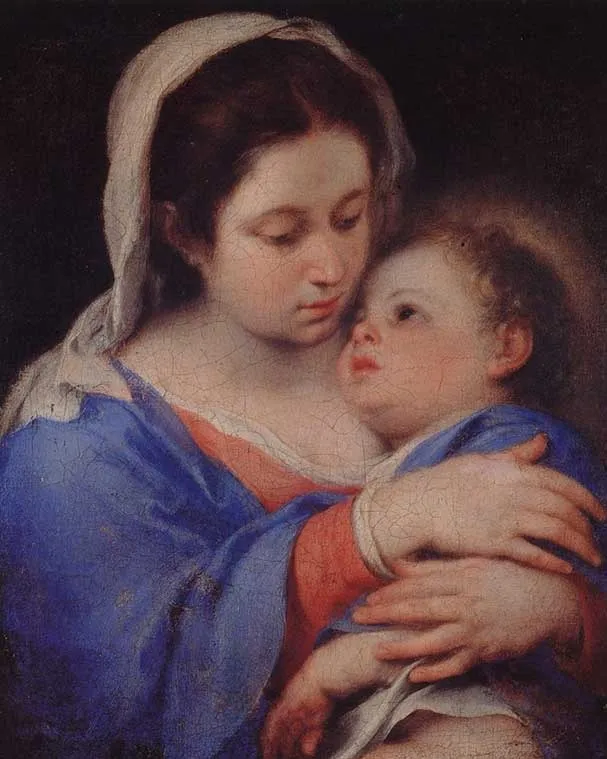
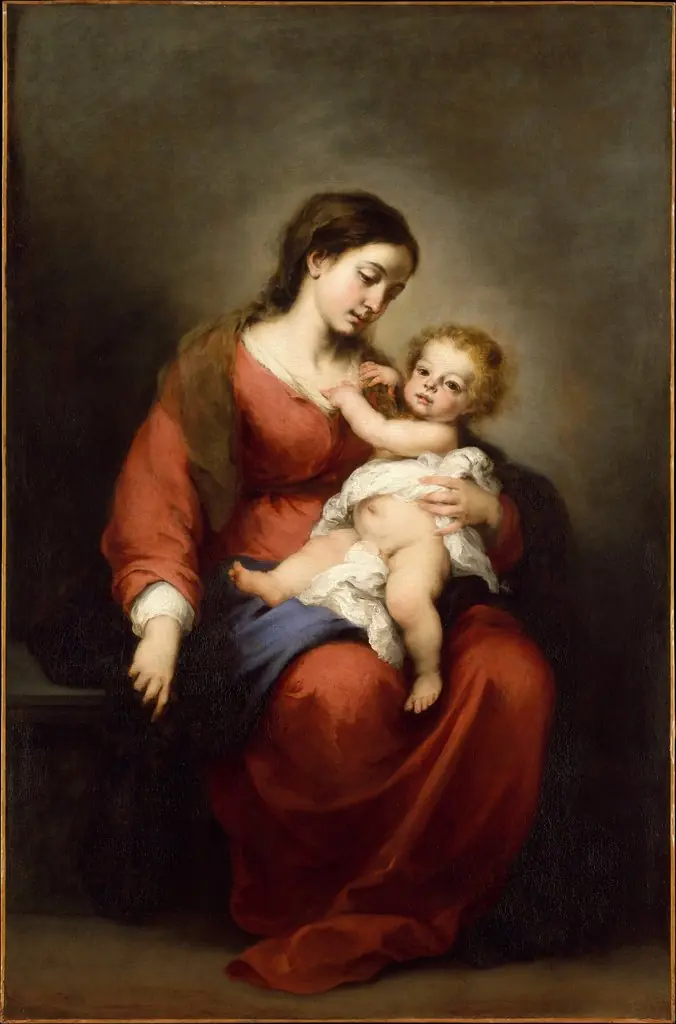
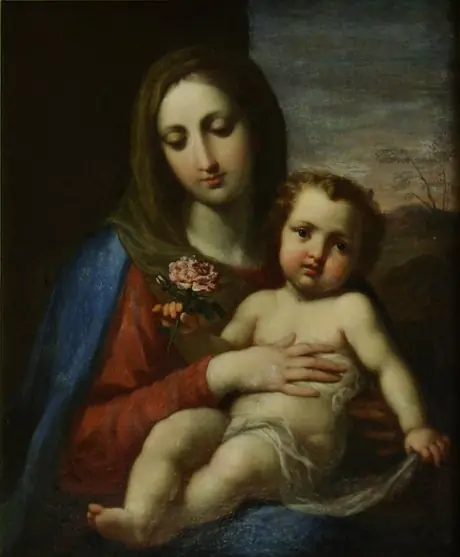
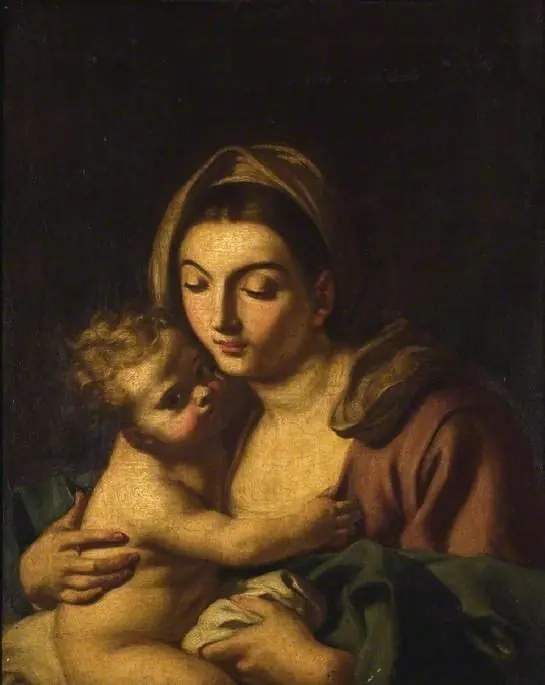
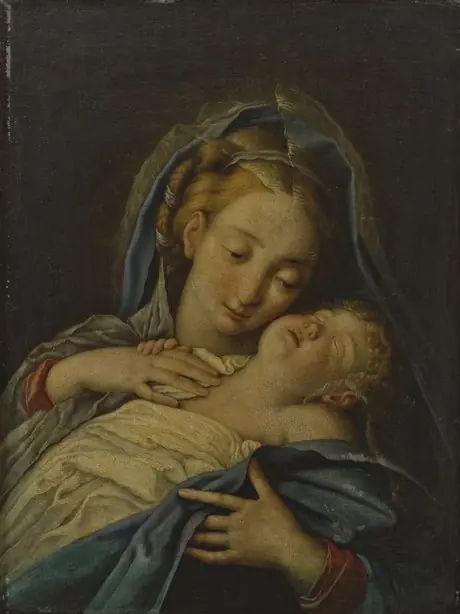
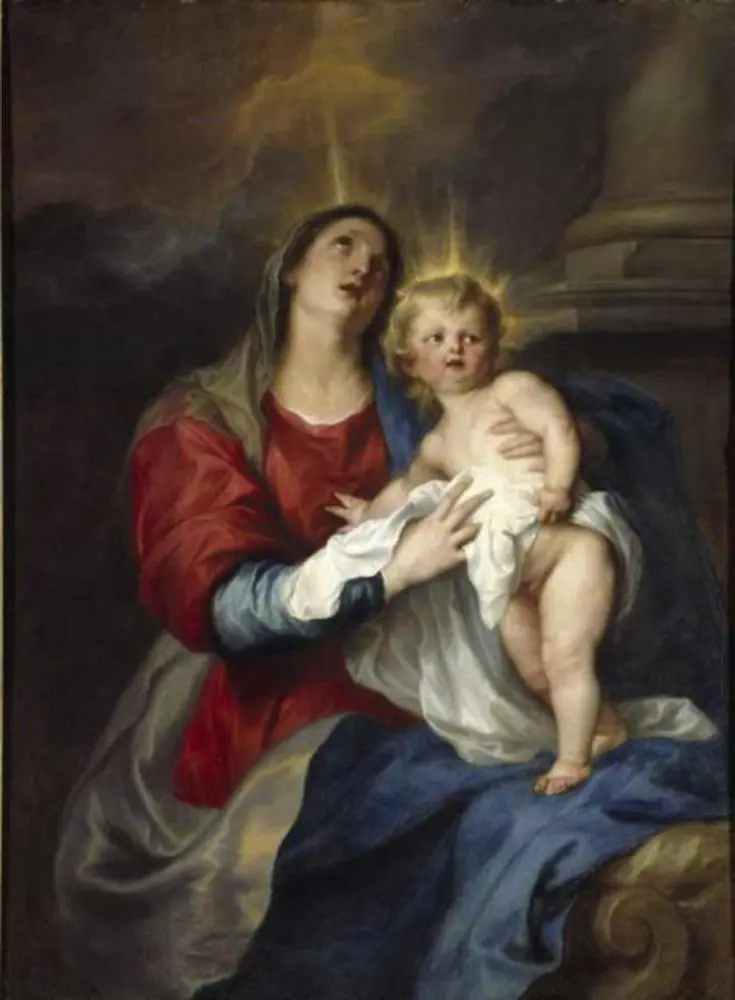
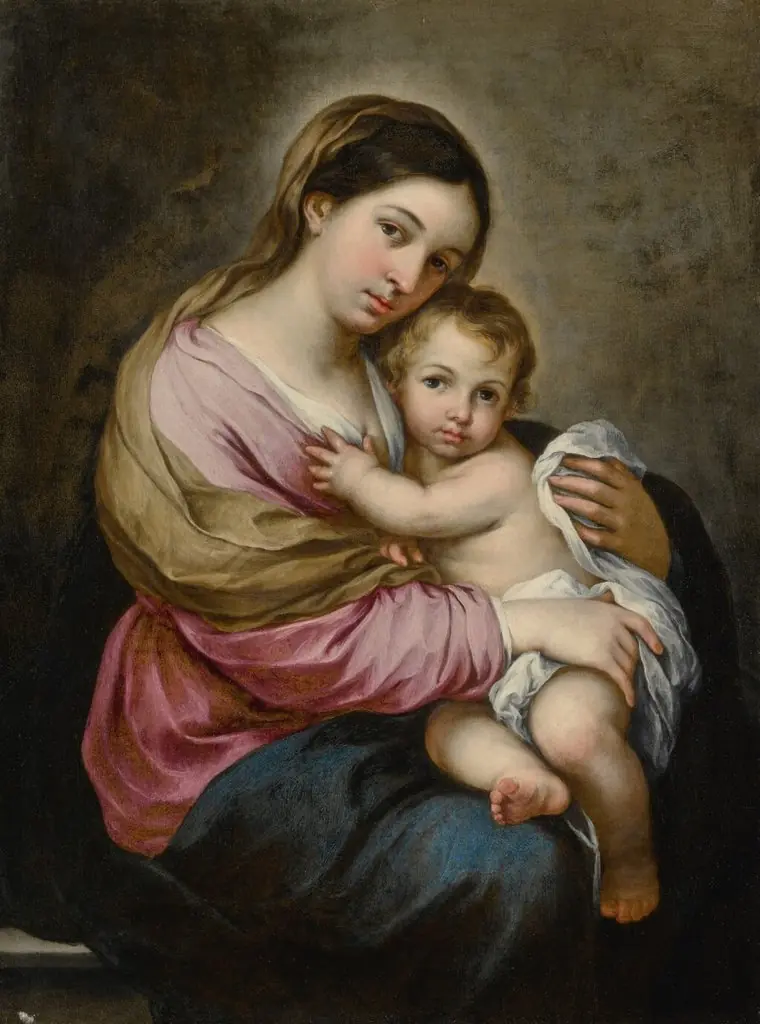
Virgen con el Niño is an oil painting by Bartolomé Esteban Murillo. It dates from 1659 and is held in the collection of the Chilean National Museum of Fine Arts. Painted circa 1659, this oil on canvas depicts the Virgin Mary with the infant Jesus, a common devotional subject in Spanish Baroque art.
About this work
Overview
Executed by Bartolomé Esteban Murillo, the work reflects his signature approach to sacred imagery—gentle, humanized, and emotionally resonant.
Painted circa 1659, this oil on canvas depicts the Virgin Mary with the infant Jesus, a common devotional subject in Spanish Baroque art. Executed by Bartolomé Esteban Murillo, the work reflects his signature approach to sacred imagery—gentle, humanized, and emotionally resonant. It is held in the collection of the National Museum of Fine Arts in Santiago, Chile, where it remains a key example of 17th-century Spanish religious painting outside Spain.
Subject & Meaning
The Virgin, dressed in a blue mantle and white head covering, cradles the Christ Child with quiet tenderness. The child, dressed in a similarly hued robe, gazes upward with an expression of innocent curiosity rather than divine authority. This intimate, domestic moment emphasizes maternal affection over theological grandeur, aligning with Murillo’s broader tendency to render sacred figures with accessible, human warmth.
Technique & Style
Murillo employs soft chiaroscuro to model forms gently, avoiding harsh contrasts in favor of diffused light that enhances the scene’s intimacy. His brushwork includes subtle impasto in the folds of fabric and the child’s skin, adding tactile presence without overt texture. Warm, muted tones unify the composition, while the delicate handling of light suggests a quiet, interior space, reinforcing the painting’s emotional restraint and lyrical tone.
History & Provenance
The painting was likely created during Murillo’s mature period in Seville, when he produced numerous devotional works for churches and private patrons. It entered the collection of the National Museum of Fine Arts in Santiago through 19th-century acquisitions, possibly as part of a broader transfer of Spanish religious art to Latin American institutions during the colonial and post-independence eras.
Context
In mid-17th-century Spain, religious imagery served both spiritual and social functions, often commissioned to inspire piety among the faithful. Murillo’s approach, emphasizing tenderness over austerity, responded to Counter-Reformation ideals that favored emotionally engaging depictions of sacred figures. His popularity extended beyond Spain, influencing collectors and artists across Europe and the Americas.
Legacy
Murillo’s Virgin and Child compositions became widely reproduced and admired for their emotional accessibility. This painting exemplifies how his style helped redefine religious art in the Baroque era—not through dramatic intensity, but through quiet humanity. Its presence in Santiago underscores the transatlantic circulation of Spanish artistic traditions and their enduring resonance in Latin American collections.
Artist & collection
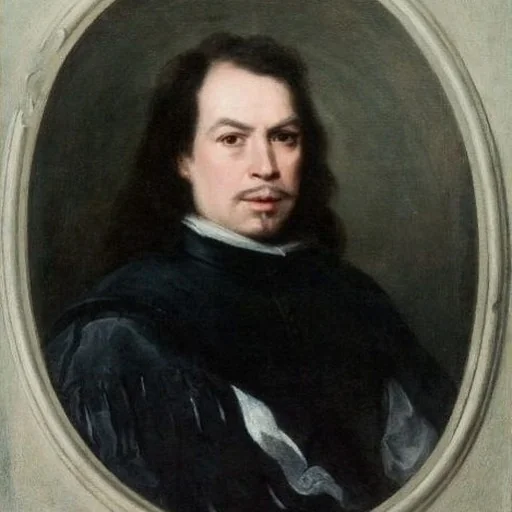
Artist
Bartolomé Esteban Murillo ( mure-IL-oh, m(y)uu-REE-oh, Spanish: ; late December 1617, baptised 1 January 1618 – 3 April 1682) was a Spanish Baroque painter.