Artwork
Virgin and Child.
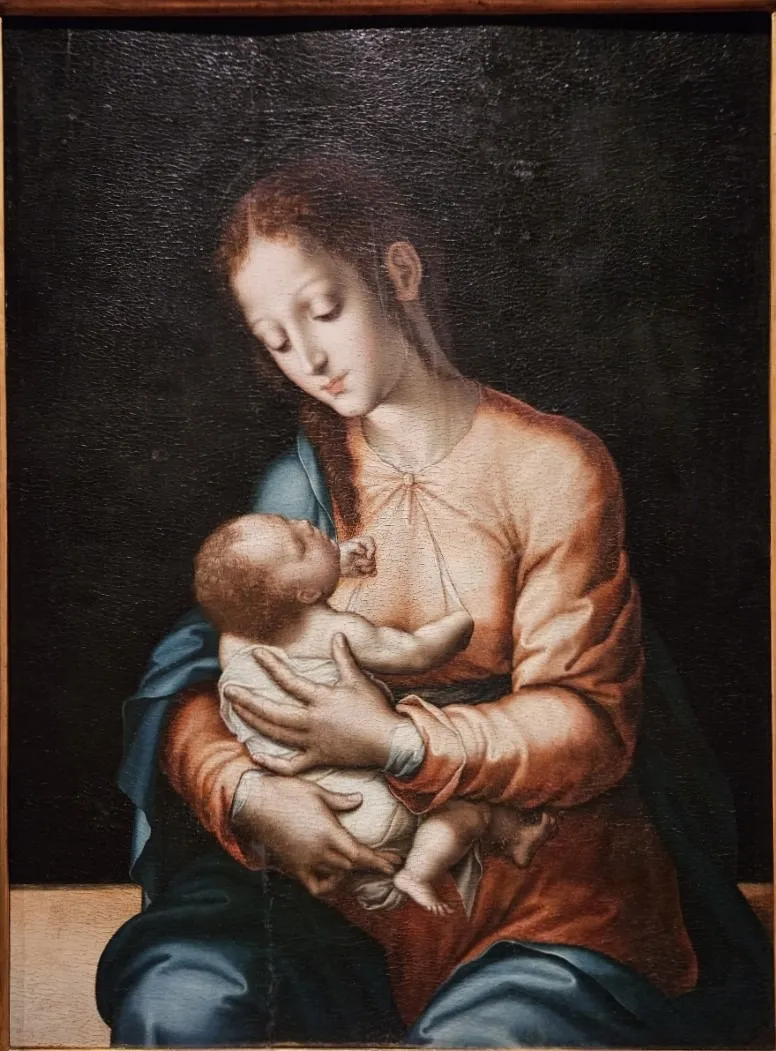
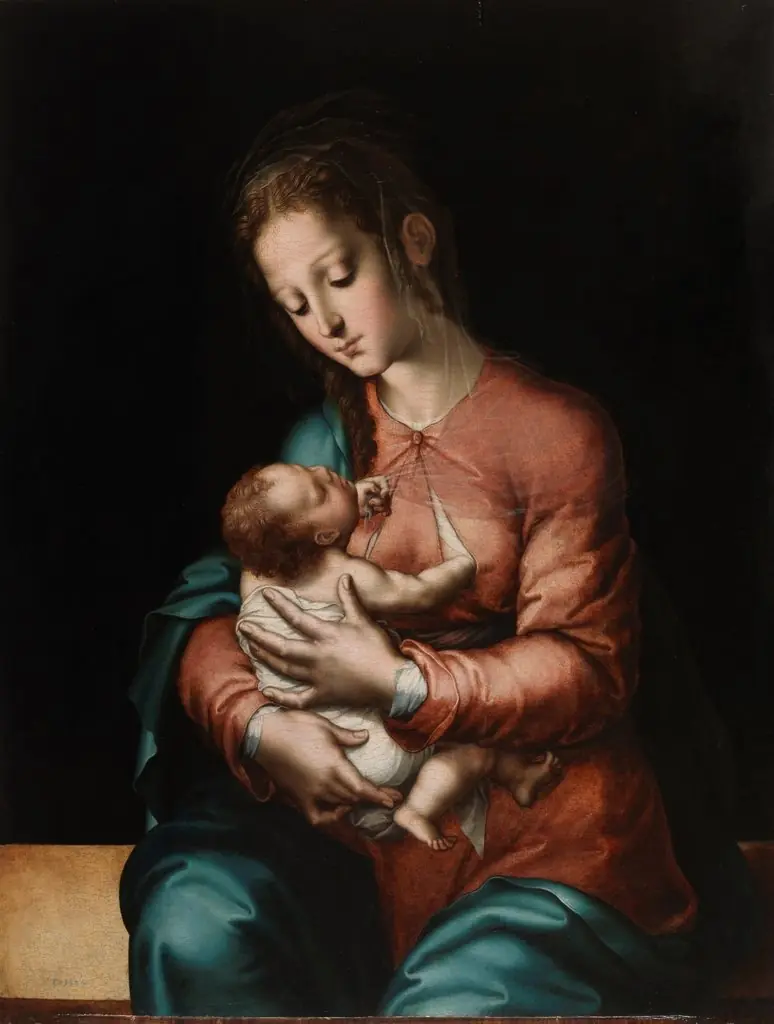
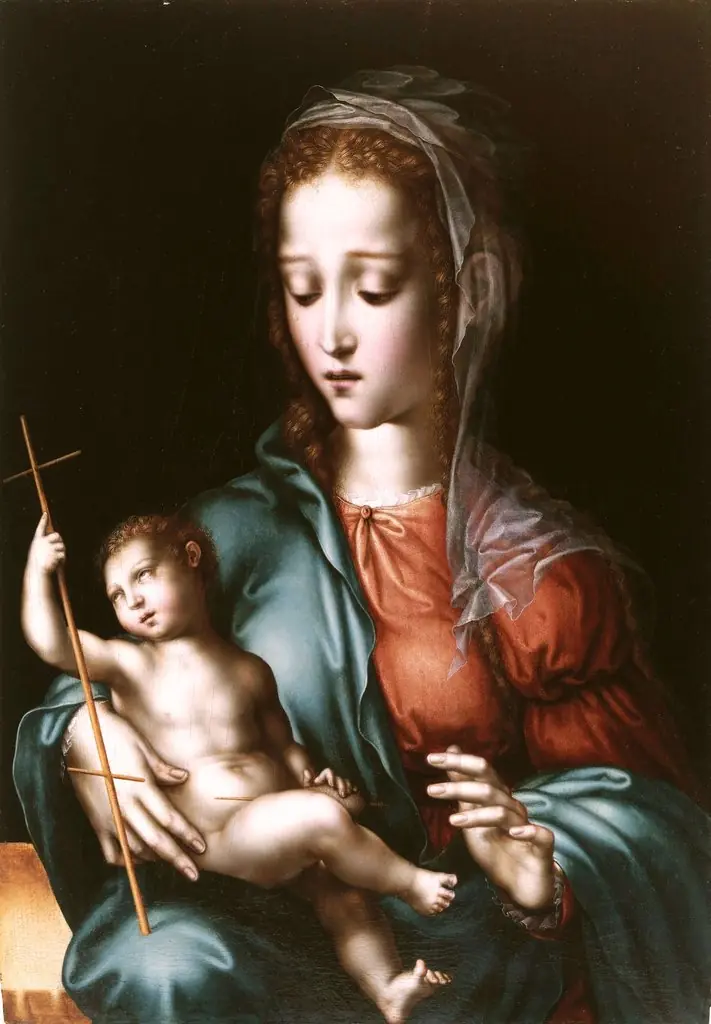
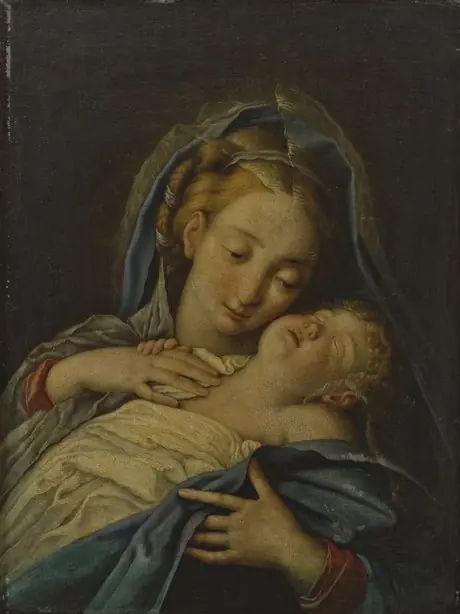
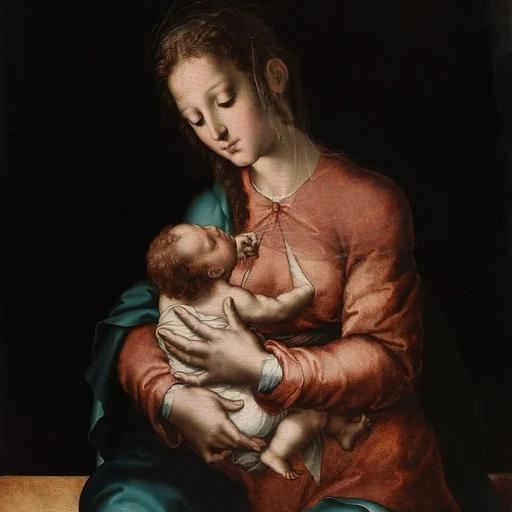
Virgin and Child. is an oil painting by the Mannerist artist Luis de Morales. It dates from 1560 and is held in the collection of the National Museum of Ancient Art. Created circa 1560, this oil painting depicts the Virgin Mary cradling the infant Jesus.
About this work
Overview
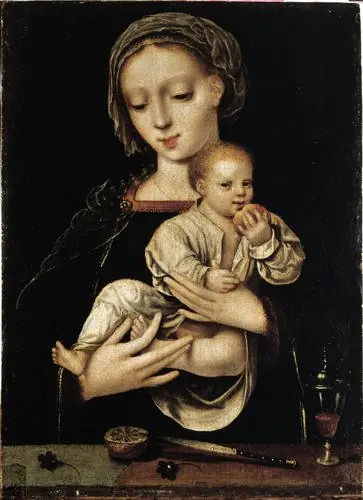
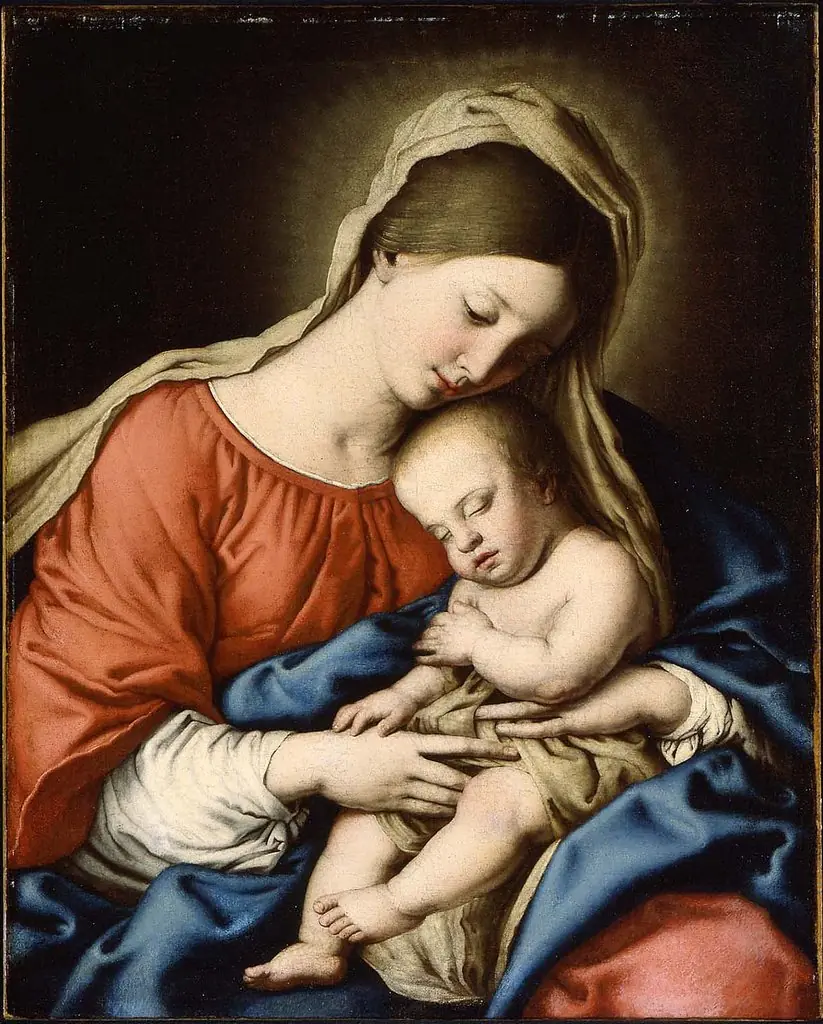
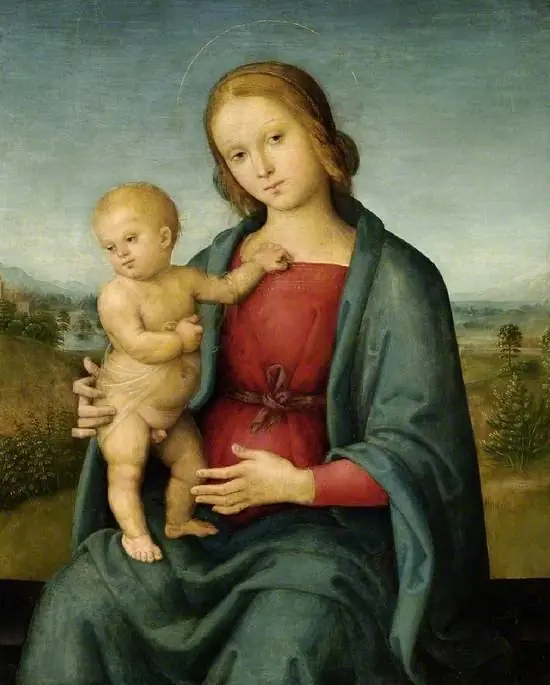
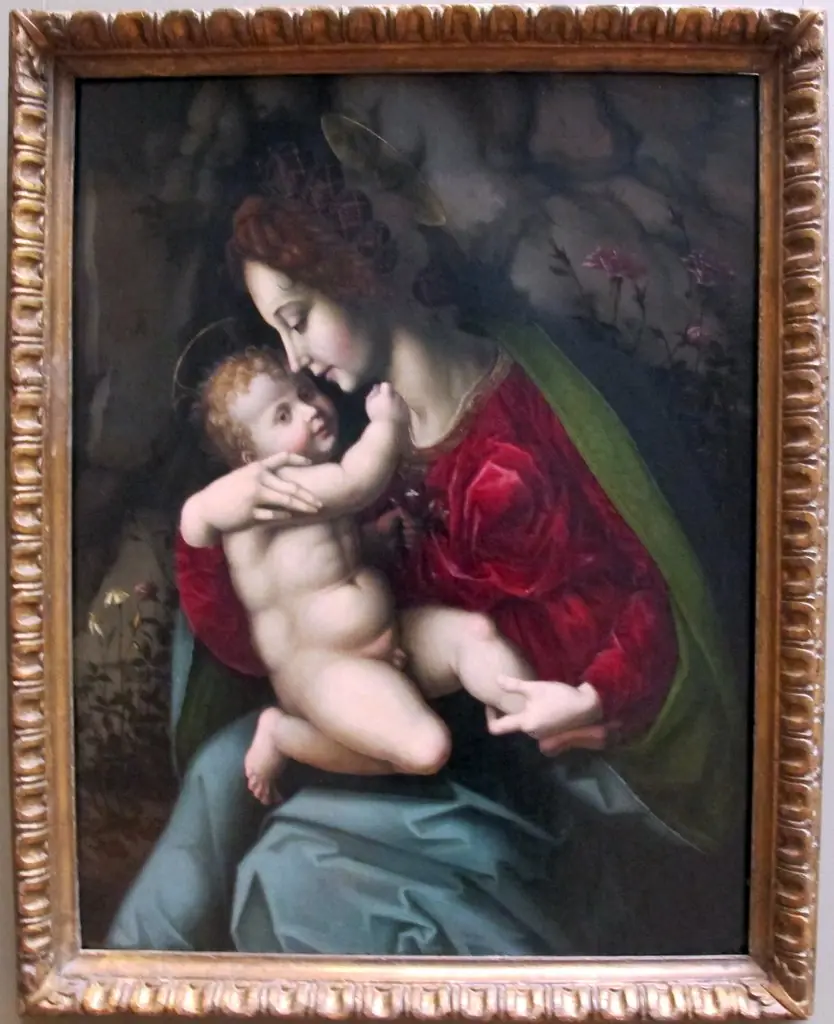
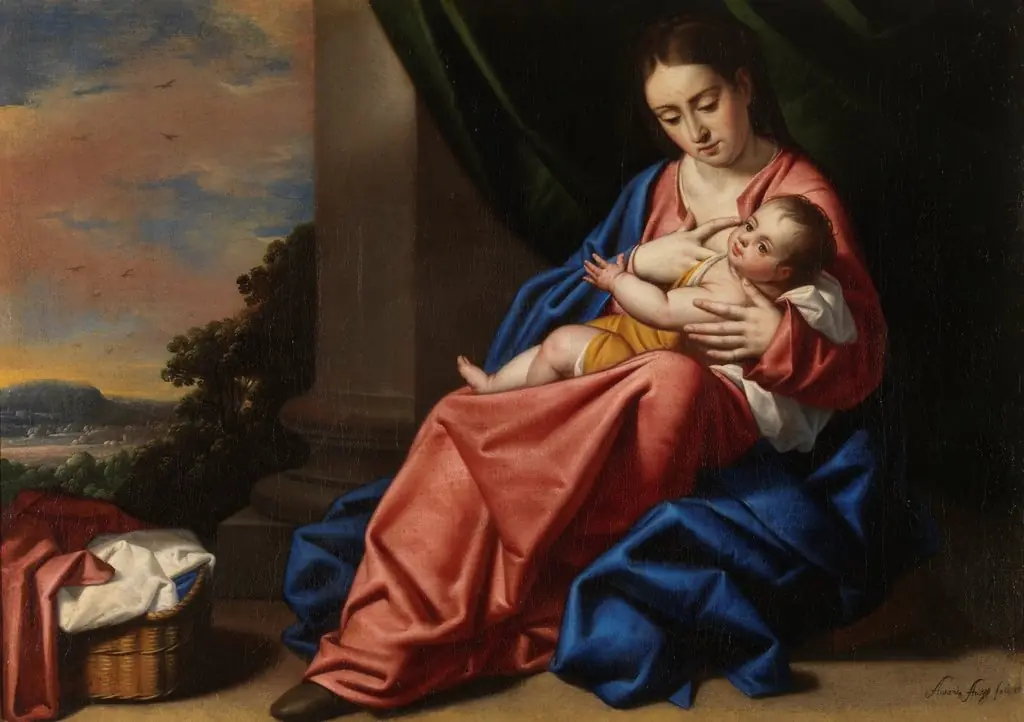
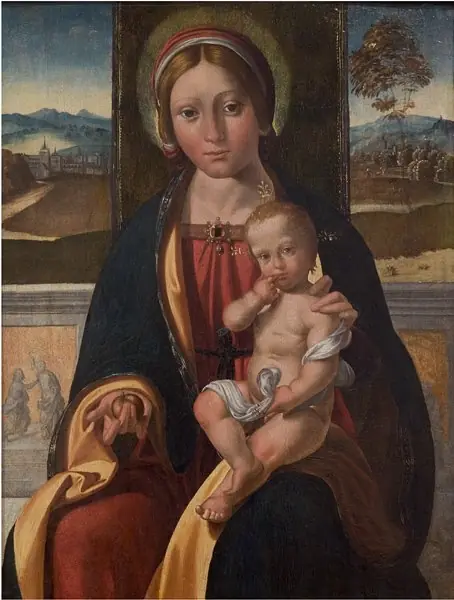
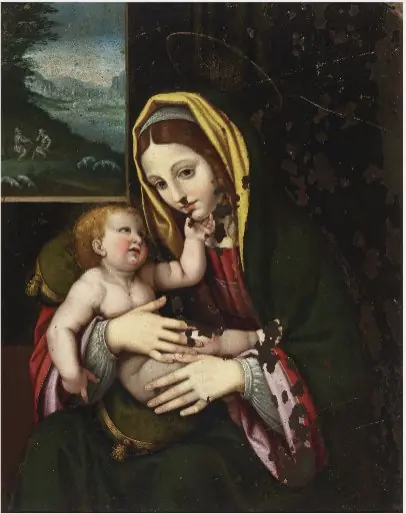
Created circa 1560, this oil painting depicts the Virgin Mary cradling the infant Jesus. The composition is set against a dark backdrop, with a subtle illumination that highlights the figures’ faces. Mary is rendered with red hair, a blue mantle over a red bodice, while the child is swaddled in white. The scene conveys a quiet, intimate devotion.
Subject & Meaning
The work presents the traditional Christian motif of the Madonna and Child, emphasizing maternal tenderness and divine grace. Mary's downward gaze and gentle hold suggest both earthly love and spiritual reverence, while the infant’s closed eyes evoke innocence and the promise of salvation. The subdued atmosphere invites contemplation of the sacred bond.
Technique & Style
Morales employs delicate chiaroscuro to model the figures, and his handling of color—deep blues, reds, and luminous whites—creates a tactile realism.
Executed in oil on canvas, the painting displays the refined modeling and heightened expressiveness associated with late Renaissance Mannerism. Morales employs delicate chiaroscuro to model the figures, and his handling of color—deep blues, reds, and luminous whites—creates a tactile realism. The influence of Raphael’s compositional balance and Leonardo’s Lombard softness is evident in the graceful poses.
History & Provenance
Luis de Morales, a Spanish painter nicknamed “El Divino,” produced the piece during his mature period in the mid‑16th century. After remaining in private collections for several centuries, the painting entered the holdings of Portugal’s National Museum of Ancient Art, where it is currently displayed as part of the museum’s Renaissance holdings.
Context & Legacy
The painting reflects the Spanish Renaissance’s focus on devotional imagery, responding to Counter‑Reformation demands for emotionally resonant religious art. Morales’ realistic yet spiritually charged approach influenced subsequent Iberian painters who sought to combine naturalistic detail with pious intensity. The work remains a representative example of his contribution to the era’s visual culture.
Artist & collection
Artist
Luis de Morales (1509 – 9 May 1586) was a Spanish painter active during the Spanish Renaissance in the 16th century.