Artwork
The Madonna and Four Saints Adoring the Infant Jesus
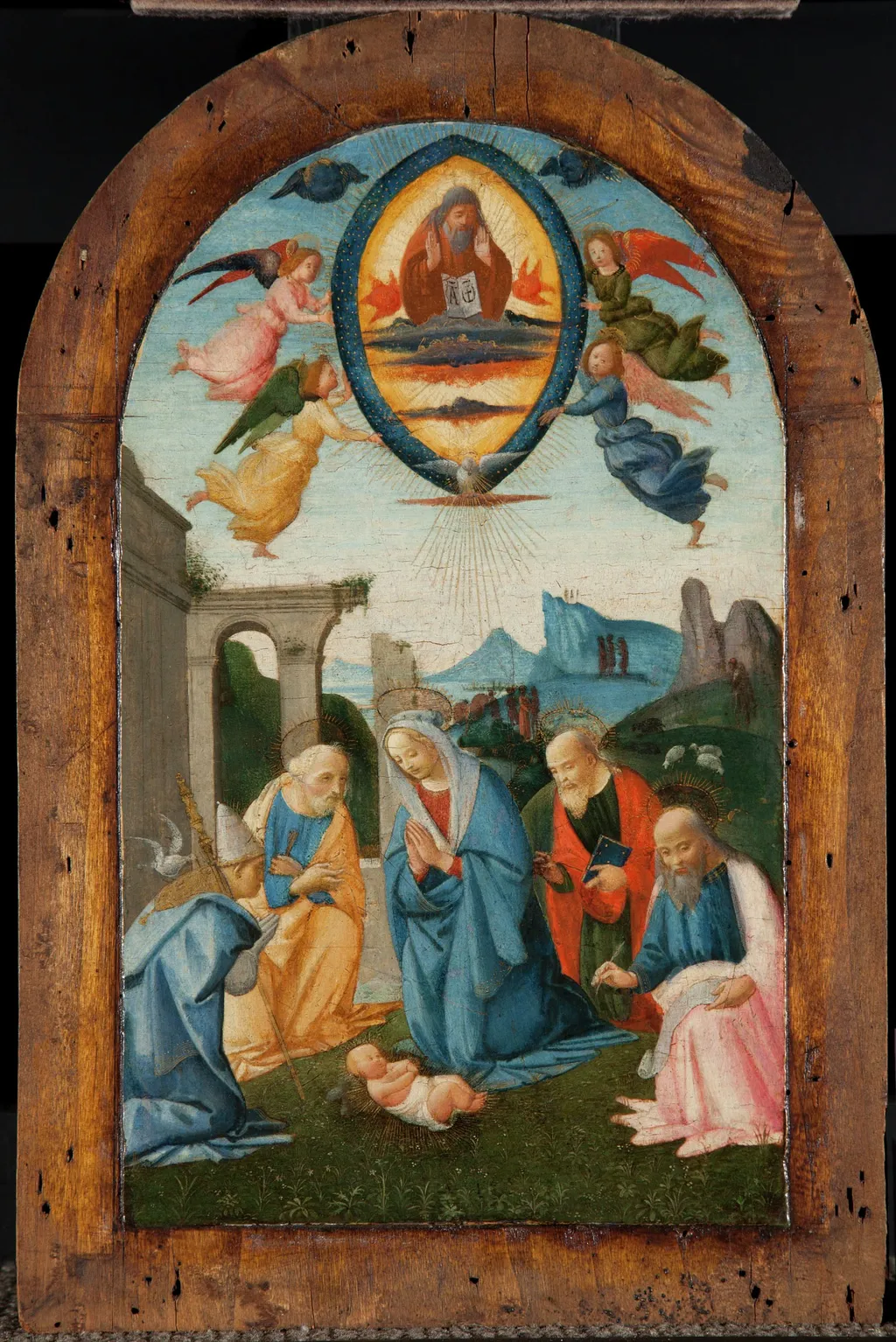
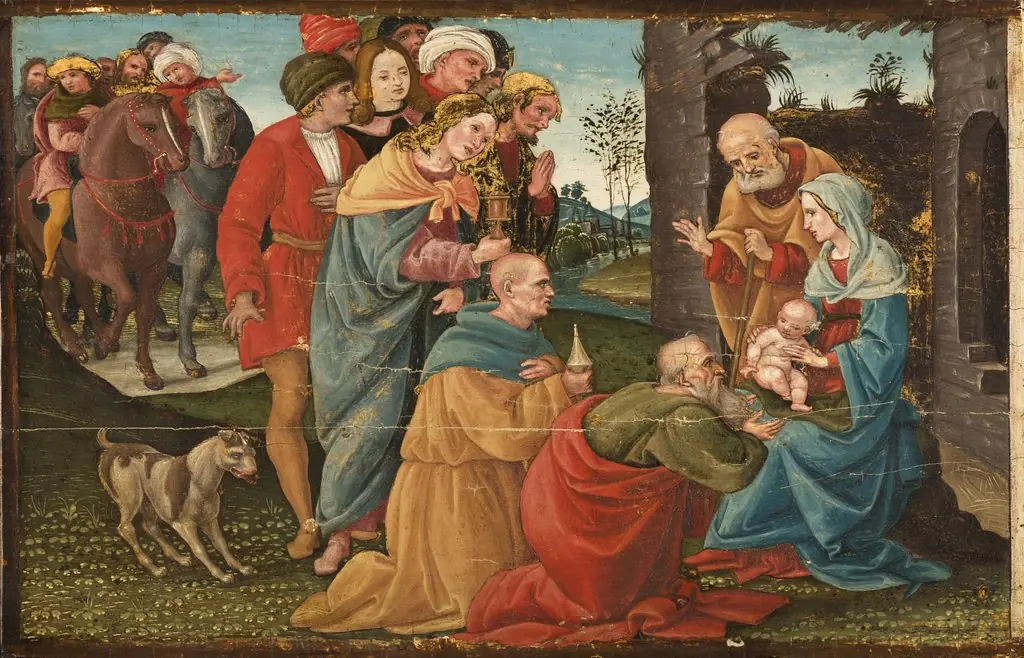
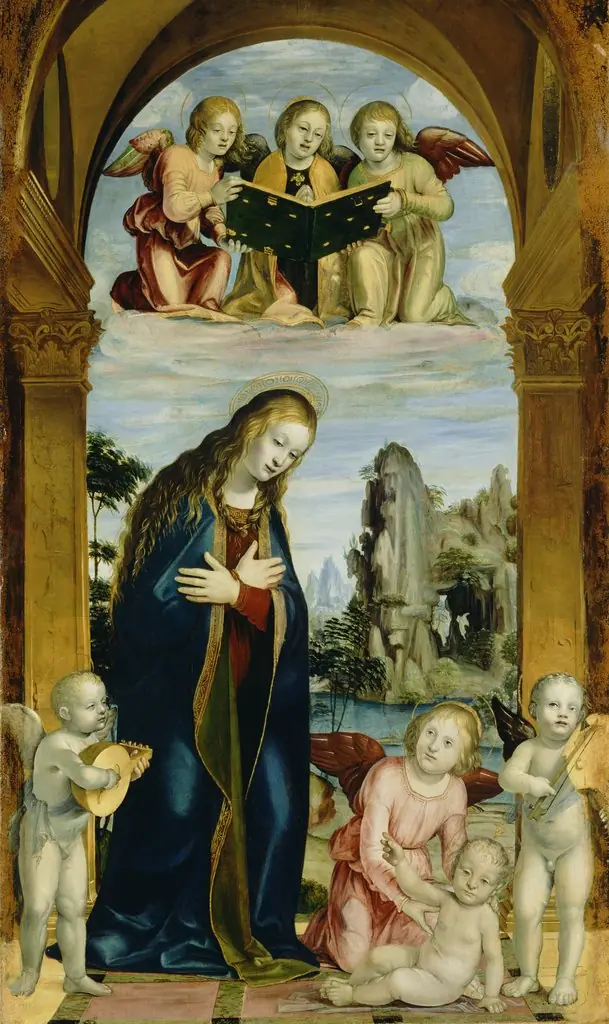
The Madonna and Four Saints Adoring the Infant Jesus is an unspecified painting by the Early Renaissance artist Bartolomeo di Giovanni. It dates from 1498 and is held in the collection of the Detroit Institute of Arts.
About this work
Overview
Painted in 1498 by Bartolomeo di Giovanni, this work is an early Renaissance devotional panel from Florence.
Painted in 1498 by Bartolomeo di Giovanni, this work is an early Renaissance devotional panel from Florence. It portrays the Virgin Mary and four saints gathered around the infant Jesus in an open-air setting. Originally misattributed as an apprentice of Domenico Ghirlandaio, Bartolomeo’s identity was later established through archival records, clarifying his role in the Florentine artistic milieu of the late 15th century.
Subject & Meaning
The composition centers on the adoration of the Christ Child, a common theme in devotional art meant to inspire reverence. The Virgin Mary, flanked by four kneeling saints, forms a protective circle around the infant, who lies on the earth rather than a throne, emphasizing humility. The inclusion of specific saints suggests a private or institutional commission tied to particular devotional practices or patronage.
Technique & Style
Bartolomeo employs clear outlines and flat, luminous colors typical of early Renaissance panel painting. Robes in blue, red, and yellow are rendered with careful attention to pattern and fold, while halos are rendered as thin gold bands. The background features a distant landscape with stone arches and rolling hills, suggesting depth without full perspective. Figures are arranged symmetrically to convey calm and order.
History & Provenance
The painting’s early ownership is undocumented, but its style and date align with Florentine workshop production of the 1490s. Art historian Bernard Berenson first classified the artist as the 'Alunno di Domenico' before archival evidence confirmed Bartolomeo di Giovanni as the creator. The work has remained within scholarly circulation since the early 20th century, though its exact provenance before modern collections remains unclear.
Context
Created during a period when Florence was a hub of religious art production, the painting reflects the enduring influence of Ghirlandaio’s workshop, where Bartolomeo likely trained. While not as innovative as contemporaries like Botticelli, such works fulfilled demand for portable altarpieces in private chapels and convents, blending traditional iconography with local artistic conventions.
Legacy
Bartolomeo di Giovanni’s oeuvre remains modest in scale, but his confirmed identity helped refine the understanding of minor Florentine painters active in the late Quattrocento. This painting contributes to studies of workshop practices and devotional imagery, illustrating how standardized compositions were adapted by lesser-known artists to serve specific religious communities.
Artist & collection
Artist
Bartolomeo di Giovanni di Domenico (1458? – 1501) was an Italian Renaissance painter active in Florence. His works were first identified by the art historian Bernard Berenson, who did not know the painter's real name so…