Artwork
The Coronation of the Virgin
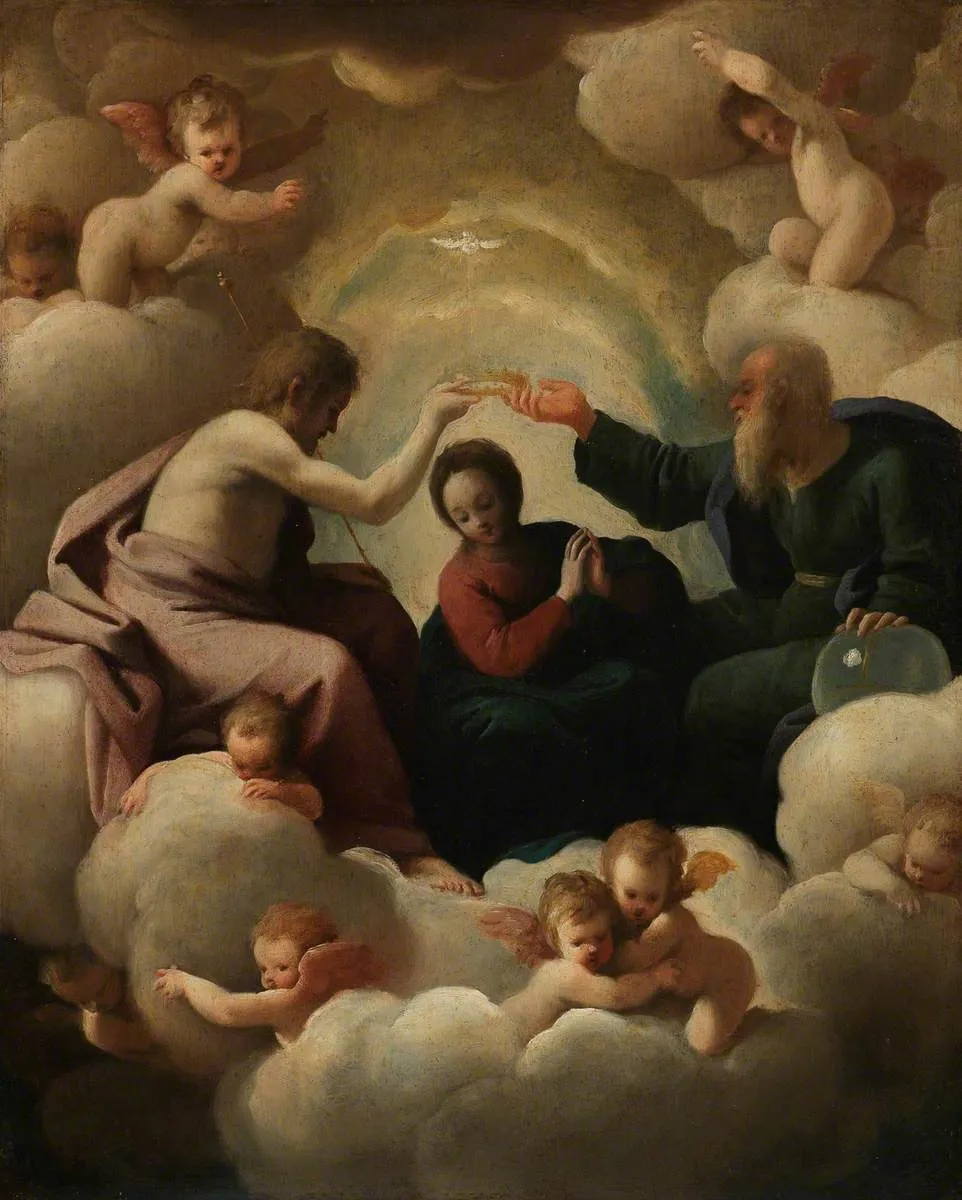
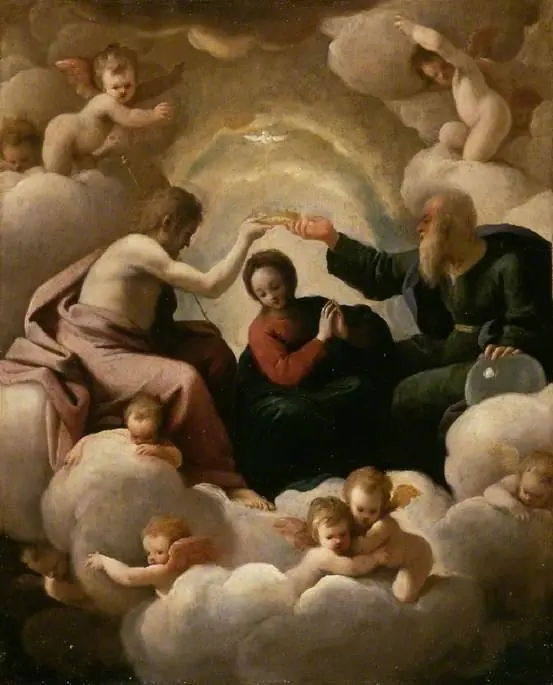
The Coronation of the Virgin is an oil painting by Bartolomeo Schedoni. It dates from 1609 and is held in the collection of the Fitzwilliam Museum.
About this work
Overview
Painted in 1609 by Bartolomeo Schedoni, this oil on canvas work depicts the Coronation of the Virgin, a common theme in Counter-Reformation religious art.
Painted in 1609 by Bartolomeo Schedoni, this oil on canvas work depicts the Coronation of the Virgin, a common theme in Counter-Reformation religious art. The piece is part of the Fitzwilliam Museum’s collection, where it remains a quiet example of early 17th-century Italian devotional painting. Its composition centers on celestial hierarchy, rendered with restrained drama and atmospheric lighting.
Subject & Meaning
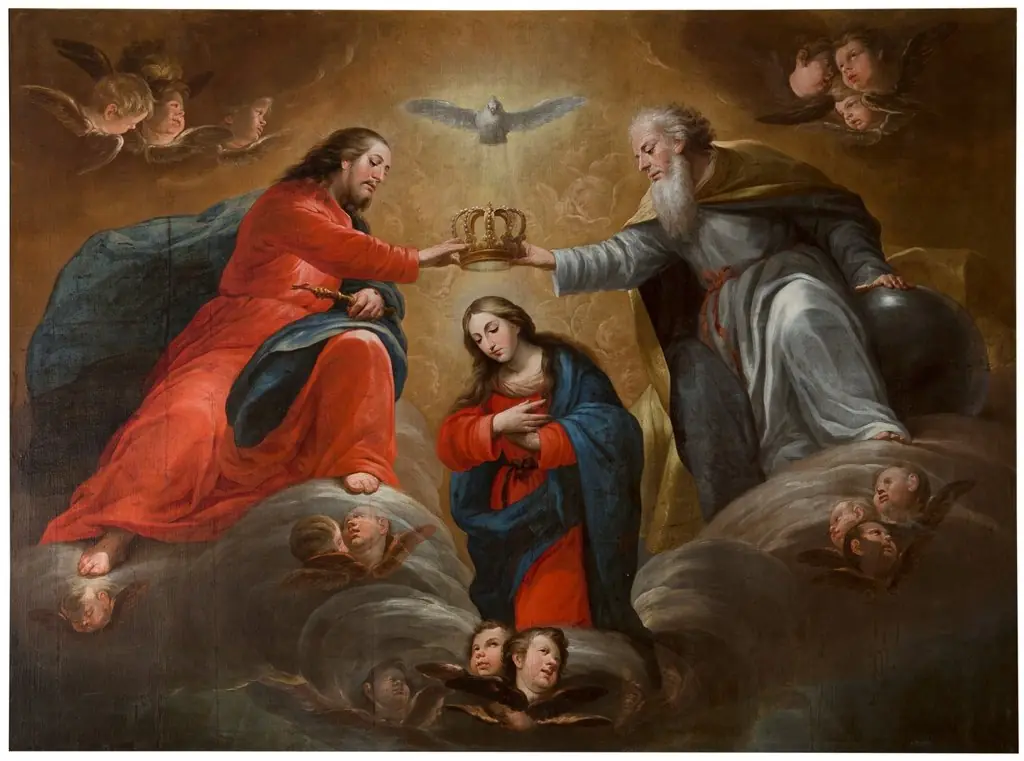
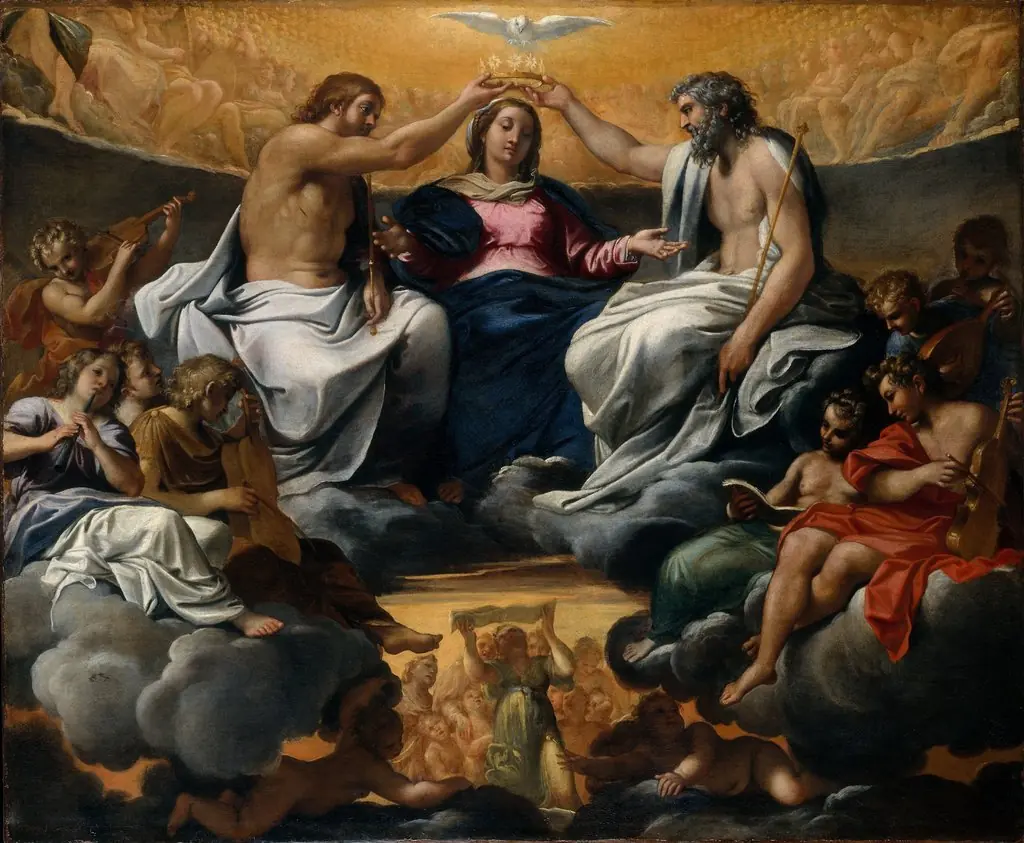
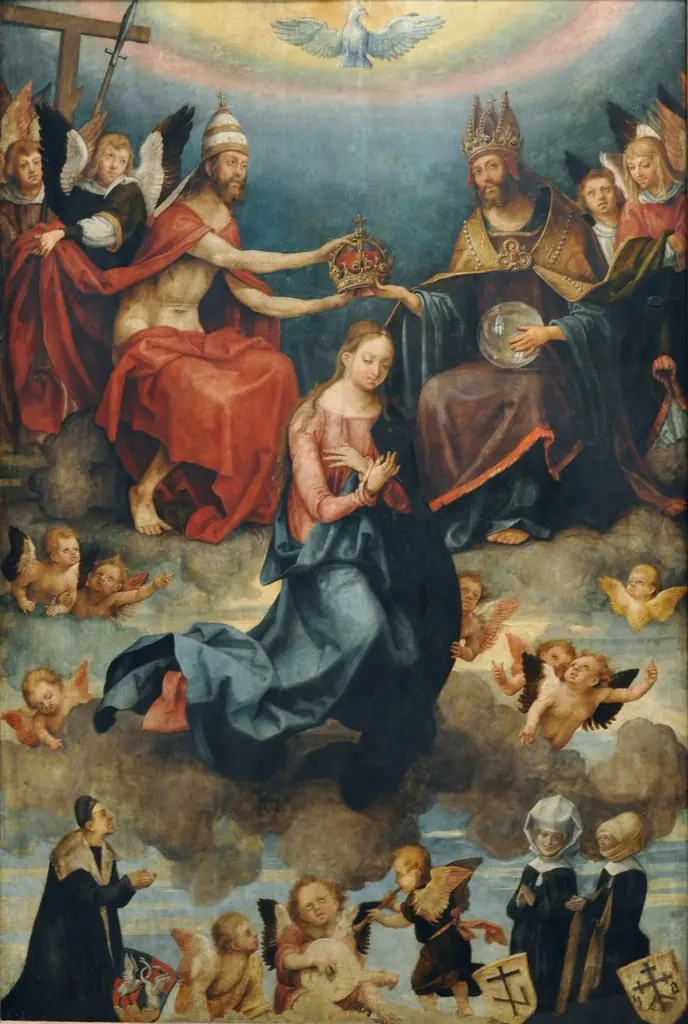
The scene illustrates the Virgin Mary being crowned Queen of Heaven by Christ, her son, who sits beside her holding a scepter. God the Father, identifiable by his long white beard and regal robe, lowers the crown from above. Surrounding cherubs amplify the sacredness of the moment, symbolizing divine praise. The imagery affirms Marian doctrine central to Catholic belief at the time, emphasizing her exalted role after earthly life.
Technique & Style
Schedoni employs chiaroscuro to define form and depth, contrasting soft, luminous clouds with darker upper regions of the sky. The figures are rendered with delicate, feathery brushwork, especially in the drapery of robes and the wings of cherubs. Skin tones are gently modeled, avoiding harsh lines. The overall handling suggests influence from Emilian naturalism, with a focus on tactile texture and quiet emotional resonance.
History & Provenance
Commissioned during Schedoni’s active years in northern Italy, the painting entered the Fitzwilliam Museum’s collection in the 19th century. Its early ownership is undocumented, but its style aligns with devotional works produced for private chapels or religious institutions. It has remained largely unchanged since its creation, preserving its original composition and tonal balance.
Context
Created during the height of the Counter-Reformation, the painting reflects the Catholic Church’s emphasis on Marian devotion as a response to Protestant critiques. Artists like Schedoni were encouraged to produce clear, emotionally resonant religious imagery to inspire piety. This work fits within a broader tradition of Italian sacred art, drawing from Venetian color and Emilian draftsmanship.
Legacy
Though not widely reproduced or celebrated in major art historical narratives, the painting stands as a competent and thoughtful example of regional Baroque religious art. It offers insight into how smaller workshops interpreted grand theological themes with intimacy and technical care. Its preservation in a public museum ensures continued access for study and contemplation.
Artist & collection