Artwork
Diana and Actaeon
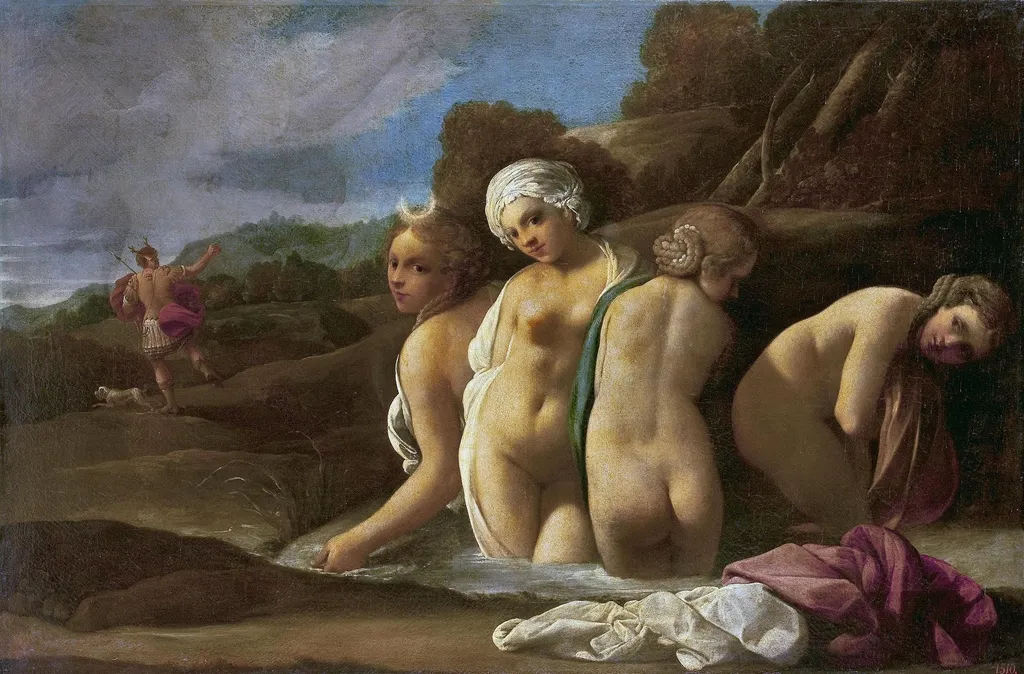
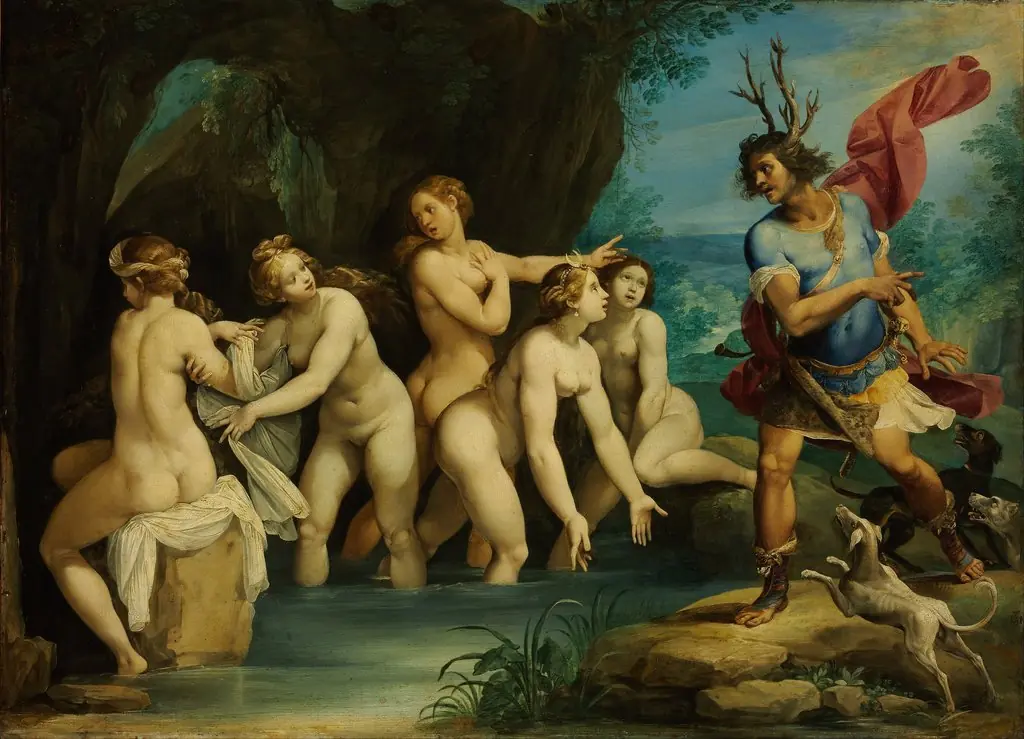
Diana and Actaeon is an oil painting by the Early Baroque Italian artist Bartolomeo Schedoni. It dates from 1615 and is held in the collection of the Hermitage Museum.
About this work
Overview
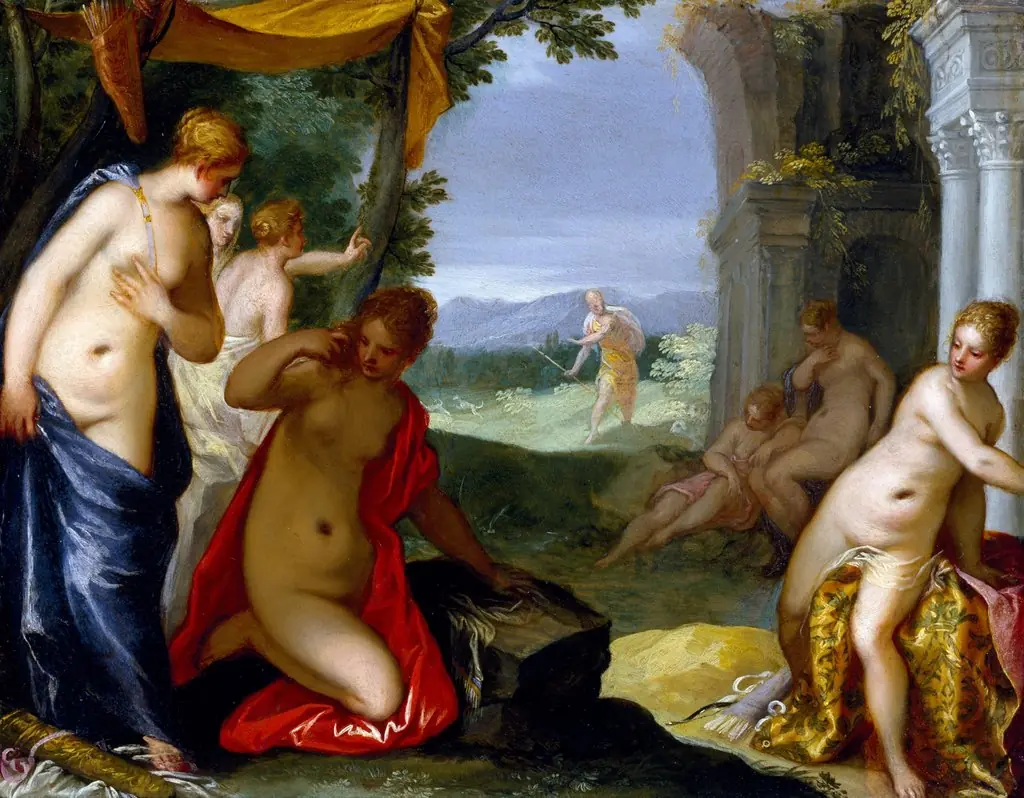
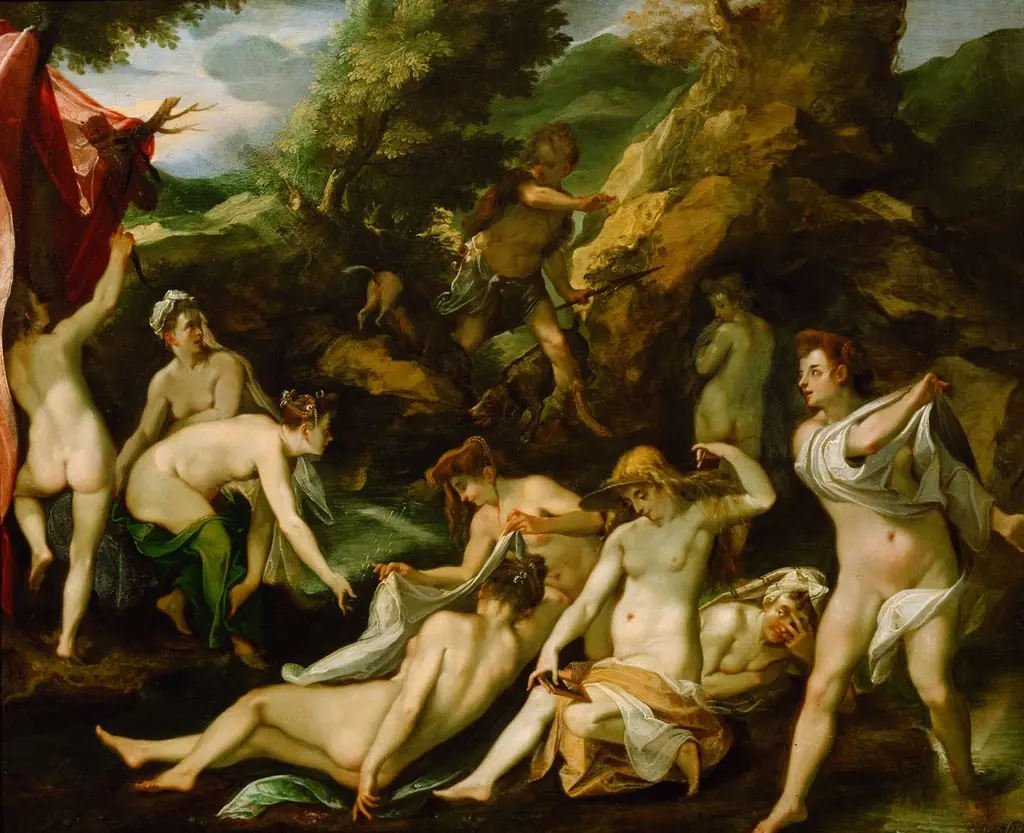
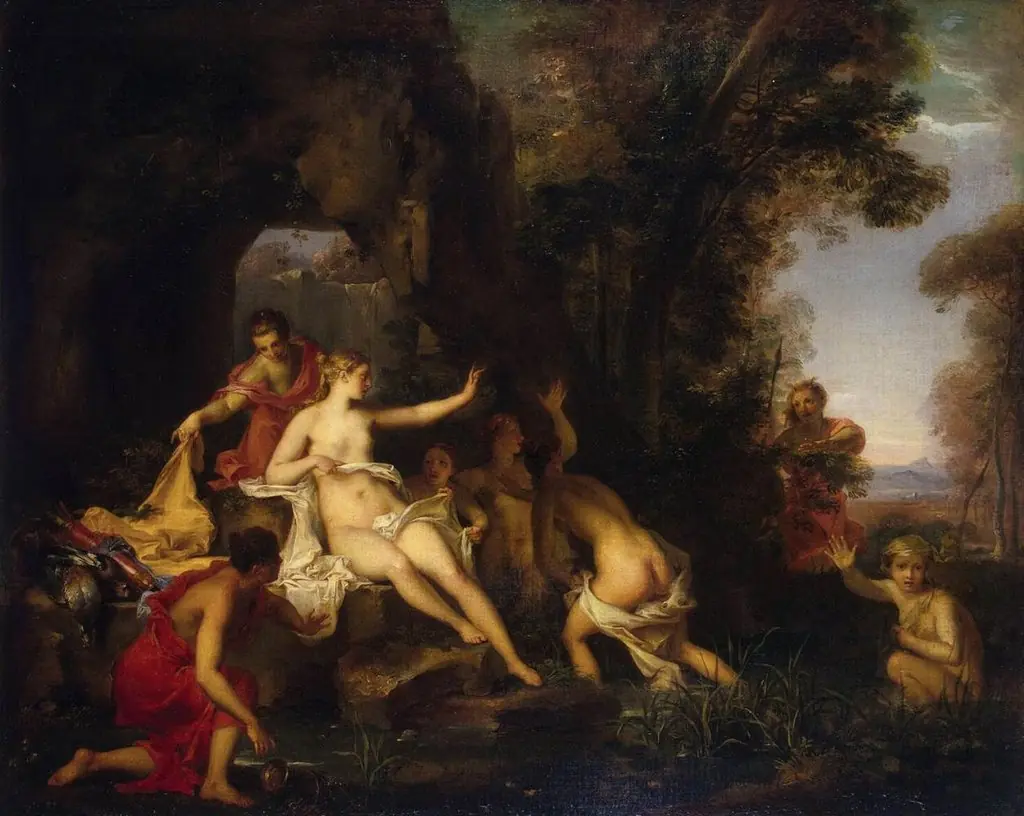
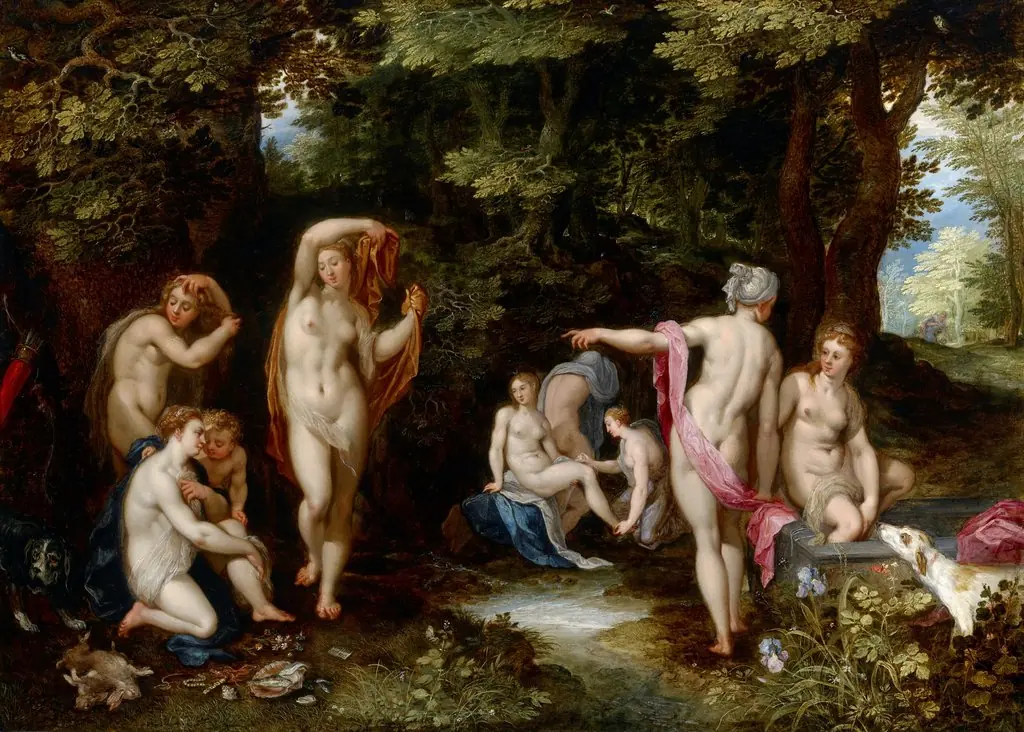
Bartolomeo Schedoni's 1615 oil painting 'Diana and Actaeon' is a mythological scene depicting a pivotal moment from classical mythology, featuring the goddess Diana and the hunter Actaeon. The work is part of the collection at the State Hermitage Museum.
Subject & Meaning
The painting illustrates a dramatic encounter between Diana (likely the central figure with the bow) and Actaeon (implied by the context, though not directly described in the visual note). In mythology, Actaeon's unintended glimpse of Diana bathing leads to his transformation into a deer and subsequent death. The scene captures the tension and consequence of this moment.
Technique & Style
Schedoni employs chiaroscuro, a strong contrast between light and dark, to accentuate the forms of the female figures. The play of light on their skin, with some areas glowing and others in shadow, showcases the artist's mastery of capturing volume and depth through illumination.
History & Provenance
Created in 1615, 'Diana and Actaeon' is now housed at the State Hermitage Museum, indicating its recognition as a significant work of early 17th-century European art. Specific details about its creation commission or earlier ownership are not provided.
Context
The painting reflects the Baroque period's fascination with classical mythology and the dramatic potential of light and shadow. It aligns with contemporary artistic trends that emphasized emotional intensity and visual spectacle.
Legacy
While specific influences or direct artistic lineage are not detailed, 'Diana and Actaeon' contributes to the broader legacy of Baroque painting's exploration of light, shadow, and mythological themes, potentially inspiring later artists in their depiction of dramatic, illuminated scenes.
Own this work as a print
Artist & collection