Artwork
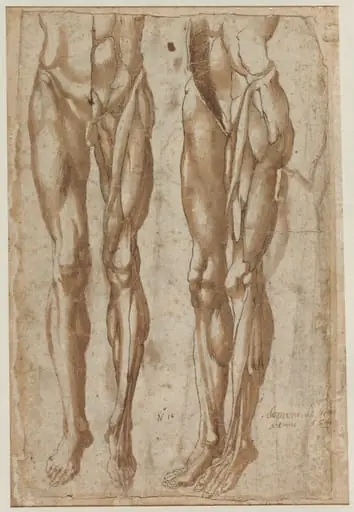
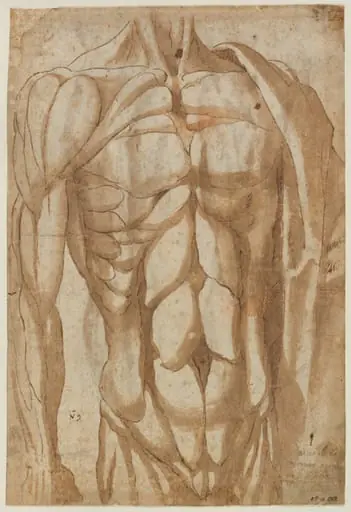
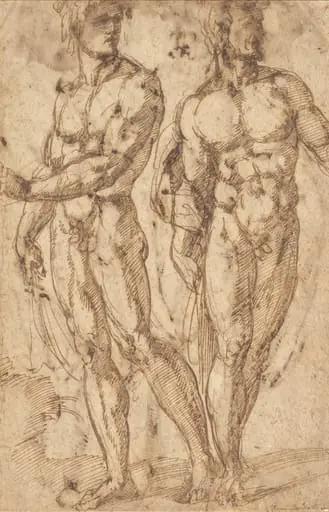
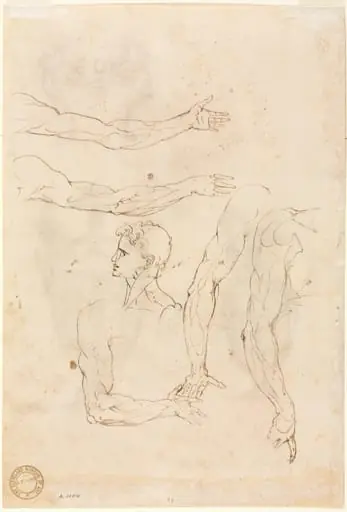
Two Studies of a Flayed Man (recto) Study of a Flayed Torso (verso)
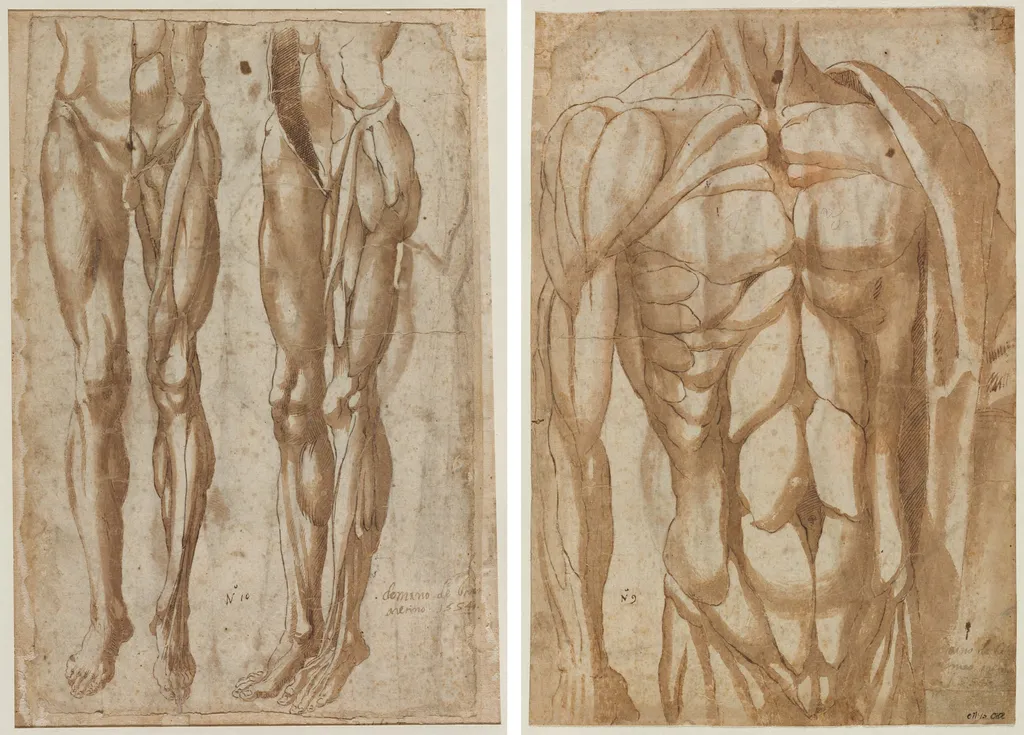
Two Studies of a Flayed Man (recto) Study of a Flayed Torso (verso) is a drawing by the Renaissance artist Bartolommeo da Arezzo. It dates from 1554 and is held in the collection of the Cleveland Museum of Art.
About this work
This painting shows two rough sketches of a flayed man’s body. The left side focuses on a whole figure. The right side zooms in on just the torso.
This was made in 1554, likely for medical or anatomical study. Back then, artists often drew cadavers to understand muscles and bones.
Check out the Cleveland Museum of Art to see it in person.
Overview
Created in 1554 by the Italian draftsman Bartolommeo da Arezzo, this double-sided drawing presents two complementary studies of a human body that has been dissected. The recto depicts a full-length figure, while the verso concentrates on the torso alone. Both images are rendered in a sketchy, observational manner and are part of the Cleveland Museum of Art’s collection.
Subject & Meaning
The work records the anatomy of a flayed corpse, exposing muscle layers and skeletal structure. By isolating the entire form on one side and the central torso on the other, the artist provides a focused examination of bodily construction, reflecting a practical interest in the physical realities of the human form rather than allegorical or narrative content.
Technique & Style
Executed with rapid, gestural lines typical of 16th‑century anatomical sketches, the drawing employs a limited palette of graphite or charcoal on paper. The rendering emphasizes contour and muscular definition, using cross‑hatching to suggest depth. The informal, study‑like quality underscores its function as a visual aid rather than a finished composition.
History & Provenance
The piece has remained in the Cleveland Museum of Art since its acquisition, though the exact path of ownership prior to its arrival is not documented in public records. Its preservation within a museum setting ensures continued access for scholars interested in Renaissance anatomical illustration.
Context
During the mid‑1500s, artists frequently collaborated with physicians and anatomists, producing drawings that aided medical education. Bartolommeo’s studies belong to this tradition, aligning with the broader Renaissance pursuit of empirical observation and the systematic study of human anatomy for both artistic and scientific purposes.
Artist & collection

![Two Nude Figures [verso], by Luca Signorelli](https://artifactworldgallery.com/img/luca-signorelli--two-nude-figures-verso--5ebb2bdb5ab5c1db-w320.webp)