Artwork
Squelettes et Ecorches
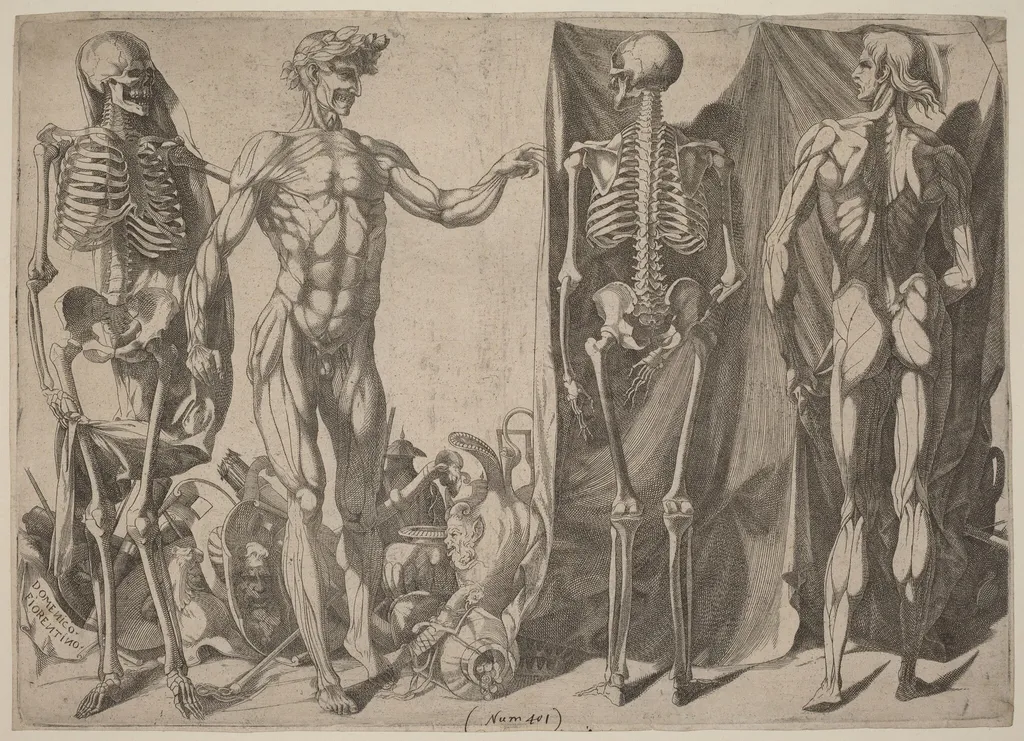
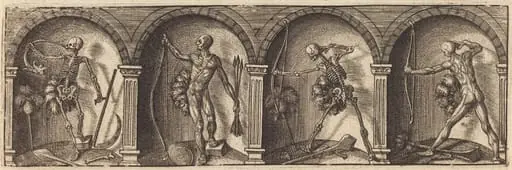
Squelettes et Ecorches is an ink print by the Renaissance artist Domenico del Barbiere. It dates from 1542 and is held in the collection of the National Gallery of Art.
About this work
Overview
Domenico del Barbiere, a Florentine engraver of the mid‑sixteenth century, produced the print *Squelettes et Ecorches* circa 1542. Executed as an engraving, the work presents a systematic arrangement of skeletal and flayed forms, rendered with precise linear detail. The piece reflects the artist’s interest in anatomical observation, a preoccupation common among Renaissance practitioners.
Subject & Meaning
The composition juxtaposes human skeletons with stripped‑off skins, organized in orderly rows that emphasize the physicality of the human body without its outer layer. By exposing bone and flesh, the image invites contemplation of mortality and the underlying structure of life, themes that resonated with contemporary studies of anatomy and the transitory nature of existence.
Technique & Style
Del Barbiere employs fine parallel lines and cross‑hatching to model volume and convey the texture of bone and tissue. The engraving’s sharp, linear incisions delineate ribcages and vertebrae, while varying densities of hatch create subtle gradations of light and shadow, imparting a tactile sense of weight to the skeletal forms.
History & Provenance
Trained in Italy, del Barbiere later joined the artistic circles of Fontainebleau and Meudon, working under Primaticcio and Rosso Fiorentino before returning to Troyes in 1541. *Squelettes et Ecorches* was likely produced shortly after his return, reflecting the synthesis of Italian training and French court influences that marked his later career.
Context
The print belongs to a broader Renaissance fascination with anatomical accuracy, paralleling the work of contemporaries such as Albrecht Dürer, whose own series on the Apocalypse includes similarly detailed studies of the human form. Engravings like this served both as artistic exercises and as visual aids for scholars engaged in the emerging scientific study of the body.
Artist & collection

Artist
Domenico del Barbiere (c. 1506 – c. 1570) was a Florentine artist of the Renaissance period, also referred to as Domenico Fiorentino, and, in France, Dominique Florentin. He settled and married at Troyes in France…

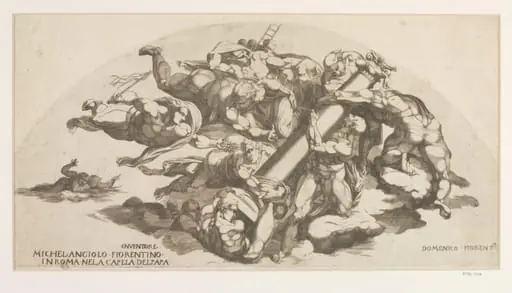
 Les divers pourtraicts et figures VII
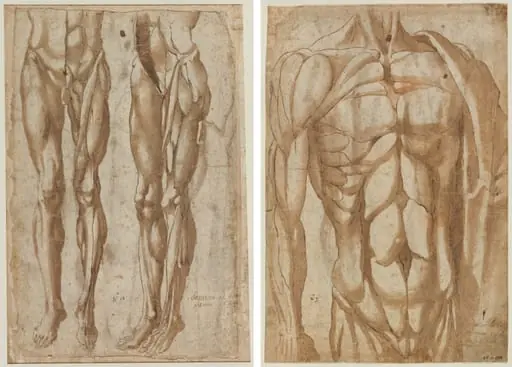 Two Studies of a Flayed Man (recto) Study of a Flayed Torso (verso)
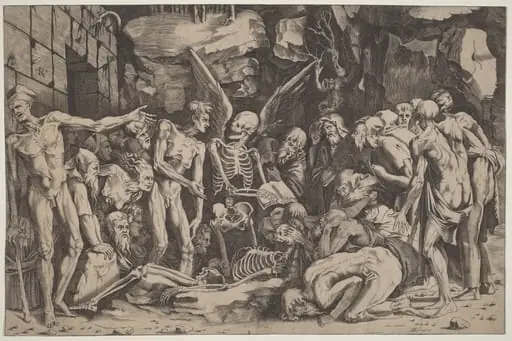 The Skeletons
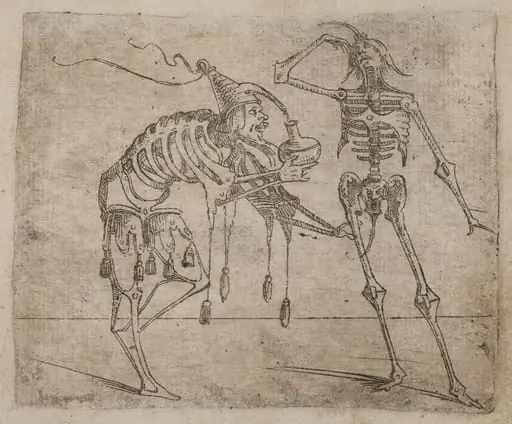 From "Bizzarie di varie Figure"
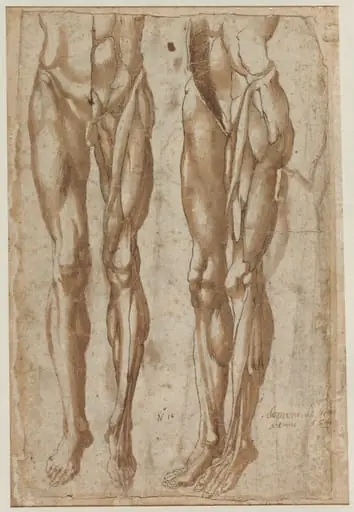 Two Studies of a Flayed Man (recto)
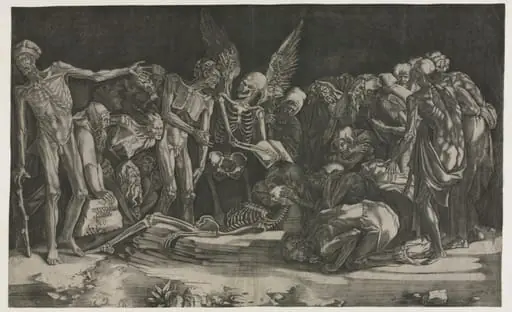 Skeletons, also known as Allegory of Death and Fame
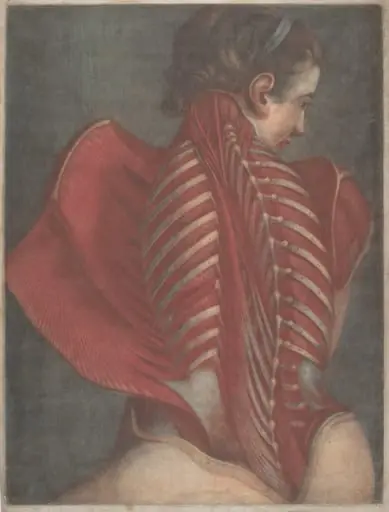 L'Ange anatomique (The Anatomical Angel) or Dissection of a Woman's Back
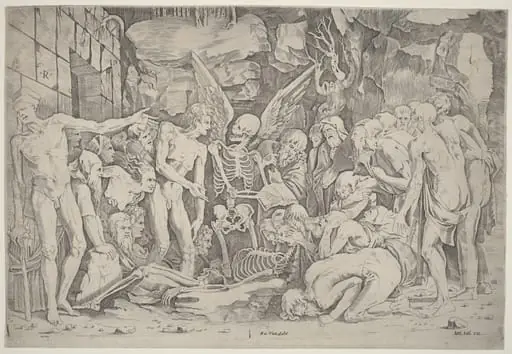 The Skeletons
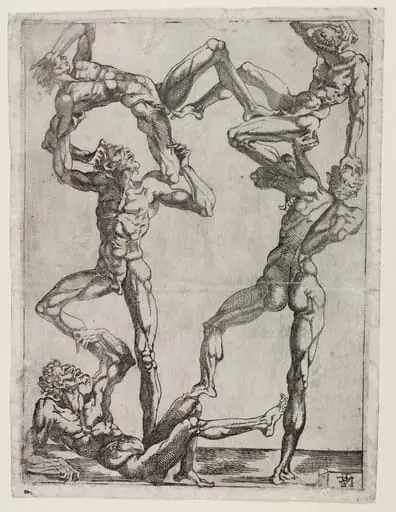 Pyramid of Five Men
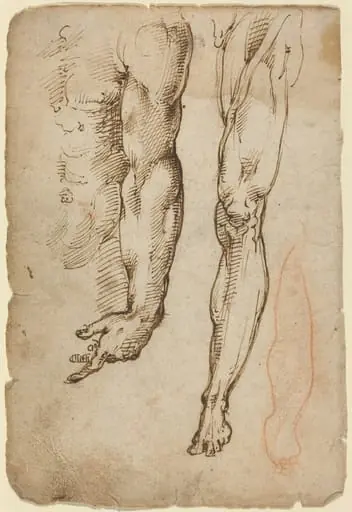 Anatomical Studies
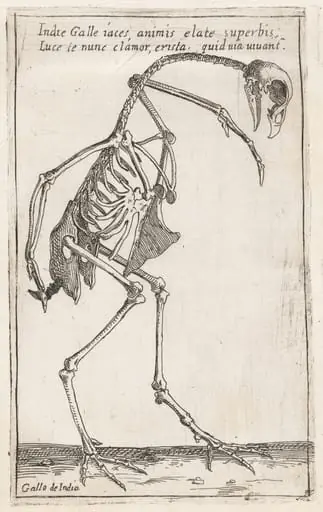 Skeleton of a Turkey
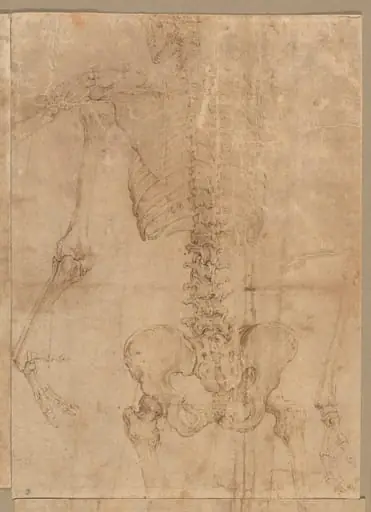 Upper Half of Skeleton from the Back