Artwork
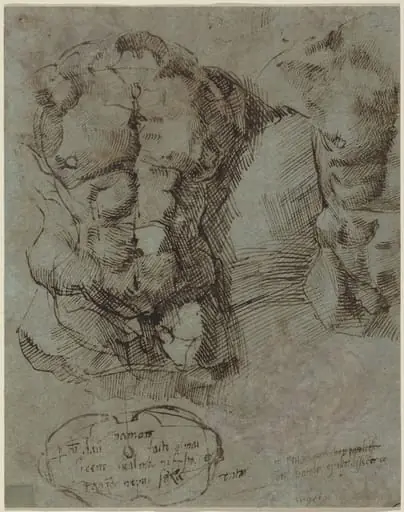
Study of a Flayed Torso (verso)
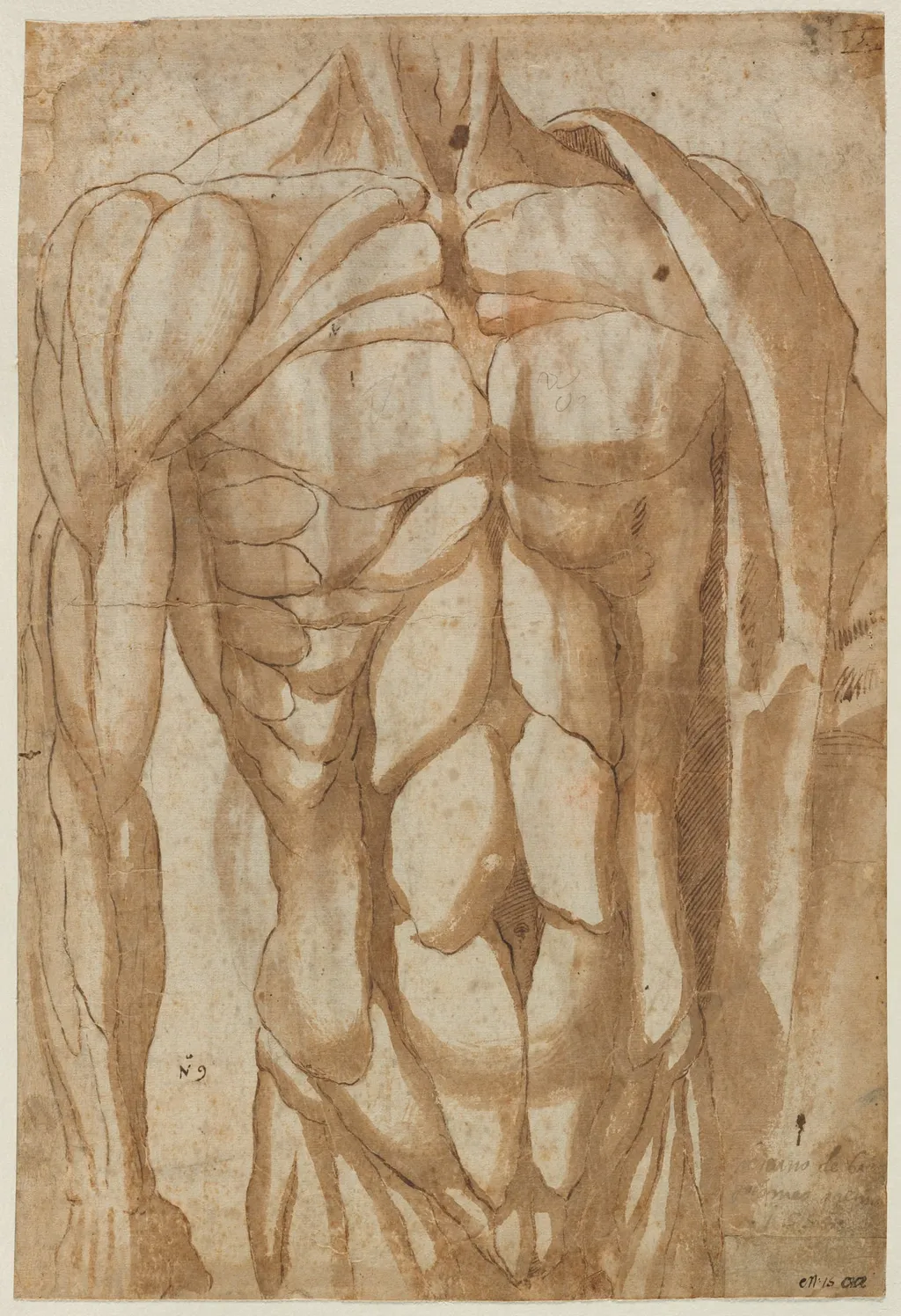
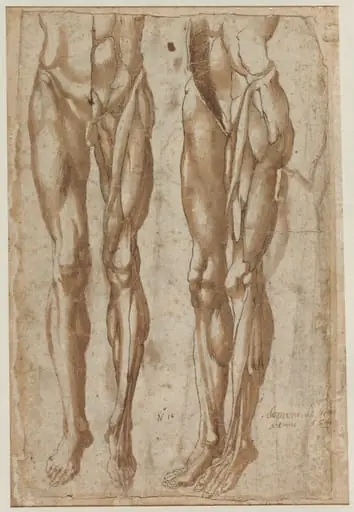
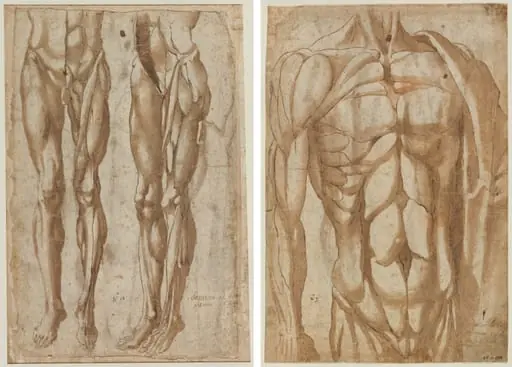
Study of a Flayed Torso (verso) is a drawing by the Renaissance artist Bartolommeo da Arezzo. It dates from 1554 and is held in the collection of the Cleveland Museum of Art. This drawing, executed in pencil or chalk, depicts a flayed human torso on the reverse side of a sheet.
About this work
This drawing shows a flayed human torso in pencil or chalk. The skin is peeled back to reveal muscle and bone underneath.
The artist wasn’t just sketching—he dug up bodies at night to study them. Bartolommeo da Arezzo learned this trick from Michelangelo, who did the same years before.
Check out Bartolommeo da Arezzo (Italian, active 1550–80) to see more of his strange sketches.
Overview
The work reflects a practice rooted in Renaissance anatomical inquiry, where the internal structure of the body was rendered to understand form and movement.
This drawing, executed in pencil or chalk, depicts a flayed human torso on the reverse side of a sheet. It was created by Bartolommeo da Arezzo, an artist active in the mid-to-late 16th century who studied anatomy through direct observation of cadavers. The work reflects a practice rooted in Renaissance anatomical inquiry, where the internal structure of the body was rendered to understand form and movement.
Subject & Meaning
The subject is a stripped torso, with skin removed to expose musculature and skeletal elements. Rather than serving as a clinical illustration, the drawing conveys a visceral engagement with the human body’s architecture. It suggests an intent not merely to record, but to internalize the mechanics of movement and weight, aligning with broader Renaissance interests in corporeal truth.
Technique & Style
Rendered with controlled, linear strokes in a single medium, the drawing emphasizes structure over texture. Contours define muscle groups with precision, while shading suggests volume without embellishment. The absence of background or context focuses attention solely on the anatomical form, reflecting a methodical, almost forensic approach to observation.
History & Provenance
Bartolommeo da Arezzo, active between 1550 and 1580, was influenced by Michelangelo’s earlier anatomical studies. Historical accounts indicate he obtained cadavers through illicit means, including exhumations, mirroring practices Michelangelo had employed decades prior. This drawing survives as one of several such studies, preserved as evidence of an underground tradition in artistic anatomy.
Context
During the 16th century, public dissections were rare and tightly regulated, prompting artists to seek alternative access to bodies. Bartolommeo’s nocturnal exhumations reflect the tension between institutional restrictions and the desire for direct anatomical knowledge. His work situates him within a small circle of artists who prioritized empirical study over idealized representation.
Legacy
Though less renowned than his predecessors, Bartolommeo’s anatomical drawings contributed to the transmission of observational methods among later artists. His persistence in studying the body beyond surface appearance helped sustain a tradition of anatomical realism in drawing, influencing generations who valued direct study over theoretical models.
Artist & collection