Artwork
Gebirgslandschaft mit Hagar und Ismael
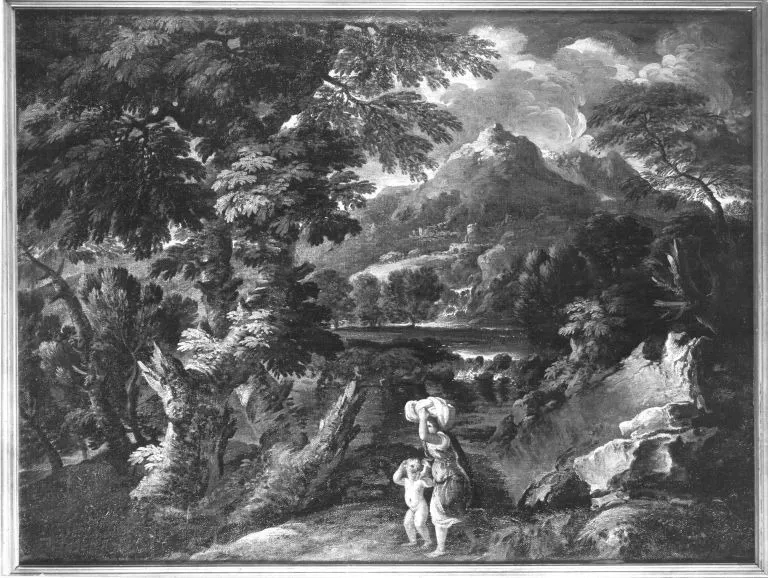
Gebirgslandschaft mit Hagar und Ismael is an unspecified painting by Bartolommeo Torregiani. It dates from 1640 and is held in the collection of the Bavarian State Painting Collections.
About this work
Overview
Gebirgslandschaft mit Hagar und Ismael is a Baroque painting created around 1640 by Italian artist Bartolommeo Torregiani, a follower of Salvatore Rosa. The work combines a mountainous landscape with a biblical narrative, characteristic of Torregiani's dramatic and rugged style.
Subject & Meaning
The painting depicts the biblical figures Hagar and her son Ismael in a serene, natural setting. Hagar, dressed in a long robe with a headcloth, interacts with the naked Ismael, who plays with her clothing, amidst trees and rocks. The scene conveys a sense of tranquility.
Technique & Style
Torregiani employed muted colors, predominantly greens and browns, to render the landscape. The use of chiaroscuro creates depth and volume, guiding the viewer's eye into the composition. This technique, along with the dramatic landscape, reflects the influence of Salvatore Rosa.
History & Provenance
The painting is part of the collection at the Alte Pinakothek, though specific details of its acquisition history are not provided here.
Context
As a work of Baroque landscape painting, it aligns with 17th-century trends that often incorporated biblical themes into natural, sometimes dramatic, environments.
Legacy
While specific legacy details of *Gebirgslandschaft mit Hagar und Ismael* are not outlined, it contributes to the broader understanding of Torregiani's oeuvre and the Baroque landscape tradition.
Artist & collection
Artist
Bartolommeo Torregiani (died c. 1674) was an Italian painter of the Baroque. He was a follower of Salvatore Rosa, and painted landscapes and portraits. He is said to have died in 1674.

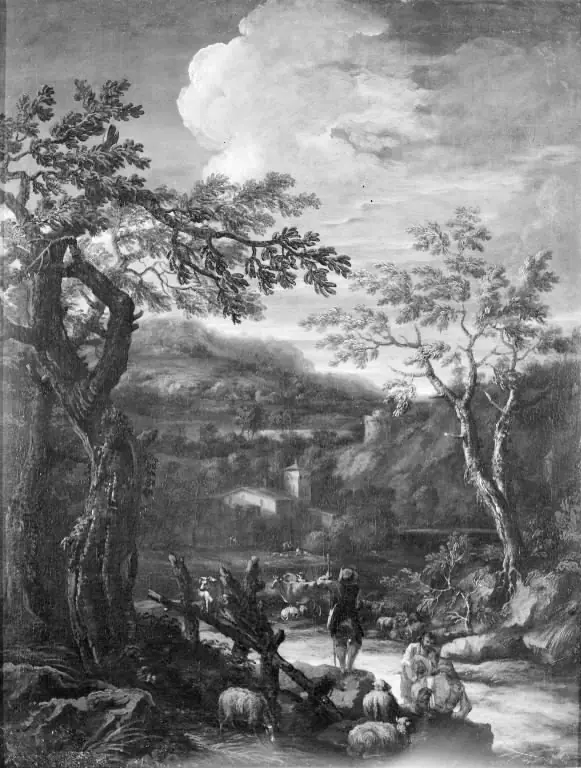 Road with People and Animals
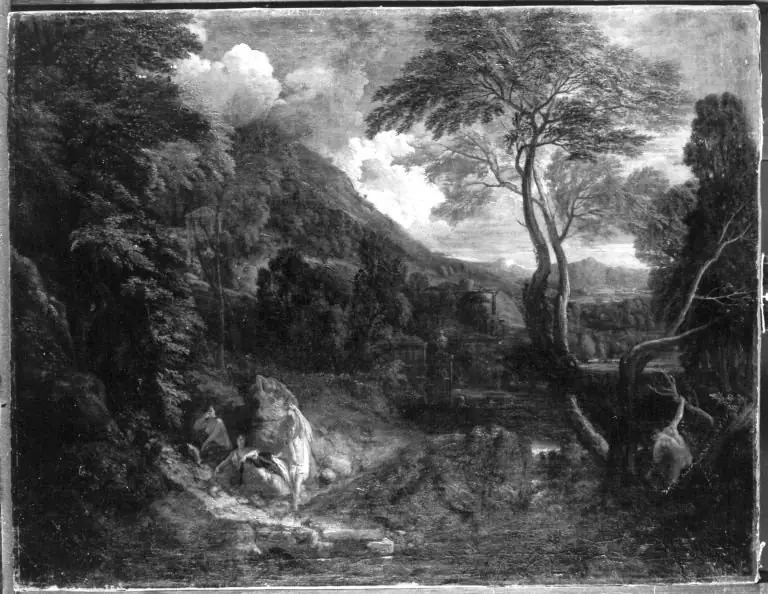 Italienische Ideallandschaft
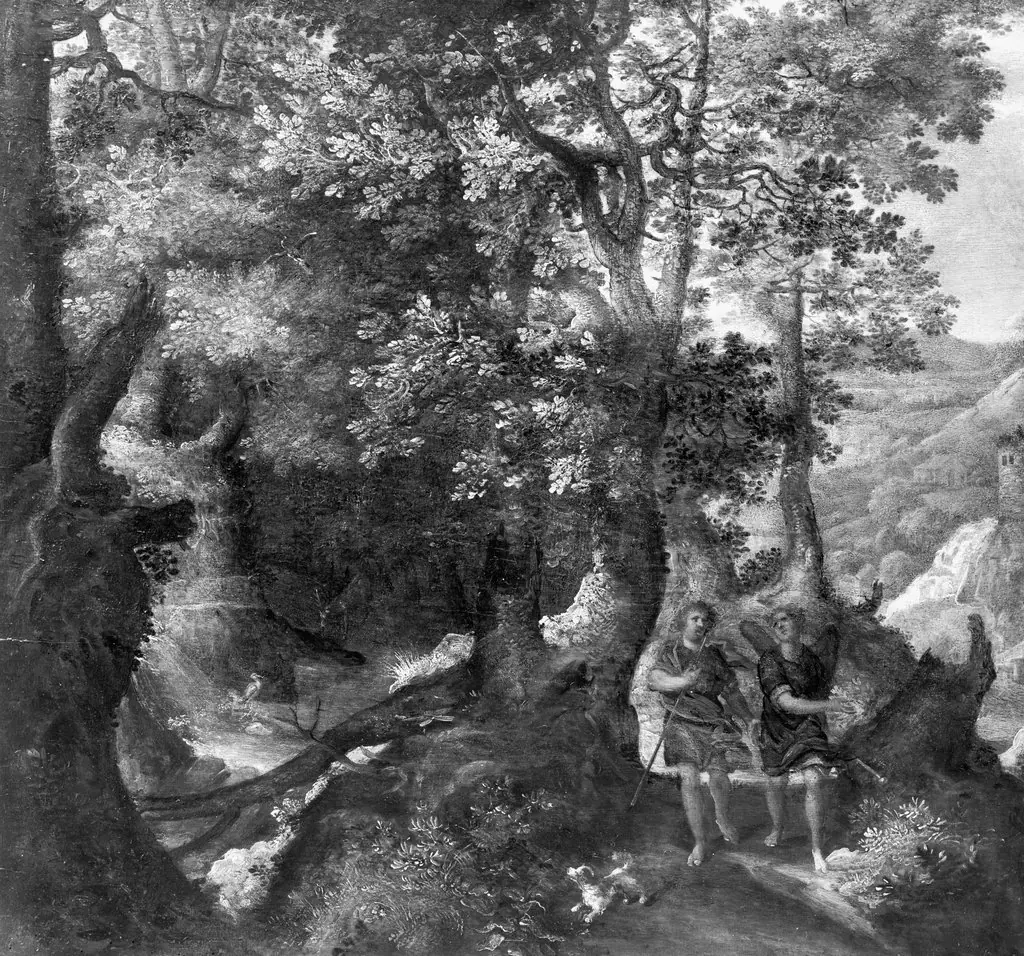 Wooded landscape with Tobias and the angel
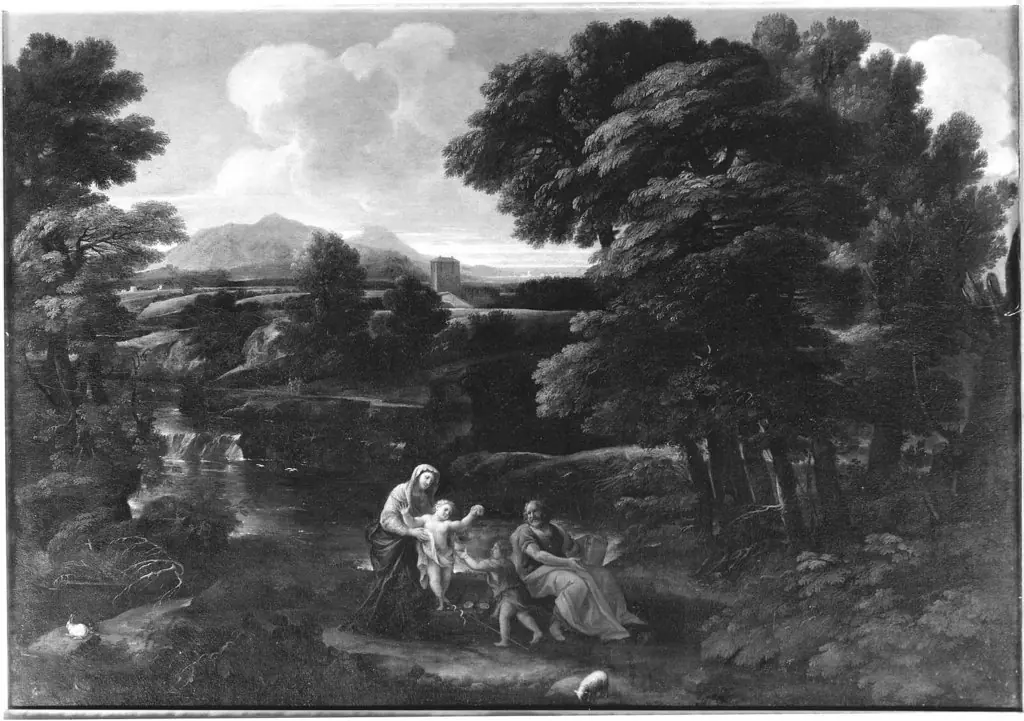 Landscape with the Holy Family and the Infant Saint John the Baptist
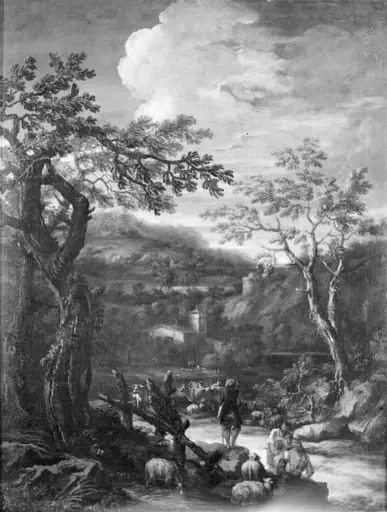 Road with People and Animals
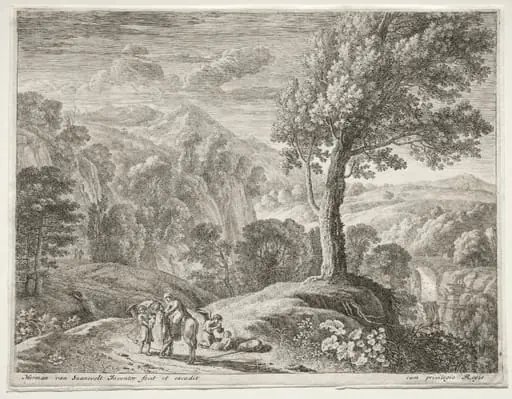 The Large Tree and the Cascade
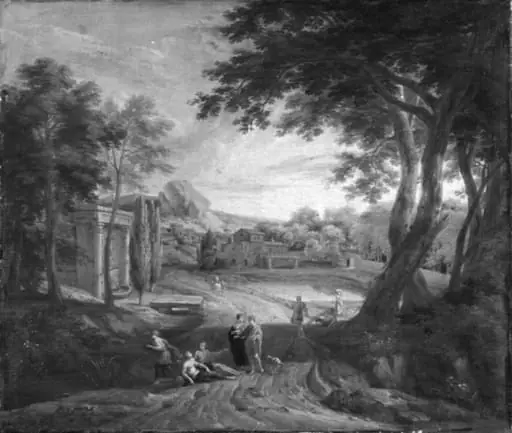 Arcadian Landscape
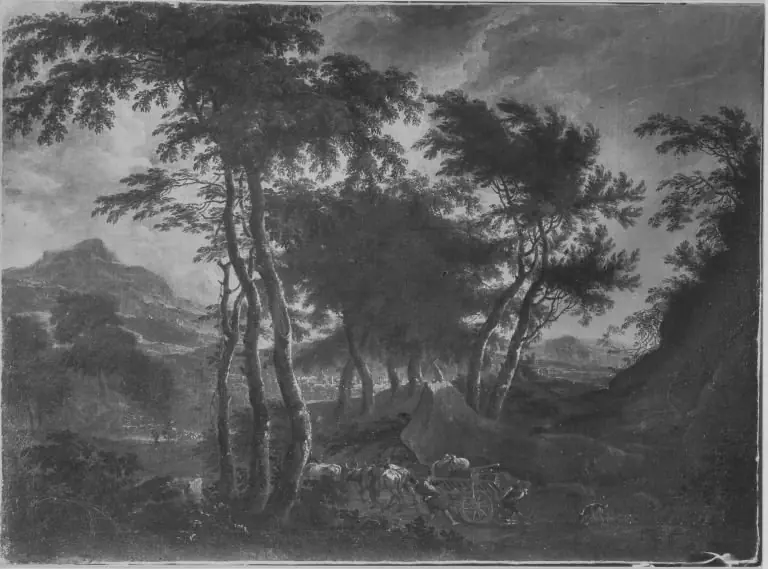 Abendlandschaft
 Arcadian Landscape
 Craggy Landscape
 Landschaft mit Christus und Maria Magdalena (Noli me tangere) (Umkreis)