Artwork
Tiger
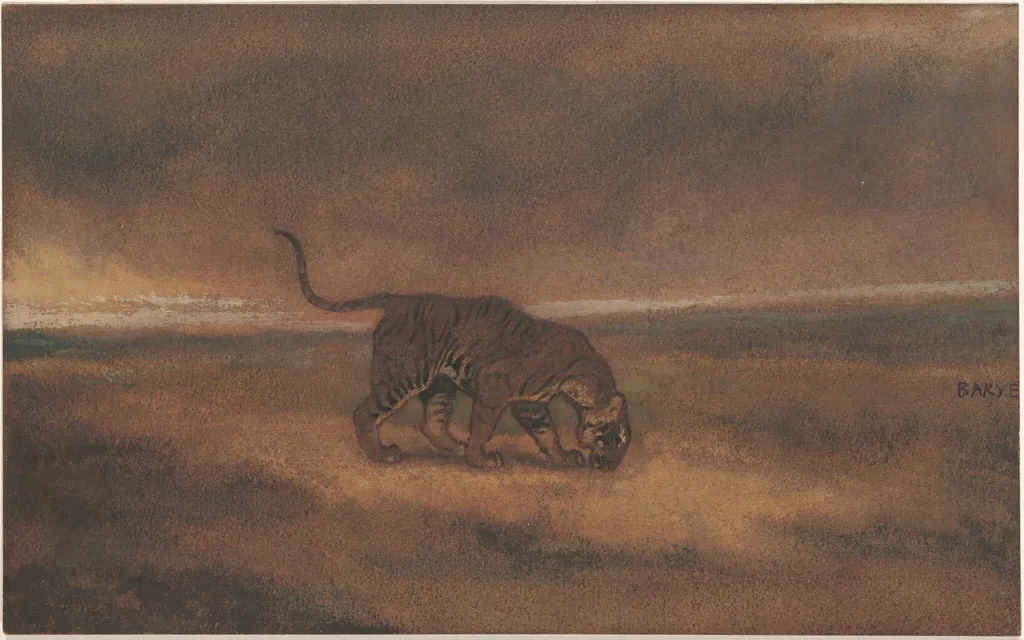
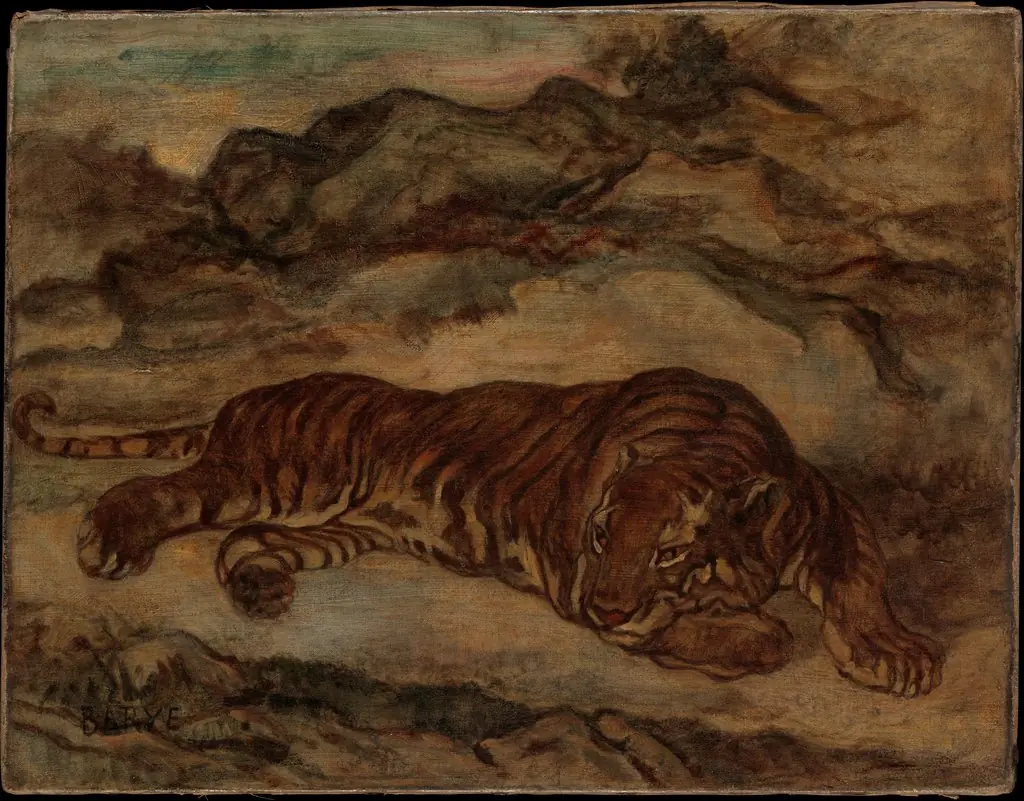
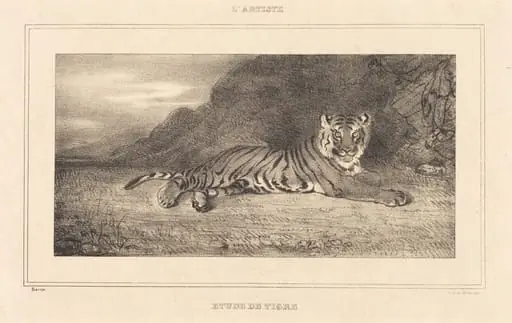
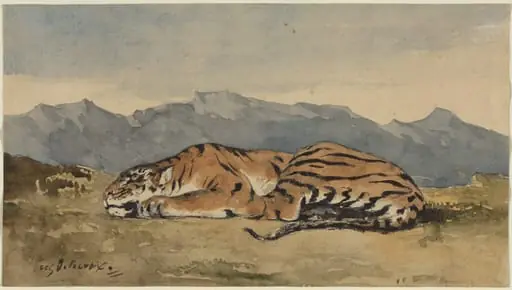
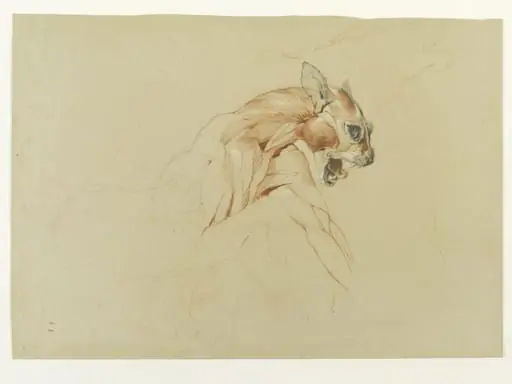
Tiger is a watercolor drawing by the Romanticist artist Antoine-Louis Barye. It dates from 1855 and is held in the collection of the National Gallery of Art.
About this work
Overview
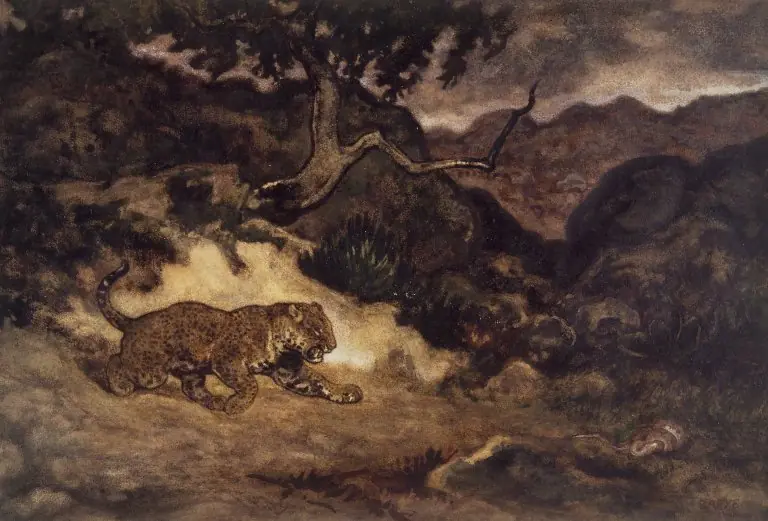
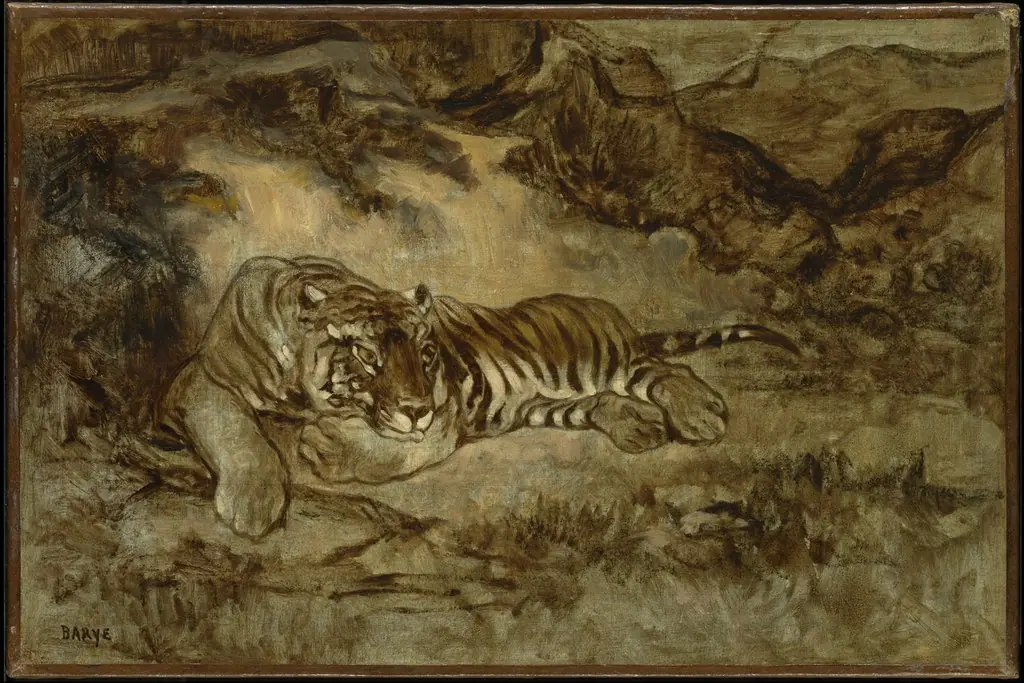
Antoine-Louis Barye’s watercolor drawing, titled “Tiger,” dates from the mid‑19th century. Executed on wove paper, the work presents a lone tiger moving across a stark, rocky terrain. The composition is dominated by muted earth tones, allowing the animal’s orange coat to become the visual anchor within an otherwise subdued landscape.
Subject & Meaning
The solitary tiger is depicted in a calm, measured stride, conveying a blend of strength and vulnerability. Set against a barren backdrop, the scene emphasizes the animal’s isolation, reflecting Barye’s interest in portraying wild creatures in moments that reveal both their power and their exposure to the elements.
Technique & Style
Barye employed watercolor glazing, applying successive layers of thin, transparent pigment to achieve depth and texture. The blended browns and grays of the ground contrast with the luminous orange of the tiger’s fur, a result of careful modulation of tone that enhances the three‑dimensionality of the figure within the flat paper support.
History & Provenance
The drawing aligns with Barye’s broader oeuvre, in which he frequently studied animals observed in Parisian zoos. While specific ownership records for this piece are limited, it exemplifies the artist’s mid‑century focus on naturalistic animal studies, a subject that occupied a central place in his artistic practice.
Own this work as a print
Artist & collection
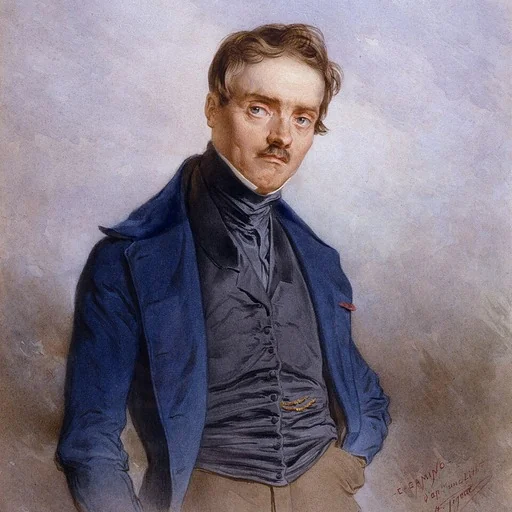
Artist
Antoine-Louis Barye was a Romantic French sculptor most famous for his work as an animalier, a sculptor of animals. His son and student was the sculptor Alfred Barye.