Artwork
The Tiger Hunt
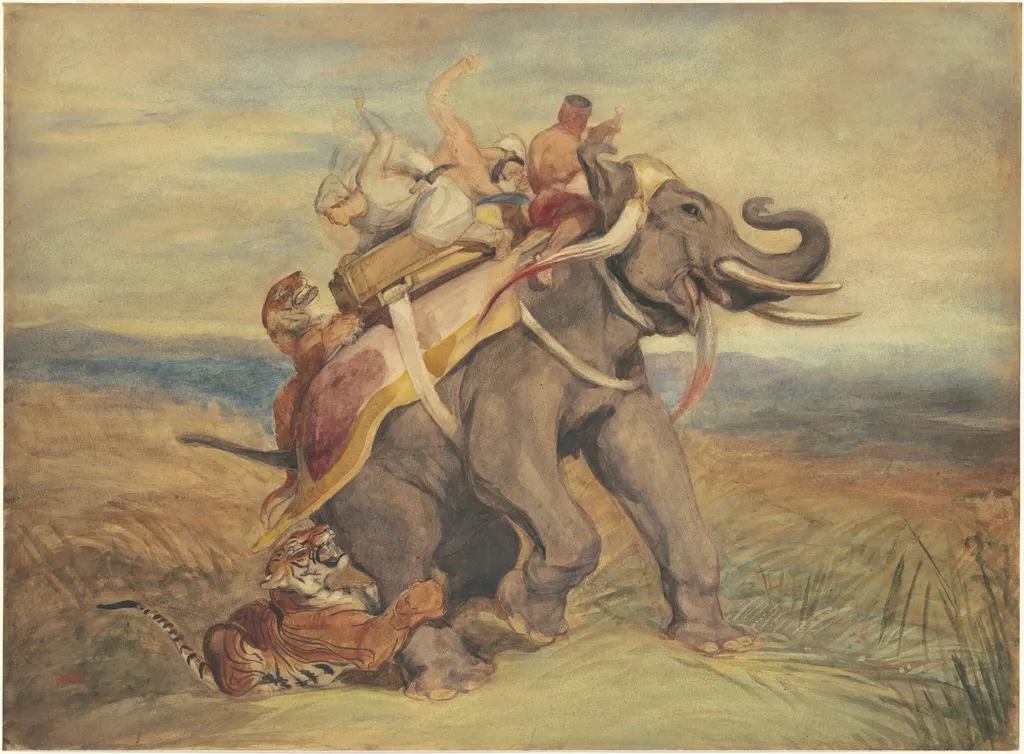
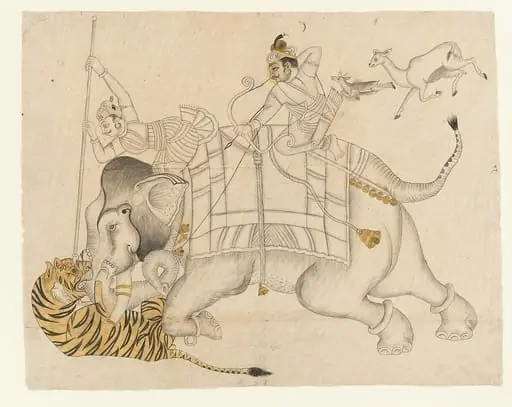
The Tiger Hunt is a watercolor drawing by the Romanticist artist Antoine-Louis Barye. It dates from 1836 and is held in the collection of the National Gallery of Art.
About this work
Overview
The Tiger Hunt, created by Antoine-Louis Barye around 1836, is a watercolor drawing on wove paper depicting a dramatic hunting scene involving an elephant, hunters, and a tiger.
Subject & Meaning
The artwork captures a chaotic moment in a tiger hunt, with an elephant charging through a landscape, trampling a tiger, while two hunters are aboard. The scene conveys dynamic movement and intense emotion, characteristic of the Romantic emphasis on the sublime.
Technique & Style
Barye employed quick, loose brushstrokes in earthy tones (grays, oranges, blacks, and greenish-yellows) to convey the rapidity and turmoil of the hunt, aligning with his skill as an animalier in capturing animal anatomy and motion.
History & Provenance
Created circa 1836 by Antoine-Louis Barye, a renowned French Romantic sculptor and animalier, known for his dynamic wildlife depictions informed by anatomical and natural studies.
Context
The Tiger Hunt fits within the Romantic art movement, which valued emotion, the sublime, and the portrayal of powerful natural scenes, often emphasizing drama and the awe-inspiring aspects of life and nature.
Legacy
As a work by Barye, it contributes to the legacy of Romantic animalier art, highlighting the artist’s ability to evoke movement and emotion through his chosen medium, in this case, watercolor on wove paper.
Own this work as a print
Artist & collection
Artist
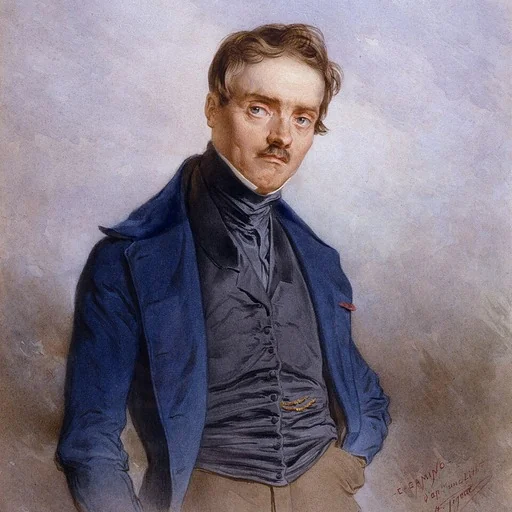
Antoine-Louis Barye was a Romantic French sculptor most famous for his work as an animalier, a sculptor of animals. His son and student was the sculptor Alfred Barye.

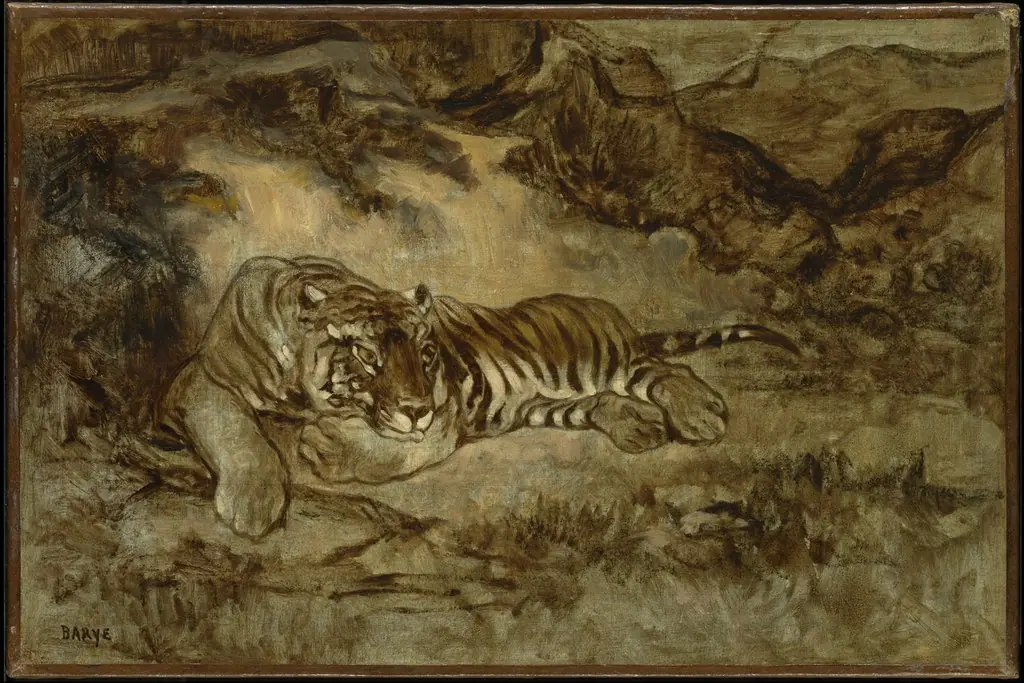
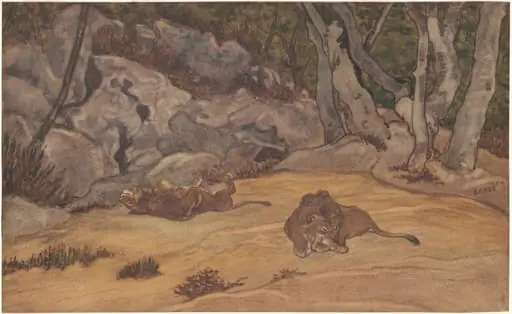
 Untitled
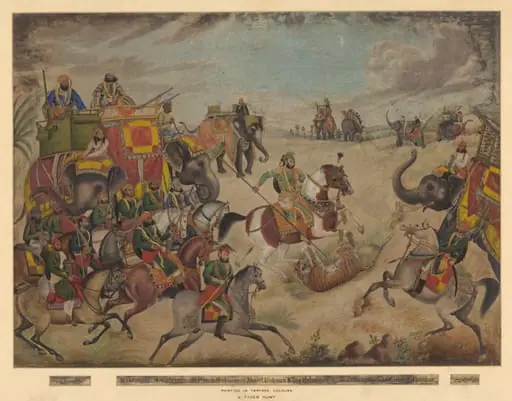 A tiger hunt at Jhajjar, Rohtak District, Panjab
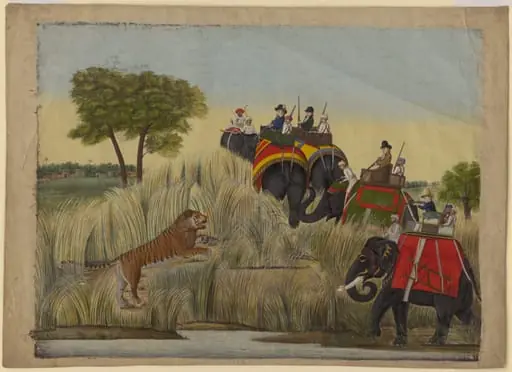 Four elephants with Europeans seated in the howdahs taking part in a tiger hunt.
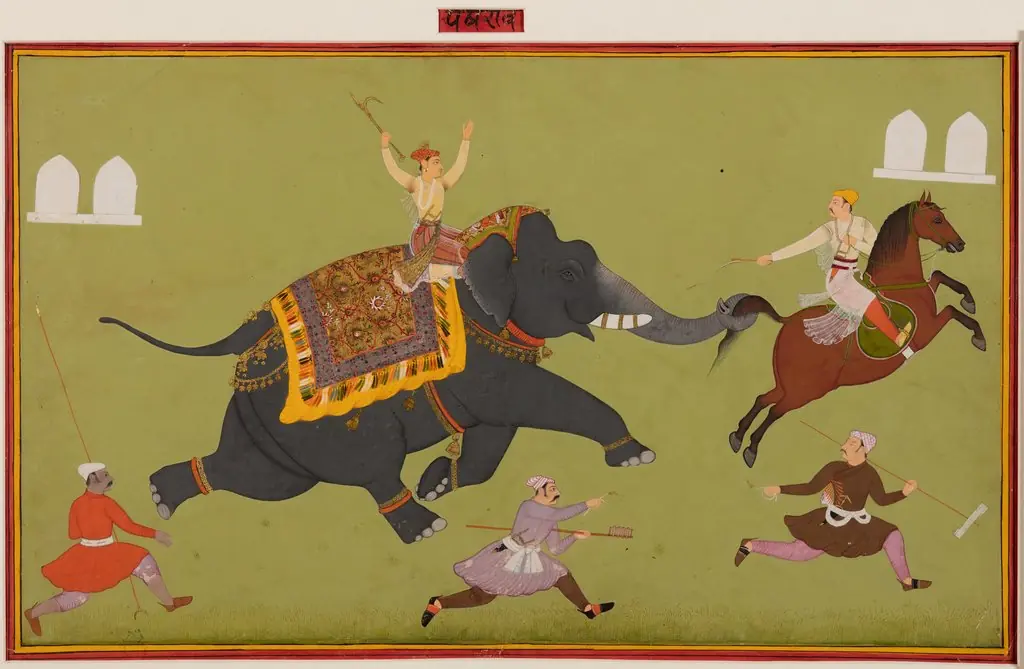 The Elephant of Maharana Jai Singh of Mewar (r. 1680–98) Catches a Horse by the Tail
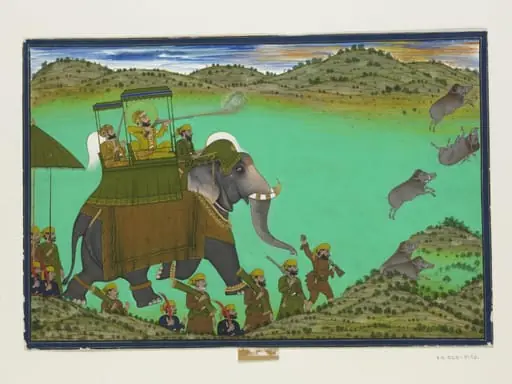 Maharana Sarup Singh of Udaipur
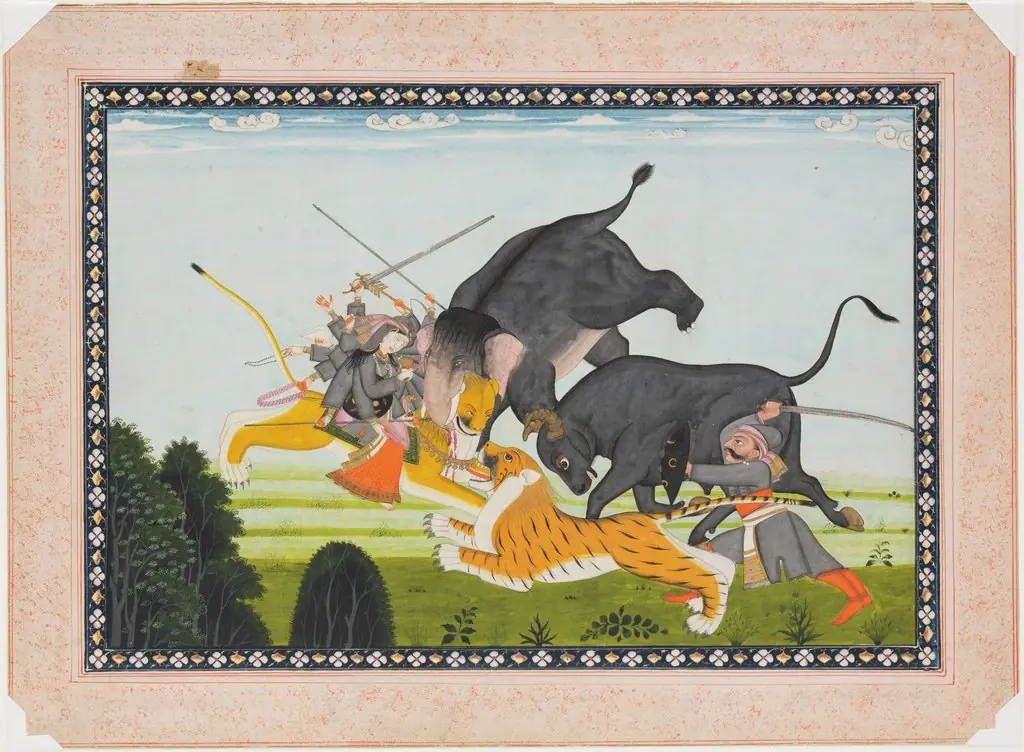 Durga Fighting an Elephant, Bull and Tiger
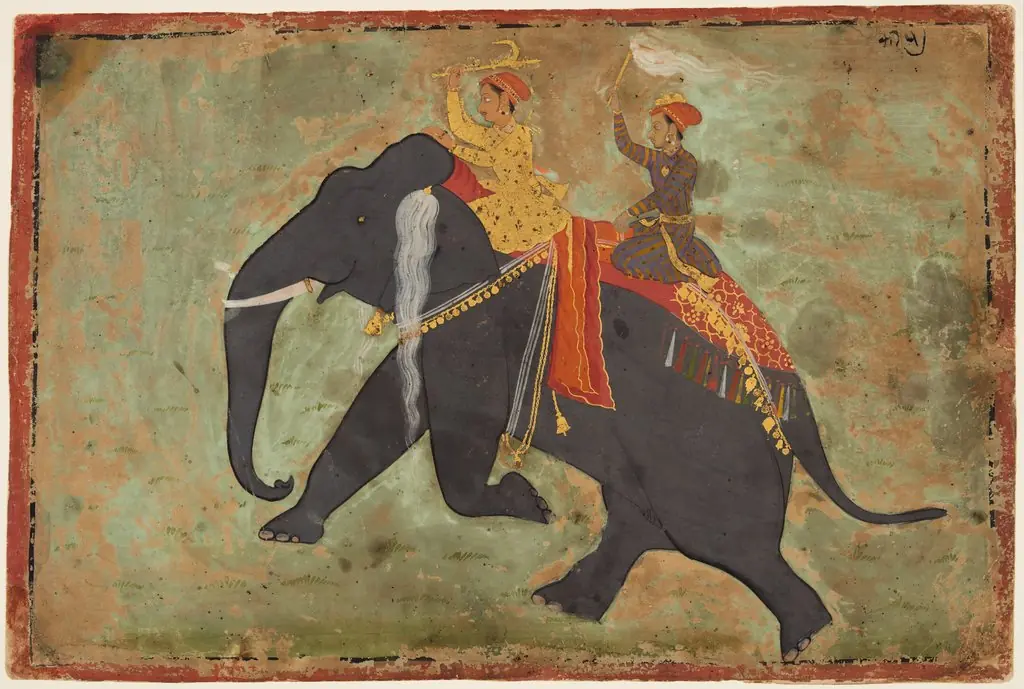 Prince Amar Singh (1672–1710) Drives His Own Elephant
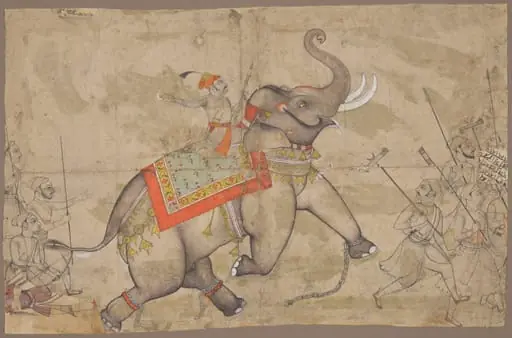 A Raja on an Elephant
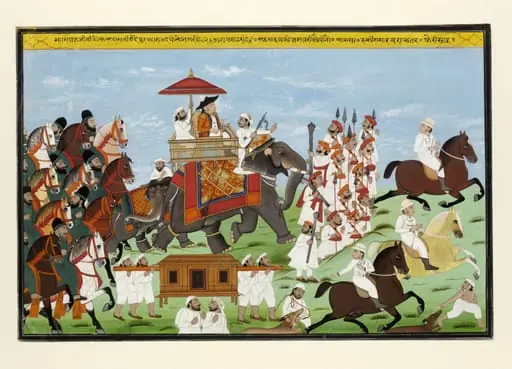 Captain James Tod riding an elephant with his companions and escort