Artwork
Mr. William Waters
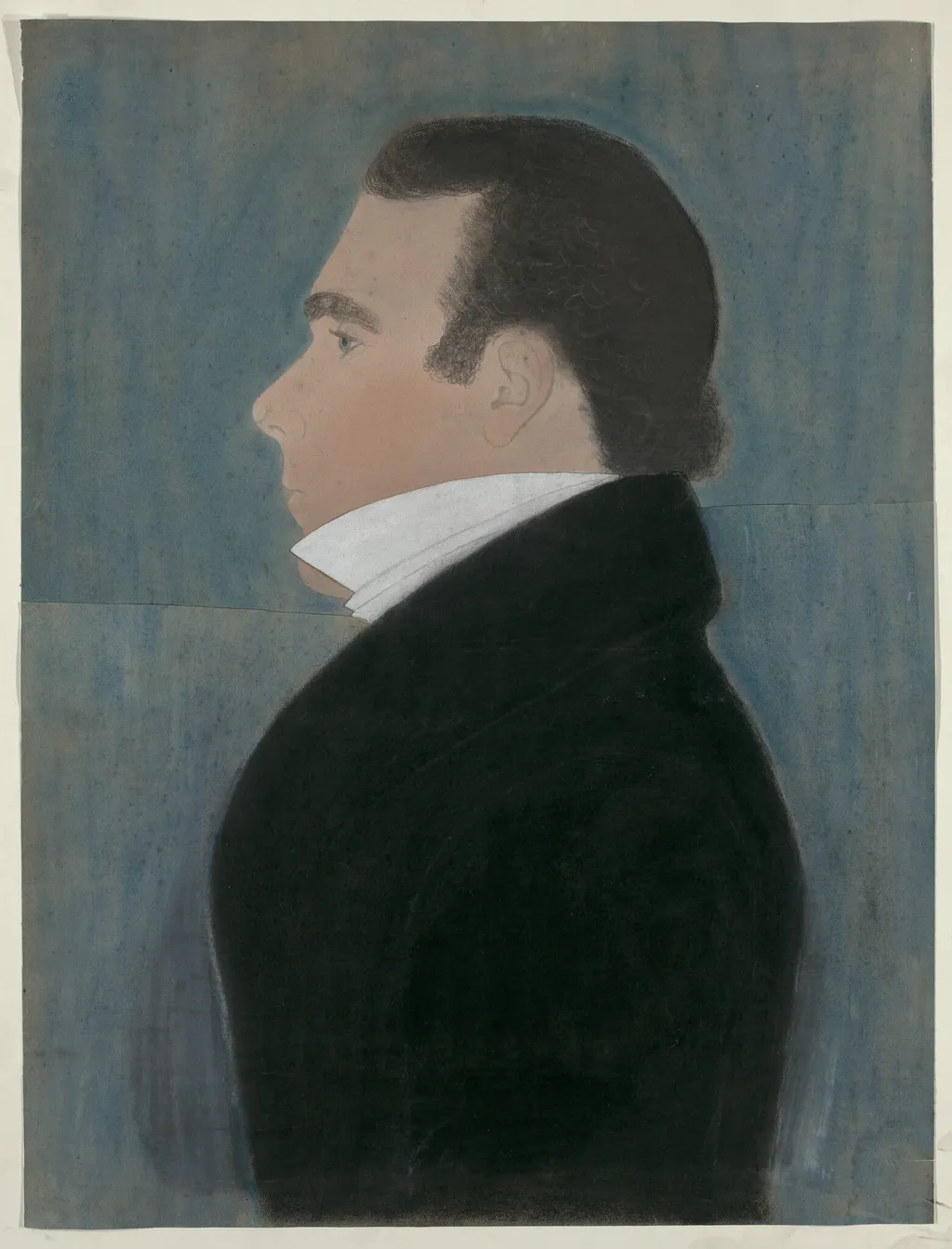
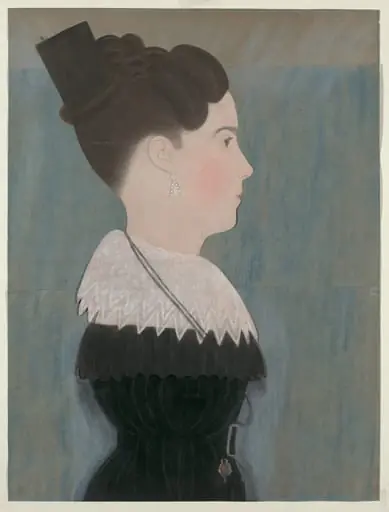
Mr. William Waters is a graphite drawing by the Romanticist artist Ruth Henshaw Bascom. It dates from 1828 and is held in the collection of the National Gallery of Art.
About this work
Overview
Created around 1828, this portrait by Ruth Henshaw Bascom depicts a gentleman identified as Mr. William Waters. Executed in pastel, graphite, and watercolor on a composite sheet of paper, the work measures a modest size typical of intimate studies. The figure is presented in profile against a muted blue‑gray field, emphasizing the sitter’s facial features and attire.
Subject & Meaning
The sitter appears in a dignified pose, his dark hair neatly arranged and his expression solemn. He wears a black coat trimmed with a white collar, attire that suggests middle‑class respectability in the early nineteenth century. The restrained background and direct gaze convey a sense of personal gravitas, likely intended as a commemorative likeness for family or social record.
Technique & Style
Bascom combined pastel and graphite to define the facial structure, then applied watercolor washes to soften the tones and integrate the two paper sheets. The adhesion of the sheets is visible at the edges, a practical solution that also adds a subtle textural element. The overall effect is a gently blurred surface where line and color merge, characteristic of Bascom’s delicate portraiture.
History & Provenance
While specific ownership records are limited, the piece reflects Bascom’s practice of producing portable portraits for clients across the region.
The drawing is catalogued as a work by Ruth Henshaw Bascom, an itinerant artist active in New England during the early 1800s. While specific ownership records are limited, the piece reflects Bascom’s practice of producing portable portraits for clients across the region. Its survival on adhered paper indicates careful preservation, allowing contemporary viewers to assess her materials and methods.
Artist & collection


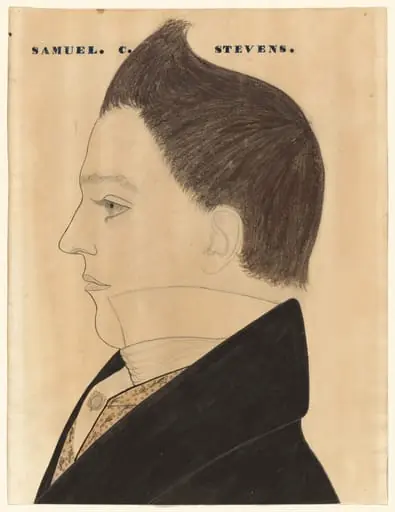 Samuel C. Stevens
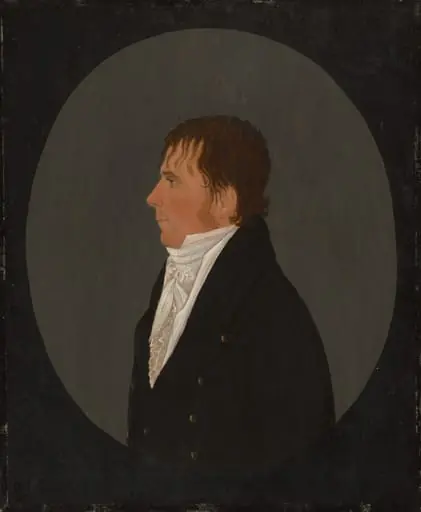 Profile Portrait of a Young Man
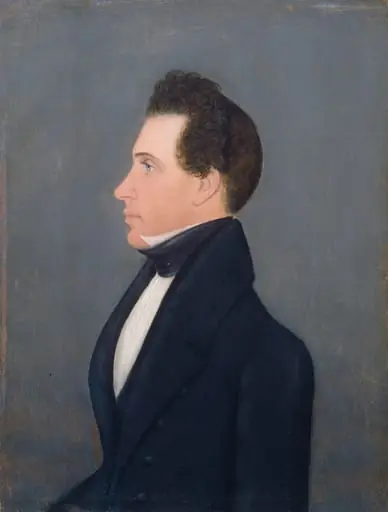 Profile Portrait of a Man
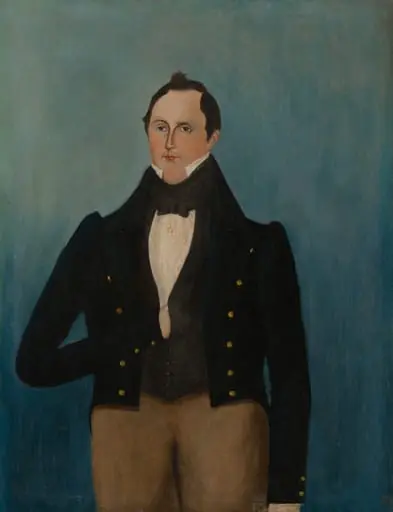 Anonymous Man
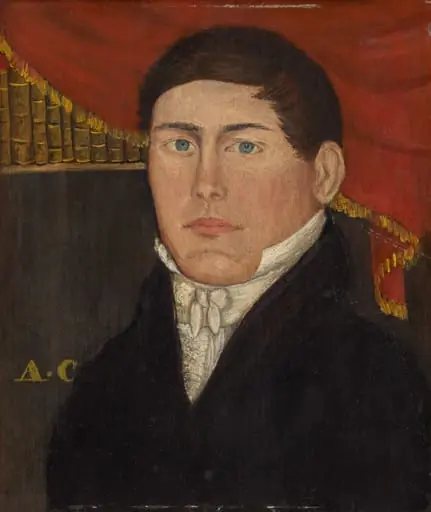 Dr. Alvah Cook
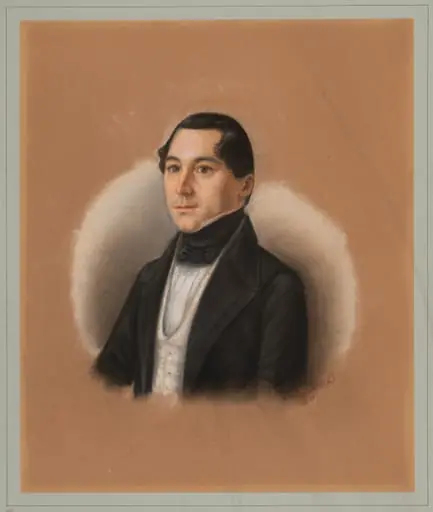 Schubert, Emilie: Portrait of the Husband of Auguste Schubert (attributed)
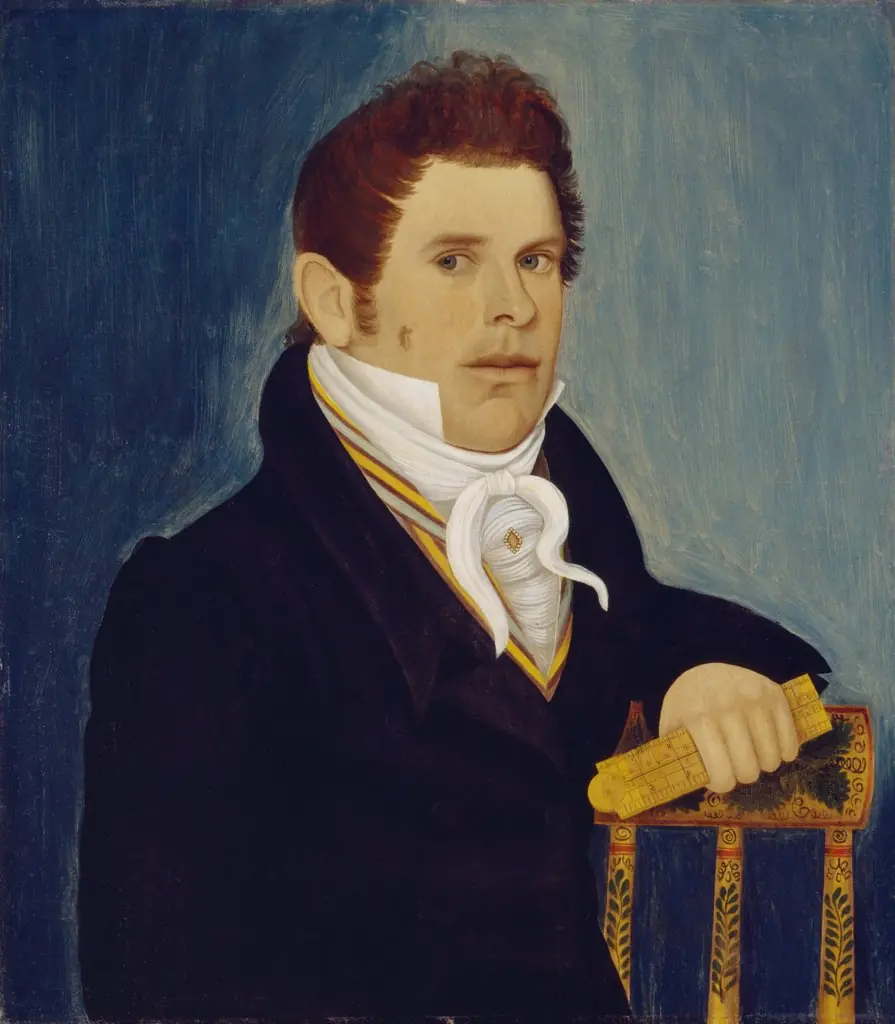 Man with Folding Rule
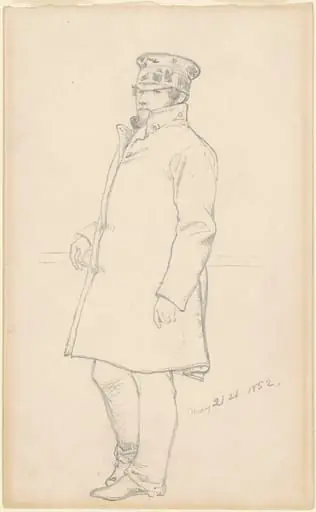 Man in Cap and Coat
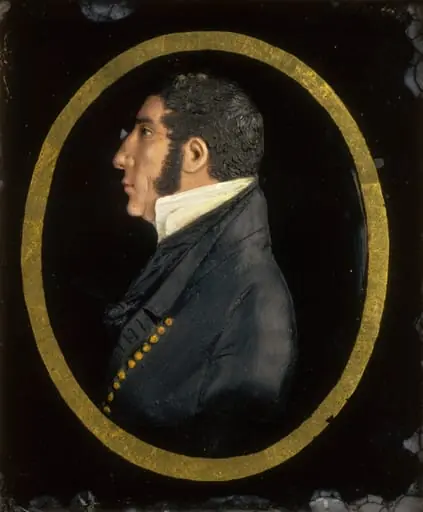 William Henry Vining
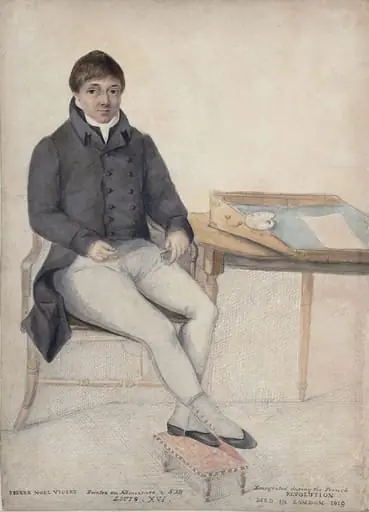 Portrait of Pierre Noel Violet
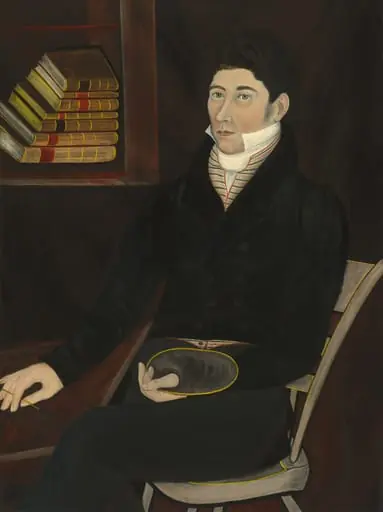 Possibly William Sheldon
 Mrs. William Waters