Artwork
The Sacrifice of Iphigenia
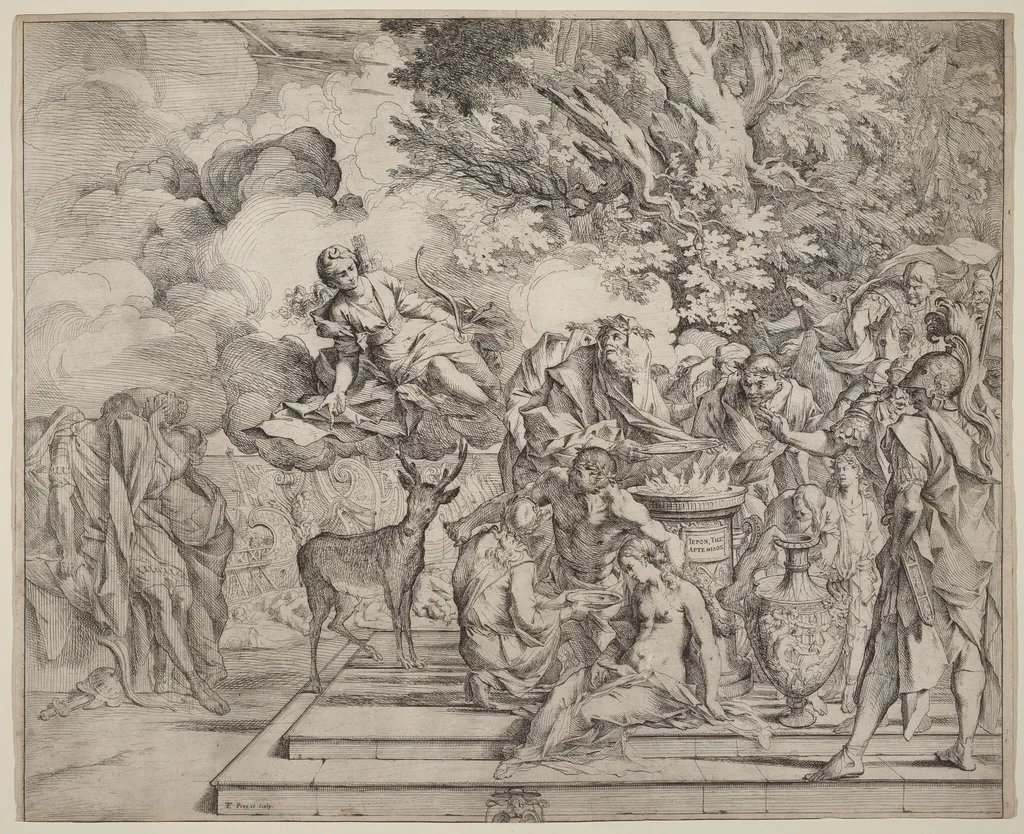
The Sacrifice of Iphigenia is an ink print by the Baroque artist Pietro Testa. It dates from 1641 and is held in the collection of the National Gallery of Art. Created circa 1641, this Italian etching portrays the mythic moment when Iphigenia is led to her death.
About this work
Overview
Created circa 1641, this Italian etching portrays the mythic moment when Iphigenia is led to her death. Executed in the High Baroque period, the print presents a crowded tableau of figures and animals, anchored by a looming tree and an altar. The composition’s chiaroscuro and intricate line work generate a tense, emotionally charged atmosphere that draws the eye through the narrative.
Subject & Meaning
The image visualizes the ancient tale of Iphigenia, who is escorted to an altar for sacrifice to appease the gods and secure safe passage for the Greek fleet. The presence of a sword‑bearing attendant and a startled deer underscores the violence and disruption of natural order, while the gathered crowd reflects communal complicity in the tragic rite.
Technique & Style
Executed with copperplate etching, the work relies on delicate incised lines and varying tonal washes typical of 17th‑century Italian printmaking.
Executed with copperplate etching, the work relies on delicate incised lines and varying tonal washes typical of 17th‑century Italian printmaking. Testa manipulates light and shadow through cross‑hatching, creating depth among the densely packed figures. The careful modulation of tone enhances the drama, while the precise rendering of textures—fur, foliage, and fabric—demonstrates the artist’s mastery of the medium.
History & Provenance
Pietro Testa, a Roman draftsman and printmaker, produced the piece within a network of scholars and artists devoted to classical antiquity, notably the circle around patron Cassiano dal Pozzo. Though Testa achieved limited recognition as a painter, his prints circulated among intellectuals, serving as visual interpretations of mythological subjects for learned audiences.
Context
The etching reflects the Baroque fascination with theatricality and moral exempla drawn from antiquity. In Rome’s mid‑17th‑century artistic climate, classical themes were revived to illustrate virtues and vices, aligning with the humanist interests of patrons like dal Pozzo. Testa’s work thus functions both as a decorative object and as an educational illustration for scholarly collections.
Artist & collection
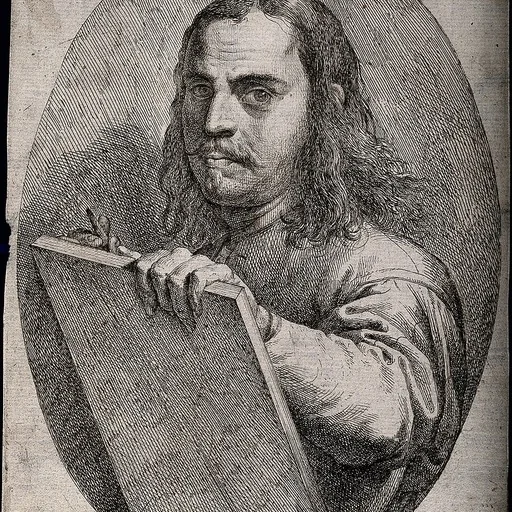
Artist
Pietro Testa (1612 – 1 March 1650) was an Italian High Baroque artist active in Rome.