Artwork
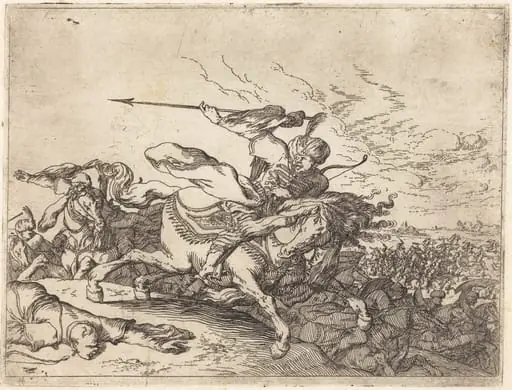
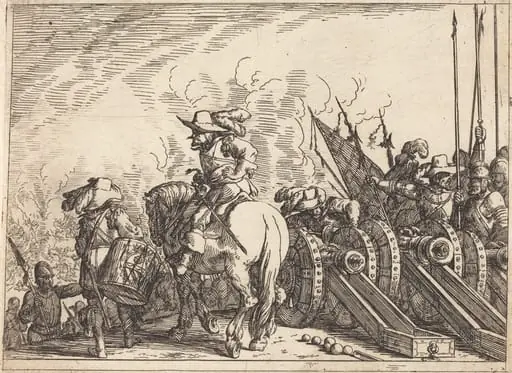
Capricci di varie battaglie
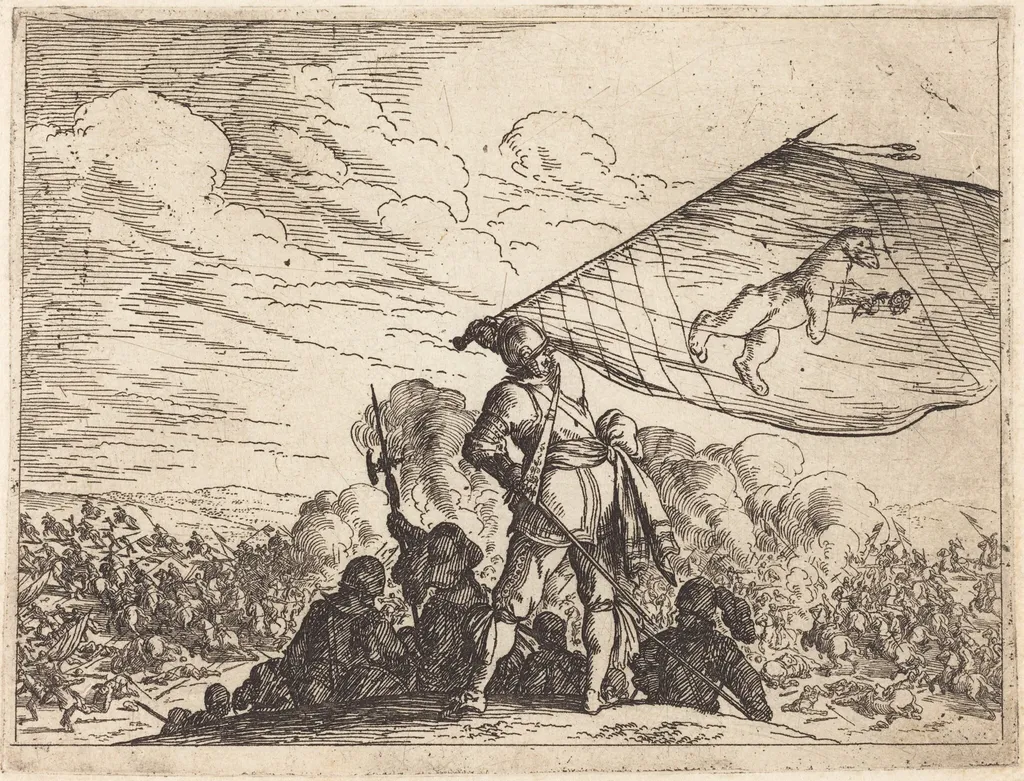
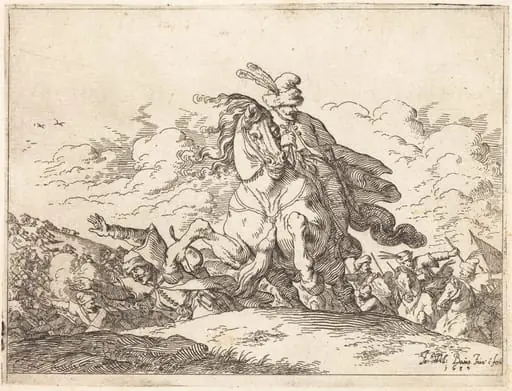
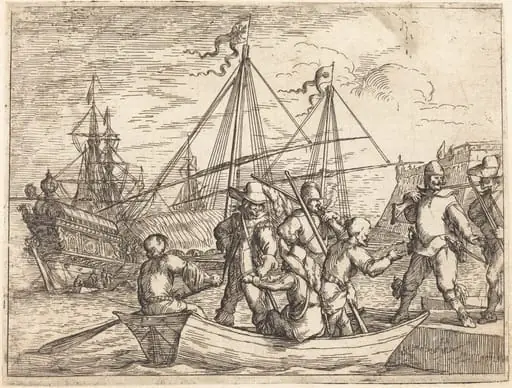
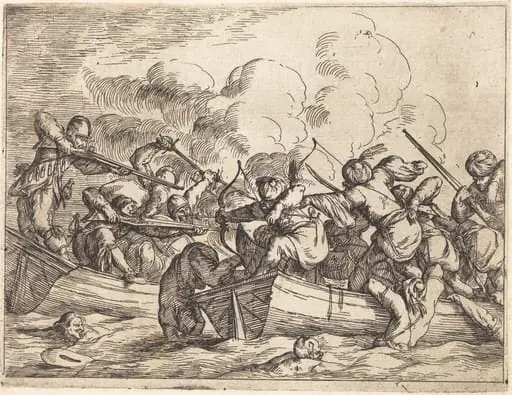
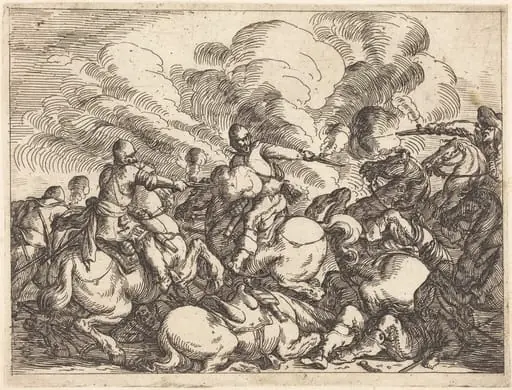
Capricci di varie battaglie is an ink print by the Baroque artist Johann Wilhelm Baur. It dates from 1635 and is held in the collection of the National Gallery of Art.
About this work
Overview
This piece reflects his interest in dynamic, theatrical compositions rather than historical accuracy, blending real and fantastical elements in a single frame.
Johann Wilhelm Baur produced *Capricci di varie battaglie* in 1635 as an etching on laid paper, part of a series of imaginative battle scenes. A German artist born in Strasbourg in 1607, Baur worked across printmaking, miniature painting, and illustration. This piece reflects his interest in dynamic, theatrical compositions rather than historical accuracy, blending real and fantastical elements in a single frame.
Subject & Meaning
The scene depicts a disordered battlefield, with a lone armored figure standing atop a rocky outcrop, spear in hand, surveying the carnage below. Above, a horse rears unnaturally in the air, as if suspended by unseen forces. The composition suggests a collapse of natural order, evoking chaos and the futility of conflict. It is not a record of any specific engagement but a symbolic meditation on war’s disorder.
Technique & Style
Baur employed sharp, incised lines typical of etching, using acid to bite into a metal plate coated with wax. The resulting marks create a sense of urgency and motion, with jagged contours defining fallen bodies, scattered debris, and the turbulent sky. The lack of tonal gradation emphasizes contrast and rhythm, aligning with the expressive conventions of early 17th-century Northern European printmaking.
History & Provenance
Created in 1635, the print emerged during Baur’s mature period, when he was active in Italy and influenced by Italian Mannerist aesthetics. Though few records of its early ownership survive, it was likely circulated among collectors of prints and military imagery. Baur’s reputation as a draftsman of Ovidian subjects lent credibility to his fantastical works, ensuring their place in private cabinets of curiosities.
Context
In the mid-1630s, Europe was embroiled in the Thirty Years’ War, and images of battle—real or invented—held broad appeal. Baur’s capricci responded to this climate not through documentation but through allegory and invention. His work stood apart from topographical war prints, offering instead psychological and visual turbulence, aligning with a broader European trend toward imaginative, emotionally charged imagery.
Legacy
Baur’s *Capricci di varie battaglie* contributed to the development of the capriccio genre in printmaking, influencing later artists who fused reality with fantasy. Though less known than his Ovidian illustrations, this series exemplifies his ability to convey emotional intensity through line and composition. It remains a key example of how printmakers used technical precision to explore themes beyond literal representation.
Artist & collection
Artist
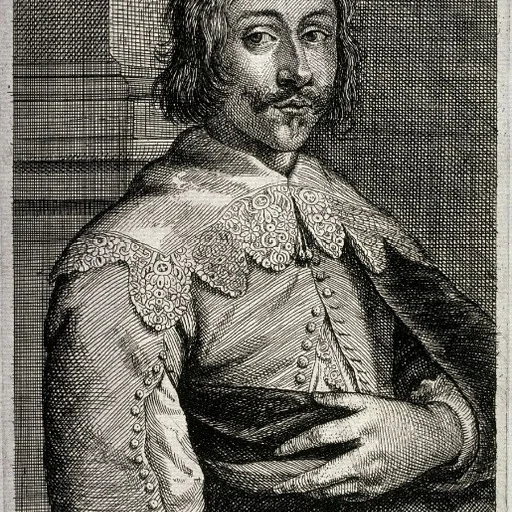
Johann Wilhelm Baur, Joan Guiliam Bouwer, or Bauer (Strasbourg, 31 May 1607 - Vienna, 1 January 1640) was a German engraver, etcher and miniature painter. He is famous for a series of illustrations of Ovid's Metamorphoses.