Artwork
Chiswick Mall
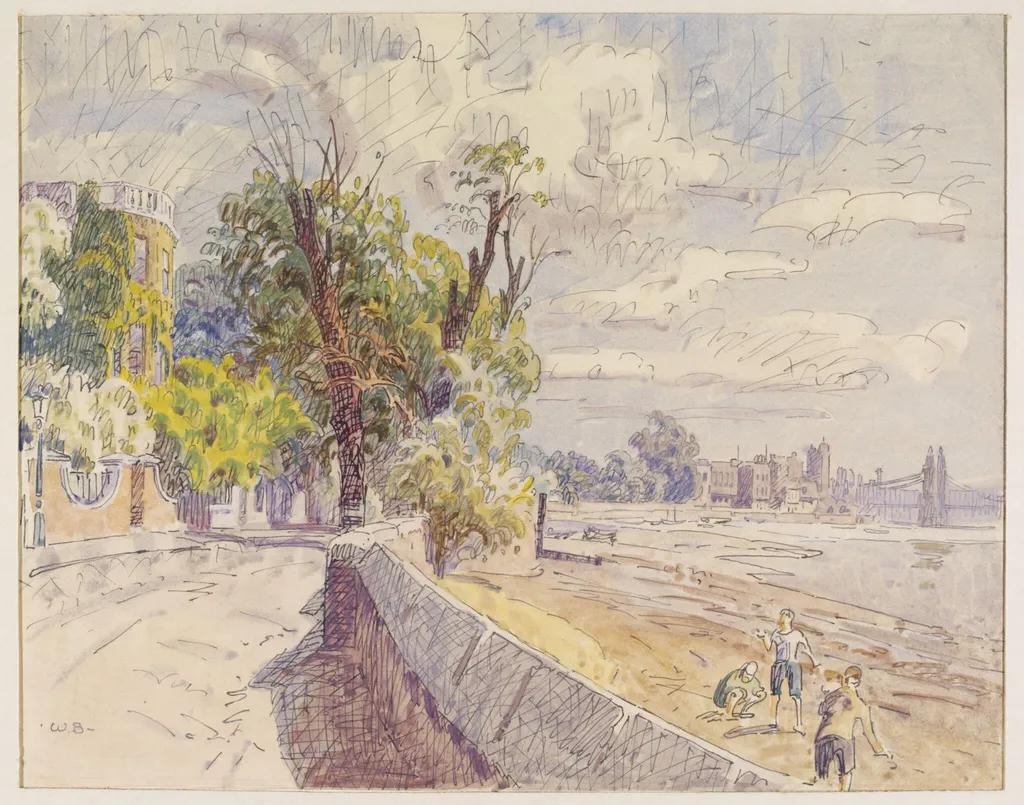
Chiswick Mall is a watercolor work on paper by the Impressionist artist Bayes. It dates from 1940 and is held in the collection of the Victoria and Albert Museum.
About this work
Overview
Created for the Recording Britain project, the work reflects a deliberate effort to preserve everyday English landscapes during wartime.
A 1940 watercolour by Bayes captures a quiet stretch of Chiswick Mall along the River Thames. Created for the Recording Britain project, the work reflects a deliberate effort to preserve everyday English landscapes during wartime. Its delicate brushwork and muted palette convey a sense of stillness, contrasting with the upheavals of the era. The piece is one of hundreds produced under this initiative to safeguard visual records of a nation at risk of transformation.
Subject & Meaning
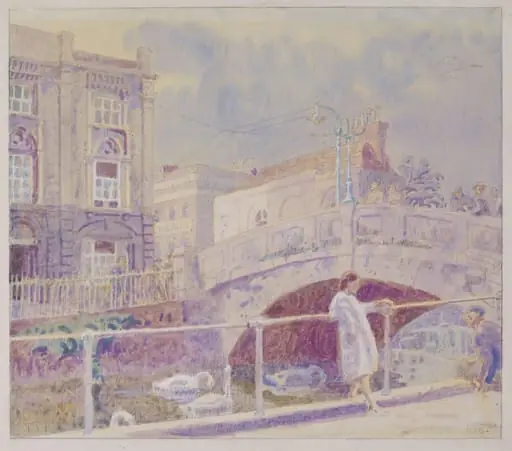
The scene centers on the riverbank, where a low stone wall frames the water’s edge and a few figures sit or stand in quiet repose. Children are present, engaged in unremarkable play, while a prominent tree rises in the foreground, its foliage rendered in soft greens. The composition avoids drama, instead emphasizing ordinary moments—suggesting resilience in routine life. The bridge and distant buildings anchor the view in a specific place, grounding the image in local identity.
Technique & Style
Bayes employs transparent watercolour washes to suggest atmosphere rather than define form. Brushstrokes are loose yet controlled, allowing the paper’s texture to contribute to the effect of light and air. The sky is rendered in pale greys, diffusing the light across the scene, while the tree’s leaves are suggested with layered tints rather than detailed outlines. This approach echoes Impressionist concerns with transient light, though without the vibrancy typical of French painting.
History & Provenance
The painting was commissioned as part of the Recording Britain project, initiated in 1939 by Sir Kenneth Clark and funded by the Pilgrim Trust. Artists were tasked with documenting landscapes and vernacular architecture threatened by war or modernization. Bayes’s work entered the Victoria and Albert Museum’s collection alongside hundreds of others, forming a curated archive of pre-war Britain. Its survival reflects the project’s success in preserving cultural memory.
Context
Created during the early years of the Second World War, the painting responds to anxieties about loss—of place, tradition, and stability. While bombs fell on cities, artists like Bayes turned to quieter corners, recording scenes deemed vulnerable to change. Chiswick Mall, a historic riverside promenade, symbolized continuity. The project’s emphasis on the mundane was itself a quiet act of resistance against the erasure of everyday life.
Legacy
The Recording Britain collection remains a vital historical resource, offering insight into how artists interpreted national identity under duress. Bayes’s watercolour, like others in the series, avoids heroism or spectacle, instead valuing subtlety and presence. Today, it contributes to ongoing discussions about memory, place, and the role of art in times of crisis—testimony to the quiet endurance of ordinary landscapes.
Artist & collection
Artist
This artist painted watercolours around London in the 1940s. They captured quiet spots like The Gateway at Royal Naval College, Greenwich, The Garden at York House in Twickenham, and London Dock, Wapping. Each sheet…

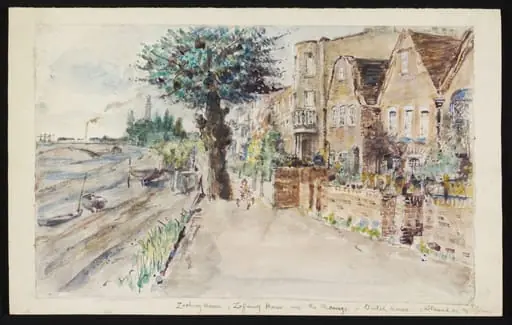 Zachary House, Zoffany House and the Moorings, Strand-on-the-Green, Chiswick
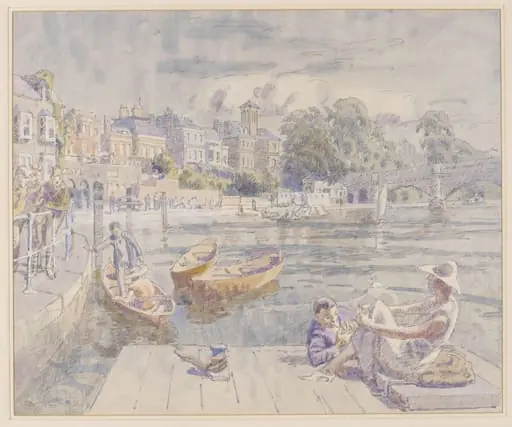 River Front, Richmond
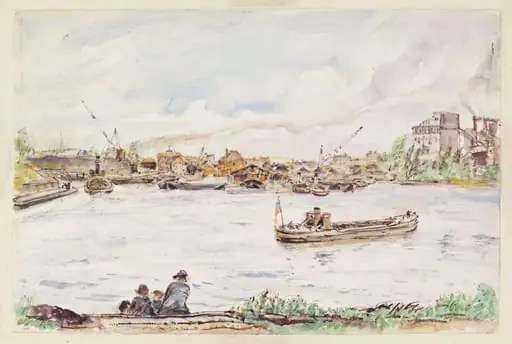 The Thames at Brentford
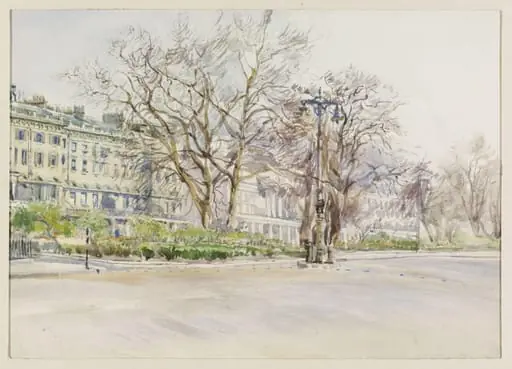 Eaton Square from Eaton Gate
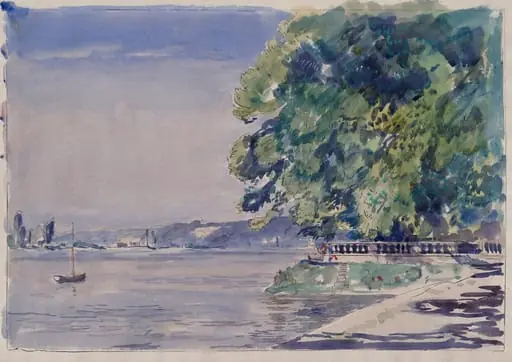 The Seine at Caudebec
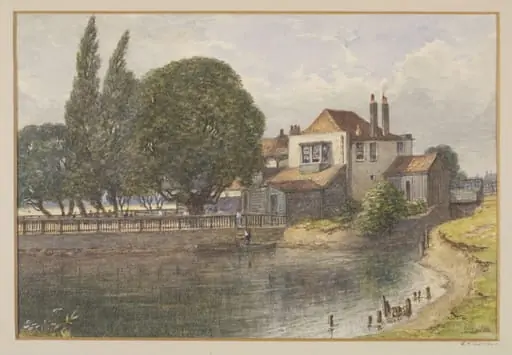 The White Hart, on the River Lea at Temple Mills, Hackney Marshes
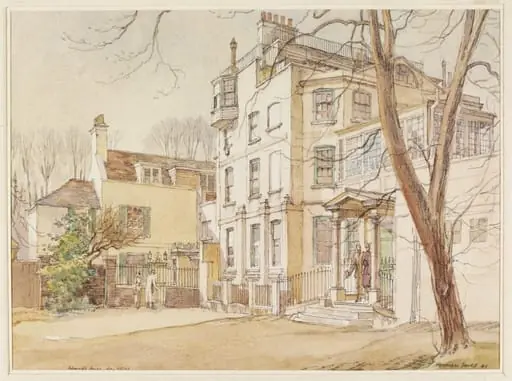 Admiral's House, Hampstead
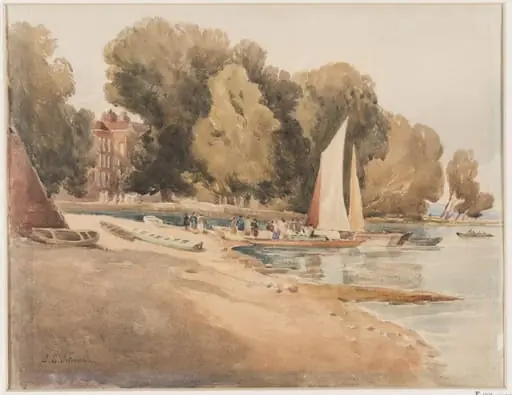 Twickenham
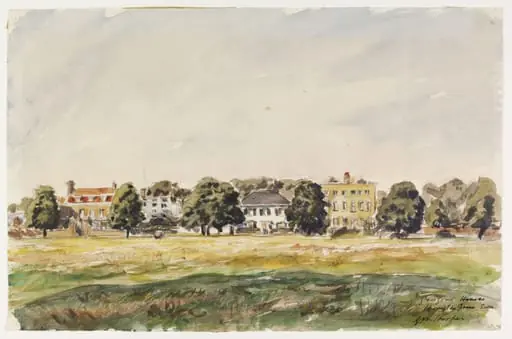 Georgian Houses, Hampton Green
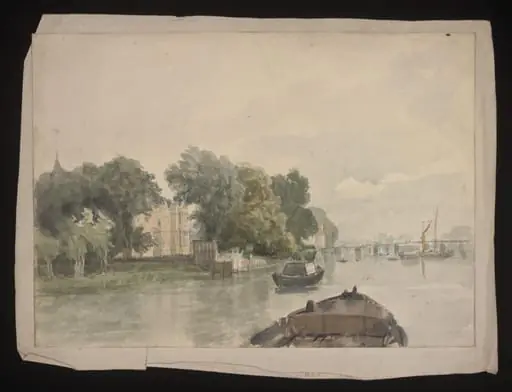 Watercolour drawing by the Grieve family, showing a scene on the River Thames
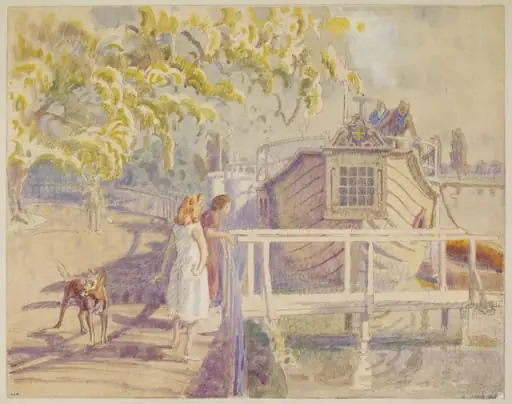 College Barges on the Isis, Oxford
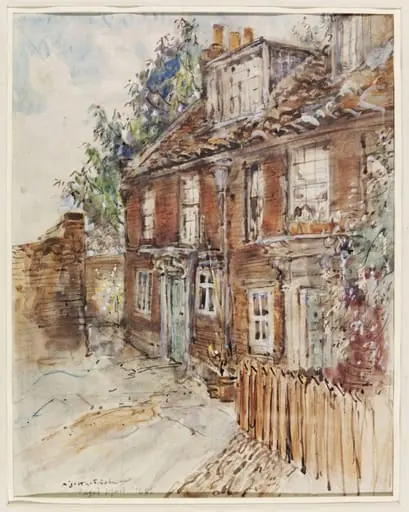 Page's Yard, Chiswick Mall