Artwork
Fountain on the Terrace, Richmond
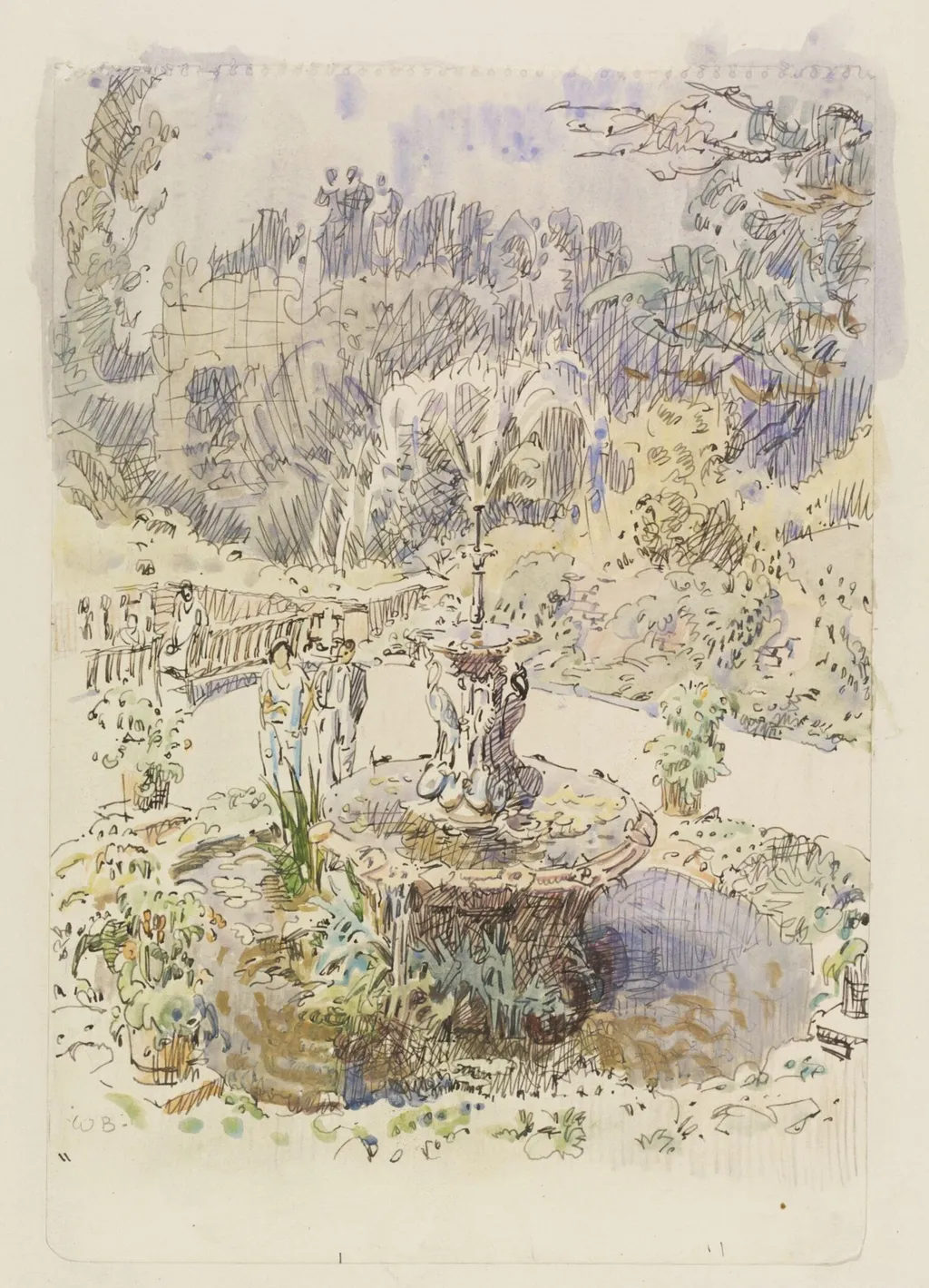
Fountain on the Terrace, Richmond is a watercolor work on paper by the Impressionist artist Bayes. It dates from 1940 and is held in the collection of the Victoria and Albert Museum.
About this work
Overview
Executed as part of the Recording Britain project, it reflects a broader effort to visually archive everyday landscapes during wartime.
Created in 1940, this watercolour by Bayes is a modest yet deliberate record of a garden fountain in Richmond. Executed as part of the Recording Britain project, it reflects a broader effort to visually archive everyday landscapes during wartime. The work’s informal quality and restrained palette align with the initiative’s emphasis on authenticity over grandeur, capturing a quiet moment rather than a monumental scene.
Subject & Meaning
The fountain, centrally placed within a modest garden, is surrounded by scattered figures and dense foliage, suggesting a familiar, lived-in space. Its inclusion in the project implies value not in grandeur but in ordinary continuity—something worth preserving amid the uncertainty of war. The presence of people, though minimally rendered, hints at public use and communal memory tied to such features.
Technique & Style
Bayes employed loose, rapid brushwork and a restrained palette of pale blues, greens, and earth tones, allowing the paper’s white to suggest light and air. Details are omitted; forms are suggested rather than defined. This sketch-like approach prioritizes immediacy and atmosphere, reflecting the artist’s intent to record a fleeting impression rather than produce a finished composition.
History & Provenance
The work was produced under the Recording Britain initiative, funded by the Pilgrim Trust and overseen by Sir Kenneth Clark. Launched in 1939, the project commissioned artists to document vulnerable or disappearing aspects of the British landscape. This watercolour entered institutional collections as part of that effort, now held as a historical record of regional vernacular spaces during wartime.
Context
During the Second World War, many local landmarks faced risk from bombing, neglect, or urban change. Recording Britain sought to preserve visual evidence of places deemed culturally significant, even if unremarkable. This work belongs to a larger corpus of topographical studies that valued quiet, everyday sites as symbols of national identity under threat.
Legacy
The watercolour remains part of a significant archive of wartime British art, now held in public collections such as the Victoria and Albert Museum. Its unassuming nature underscores the project’s democratic ethos—valuing ordinary scenes as worthy of preservation. Today, it serves as a quiet testament to the cultural priorities of a nation in crisis.
Artist & collection
Artist
This artist painted watercolours around London in the 1940s. They captured quiet spots like The Gateway at Royal Naval College, Greenwich, The Garden at York House in Twickenham, and London Dock, Wapping. Each sheet…

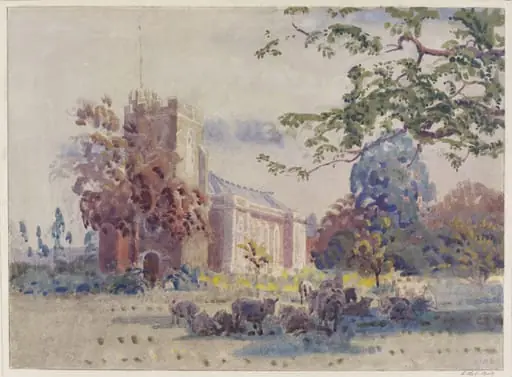
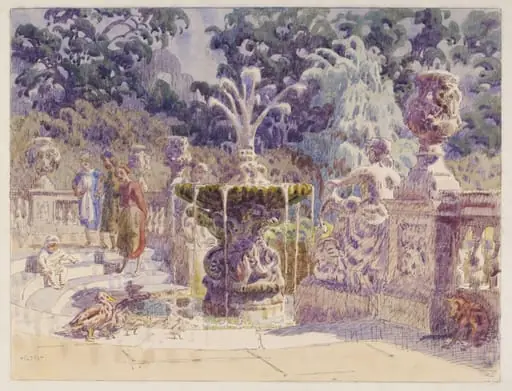 Fountain in Kensington Gardens
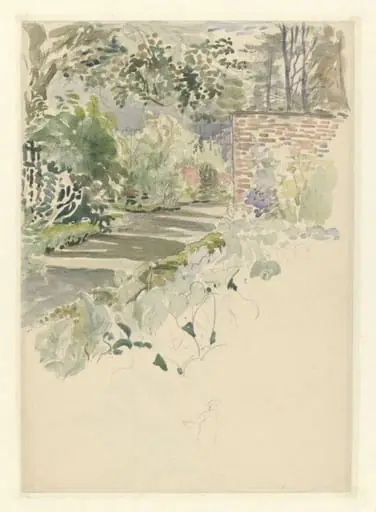 Sketch of the garden at Gwaynynog for the frontispiece of <i>The Tale of the Flopsy Bunnies</i>
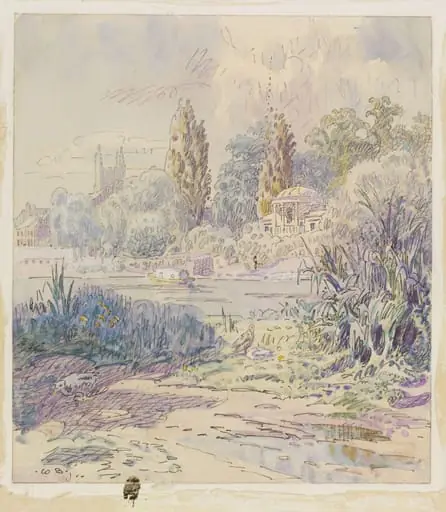 Isleworth
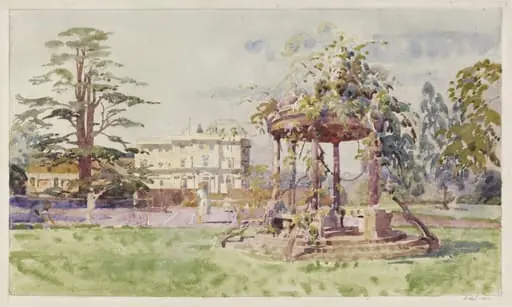 Cannons Park, Edgware; from the Tennis Courts
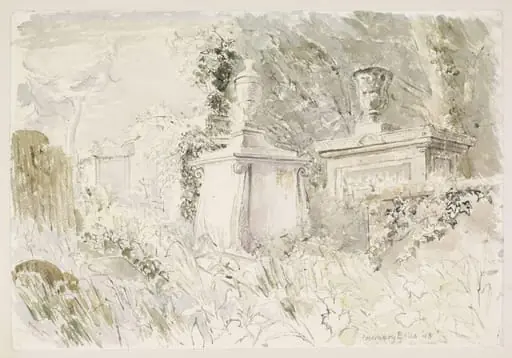 Tombstones, Bathampton Cemetery, Bath
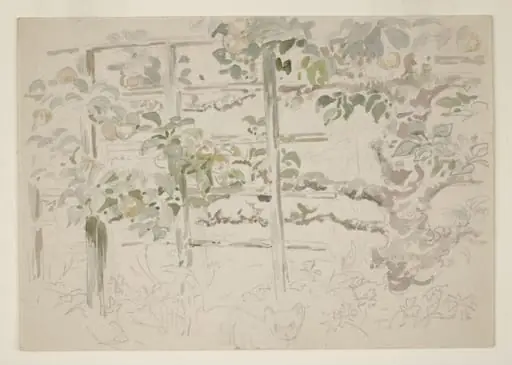 Trellis and apple tree in the garden at Gwaynynog
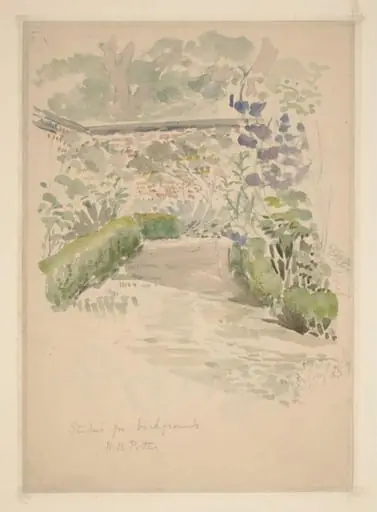 Sketch of the garden at Gwaynynog, Denbigh for <i>The Tale of the Flopsy Bunnies</i>
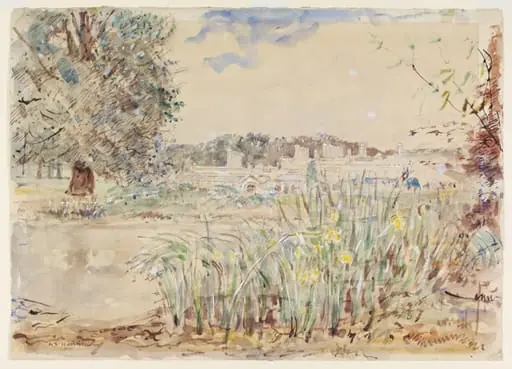 Gunnersbury House, Brentford
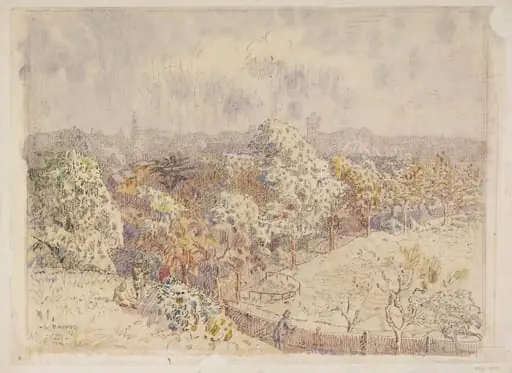 Colchester from the North Station
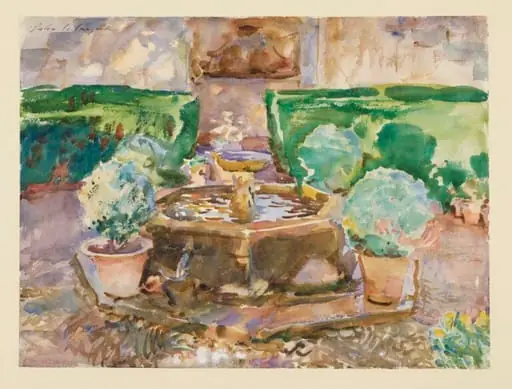 Fountain in the Generalife
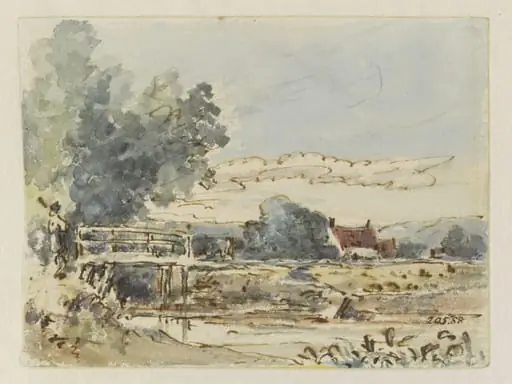 A bridge over a stream, with a cottage behind