Artwork
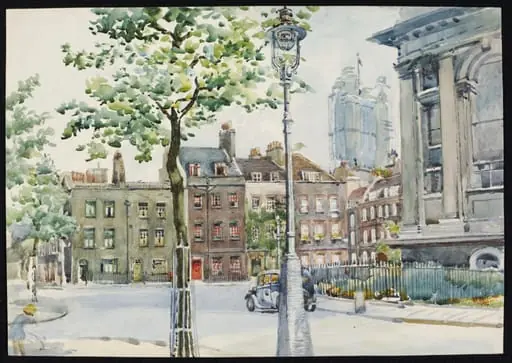
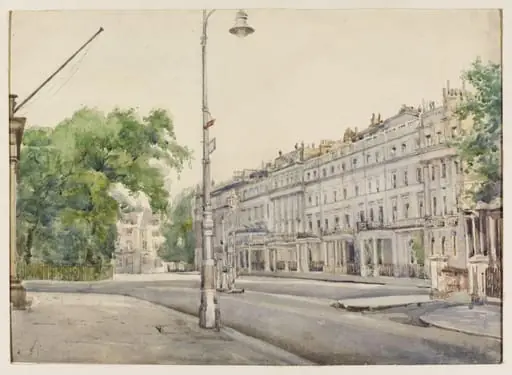
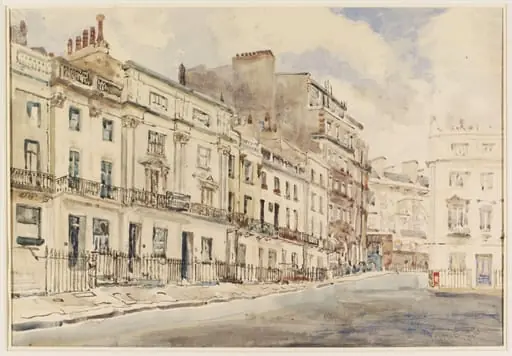
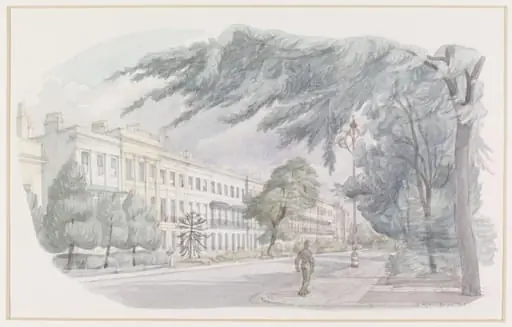
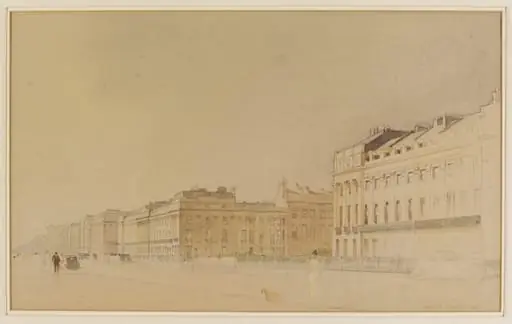
Eaton Square from Eaton Gate
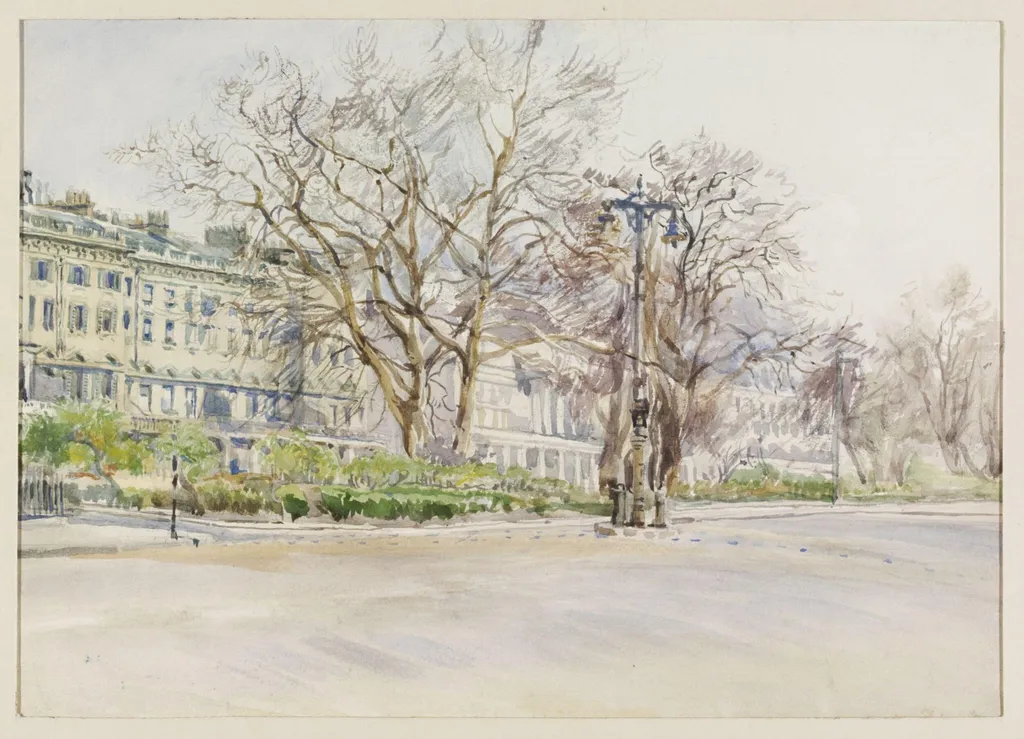
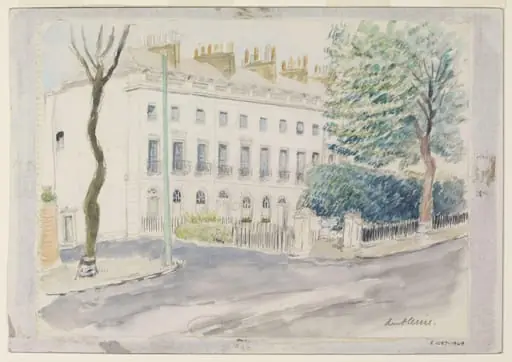
Eaton Square from Eaton Gate is a watercolor work on paper by the Impressionist artist Ediss. It dates from 1942 and is held in the collection of the Victoria and Albert Museum.
About this work
Overview
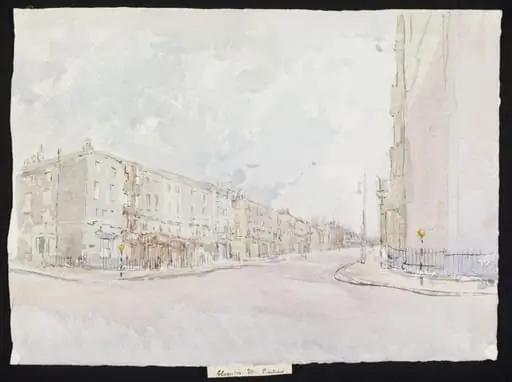
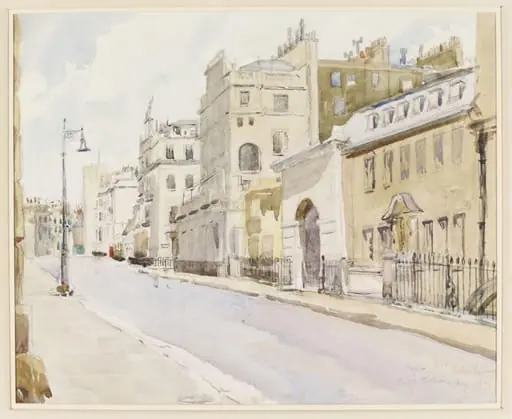
Created in 1942 by artist Ediss, this watercolour depicts a quiet corner of Eaton Square as seen from Eaton Gate.
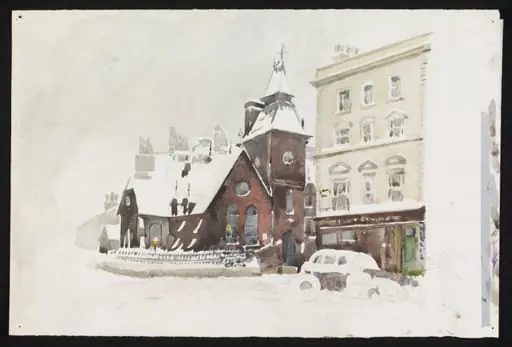
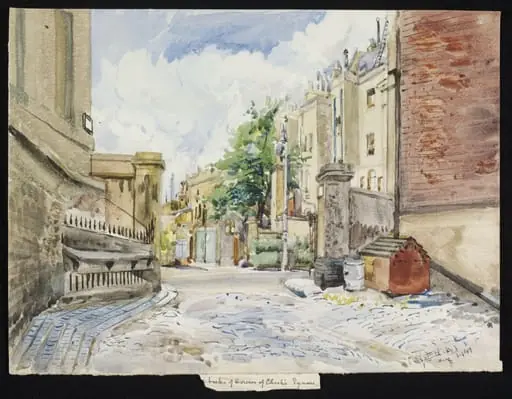
Created in 1942 by artist Ediss, this watercolour depicts a quiet corner of Eaton Square as seen from Eaton Gate. It was made during the Second World War as part of the Recording Britain project, a government-backed initiative to visually archive the nation’s landscapes and architecture. The work is one of over 1,500 pieces produced by nearly 100 artists under the auspices of the Pilgrim Trust and Sir Kenneth Clark, aiming to preserve scenes vulnerable to wartime disruption or modernization.
Subject & Meaning
The scene captures a still urban street in winter, with bare trees lining a narrow pavement and pale, multi-windowed terraced buildings rising behind. A solitary lamppost casts a faint shadow, emphasizing solitude and quietude. The composition avoids human presence, focusing instead on the architecture and seasonal stillness. This restraint reflects the project’s broader intent: to document ordinary, unremarkable places that might vanish due to conflict or change, turning everyday views into quiet historical records.
Technique & Style
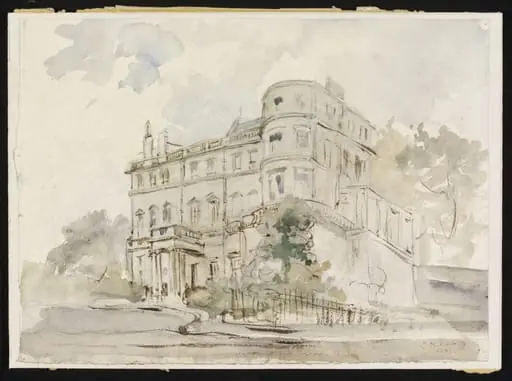
Ediss employed a restrained watercolour technique, using diluted washes to create soft transitions between sky, ground, and building facades. The palette is muted—pale greys, washed blues, and faint ochres—enhancing the sense of winter calm. Lines are minimal, shapes simplified, and details subdued, avoiding dramatic contrast. The brushwork is deliberate yet light, allowing the paper’s texture to contribute to the atmosphere. This approach aligns with the Recording Britain project’s preference for clarity and quiet observation over expressive flourish.
History & Provenance
The work was produced under the Recording Britain initiative, launched in 1939 to commission artists to document the British countryside and towns at risk from bombing or redevelopment. Ediss was among the artists employed by the Pilgrim Trust, which funded the project with support from the Committee for the Employment of Artists in Wartime. The finished watercolour entered the Victoria and Albert Museum’s collection, where it remains part of a larger archive of wartime visual documentation, preserved for its historical rather than aesthetic value.
Context
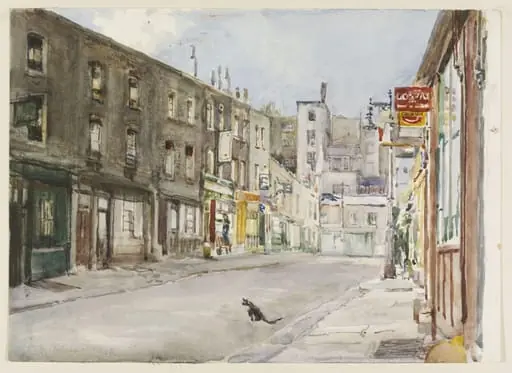
During the Second World War, Britain faced widespread destruction and rapid urban transformation. The Recording Britain project emerged as a cultural response, seeking to preserve visual records of places deemed at risk—not only from bombs, but from the erosion of traditional landscapes by modernization. Artists were sent across the country to record churches, cottages, market squares, and residential streets like Eaton Square, creating a collective archive that reflected national identity through its most ordinary, enduring features.
Legacy
The Recording Britain collection endures as a significant historical resource, offering insight into Britain’s built environment during a time of upheaval. Ediss’s watercolour, like others in the series, contributes to a quiet but enduring record of civilian life and urban form. These works are now studied for their topographical accuracy and emotional restraint, valued not for artistic innovation but for their fidelity to a moment in time—preserving the ordinary before it disappeared.
Artist & collection
Artist
Ediss painted London’s quiet streets and squares in delicate watercolours during the early 1940s.