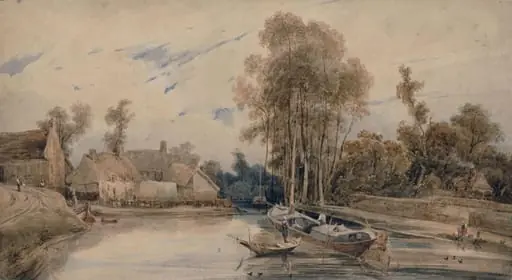
Artwork
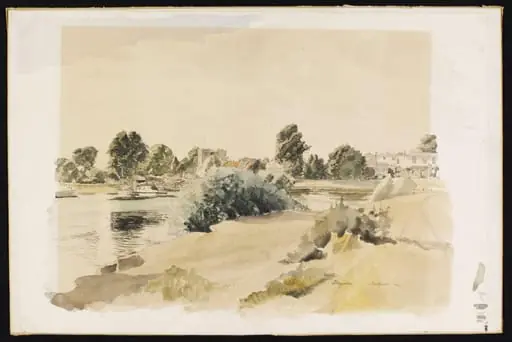
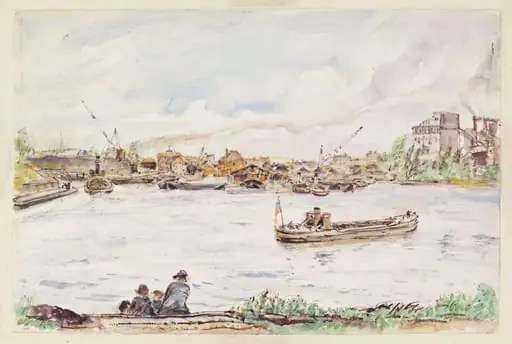
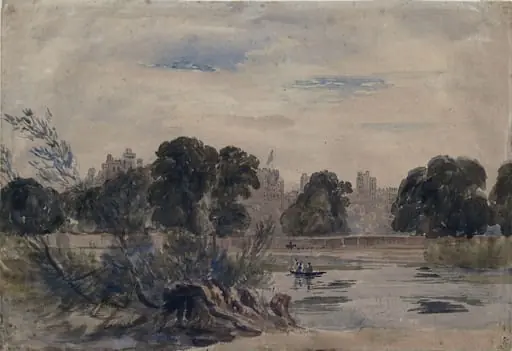
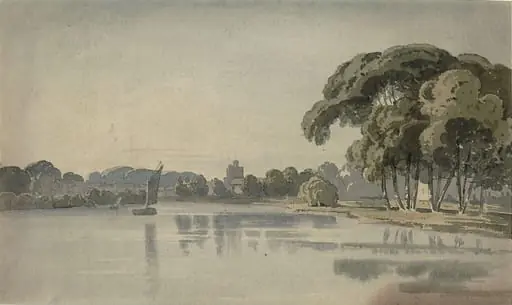
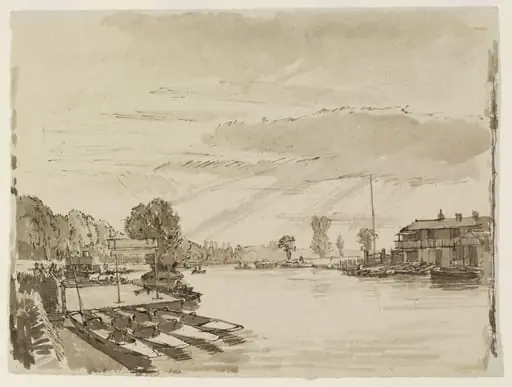
Watercolour drawing by the Grieve family, showing a scene on the River Thames
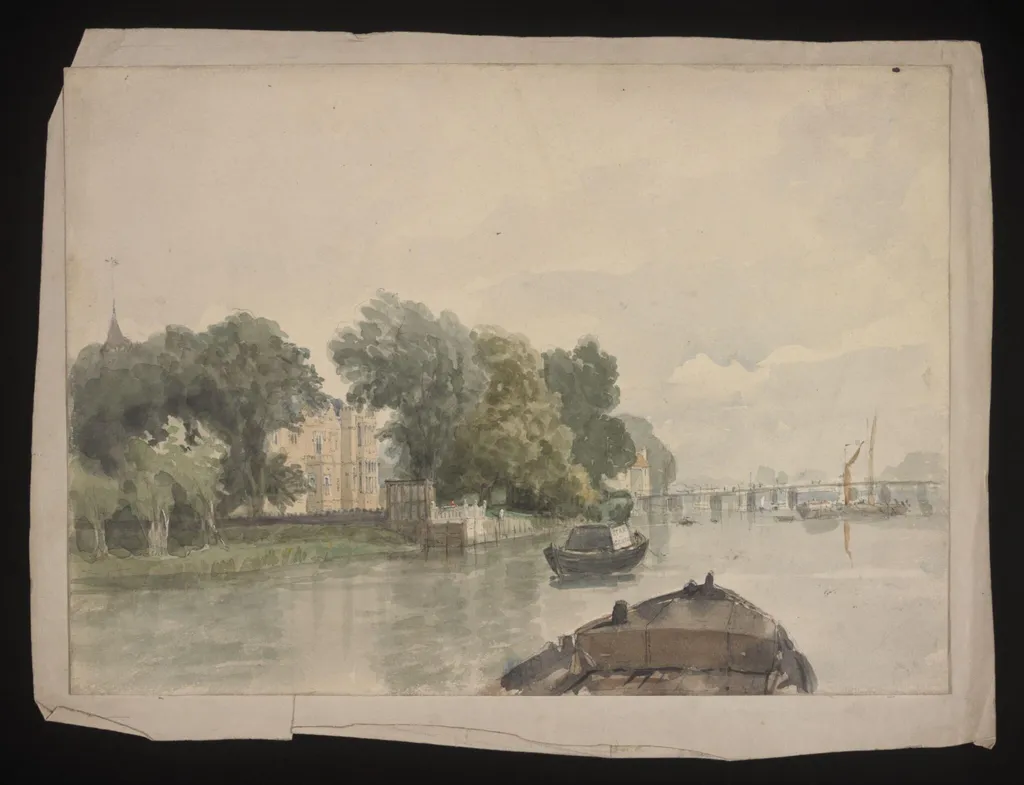
Watercolour drawing by the Grieve family, showing a scene on the River Thames is a drawing by Grieve. It dates from 1850 and is held in the collection of the Victoria and Albert Museum.
About this work
Overview
This watercolour and pencil drawing depicts a tranquil stretch of the River Thames, created in the early 19th century by members of the Grieve family.
This watercolour and pencil drawing depicts a tranquil stretch of the River Thames, created in the early 19th century by members of the Grieve family. Known primarily for theatrical scene painting, the family also produced observational drawings of real landscapes, likely made on-site. The work reflects their transition from stylized stage backdrops to more direct, naturalistic representation of the English countryside.
Subject & Meaning
The drawing captures an unassuming riverside view, possibly near London or Kent, with modest boats, banks, and distant structures. Unlike theatrical fantasies, this scene emphasizes quiet observation rather than drama. It suggests the Grieves’ interest in documenting everyday environments, possibly as studies for stage designs or personal records of place, revealing a shift toward realism in their artistic practice.
Technique & Style
Executed in delicate watercolour with pencil underdrawing, the work displays a restrained palette and careful attention to light and texture. The composition avoids theatrical grandeur, favoring subtle tonal gradations and precise detail in architecture and water. This approach aligns with the family’s evolving technique, moving away from exaggerated stage conventions toward observational accuracy.
History & Provenance
The drawing is part of a larger collection assembled by Thomas Walford Grieve, who continued the family’s theatrical legacy. He donated the archive, including this piece, to the Victoria and Albert Museum. The collection comprises numerous watercolours of southern English locations, many likely drawn during travels or site visits, preserving a record of regional topography through the eyes of theatre artisans.
Context
During the early 1800s, London’s theatres demanded increasingly realistic scenery, prompting scene painters like the Grieves to study actual landscapes. Their work on stages at Covent Garden and elsewhere required accurate depictions of architecture, water, and sky. This drawing exemplifies how theatrical artists bridged performance and documentation, using real-world observation to inform their painted illusions.
Legacy
The Grieve family’s archive at the V&A offers rare insight into the transition from romantic to realistic stage design in 19th-century Britain. Their observational drawings, including this Thames scene, reveal a quiet but significant contribution to British visual culture—documenting places not as idealized backdrops, but as lived environments, influencing both theatre and topographical art.
Artist & collection
Artist
This bundle gathers delicate early 19th-century watercolours by the Grieve family, mostly of quiet corners in Kent and along the Thames.

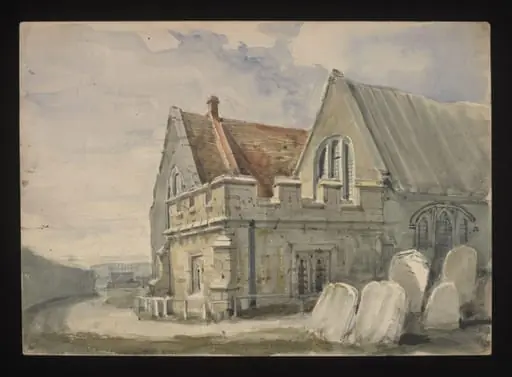 Watercolour drawing by the Grieve family, showing St Peter's Church in Kent
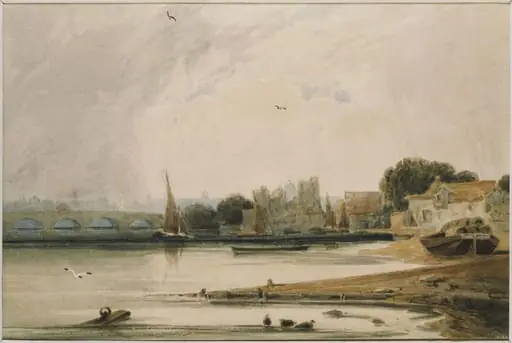
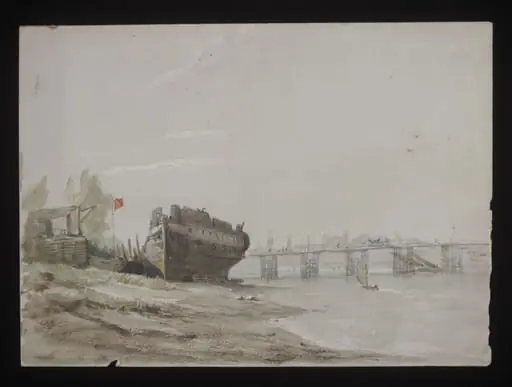 Watercolour drawing by the Grieve family, showing Battersea Bridge
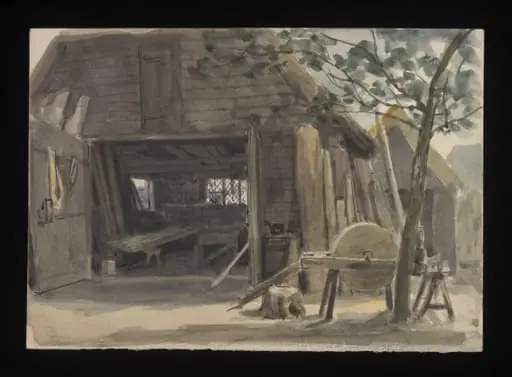 Watercolour drawing by the Grieve family, showing a workman's hut at Garlinge, Kent
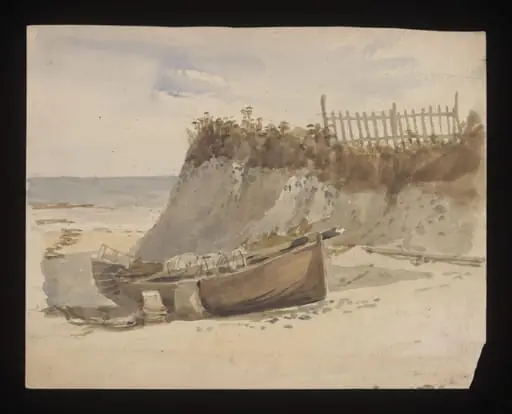 Watercolour drawing by the Grieve family, showing the beach at Kingsgate, Kent
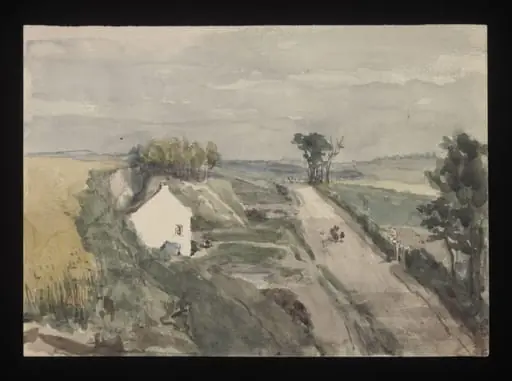 Watercolour drawing by the Grieve family, showing a country scene, near Minster, Kent
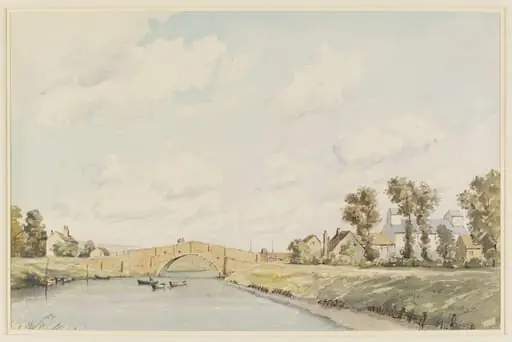
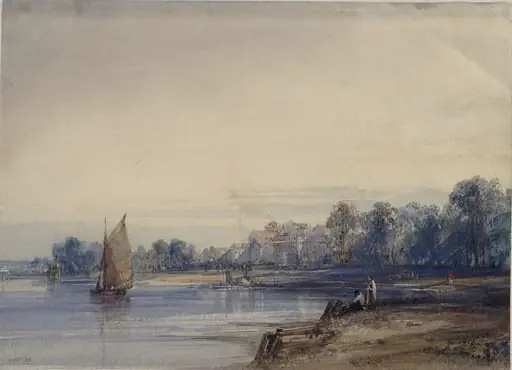
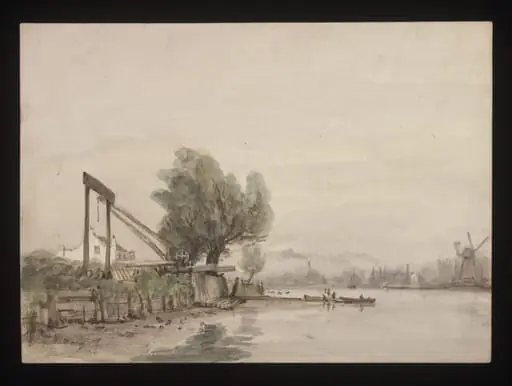 Watercolour drawing by the Grieve family, showing a river scene
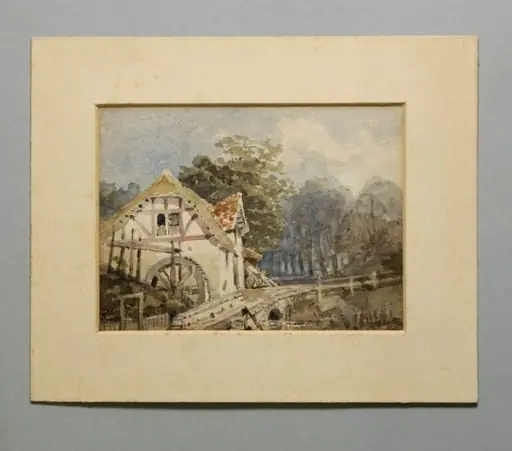 Watercolour drawing by the Grieve family, showing a water mill