Artwork
Elephant Riding, Zoological Gardens, Regent's Park, London
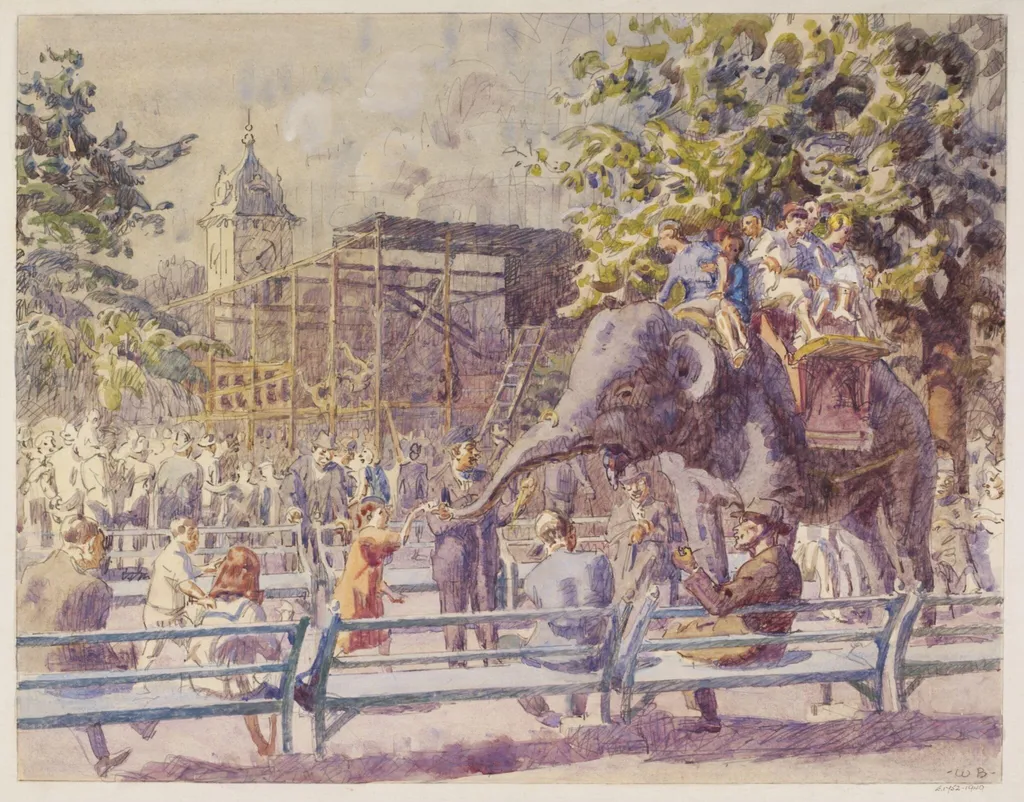
Elephant Riding, Zoological Gardens, Regent's Park, London is a watercolor work on paper by Walter Bayes. It dates from 1940 and is held in the collection of the Victoria and Albert Museum.
About this work
Overview
Walter Bayes created this 1940 watercolour as part of the Recording Britain project, a wartime effort to preserve visual records of everyday British scenes.
Walter Bayes created this 1940 watercolour as part of the Recording Britain project, a wartime effort to preserve visual records of everyday British scenes. The painting captures a moment at London’s Zoological Gardens in Regent’s Park, where public interaction with animals reflects ordinary life amid global conflict. Its modest scale and medium align with the project’s focus on accessible, unidealized views of the nation’s spaces and routines.
Subject & Meaning
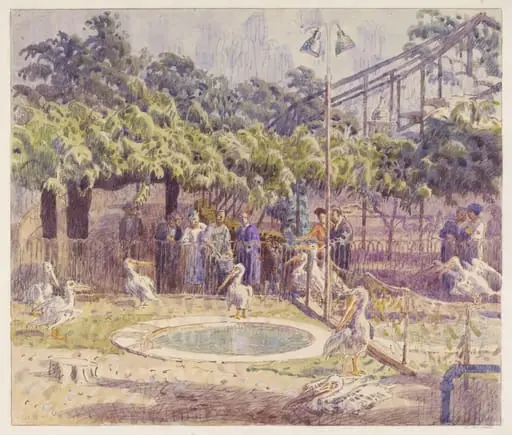
The scene centers on an elephant being ridden by visitors, supervised by a zoo attendant wielding a cane. Nearby, spectators observe or feed animals, while a monkey enclosure draws attention in the background. The composition suggests a quiet normalcy—families engaged in leisure, animals as part of public life—offering a subtle counterpoint to wartime anxieties, without overt commentary or drama.
Technique & Style
Bayes employed loose, fluid brushwork to convey movement and texture: the elephant’s wrinkled skin, the flutter of clothing, and the dappled light through trees. Soft washes of blue and green dominate the palette, creating a calm atmosphere. The watercolour’s transparency allows underlying pencil lines to remain visible, reinforcing the sketch-like immediacy of the observation, typical of the Recording Britain approach.
History & Provenance
Commissioned by the Pilgrim Trust in 1940, the painting was produced under the Recording Britain initiative, which sought to document the country’s changing landscapes and social habits during wartime. The work entered the Victoria and Albert Museum’s collection as part of this project’s archive, preserving a record of pre-industrial leisure spaces that many feared might vanish under bombing or neglect.
Context
During the Second World War, British zoos remained open as places of public solace and routine. Regent’s Park’s zoo, though under financial strain, continued to operate, offering a rare sense of continuity. Bayes’s depiction reflects this cultural resilience—ordinary activities preserved not as spectacle, but as quiet testimony to endurance in uncertain times.
Legacy
The painting endures as part of a broader visual archive that redefined documentary art in Britain. Unlike grand historical narratives, Recording Britain emphasized the value of everyday moments. Bayes’s work contributes to this legacy by capturing a fleeting, unremarkable scene that, in its simplicity, reveals the texture of civilian life during wartime.
Artist & collection
Artist
Walter John Bayes was an English painter and illustrator who was a founder member of both the Camden Town Group and the London Group and also a renowned art teacher and critic.

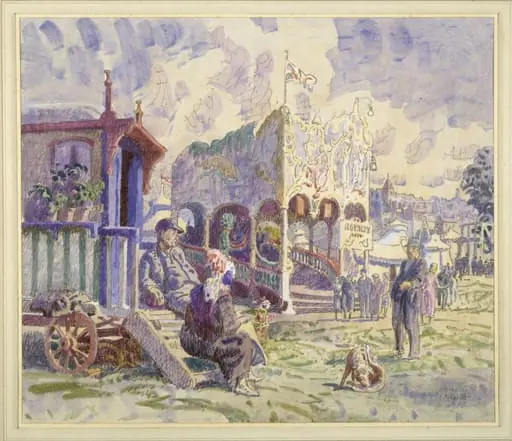 The Fair Ground, Hampstead Heath
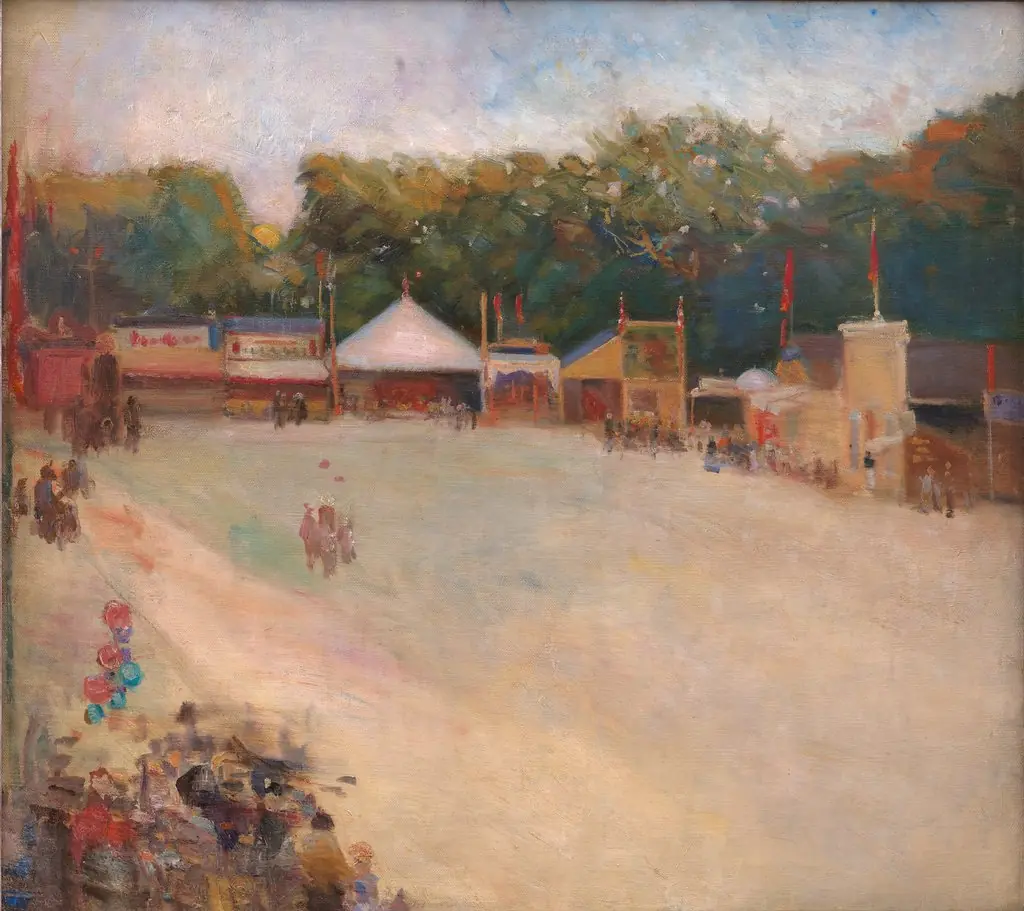 A Summer's Evening at the Fun Fair in the Deer park, North of Copenhagen
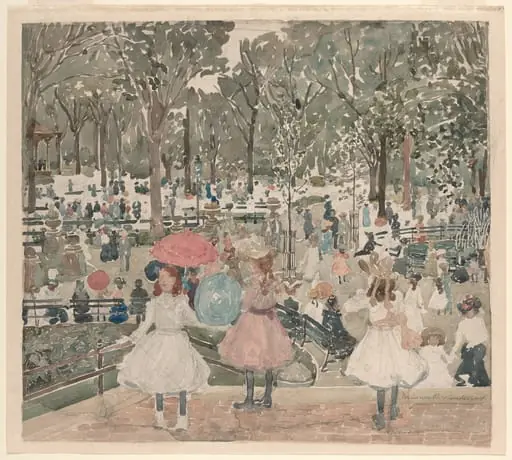 The Mall, Central Park
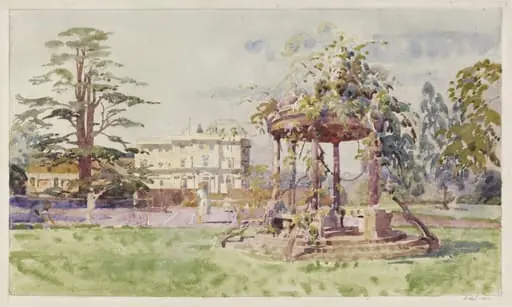 Cannons Park, Edgware; from the Tennis Courts
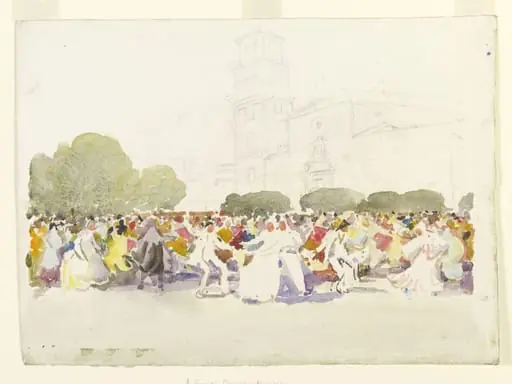 A Spanish Carnival, Algeciras
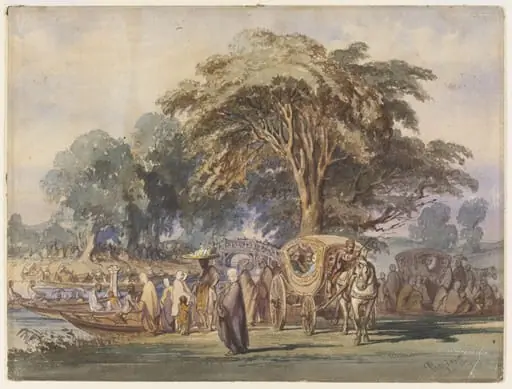 The Sweet Waters of Europe, Constantinople
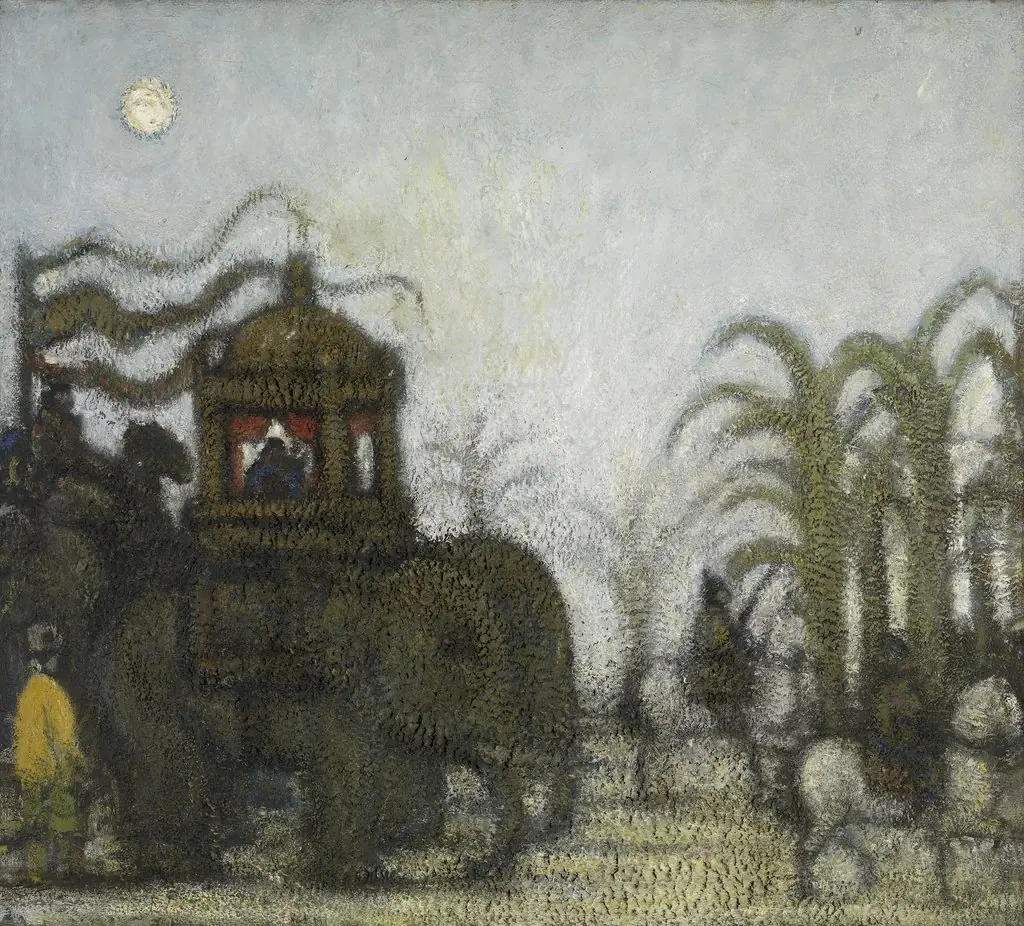 The Parade of the Magi
 College Barges on the Isis, Oxford
 Fountain in Kensington Gardens
 St. Margarets with stands
 The Esir Hani or Avrat Pazari, the female slave market near the Nur-i Osmaniye Cami, Istanbul
 Pelican Ponds, Zoological Gardens