Artwork
Piper's Island from Caversham Bridge
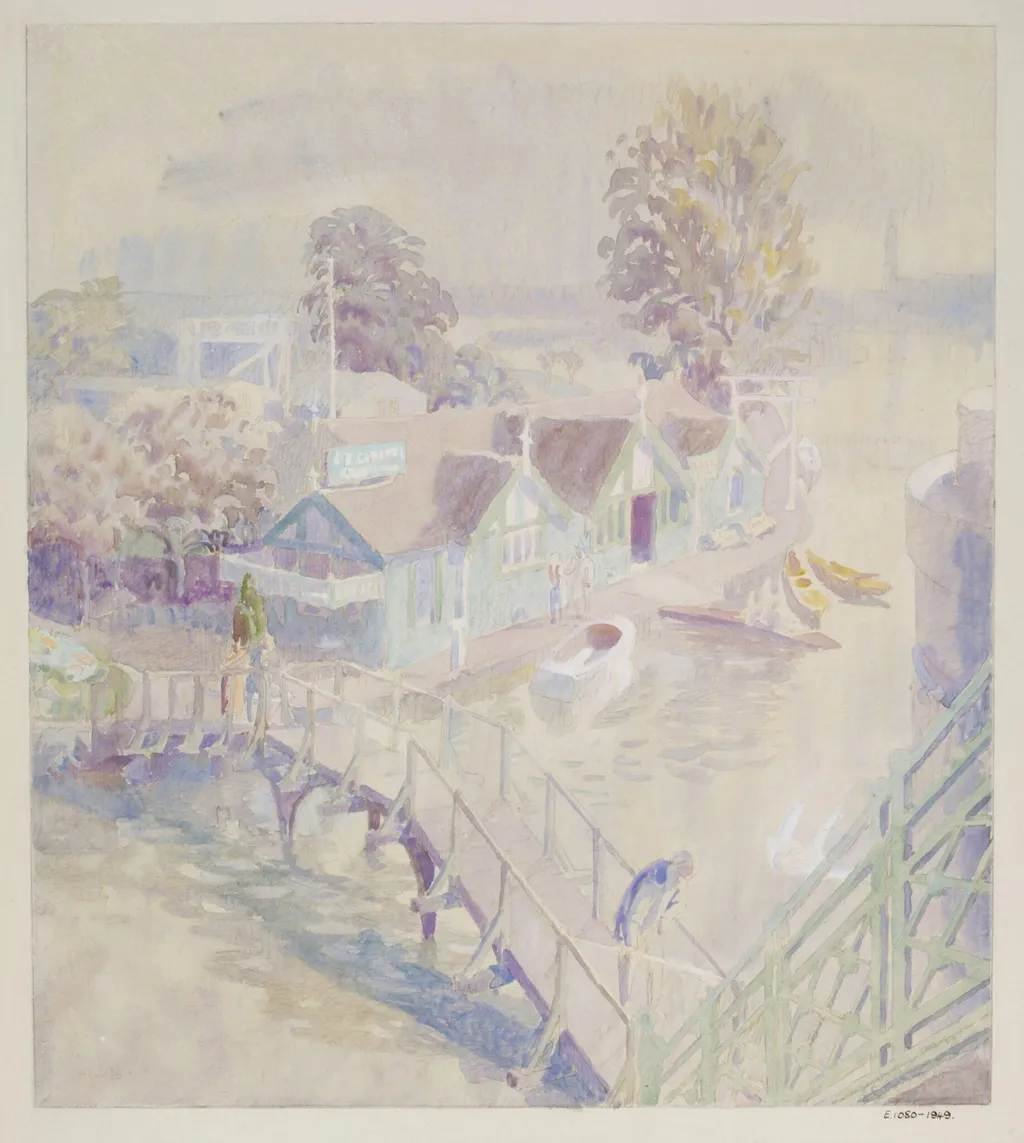
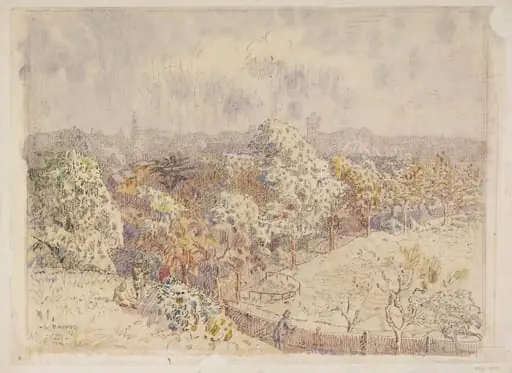
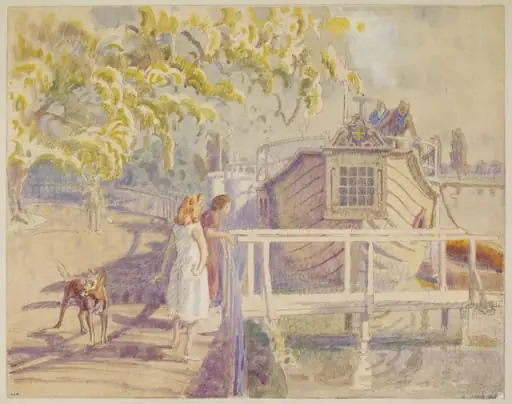
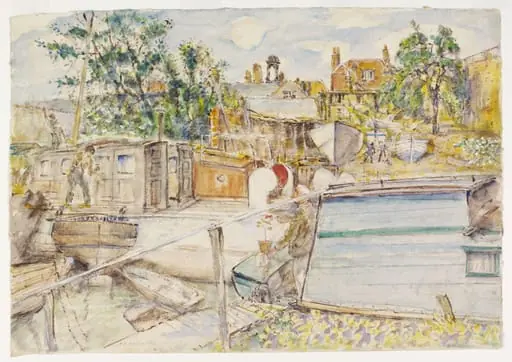
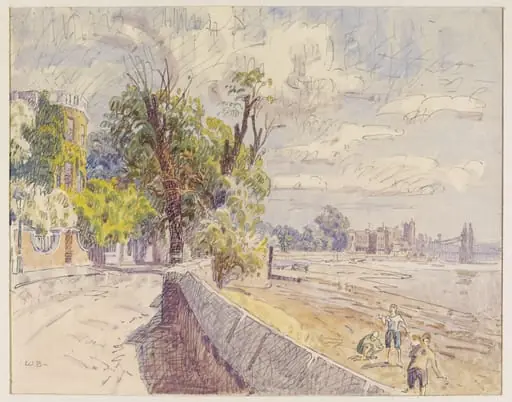
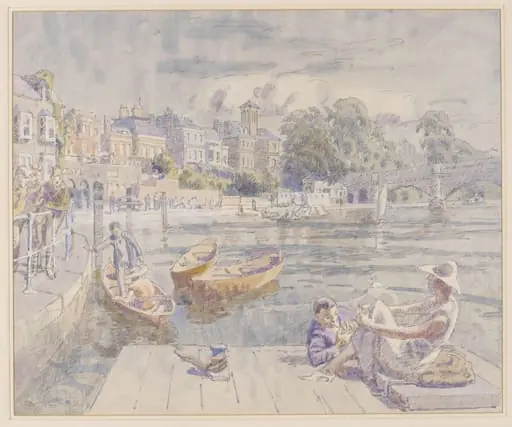
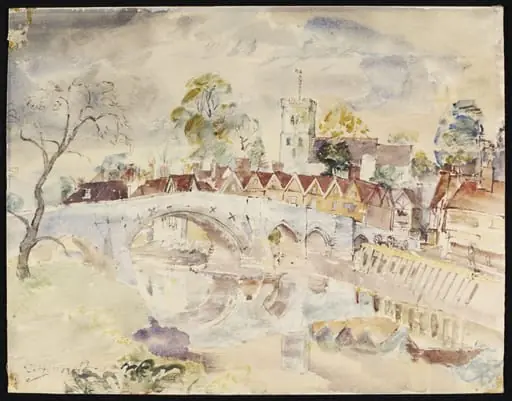
Piper's Island from Caversham Bridge is a watercolor work on paper by Walter Bayes. It dates from 1940 and is held in the collection of the Victoria and Albert Museum.
About this work
Overview
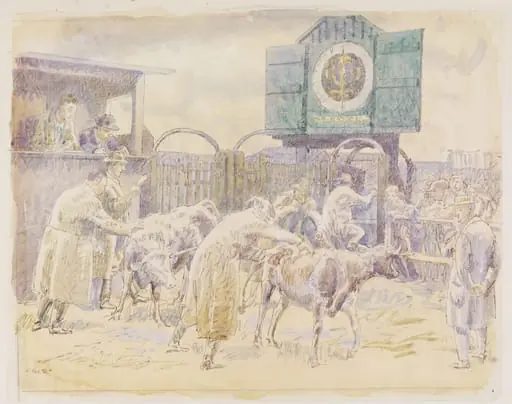
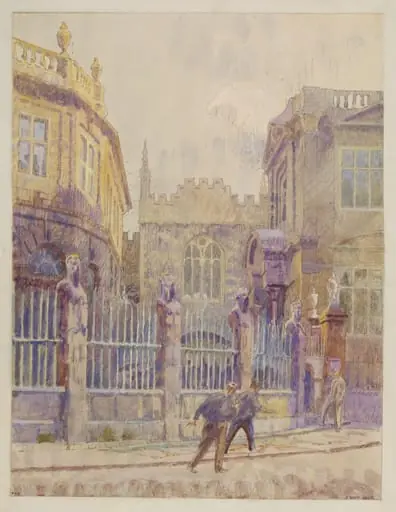
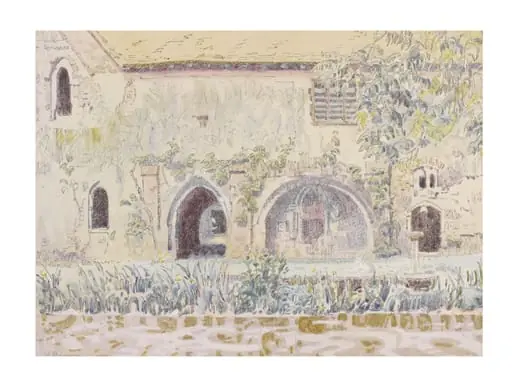
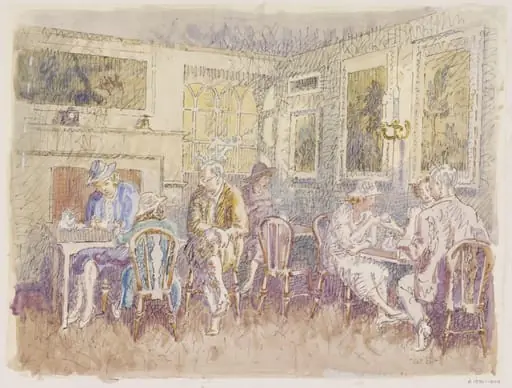
The work is part of the 'Recording Britain' initiative, a wartime project designed to document the English landscape amid fears of cultural and physical loss.
Walter Bayes created this watercolour in 1940, capturing Piper’s Island as seen from Caversham Bridge over the River Thames. The work is part of the 'Recording Britain' initiative, a wartime project designed to document the English landscape amid fears of cultural and physical loss. Funded by the Pilgrim Trust and directed by Sir Kenneth Clark, the scheme enlisted artists to record scenes deemed vulnerable to wartime disruption or modernization.
Subject & Meaning
The painting focuses on a quiet stretch of the Thames near Reading, with Caversham Bridge anchoring the foreground and Piper’s Island rising gently in the distance. The composition emphasizes stillness and continuity, offering a quiet counterpoint to the turbulence of the era. Rather than highlighting grandeur, Bayes chose a modest, everyday view—suggesting value in ordinary places that might otherwise be overlooked or erased.
Technique & Style
Bayes employed delicate watercolour washes and restrained brushwork to convey a tranquil atmosphere. Soft transitions between tones, subtle gradations of light, and minimal detail in the foliage and architecture create a muted, contemplative mood. The technique avoids dramatic contrast, instead favoring harmony and restraint—qualities aligned with the project’s aim to preserve a sense of enduring calm within a changing landscape.
History & Provenance
Created during the early years of the Second World War, this watercolour was produced under the 'Recording Britain' scheme, which ran from 1939 to 1942. It entered the collection of the Victoria and Albert Museum as part of the project’s archive, which amassed over 1,500 works by 97 artists. The initiative deliberately excluded Northern Ireland and parts of Wales, while Scotland maintained a parallel effort under different administration.
Context
The 'Recording Britain' project emerged from anxieties about the erosion of traditional landscapes due to bombing, urban expansion, and industrial change. Artists were commissioned not to glorify, but to record—capturing vernacular architecture, rural views, and riverside scenes before they vanished. Bayes’s depiction of Piper’s Island reflects this mission: a quiet, unassuming place rendered with care, as if to say its existence mattered.
Legacy
The watercolour remains part of a significant historical archive, offering insight into how artists responded to national crisis through observation rather than propaganda. Today, the 'Recording Britain' collection serves as a visual record of England’s countryside during a pivotal moment, preserving not just places but a particular sensibility—one of quiet endurance and attention to the subtle beauty of the everyday.
Artist & collection
Artist
Walter John Bayes was an English painter and illustrator who was a founder member of both the Camden Town Group and the London Group and also a renowned art teacher and critic.