Artwork
The Interior of the Old Grand Theatre, now the Gaumont Hippodrome, Colchester
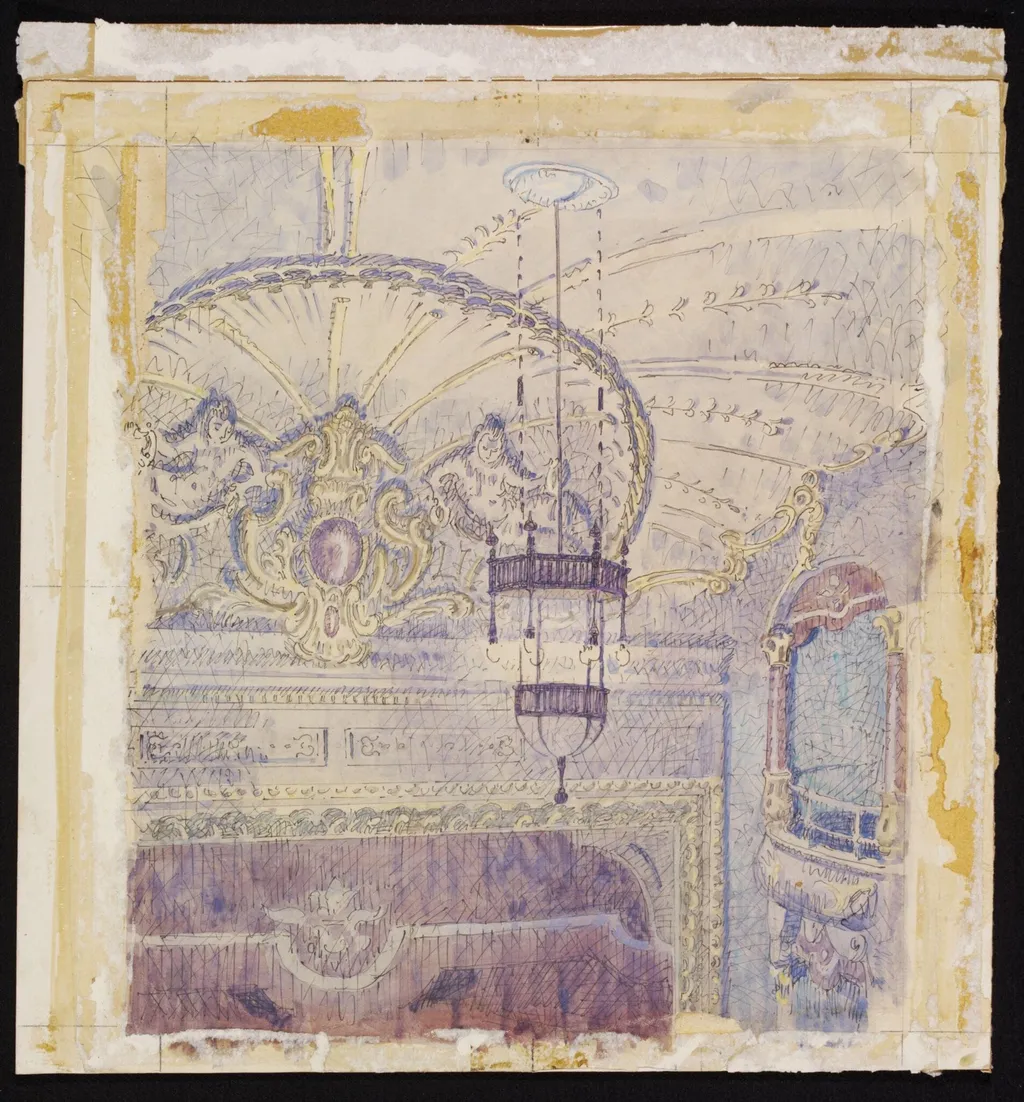
The Interior of the Old Grand Theatre, now the Gaumont Hippodrome, Colchester is a watercolor work on paper by Walter Bayes. It dates from 1940 and is held in the collection of the Victoria and Albert Museum.
About this work
Unlike Sickert’s dark stage scenes, Bayes focused on bright lights and shiny surfaces in pink, white, and gold.
This watercolor shows the inside of a once-grand theater, now an old cinema. Walter Bayes painted it between 1940 and 1943 using soft watercolor tones.
Bayes belonged to a small London art group led by Walter Sickert. Unlike Sickert’s dark stage scenes, Bayes focused on bright lights and shiny surfaces in pink, white, and gold.
Look up the Victoria and Albert Museum to see more watercolors by Bayes.
Overview
Walter Bayes’s watercolour captures the interior of Colchester’s former Grand Theatre, later known as the Gaumont Hippodrome. Executed between 1940 and 1943, the work records the ornate Edwardian décor—pink, white and gilt surfaces illuminated by the theatre’s electric lighting—before the building’s conversion to a cinema and later uses.
Subject & Meaning
The composition highlights the lavish shell and pearl motif that crowns the stage, a nod to Colchester’s historic oyster trade. Rather than focusing on the dramatic chiaroscuro favored by his contemporary Walter Sickert, Bayes emphasizes the reflective quality of the decorative elements and the bright ambience of the performance space.
Technique & Style
Bayes employs a restrained palette of pale watercolours, allowing the luminous tones of the interior to dominate. His handling of light creates a subtle sheen on the gilt and glass, conveying the sparkle of the theatre’s lighting fixtures while maintaining a calm, observational tone.
History & Provenance
The Grand Palace of Varieties opened in 1905 as a premier venue for live entertainment. By the early 1940s, when Bayes painted the scene, the theatre was nearing the end of its stage career. It survived the widespread demolition of similar venues, later serving as a cinema, a bingo hall, and, after a 1980s restoration, a nightclub.
Context
Bayes was a peripheral member of the Camden Town Group, a London collective led by Walter Sickert. While Sickert’s stage interiors often explored the atmospheric effects of gas lighting on performers, Bayes’s work reflects a shift toward the brighter electric illumination characteristic of early twentieth‑century entertainment spaces.
Artist & collection
Artist
Walter John Bayes was an English painter and illustrator who was a founder member of both the Camden Town Group and the London Group and also a renowned art teacher and critic.

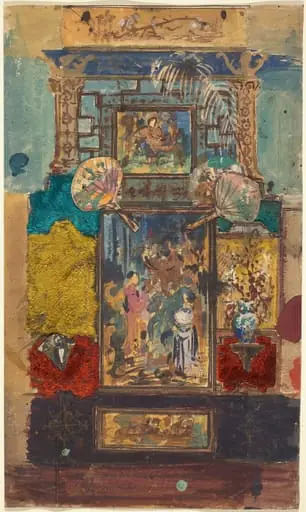 Stage Set Consisting Of Painted Panels, Fabrics, And Fans
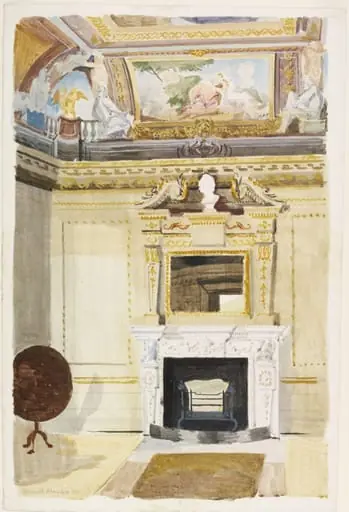 Interior of The Temple, Rievaulx Terrace, Yorkshire
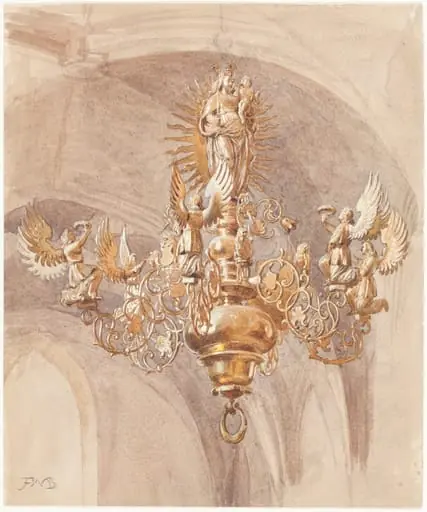 A Chandelier with the Virgin Mary Holding the Christ Child
 Amiens Cathedral
 The Throne Room at Fontainebleau
 The Green Drawing Room, Windsor Castle
 Reredos, fonts, a pulpit and monuments
 Pompeiian Wall Decoration
 Interior with Pink Wallpaper II
 Veneția în ceață