Artwork
Reredos, fonts, a pulpit and monuments
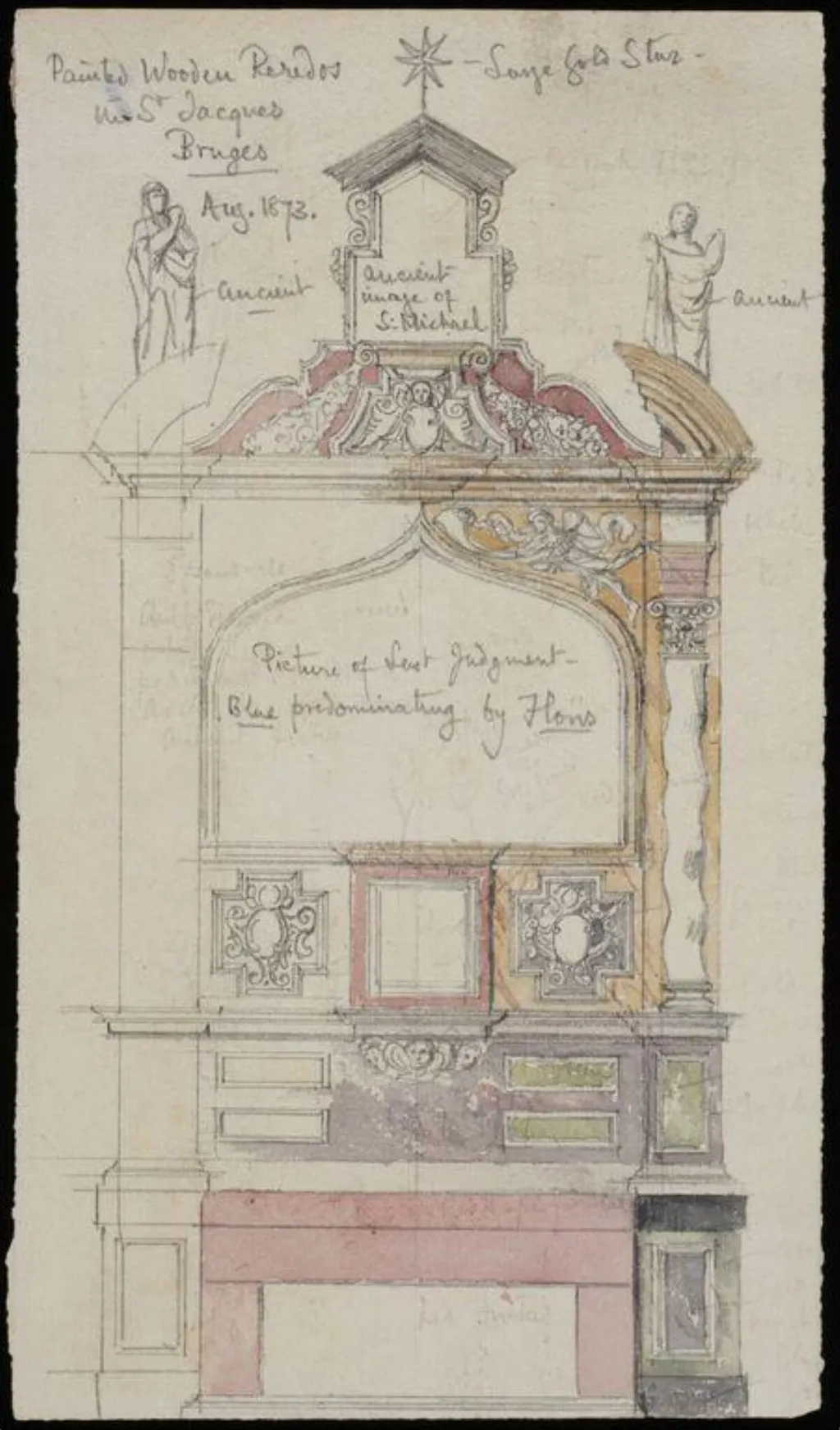
Reredos, fonts, a pulpit and monuments is a drawing by the Impressionist artist Charles Frederick Godbold Turner. It dates from 1895 and is held in the collection of the Victoria and Albert Museum. This drawing presents a detailed study of ecclesiastical furnishings within a church interior.
About this work
Overview
This drawing presents a detailed study of ecclesiastical furnishings within a church interior. It captures a reredos, pulpit, fonts, and monuments in a single composition, combining observed reality with preparatory annotations. The work serves both as documentation and as a conceptual sketch, indicating the artist’s intent to refine specific elements of design and ornamentation.
Subject & Meaning
Marginal notes specify color preferences, such as a predominance of blue, revealing an interest in material and chromatic effects.
The drawing depicts an altar arrangement typical of Christian liturgical spaces. A carved reredos dominates the scene, surmounted by a small statue identified as an ancient image of Saint Michael. Flanking elements include a pulpit to the left and two fonts to the right, suggesting a functional and symbolic layout. Marginal notes specify color preferences, such as a predominance of blue, revealing an interest in material and chromatic effects.
Technique & Style
Executed in a precise yet fluid manner, the drawing blends observational accuracy with schematic notation. Lines define architectural forms and sculptural details, while color washes—pink, gold, and faded hues—indicate intended decorative schemes. Handwritten labels and directional notes scatter the margins, merging technical drafting with artistic planning. The style reflects a working method that balances realism with practical adaptation.
History & Provenance
The drawing’s origins lie in a period of architectural or decorative commission, though its exact creator and patron remain unspecified. Its function as a preparatory study suggests it was produced in advance of a larger project, possibly for a church renovation or sculptural installation. The presence of detailed annotations implies direct engagement with craftsmen or patrons during the design process.
Context
Such sketches were common in ecclesiastical design, where architects and artists collaborated to integrate sculpture, woodwork, and polychromy into sacred spaces. The inclusion of specific saints and color directives aligns with traditions of religious art, where symbolism and materiality reinforced liturgical purpose. The drawing reflects a moment of transition between observation and execution, characteristic of workshop practice.
Artist & collection
Artist
Charles Frederick Godbold Turner
Charles Frederick Godbold Turner spent his life drawing the small stuff most people ignore: the worn stone of cathedral steps, the faded embroidery on an old priest’s robe, the way light slants through a church window.

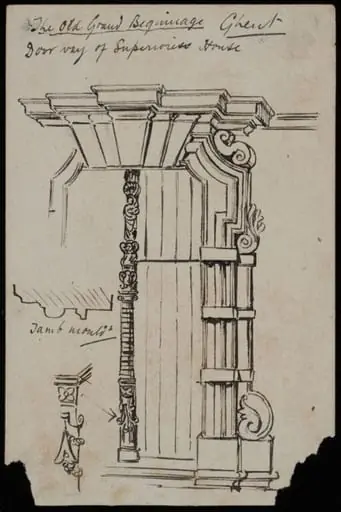
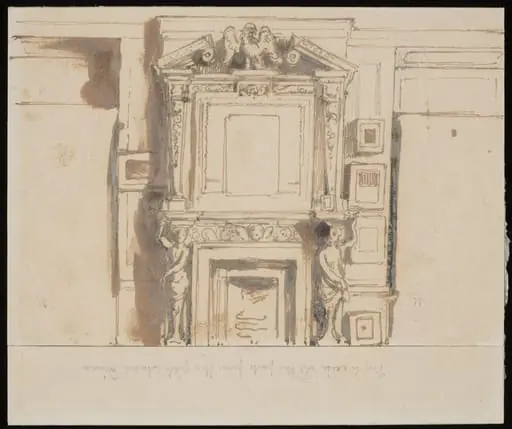 Ornamental Fireplace
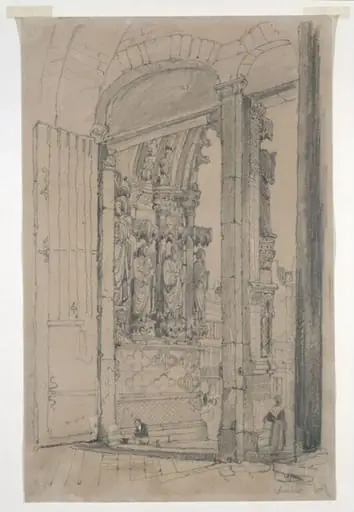 Amiens Cathedral
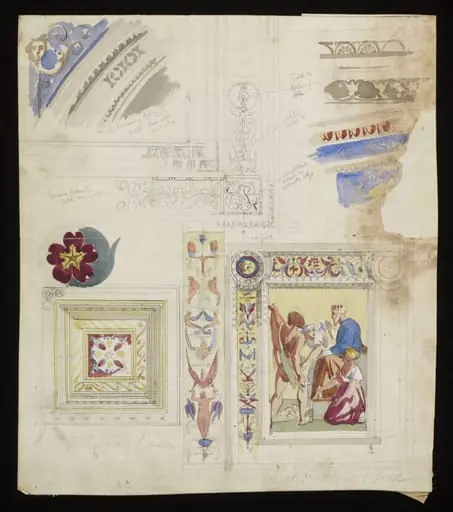 Study of frescos by Raphael on the ceiling of the Stanze della Segnatura in the Vatican Palace
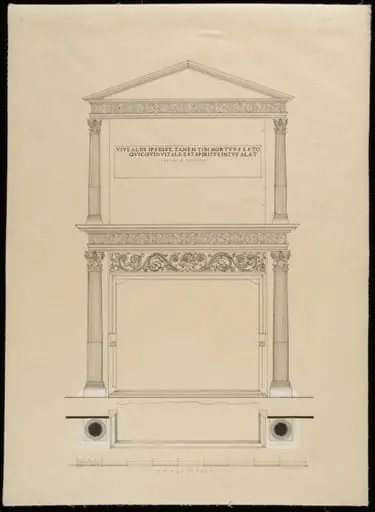 Elevation of mantelpiece.
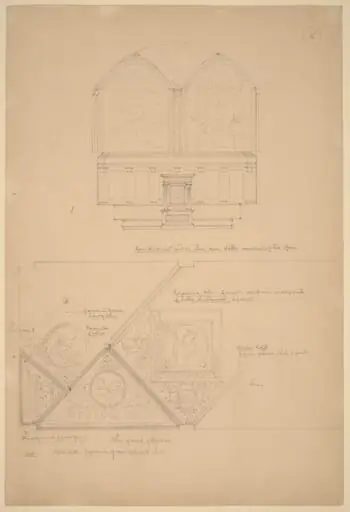 Study of an Altarpiece and Ceiling Panels
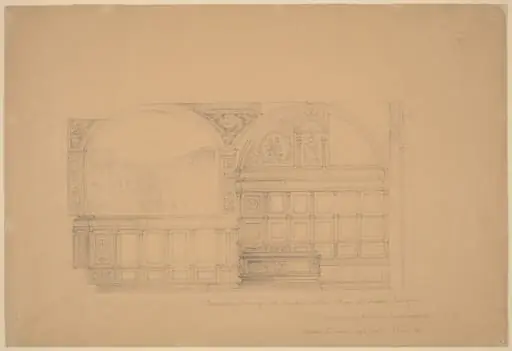 Perugino's Udienza del Cambio in the Collegio del Cambio, Perugia
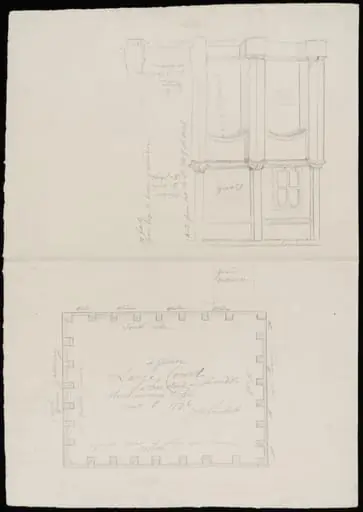 Plan, and elevation of two bays, of Green Court.
![Palatial Mantelpiece with Mercury and Hope [recto], by Austrian 16th Century](https://artifactworldgallery.com/img/austrian-16th-century--palatial-mantelpiece-with-mercury-and-hope-recto--35fcb50c5d0e2044-w320.webp) Palatial Mantelpiece with Mercury and Hope [recto]
Palatial Mantelpiece with Mercury and Hope [recto] The church of S. Domingos, Macau
 Design for an Altar
 The Franco-Italian Album