Artwork
Retiring Wounded from Battle
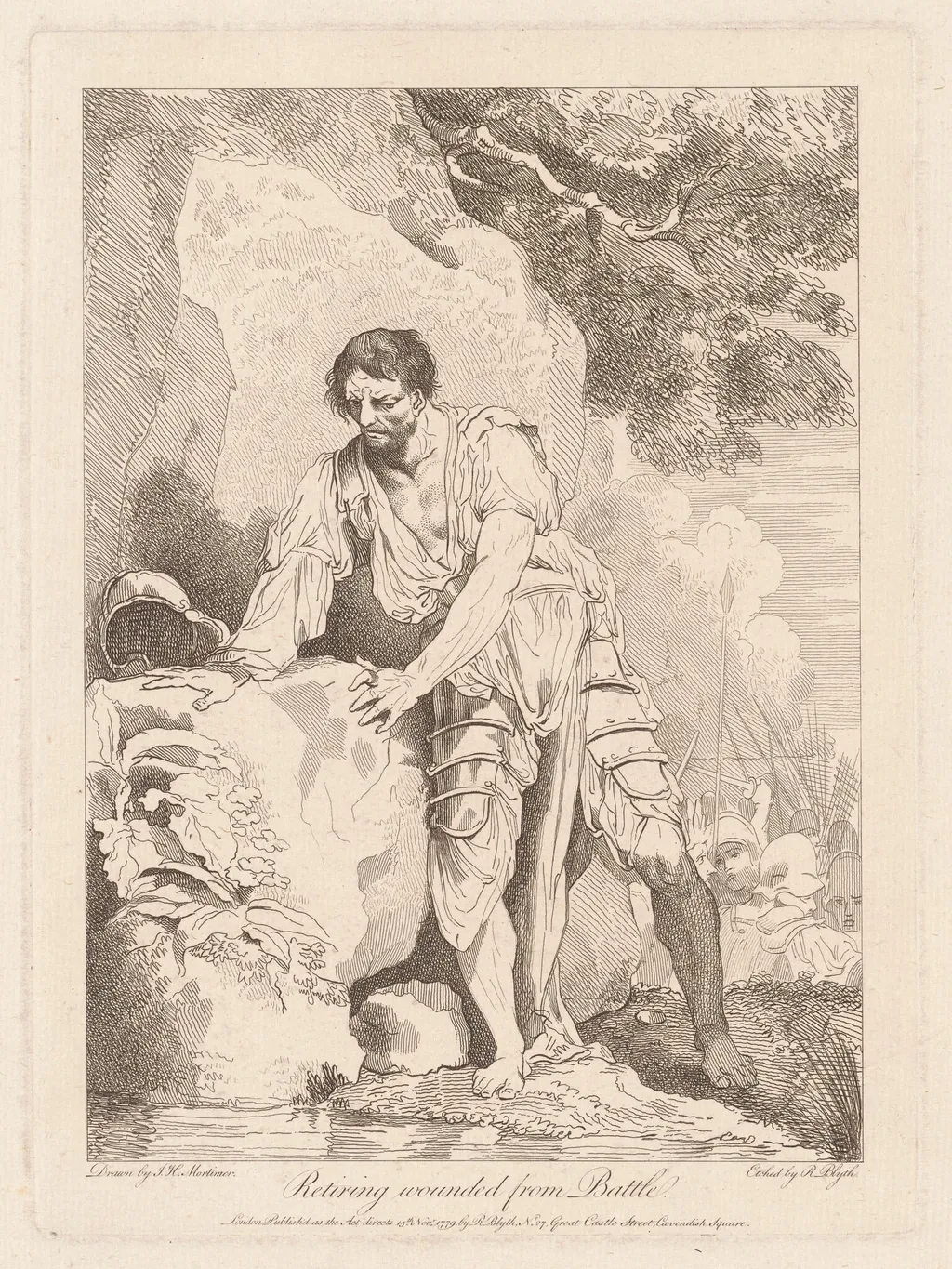
Retiring Wounded from Battle is an ink print by the Romanticist artist Robert Blyth. It dates from 1779 and is held in the collection of the National Gallery of Art.
About this work
Overview
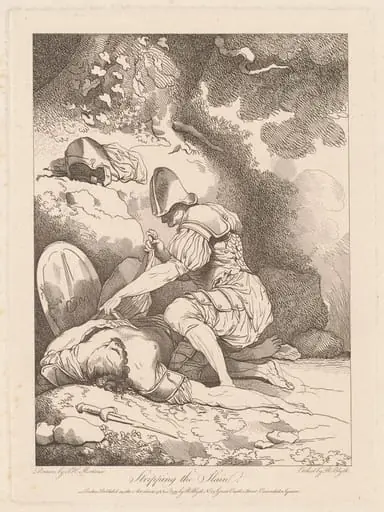
Retiring Wounded from Battle is an 1779 etching on laid paper by Robert Blyth. The print depicts a small group of soldiers assisting an injured comrade as they withdraw from a battlefield shrouded in lingering smoke. The composition captures a moment of quiet urgency, emphasizing the physical strain and camaraderie among the men as they navigate the grassy terrain.
Subject & Meaning
The scene focuses on the wounded figure, whose posture leans heavily on his companions, underscoring themes of sacrifice and collective responsibility in war. The exhausted yet careful expressions of the soldiers convey a sense of solemn duty, inviting viewers to contemplate the human cost of conflict beyond the spectacle of battle.
Technique & Style
Blyth employs delicate, fine lines characteristic of etching to render subtle gradations of light and shadow across the figures and background. The use of laid paper enhances the texture of the print, while the restrained tonal range reflects an early Romantic sensibility, prioritizing emotional resonance over precise anatomical detail.
Context
Created shortly before the Romantic movement gained prominence, the work anticipates its emphasis on individual experience and the sublime in everyday scenes. Blyth’s choice to depict the aftermath of combat rather than heroic triumph aligns with a growing 18th‑century interest in the personal realities of war.
History & Provenance
The etching was produced in 1779 and has remained attributed to Robert Blyth. It is catalogued among his early prints, though specific ownership records prior to modern museum acquisition are limited, reflecting the modest circulation typical of prints from this period.
Artist & collection