Artwork
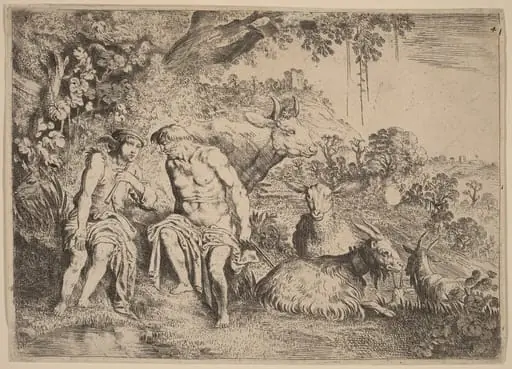
Mercury and Argus
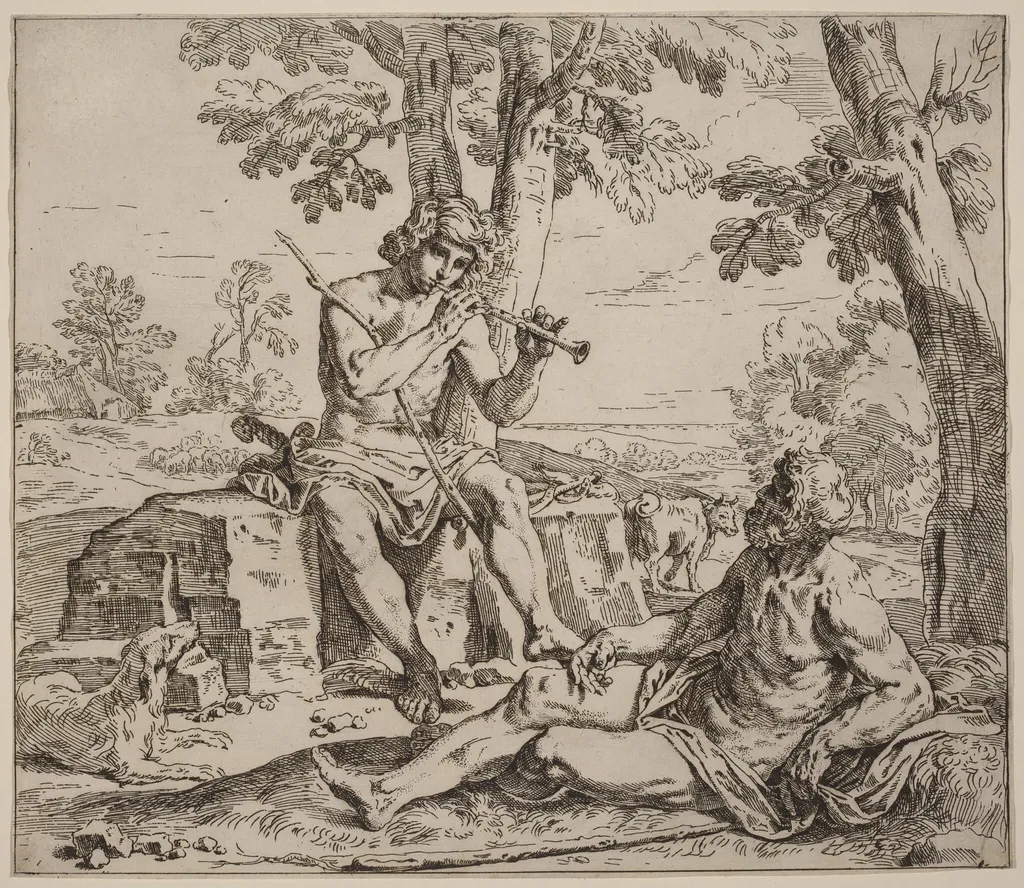
Mercury and Argus is an ink print by the Baroque artist Simone Cantarini. It dates from 1630 and is held in the collection of the National Gallery of Art.
About this work
Overview
The print depicts a robust figure, presumed to be Mercury, reclining beneath foliage while playing a flute, his legs relaxed and his back against a stone.
Simone Cantarini’s 1630 etching *Mercury and Argus* presents a mythological scene rendered in monochrome. The print depicts a robust figure, presumed to be Mercury, reclining beneath foliage while playing a flute, his legs relaxed and his back against a stone. In the lower left, a sleeping form wrapped in a blanket suggests the slain Argus. The composition is framed by intricate trees whose leaves and branches are finely delineated.
Subject & Meaning
The work draws on the classical tale in which Mercury, the messenger god, slays the many‑eyed giant Argus to free Io. By showing Mercury in a tranquil pose with his instrument, Cantarini emphasizes the god’s dual nature as both a cunning hunter and a patron of the arts. The juxtaposition of the active musician and the inert, blanket‑bound figure underscores the transition from vigilance to oblivion.
Technique & Style
Cantarini employed the etching process, incising lines into a copper plate that were later inked and pressed onto paper. His handling of line varies from delicate, feather‑like strokes that suggest foliage to bolder, cross‑hatched passages that model musculature and shadow. The subtle gradations of tone create a luminous effect, characteristic of his printmaking, while the overall composition retains a naturalistic vigor within a classicizing framework.
History & Provenance
Born in Pesaro in 1612, Cantarzi was active in the early Baroque period, working primarily in Bologna where he absorbed the classical ideals of the Carracci school. *Mercury and Argus* is dated to 1630, placing it among his early prints that demonstrate his synthesis of Bolognese classicism and a more direct, observational realism. The print has circulated in private collections and appears in several 19th‑century catalogues of Italian etchers.
Context
The early 17th century saw a resurgence of interest in mythological subjects among Italian artists, who used them to explore themes of power, transformation, and artistic patronage. Cantarini’s choice of Mercury—a figure associated with eloquence and invention—reflects contemporary fascination with the interplay between divine inspiration and human craft, a motif echoed in the period’s literary and visual culture.
Own this work as a print
Artist & collection
Artist
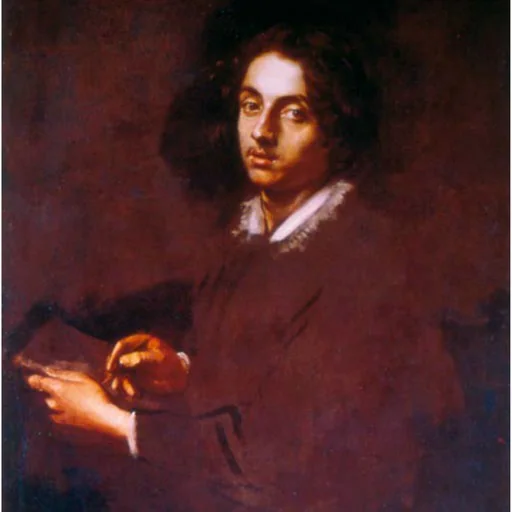
Simone Cantarini or Simone da Pesaro, called il Pesarese (Baptized on 21 August 1612 – 15 October 1648) was an Italian painter and etcher.

 Mercury Lulling Argus to Sleep
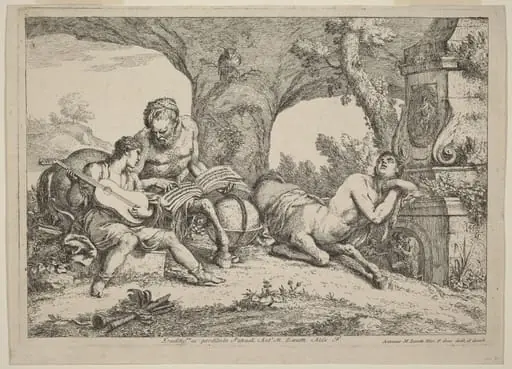 Chiron Teaching Music to Achilles
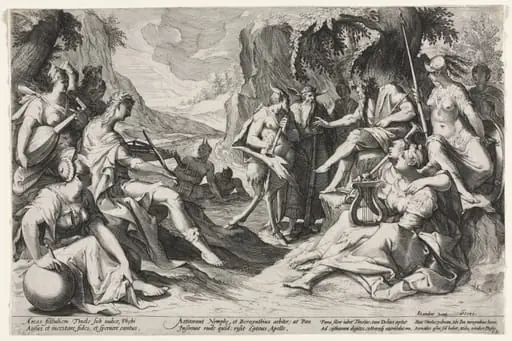 The Judgment of Midas
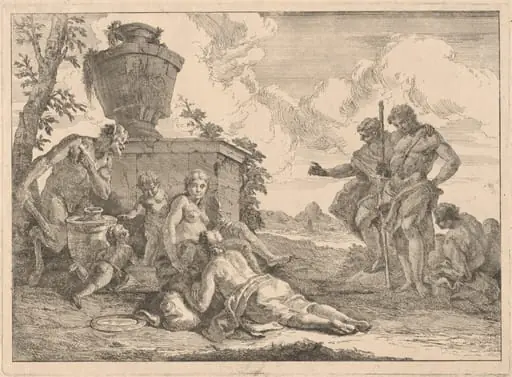 A Satyr with a Staff and Seven Other Figures
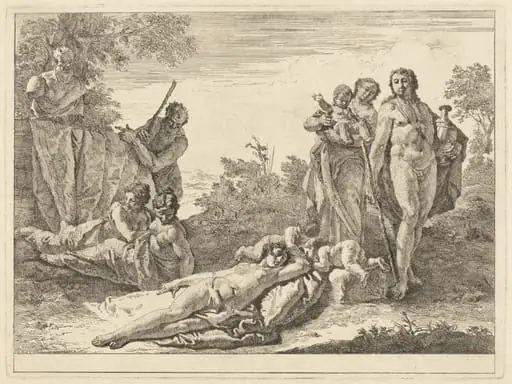 Nine Figures around a Herm of Pan
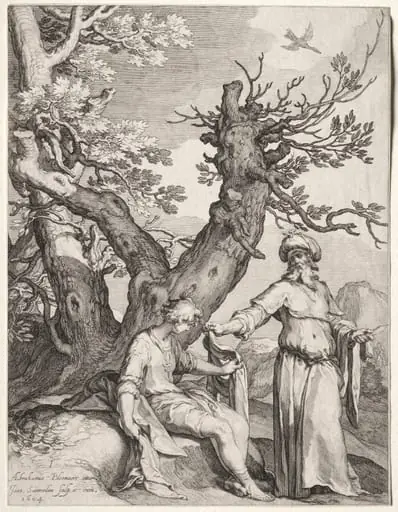 Ahijah and Jeroboam
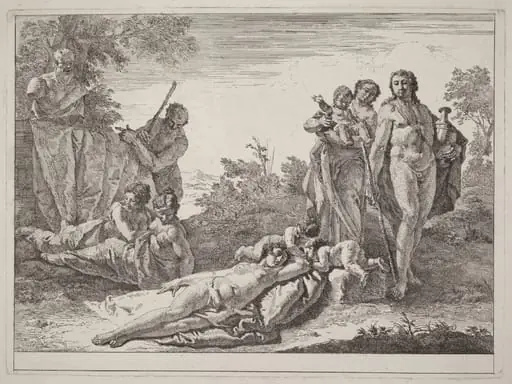 Apollo and Nymphs in a Landscape with a Bust of Pan
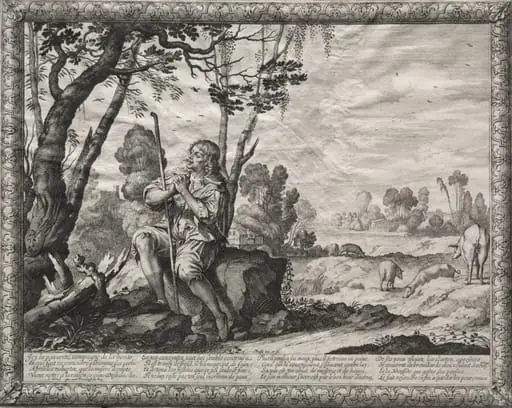 The Prodigal Son: The Prodigal Tending the Pigs
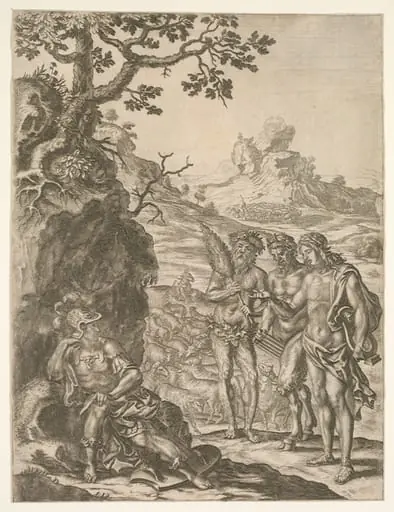 Aeneid
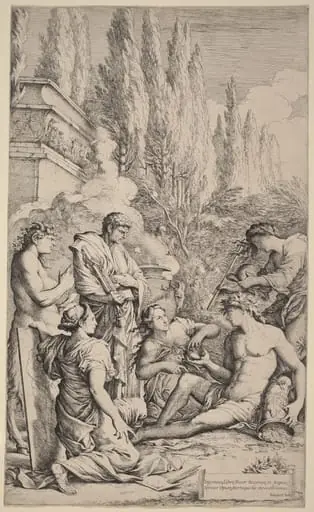 The Genius of Salvator Rosa
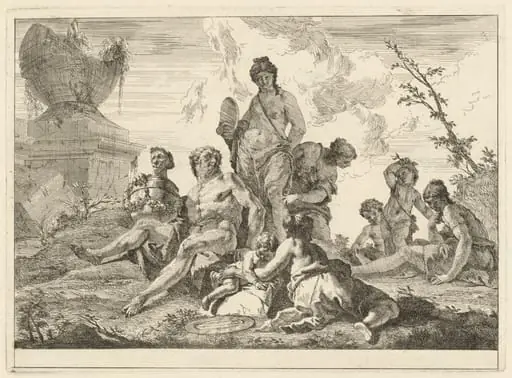 Venus and Vulcan with Three Nymphs and Three Cupids
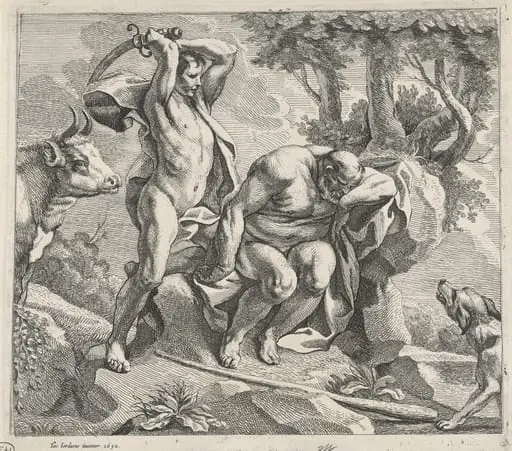 Mercury Killing Argus