Artwork
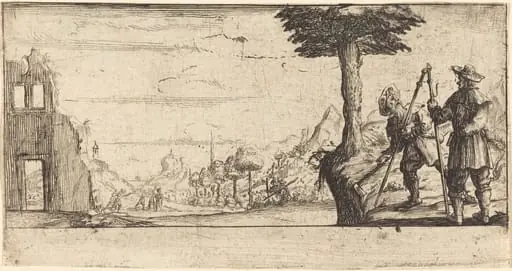
Death and the Woodman in a Coastal Landscape with Ruins
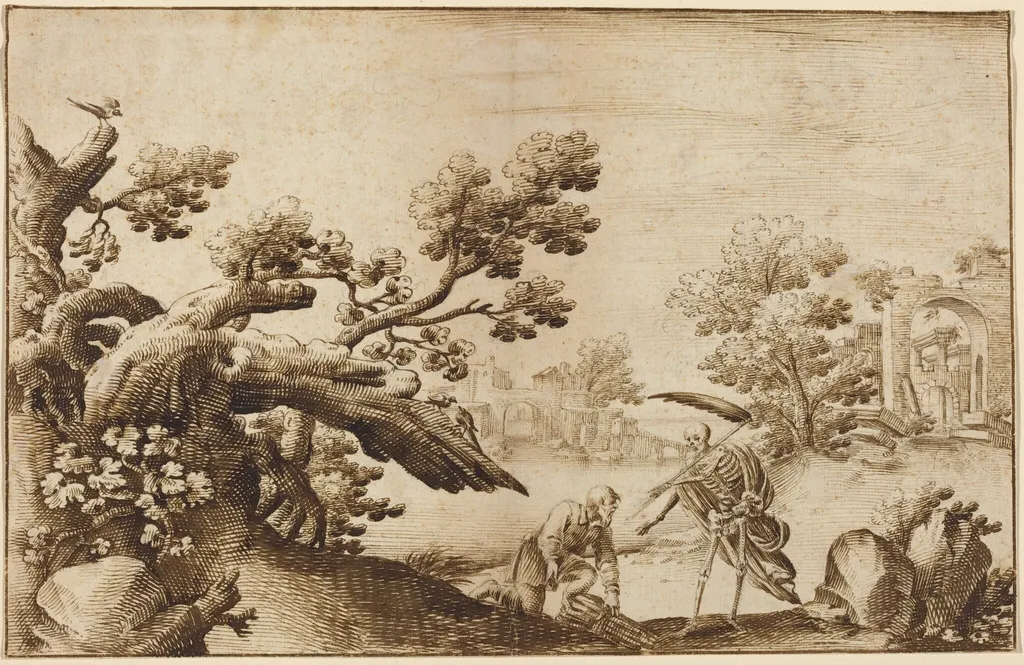
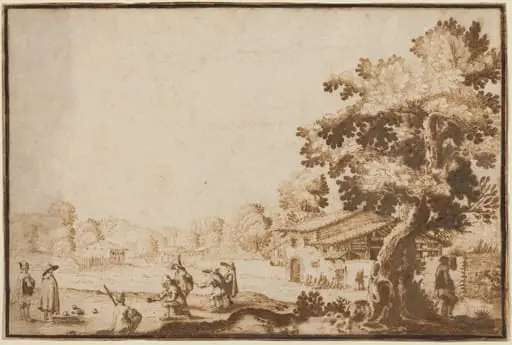
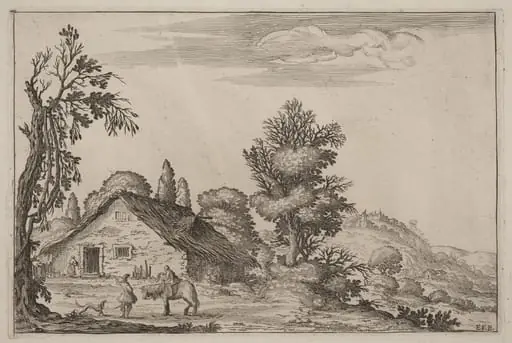
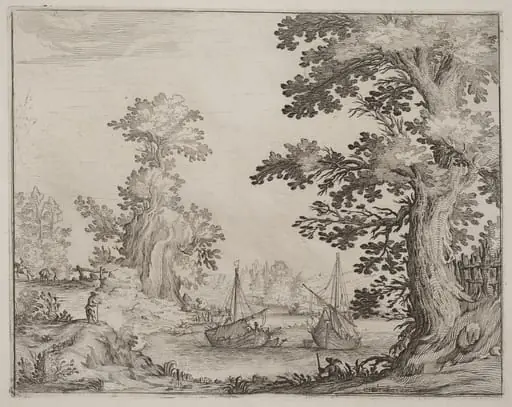
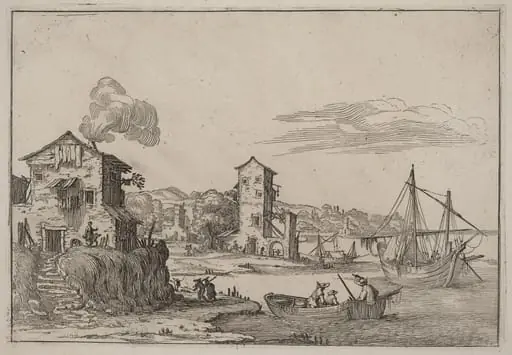
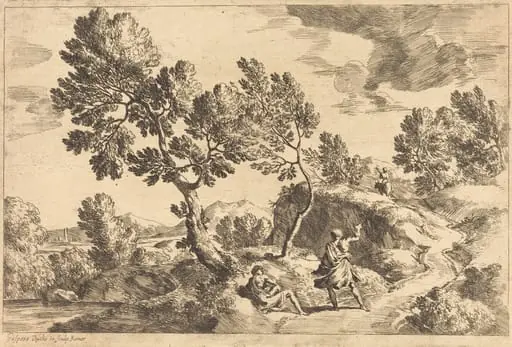
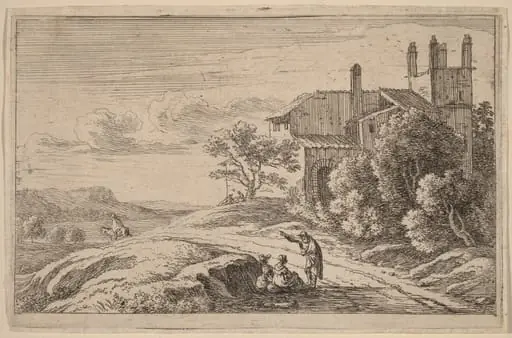
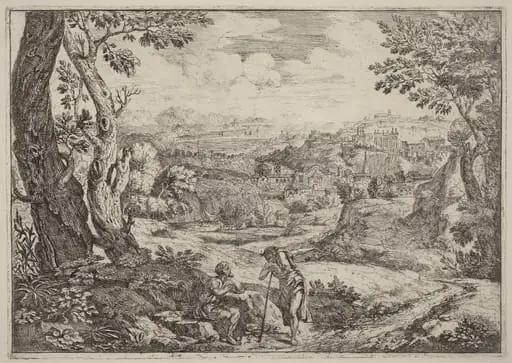
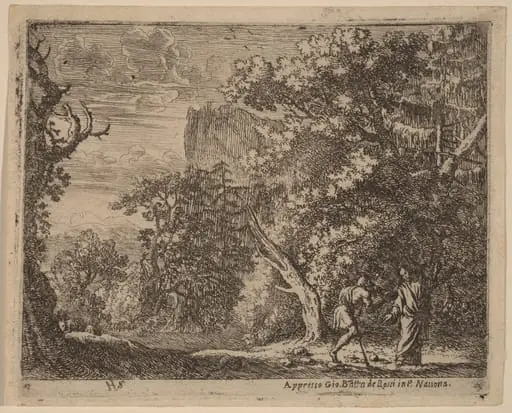
Death and the Woodman in a Coastal Landscape with Ruins is a chalk drawing by the Baroque artist Ercole Bazicaluva. It dates from 1636 and is held in the collection of the National Gallery of Art. This drawing, executed in 1636, is attributed to Ercole Bazzicaluva, an Italian engraver active during the Baroque period.
About this work
Overview
Its composition balances meticulous detail with broader atmospheric effects, reflecting the artist’s engagement with both natural and allegorical themes.
This drawing, executed in 1636, is attributed to Ercole Bazzicaluva, an Italian engraver active during the Baroque period. Rendered in pen and brown ink over black chalk on laid paper, the work merges figural and landscape elements within a coastal setting. Its composition balances meticulous detail with broader atmospheric effects, reflecting the artist’s engagement with both natural and allegorical themes.
Subject & Meaning
The scene juxtaposes a laboring woodcutter with a skeletal figure, a conventional personification of Death, who stands sheltered beneath an umbrella. The contrast between the living man’s exertion and the skeleton’s stillness suggests a meditation on mortality and the inevitability of human toil. Ruined architecture in the distance reinforces themes of decay and the passage of time, while the coastal landscape adds a sense of transience.
Technique & Style
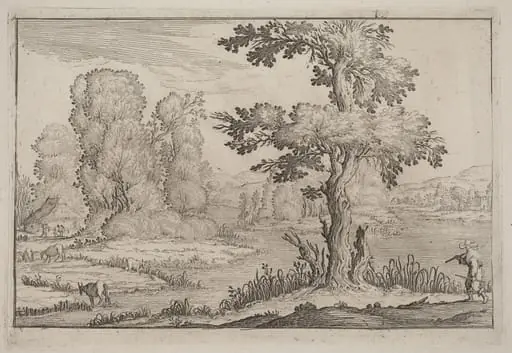
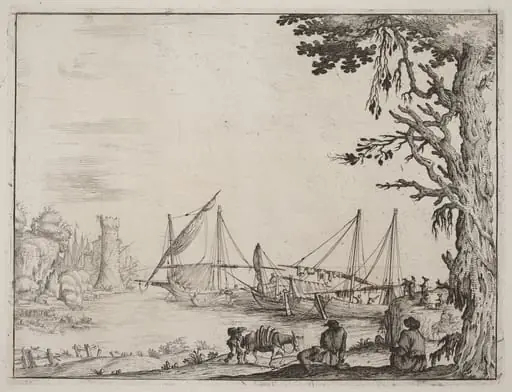
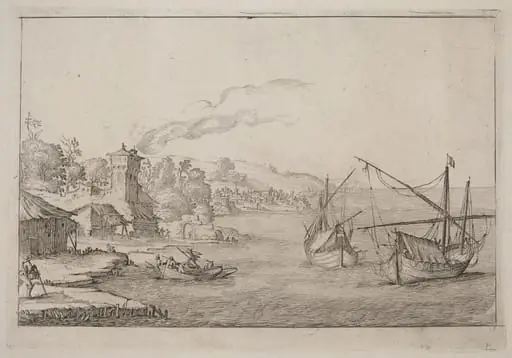
Bazzicaluva employs fine penwork to articulate intricate details—foliage, birds, and architectural fragments—while black chalk underdrawing establishes tonal structure. Cross-hatching and stippling create depth, particularly in the rendering of trees and water. The drawing’s style aligns with Baroque naturalism, where precise observation coexists with allegorical content, and contrasts in texture and light enhance the composition’s dramatic tension.
History & Provenance
Created in 1636, the drawing exemplifies Bazzicaluva’s work during his active period in mid-17th-century Italy. As a preparatory study or independent work, it reflects the artist’s engagement with landscape and figural subjects. Its subsequent ownership history remains unrecorded, though its survival in laid paper suggests it was preserved among private collections or studio holdings before entering a public institution.
Context
The drawing emerges from a Baroque tradition that blended naturalistic observation with symbolic motifs. Coastal landscapes and ruins were frequent subjects, evoking both the grandeur of antiquity and the fragility of human endeavor. Allegorical figures like Death appeared in art as reminders of mortality, resonating with contemporary audiences familiar with such moralizing themes in print and painting.
Legacy
While not among Bazzicaluva’s most widely reproduced works, this drawing contributes to the understanding of Baroque draftsmanship, particularly in its fusion of detailed landscape and allegory. Its techniques—cross-hatching and layered media—demonstrate methods later refined by engravers and draughtsmen. The work’s preservation offers insight into 17th-century artistic practices and the role of drawings as both studies and finished compositions.
Artist & collection

Artist
Ercole Bazzicaluva, also spelled Bezzicaluva or Bazzicaluve (active 1640), was an Italian engraver of the Baroque period.