Artwork
Rustic Seaport
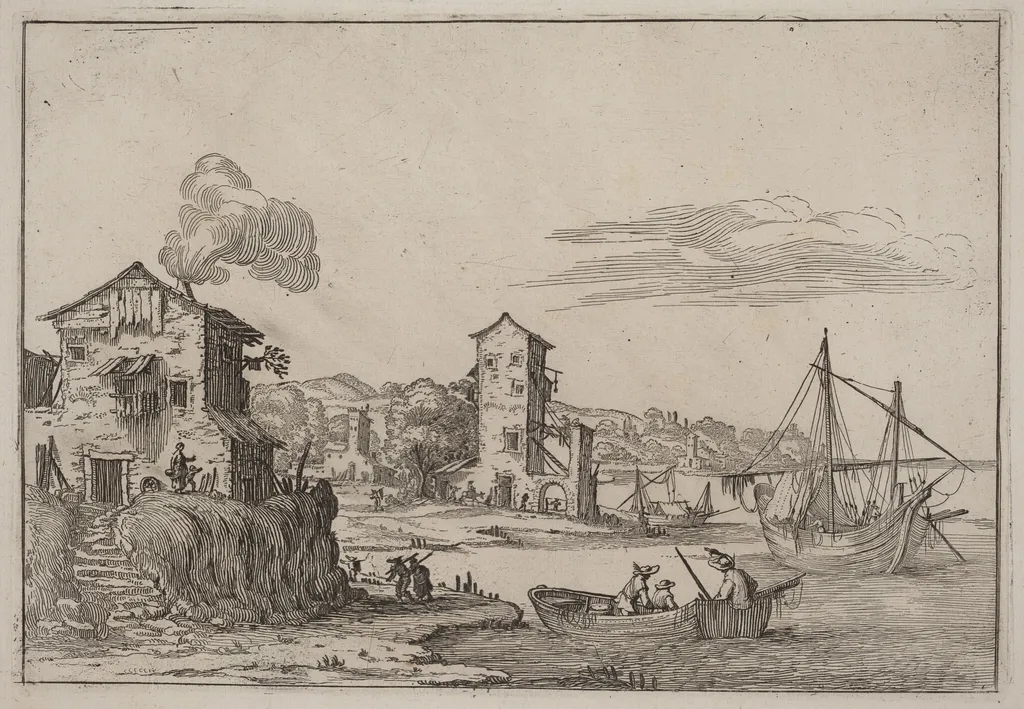
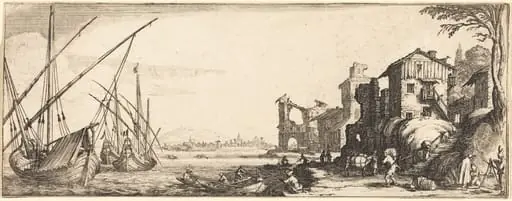
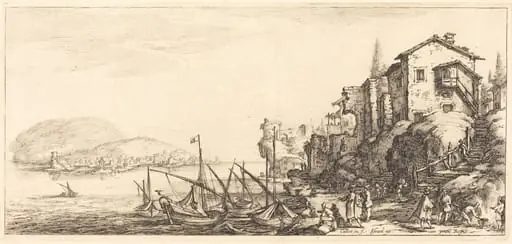
Rustic Seaport is an ink print by the Baroque artist Ercole Bazicaluva. It dates from 1638 and is held in the collection of the National Gallery of Art. Created in 1638 by the Italian engraver Ercole Bazzicaluva, this etching on laid paper captures a quiet coastal scene with modest detail.
About this work
Overview
Created in 1638 by the Italian engraver Ercole Bazzicaluva, this etching on laid paper captures a quiet coastal scene with modest detail.
Created in 1638 by the Italian engraver Ercole Bazzicaluva, this etching on laid paper captures a quiet coastal scene with modest detail. As a printmaker active in the early Baroque period, Bazzicaluva focused on everyday maritime life. The work is one of several known etchings by him, distinguished by its restrained composition and careful line work, reflecting the technical priorities of printmaking at the time.
Subject & Meaning
The scene depicts a humble seaport with anchored vessels, a crumbling structure emitting smoke, and figures engaged in routine activities—rowing, standing on docks, or tending to the shore. No grand narrative is present; instead, the image conveys the quiet rhythm of coastal labor. The contrast between small, active boats and large, still ships suggests a hierarchy of function, not power, emphasizing the domestic scale of the harbor’s life.
Technique & Style
Bazzicaluva employed etching to render fine, controlled lines that define textures: the roughness of stone walls, the ripple of water, and the grain of wooden hulls. The use of laid paper, with its subtle chain lines, complements the delicate inkwork. The composition avoids dramatic lighting or exaggerated perspective, favoring clarity and observational precision—hallmarks of Northern Italian printmaking traditions of the period.
History & Provenance
Little is documented about the early ownership of this print. It survives in institutional collections today, likely preserved through academic or collector interest in 17th-century Italian prints. Bazzicaluva’s oeuvre was modest and not widely disseminated, so this work remains a rare example of his output, offering insight into regional print culture beyond major artistic centers like Rome or Venice.
Context
In the 1630s, Italian printmaking was dominated by religious and mythological themes, yet regional artists like Bazzicaluva continued to document local landscapes and labor. This etching aligns with a quieter tradition of topographical and genre scenes, particularly in port cities where maritime activity provided endless visual material. It reflects a shift toward secular, observational subjects in print, even as the Baroque era favored grandeur elsewhere.
Legacy
Bazzicaluva’s work, including this etching, has not influenced major artistic movements, but it contributes to the broader understanding of provincial printmaking in early modern Italy. Its preservation allows scholars to study how smaller artists interpreted daily life with technical care, offering a counterpoint to the more celebrated works of his contemporaries. The print endures as a quiet record of a specific time and place.
Own this work as a print
Artist & collection

Artist
Ercole Bazzicaluva, also spelled Bezzicaluva or Bazzicaluve (active 1640), was an Italian engraver of the Baroque period.

 Men Playing Boccie in a Village
 Death and the Woodman in a Coastal Landscape with Ruins
 Landscape with a Traveler before a Cottage
 Landscape and River with Anchored Vessels
 Herdsman and Cows Crossing a River
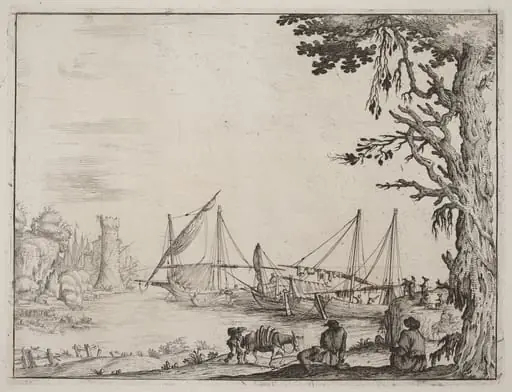 Seaport with Anchored Vessels
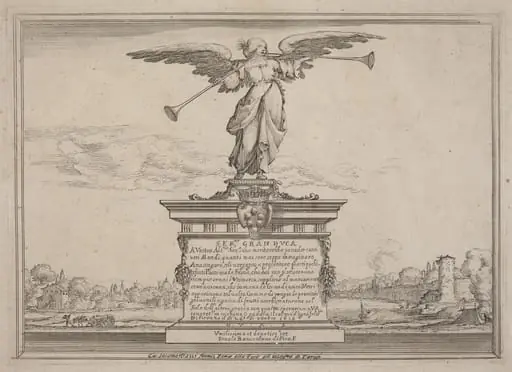 Dedication Page with Statue of Fama
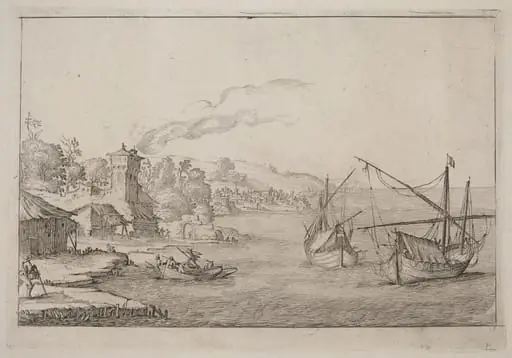 Coastal Landscape with Anchored Vessels