Artwork
Light and Shadow: The Shadows of Dissipation Falling upon the Poor
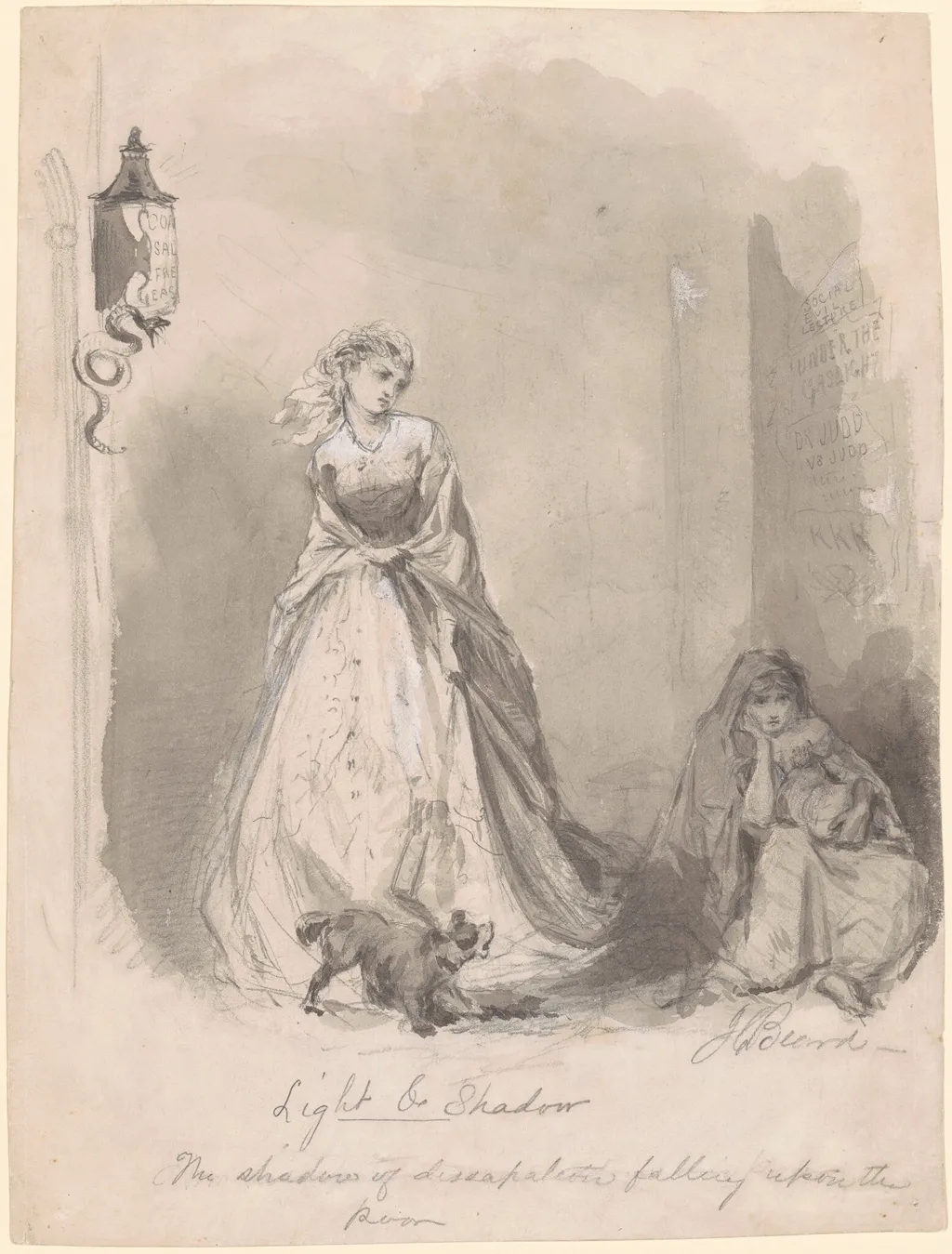
Light and Shadow: The Shadows of Dissipation Falling upon the Poor is a graphite drawing by the Impressionist artist James Carter Beard. It dates from 1870 and is held in the collection of the National Gallery of Art.
About this work
Overview
Created in 1870 by James Carter Beard, this drawing combines graphite, ink wash, and gouache on wove paper to depict a nocturnal urban scene.
Created in 1870 by James Carter Beard, this drawing combines graphite, ink wash, and gouache on wove paper to depict a nocturnal urban scene. Its loose, rapid execution suggests a spontaneous observation rather than a polished composition. The work’s title frames the image as a moral commentary, using light and darkness to distinguish between social conditions. The medium’s opacity and fluidity allow for subtle tonal contrasts that reinforce its thematic tension.
Subject & Meaning
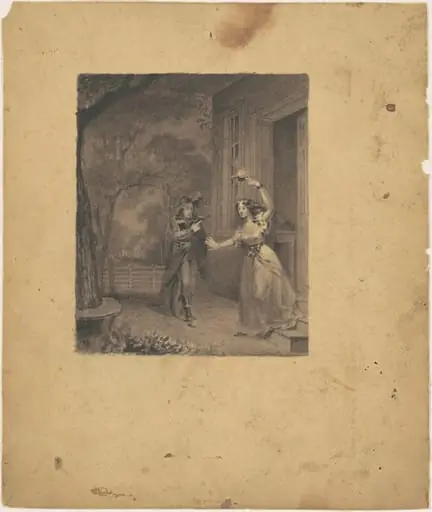
Two figures dominate the scene: a standing woman in an elaborate dress, holding a lantern inscribed with 'God Save Free Trade,' and a kneeling woman wrapped in a dark cloak, her face obscured. Between them, a small dog gazes downward, adding a quiet, observational presence. The contrast between their postures and attire suggests a critique of economic disparity, with the lantern’s slogan implying a hollow moral justification for inequality. The hidden face of the kneeling figure deepens the sense of anonymity and neglect.
Technique & Style
Beard employed graphite for structural outlines, ink wash for atmospheric depth, and gouache to create localized areas of opaque color. The application is deliberately unrefined—lines are fluid, edges blurred, and forms suggested rather than defined. This sketch-like approach conveys immediacy, as if capturing a fleeting moment. The limited palette, dominated by grays and muted tones, enhances the somber mood, while the lantern’s faint glow acts as the sole point of visual emphasis.
History & Provenance
The drawing was completed in 1870, during a period of heightened public debate over economic policy and urban poverty in Britain. Its survival as a single sheet suggests it was not part of a larger series, though its thematic focus aligns with contemporary social realism. No documented exhibition history or early ownership records are known, indicating it may have remained in the artist’s private circle or been acquired later by a collector interested in 19th-century social commentary.
Context
In the late 1860s and early 1870s, British artists increasingly turned to urban life as a subject for social critique. Beard’s work reflects this trend, echoing the visual language of reformist journalism and illustrated periodicals that exposed the conditions of the urban poor. The reference to 'Free Trade' in the lantern alludes to contemporary political rhetoric, often invoked to justify economic policies that widened class divides, making the image a quiet but pointed rebuttal.
Legacy
Though not widely exhibited during Beard’s lifetime, the drawing contributes to a broader 19th-century tradition of socially aware graphic art. Its unembellished style and moral ambiguity distinguish it from more didactic illustrations of the era. Today, it is valued for its understated power and its ability to evoke systemic inequality through minimal means, offering a quiet counterpoint to grander historical narratives of progress.
Artist & collection


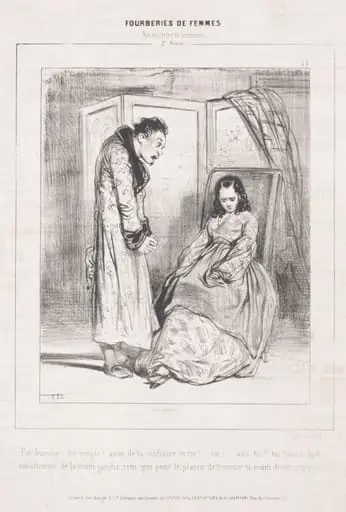 Fourberies de Femmes: En matière de sentiment
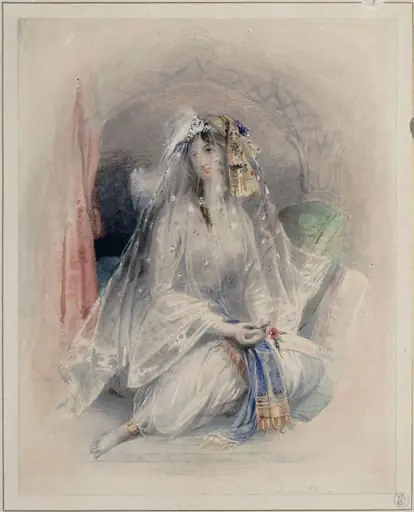 The Light of the Harem
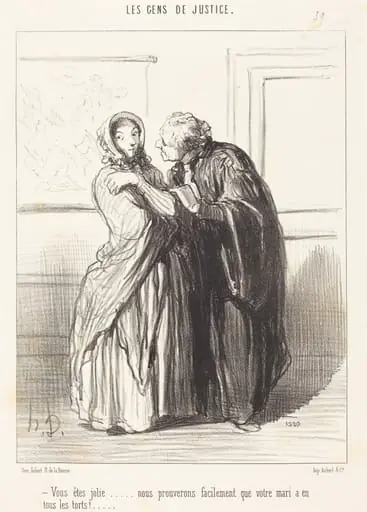 Vous êtes jolie...
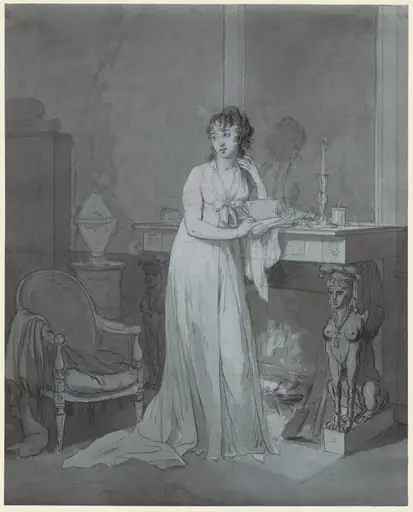 Woman in Front of a Fireplace
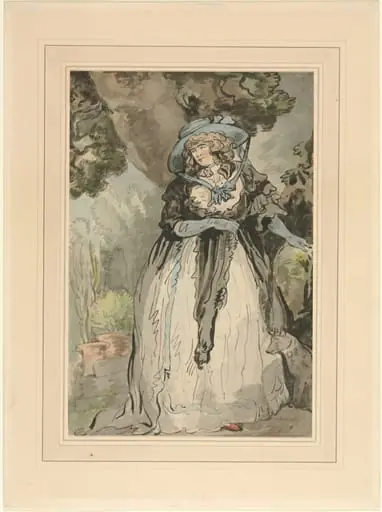 Mrs. Samuel Howitt (née Elizabeth Rowlandson)
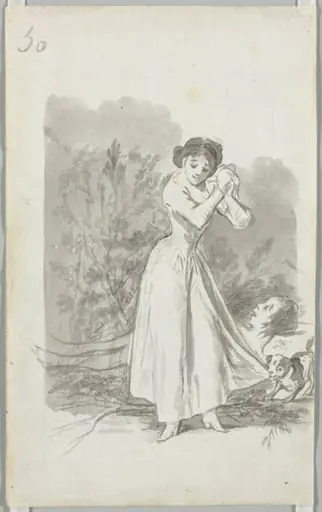 Young Woman Wringing Her Hands over a Man's Naked Body, Folio 50 (verso)
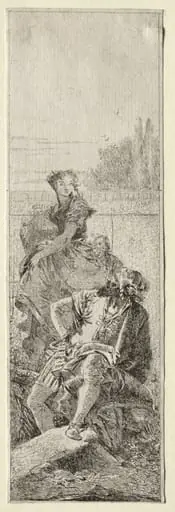 Two Peasants
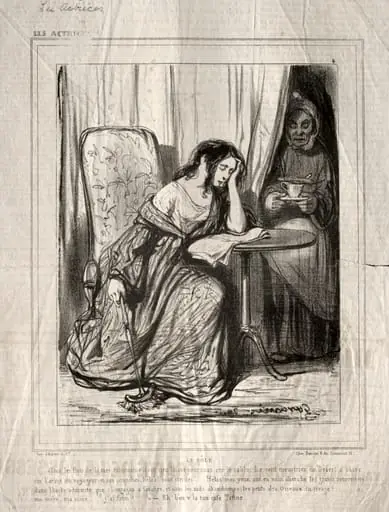 Les Actrices: Le Rôle
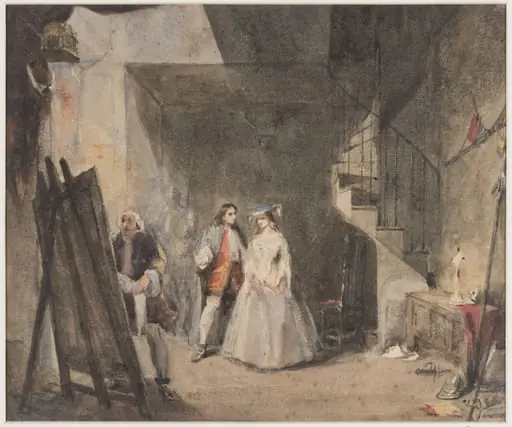 Interior of an artist's studio
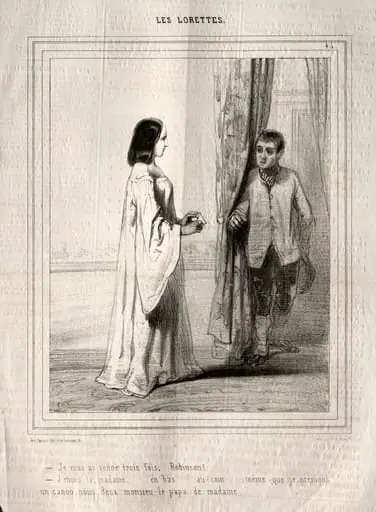 Les Lorettes
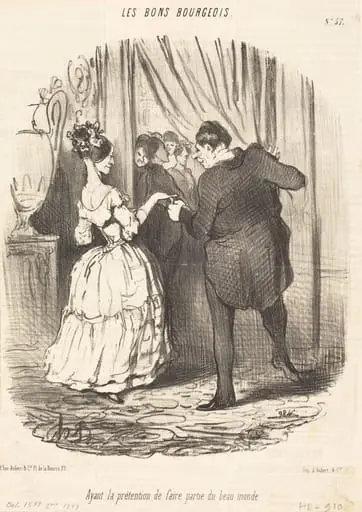 Ayant la prétention de faire partie du beau monde
 The Bride of Lammermoor