Artwork
A bridge seen from a riverbank
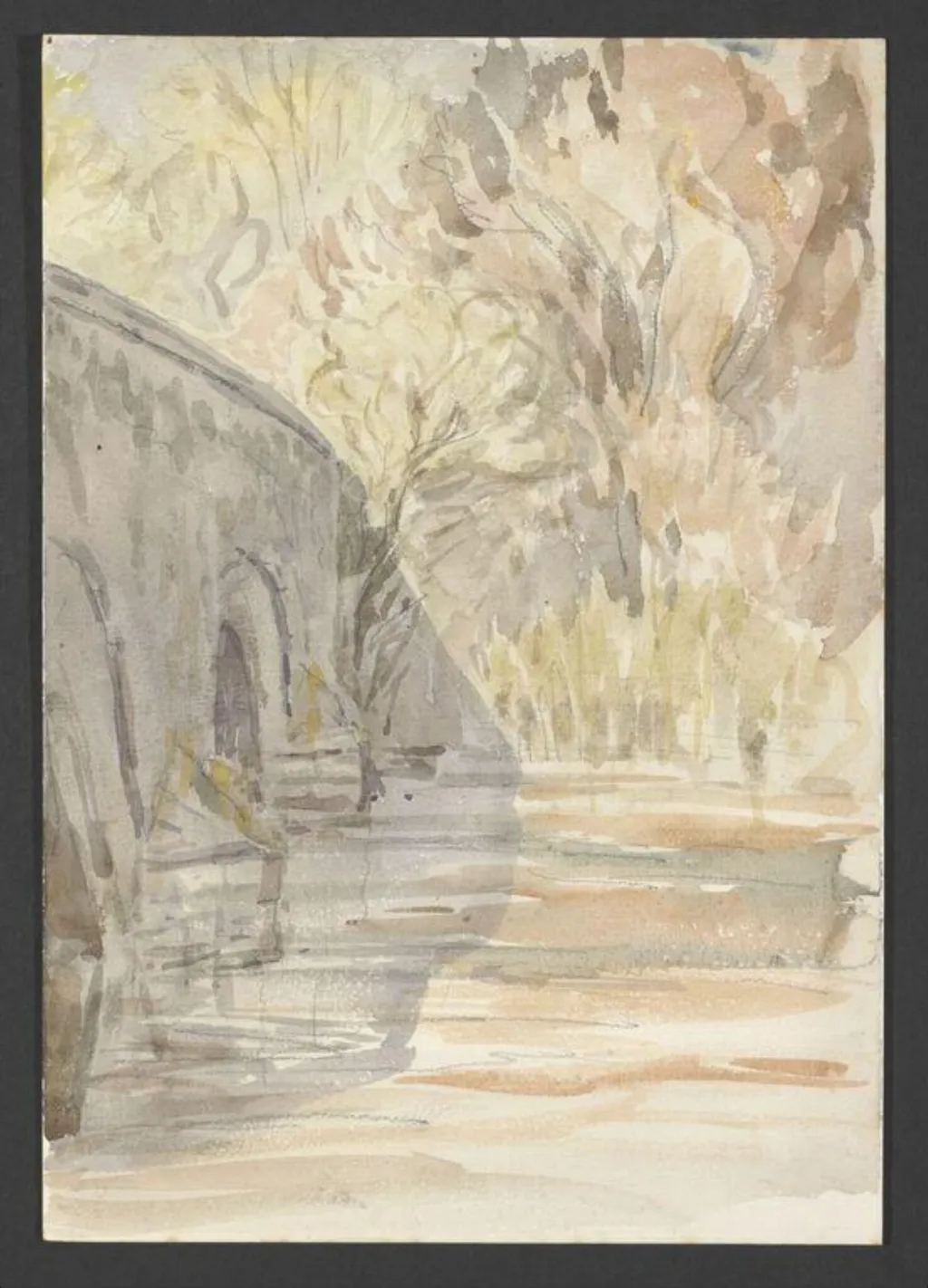
A bridge seen from a riverbank is a watercolor work on paper by the Impressionist artist Beatrix Potter. It dates from 1894 and is held in the collection of the Victoria and Albert Museum. This watercolour depicts a bridge spanning a river, viewed from its bank.
About this work
This painting is a landscape titled A bridge seen from a riverbank. It's a watercolour work by Beatrix Potter.
The subject of the painting has been identified as the River Tweed at Coldstream. Beatrix Potter is known to have visited this location in summer 1894.
To learn more about the style and techniques used in this painting, look up the movement: Impressionism, Realism.
Overview
This watercolour depicts a bridge spanning a river, viewed from its bank. The scene is rendered in a light, fluid manner characteristic of Potter’s sketching practice, capturing the interplay of water, sky, and surrounding foliage in a concise, observational study.
Subject & Meaning
The landscape represents the River Tweed near Coldstream, showing the river’s gentle curve and a modest stone bridge. The composition emphasizes the river’s meandering path and the reflective quality of its surface, echoing Potter’s journal entry that praised the Tweed’s graceful flow and its shifting relationship with the surrounding meadows.
Technique & Style
Executed in transparent watercolour washes, the work balances delicate line work with broader tonal areas, aligning with late‑19th‑century approaches that blend realistic observation with an impressionistic sensitivity to light and atmosphere. Potter’s handling of the water’s surface and the foliage demonstrates a keen eye for natural detail while maintaining a spontaneous, sketch‑like quality.
History & Provenance
The study is undated but is linked to Potter’s documented visit to Lennel, Coldstream, in the summer of 1894, when she produced several drawings of the Tweed. The piece likely originated as a field sketch made during that trip, later retained among her personal papers before entering a public collection.
Context
During the 1890s Potter traveled extensively with her family, using holidays to record the countryside in watercolour. Her work from this period reflects a broader Victorian interest in documenting rural scenery, and the River Tweed was a recurring motif in her early artistic output.
Artist & collection
Artist
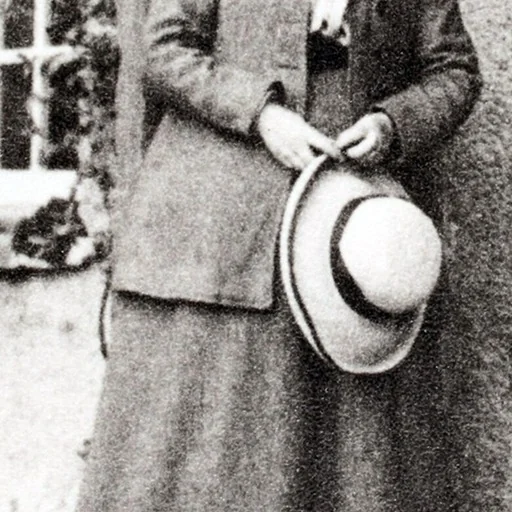
Helen Beatrix Heelis (née Potter; 28 July 1866 – 22 December 1943), usually known as Beatrix Potter ( BEE-ə-triks), was an English writer, illustrator, natural scientist, and conservationist.

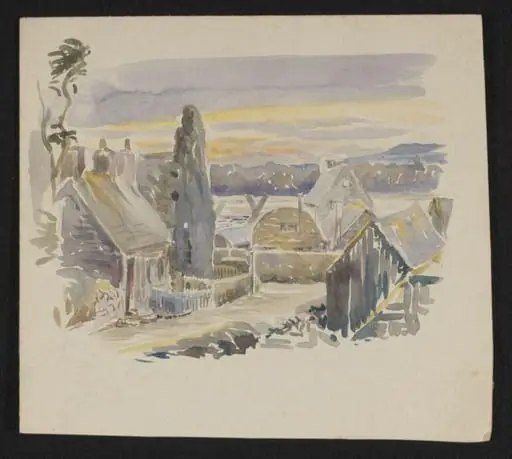
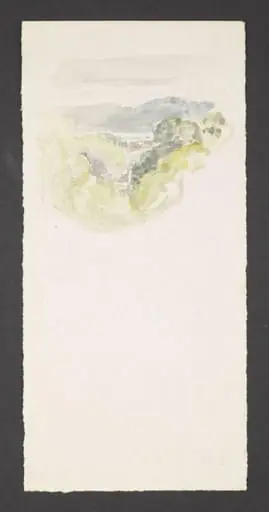 A view, through trees, of a lake and mountains
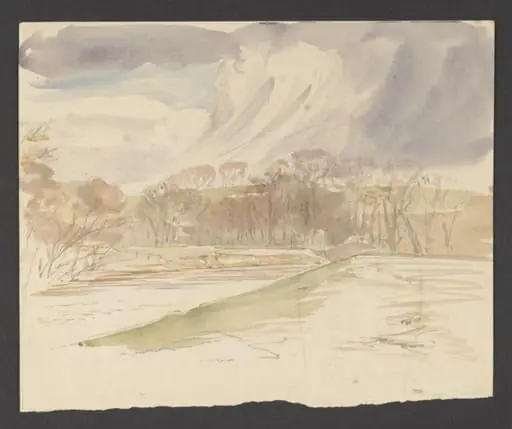 A lake and trees beneath a stormy sky
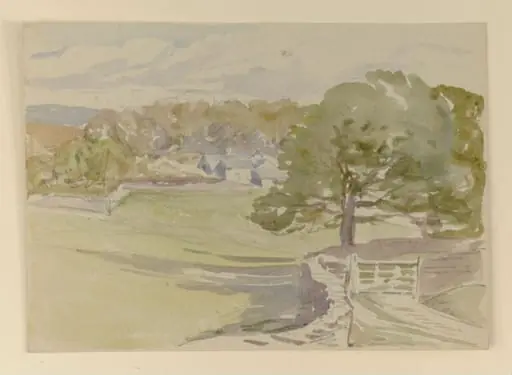 A lane with trees
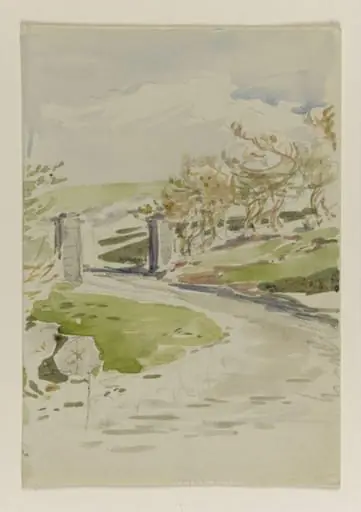 A pathway to moorland, passing through a stone gateway
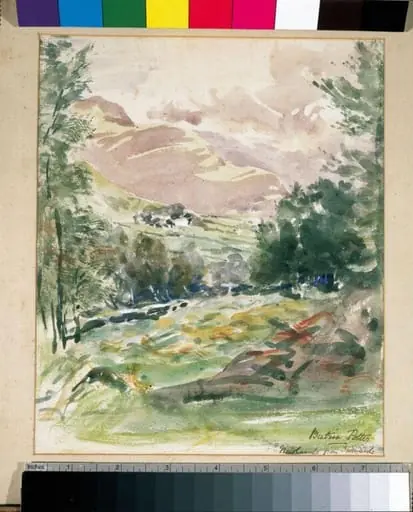
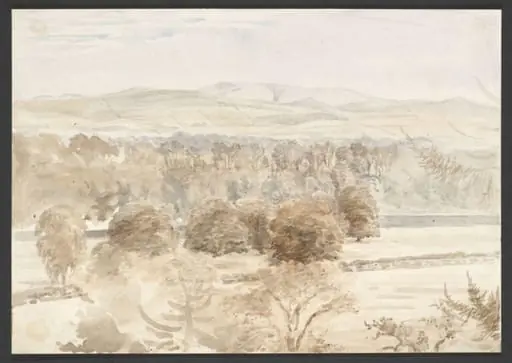 The Tweed surrounded by woodland, with the Cheviots in the background
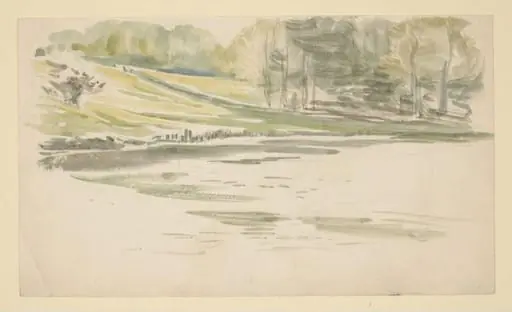 A lake with trees; study relating to The Tale of Mr Tod
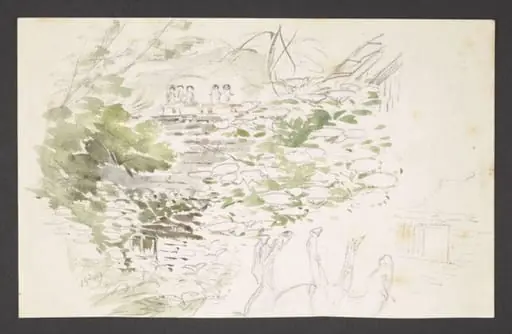 Study of a view through trees to the roof of a house and a rough sketch of a horse
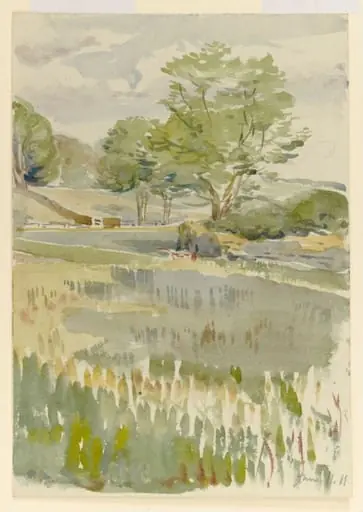 Untitled
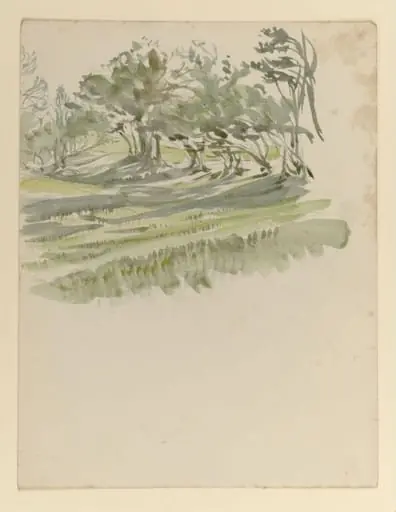 A meadow flanked by a line of trees
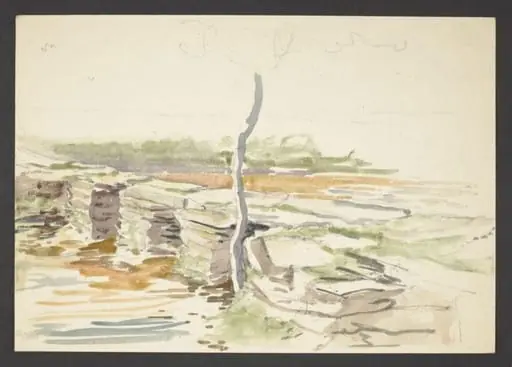 A river traversed by stone piles forming a bridge
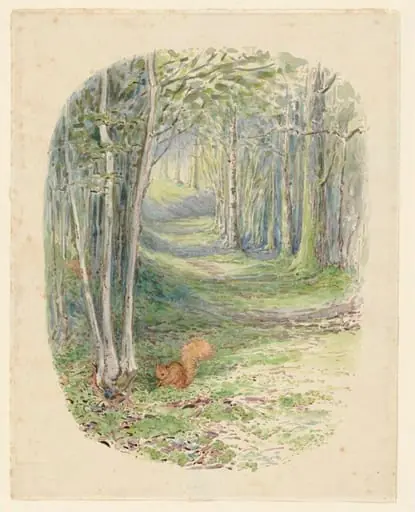
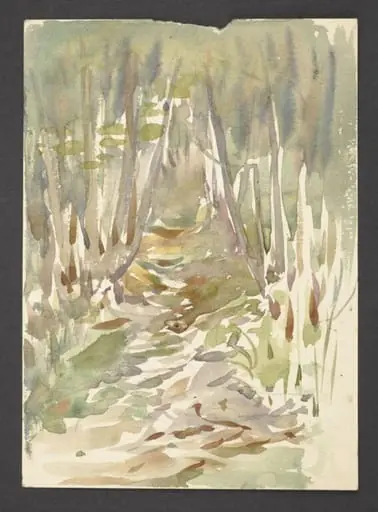 A path through a woodland in autumn