Artwork
Lady mouse curtseying beside a tea-cup
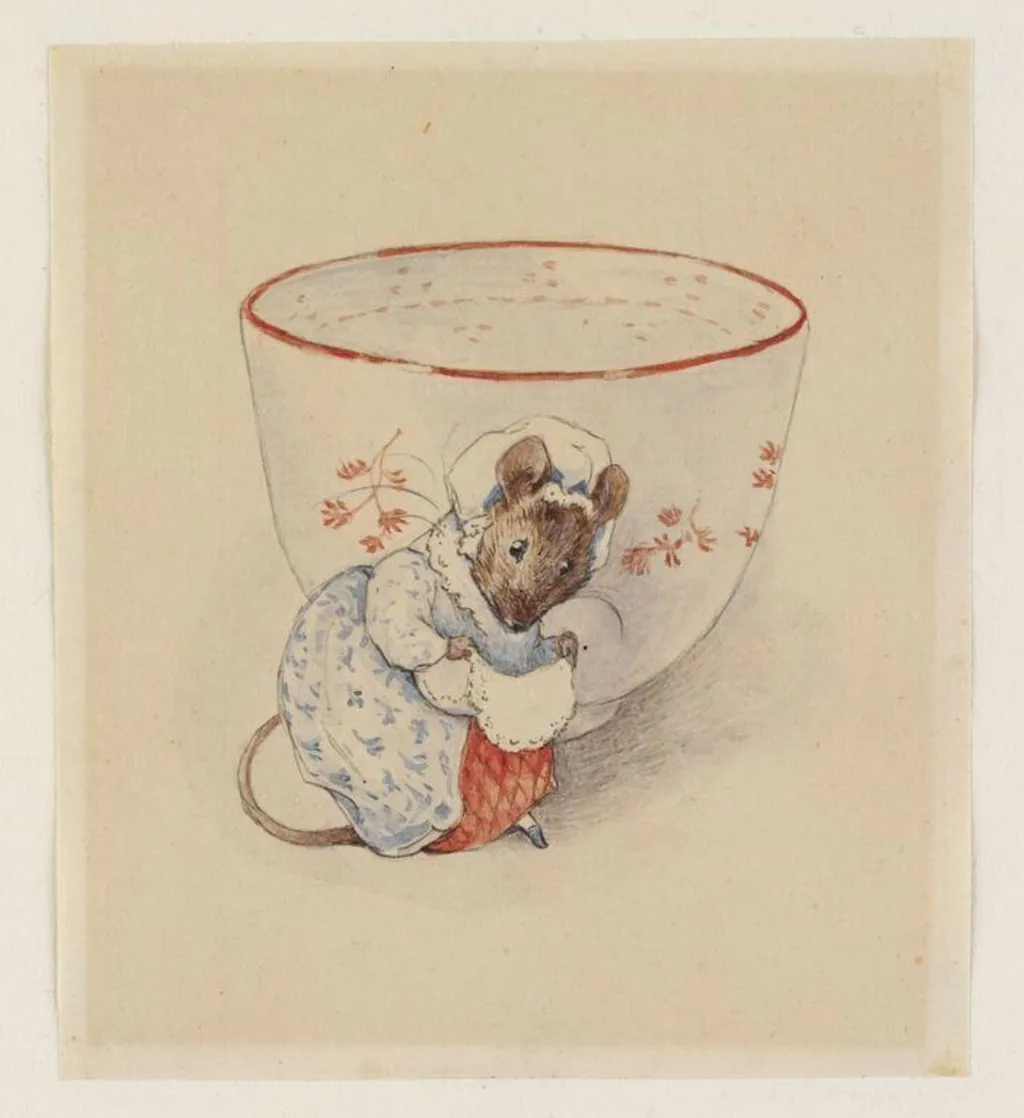
Lady mouse curtseying beside a tea-cup is a watercolor work on paper by the Post-Impressionist artist Beatrix Potter. It dates from 1903 and is held in the collection of the Victoria and Albert Museum. This watercolour, dated 1903, depicts a mouse in period dress performing a curtsey beside a teacup.
About this work
Potter is best known for Peter Rabbit, but this painting comes from her book “The Tailor of Gloucester,” set in the 1700s.
This watercolor by Beatrix Potter shows a lady mouse taking a tiny bow beside a teacup. It’s from 1903 and belongs to the Victoria and Albert Museum.
Potter is best known for Peter Rabbit, but this painting comes from her book “The Tailor of Gloucester,” set in the 1700s. She worked hard to make the costumes and details feel real.
Check out the Victoria and Albert Museum for more of her delicate watercolors.
Overview
This watercolour, dated 1903, depicts a mouse in period dress performing a curtsey beside a teacup. Created by Beatrix Potter, it originates from her illustrated tale The Tailor of Gloucester. The work is part of a series of detailed studies she made to ensure historical accuracy in the book’s imagery. It is held in the collection of the Victoria and Albert Museum, where Potter conducted research for her illustrations.
Subject & Meaning
The figure is a mouse dressed as an 18th-century lady, capturing a moment of polite gesture within the story’s narrative. The curtsey reflects the social manners of the era in which the tale is set, reinforcing the book’s thematic focus on tradition and quiet dignity. The teacup, a domestic object, anchors the scene in everyday life, blending fantasy with the realism Potter sought to achieve.
Technique & Style
Potter rendered the image in delicate watercolour, using fine brushwork to define the mouse’s lace-trimmed gown and the translucent glaze of the teacup. Her attention to texture and light suggests a mastery of observational drawing, rooted in direct study rather than imagination alone. The composition is intimate and restrained, emphasizing detail over dramatic effect.
History & Provenance
The watercolour was made in early 1903 as preparatory material for The Tailor of Gloucester, published later that year. Potter visited the Victoria and Albert Museum to study authentic 18th-century garments, even arranging to have items removed from display for closer examination. This piece, like others from the series, remained in her possession until its eventual acquisition by the museum.
Context
Potter’s commitment to historical fidelity in The Tailor of Gloucester set it apart from her other tales. While most began with timeless fables, this story was anchored in a specific past, requiring research into clothing, tools, and interior details. Her method—combining field observation with museum study—reflected a scholarly approach unusual in children’s book illustration at the time.
Legacy
These watercolours demonstrate how Potter elevated children’s book illustration through rigorous research and artistic discipline. Though best known for Peter Rabbit, her work on The Tailor of Gloucester revealed a deeper engagement with material culture. The surviving studies remain valuable as both artistic records and insights into early 20th-century illustration practices.
Artist & collection
Artist
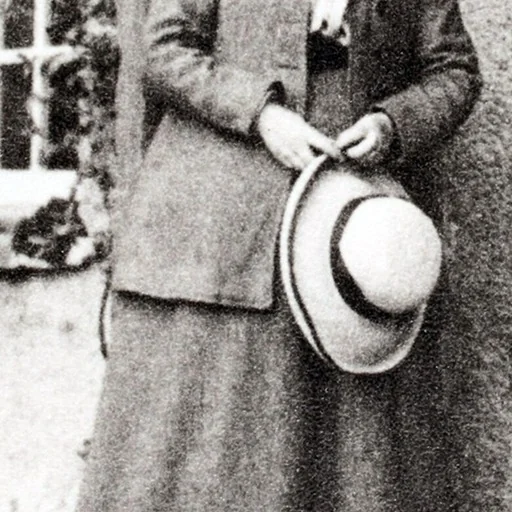
Helen Beatrix Heelis (née Potter; 28 July 1866 – 22 December 1943), usually known as Beatrix Potter ( BEE-ə-triks), was an English writer, illustrator, natural scientist, and conservationist.

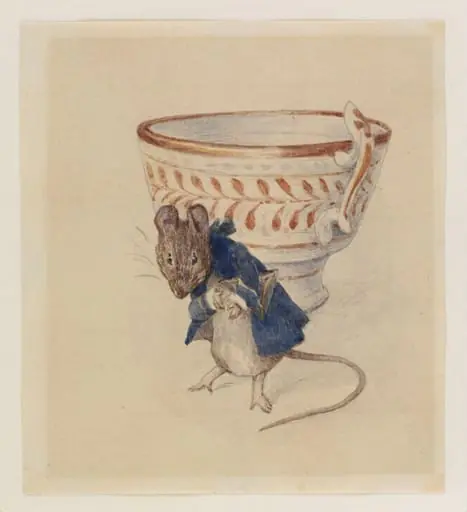 Gentleman mouse bowing beside a teacup
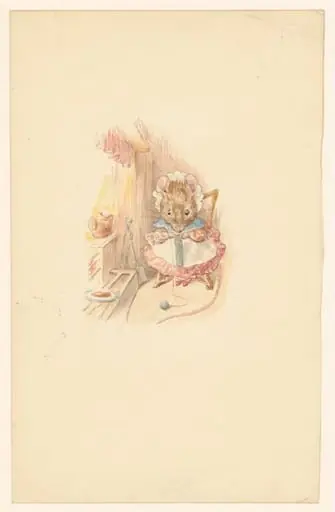 A mouse knitting
 Untitled
 'Making coats for Gentlemen'
 The White Rabbit running along a long panelled corridor
 Lady rabbit and gentleman rabbit passing on the street
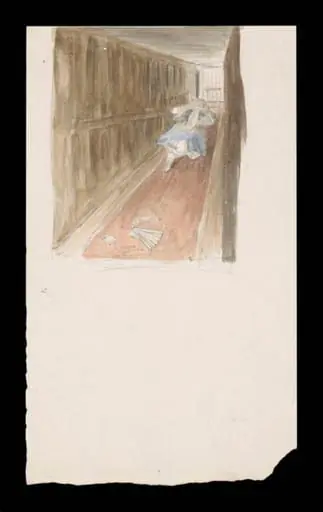 Rear view of the White Rabbit running away along the corridor
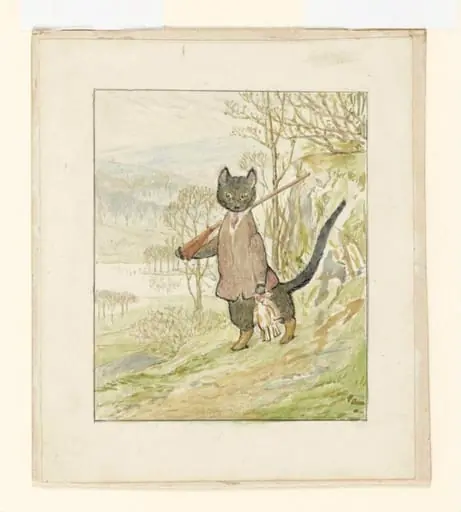 Study for the frontispiece of Kitty-in-Boots
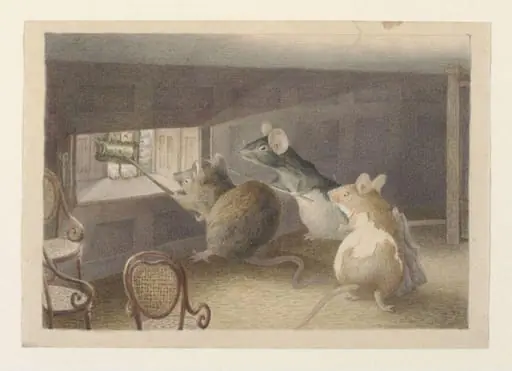 'Shall I come in, and cur off your threads?'
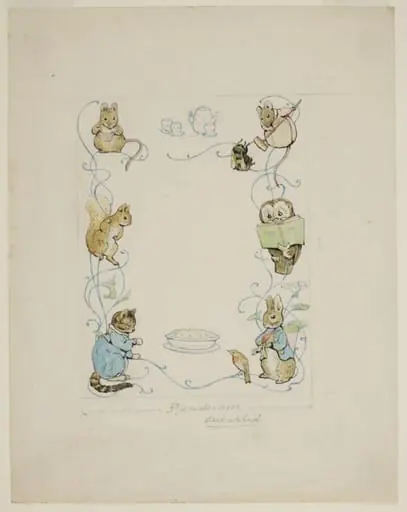 Endpaper design for a foreign translation of the Peter Rabbit books
 Studies of a cat